Welcome back. In our last lesson, we defined the mandate and operating model of the Transformation Management Office (TMO), establishing it as the strategic engine at the heart of your transformation program. We saw that two of its core functions are portfolio governance and integrated reporting. Now, we will operationalize those functions.
In any large-scale transformation, you are not managing a single project but an ecosystem of interconnected workstreams—product, engineering, GTM, and more. The greatest risk to the program often lies not within these streams, but in the gaps between them. Your objective for this lesson is to map cross-workstream interdependencies and design an integrated reporting and risk management process. This moves us from designing the TMO to equipping it with the tools to navigate and orchestrate complexity.
The Challenge: From Silos to a System View
A transformation program is a classic example of a complex system where the whole is more than the sum of its parts. Each workstream might be executing its plan perfectly, but if the output of the data platform team isn't ready when the new AI feature team needs it, the entire timeline can be jeopardized. Your project management background has undoubtedly shown you the danger of cascading delays on a single project; in a transformation, this risk is magnified across the entire organization.
Unmanaged interdependencies are the primary source of program risk. They can be:
- Technical: System A's API must be available before System B can be integrated.
- Process: The new sales compensation plan (GTM workstream) must be approved before the sales enablement training (HR workstream) can be developed.
- Resource: The same small pool of database architects is needed by three different product teams simultaneously.
- Vendor: A third-party software component must be delivered and configured before internal development can begin.
The video segment below highlights a critical type of cross-cutting dependency that spans nearly all workstreams in a software transformation: architecture and data.
Complete Guide to Digital Transformation: Strategy, Implementation, and Execution
This clip from a broader guide to digital transformation explains why architecture and data flow act as a foundational, interconnected workstream.
Please watch the segment from architecture and data. Note how it's described not as a single task, but as a crucial thread that ties multiple systems together.
The first task of the TMO is to make this invisible web of connections visible.
Visualizing the Web of Interdependencies
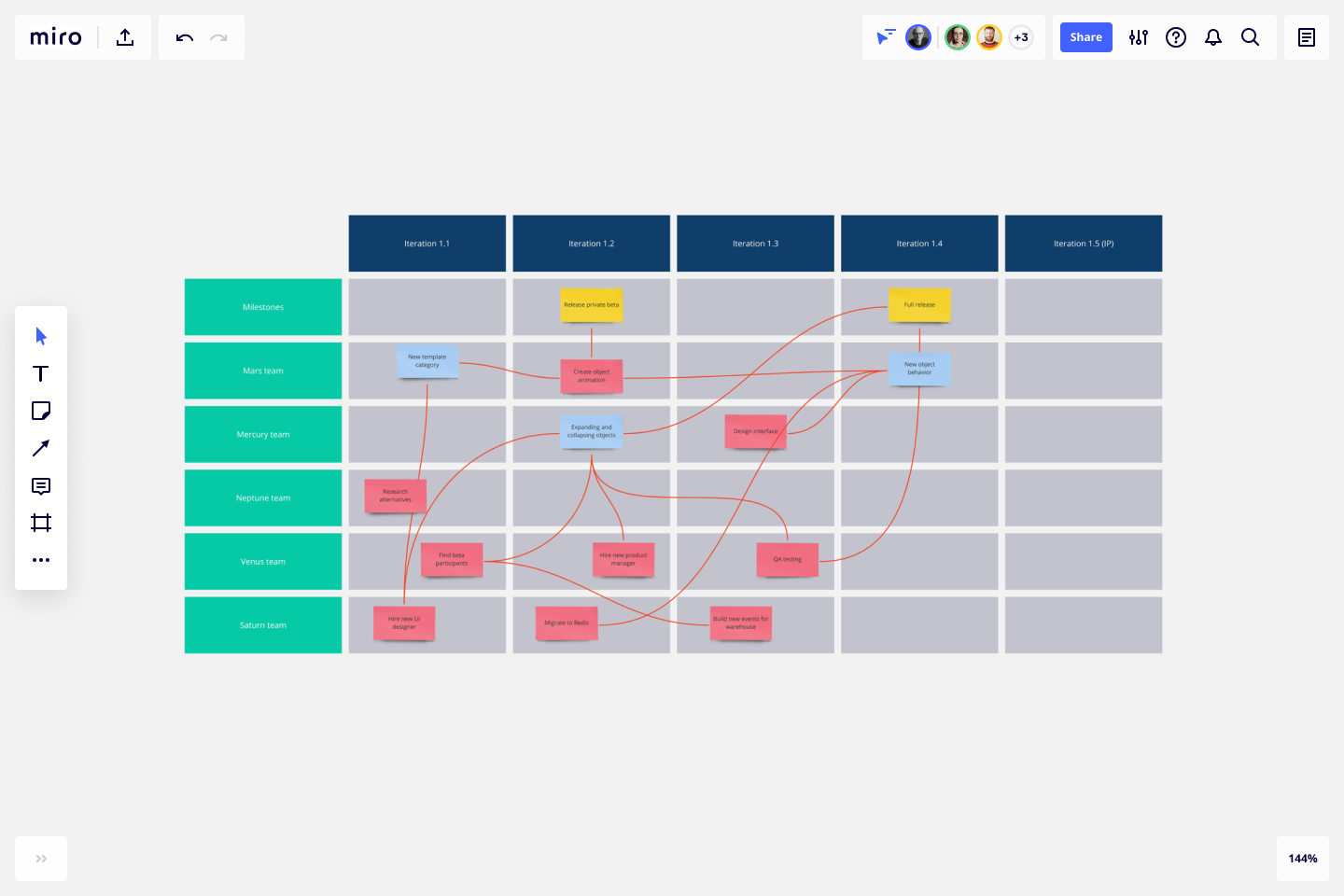
You cannot manage what you cannot see. The core of interdependency management is creating a shared, visual understanding of how all the pieces of the transformation fit together. This is not just a Gantt chart on a larger scale; it is a dynamic map of commitments and handoffs between teams.
This process starts at the individual workstream level but must be consolidated into a program-level view.
Building an Enterprise-Level Roadmap from Workstream Sprints in ...
This article from Andrew Reise provides a practical framework for rolling up detailed workstream plans into a consolidated enterprise roadmap.
First, read the section on sprint-level planning, which establishes the foundation. Then, read the following section on consolidated roadmapping to understand how these pieces are brought together into different views for different audiences.
As the article describes, the process involves two stages:
- Define at the source: Each workstream must clearly articulate its key deliverables, milestones, and, most importantly, its dependencies on other teams for each planning cycle (e.g., a sprint or a PI).
- Roll-up and visualize: The TMO consolidates these individual plans into a master roadmap. This is where the interconnections become visible.
The visual output of this process can take several forms. It can be an abstract network diagram that helps categorize the nature and criticality of dependencies, or a more tactical board used in planning sessions.

Tools and Techniques for Dependency Management
With a visual map in place, the TMO can shift from reactive firefighting to proactive management. This requires specific tools and a regular cadence of review. The principles used in large-scale agile frameworks are particularly useful here, even if your organization uses a hybrid model.
How to Visualize Dependencies Across Solution Trains
This article from AgileSeekers.com, though written in the context of the Scaled Agile Framework (SAFe), outlines universally applicable principles and tools for managing dependencies at scale.
Focus on two key parts: The four key principles of visualization: Transparency, Timeliness, Ownership, and Continuous Review. The section on tools and techniques, which describes dependency boards, matrices, and digital maps. Your experience with JIRA and Miro will make these concepts very familiar.
The key takeaway is that visualization enables management. Once a dependency is on the board, it can be managed through a clear process:
- Assign Ownership: Every dependency must have a clear owner responsible for ensuring the commitment is met. This accountability is crucial.
- Track Status: The status of dependencies (e.g., Open, In Progress, Blocked, Resolved) should be reviewed in every TMO sync meeting.
- Escalate Early: The dependency map is your early warning system. When a "sticky" on the board is at risk of slipping, it should be flagged immediately (often turned red) and escalated through the governance path you designed in the previous lesson.
Designing an Integrated Reporting and Risk Process
The dependency map is the central artifact in an integrated reporting and risk management process. It is the data source that feeds status reports, risk logs, and executive dashboards. The process ensures that information flows from the teams doing the work to the leaders making strategic decisions.
Layered Reporting for Different Audiences
A single, massive dependency map is useful for the TMO but overwhelming for senior leaders. Effective reporting involves translating the detailed view into a strategic narrative.
Building an Enterprise-Level Roadmap from Workstream Sprints in ...
We return to the Andrew Reise article to focus on tailoring the roadmap for a leadership audience.
Read the section on creating executive views. Pay attention to how it shifts the focus from tasks to milestones, health indicators, and key decision points.
Your reporting process should produce layered views:
- Workstream View (Detailed): The full dependency map, used by the TMO and workstream leads for operational coordination.
- Program View (Summary): A milestone-driven roadmap showing the health (Green/Yellow/Red) of major deliverables and highlighting key cross-functional risks. This is for program-level governance meetings.
- Executive View (Strategic): A one-page summary focusing on progress toward strategic outcomes, major risks to business value, and critical decisions required from the steering committee.
A Cadence for Risk Management
This reporting process is not static; it is built around a regular cadence of meetings where the dependency map and associated risks are reviewed. This might include:
- Daily Stand-ups: At the team level.
- Weekly TMO Syncs: Where workstream leads review cross-stream dependencies and resolve blockers. This is often called an "ART Sync" or "Scrum of Scrums" in agile contexts.
- Bi-weekly/Monthly Steering Committee Meetings: Where the executive view is presented, and strategic decisions are made.
Finally, this process can be augmented with formal risk mitigation functions, such as Quality Assurance, which acts as an independent check on whether the transformation is proceeding as planned and delivering the expected quality.
Complete Guide to Digital Transformation: Strategy, Implementation, and Execution
This final clip explains the role of Quality Assurance (QA) as a program-level risk mitigation tool.
Please watch the short segment from quality assurance. Consider how a QA function would use the dependency map to identify high-risk integration points that require extra scrutiny.
By integrating dependency mapping into a regular reporting and review cadence, the TMO transforms a static plan into a dynamic guidance system for the entire transformation.
Conclusion
In this lesson, you've learned how to bring order to the chaos of a large-scale transformation. We've moved beyond the theoretical structure of the TMO to define its most critical operational process: managing the web of interdependencies that connect all workstreams.
Key Takeaways:
- Visualize to Manage: The first step to managing interdependencies is to make them visible through consolidated roadmaps and dependency boards.
- Assign Ownership: Every dependency must have a clear owner to ensure accountability and drive resolution.
- Integrate Reporting and Risk: Dependency maps are not just planning tools; they are the foundation of an integrated reporting and risk management process, providing a single source of truth for all stakeholders.
- Tailor the Narrative: Reporting must be layered, translating detailed operational data into a strategic narrative for executive leadership.
You have now completed the module on Adaptive Strategy and Governance. You have designed the guiding coalition, the transformation charter, the governance structure, the TMO, and the process for managing interdependencies.
In our next lesson, we will begin Module 3, "Leading Product & Technology Transformation." We will start by exploring the strategic rationale and architectural differences for a microservices migration, a common and highly complex transformation initiative where the dependency management skills you've just honed are absolutely essential.