Introduction
In our previous lesson, we established a method for deconstructing how ideological phrases like 'win-win cooperation' are naturalized—made to seem like common sense—using Fairclough's three-dimensional model. We focused on the linguistic and discursive strategies that render a political project seemingly neutral and inevitable.
Now, we move to a crucial next question: What happens after an ideology is naturalized? How does it become durable, embedded, and self-reproducing within a society? This lesson addresses Fairclough's answer: the technologization of discourse (tehnologizarea discursului). We will explore this concept as the process of institutionalizing ideologies, moving them from spoken words and written texts into the very fabric of social systems, administrative procedures, and technical standards. For your thesis, this is the mechanism by which China's 'discourse power' (huàyǔ quán) transitions from a rhetorical strategy into an operational reality.
From Naturalization to Technologization
Think of the relationship between naturalization and technologization as two distinct phases. Naturalization makes an idea acceptable; technologization makes it operational.
- Naturalization is a hegemonic process where a particular discourse wins out over others, becoming the default "common sense." It persuades and normalizes.
- Technologization is a more deliberate, top-down intervention. It occurs when institutions (like governments or corporations) take a naturalized discourse and systematically engineer it into their practices, procedures, and technologies to manage populations and shape social reality.
Given your background in governance and diplomacy, you have likely observed this process firsthand. A new policy imperative, such as 'evidence-based decision-making', does not remain a mere slogan. It is technologized by being embedded into grant application forms, project reporting templates, monitoring and evaluation frameworks, and data management software. The discourse becomes a technology for governing. Fairclough's concept gives us a precise theoretical language to analyze this phenomenon.
Defining the Technologization of Discourse
The core of 'technologization' is the idea that discourse itself can be re-engineered and deployed as a tool for social control and transformation. It involves a conscious effort by those in power to reshape discursive practices to achieve specific outcomes.
A recent paper analyzing Microsoft's global AI skilling initiatives provides an excellent, contemporary application of this concept. While the context is corporate, the mechanism is directly analogous to what state actors like China are doing. The authors show how educational language is reshaped by managerial logic to serve commercial goals.
This article offers a sharp analysis of how a powerful actor (Microsoft) uses discourse as a technology. We will focus on two sections that clearly define and illustrate the concept.
First, in the section "The instrumentalization of the learner: human capital reified," please read the three paragraphs starting from "The company delineates...". This part provides a direct definition of technologization as the fusion of pedagogical and managerial logics. Next, jump to the section "Responsible AI as a business and compliance framework." Read the two paragraphs starting from "The discourse of 'Responsible AI'...". Pay close attention to how a moral concept like 'responsibility' is hollowed out and transformed into a bureaucratic, procedural one ('compliance', 'monitoring'). This is a textbook example of discourse being technologized for institutional purposes.
As the reading illustrates, technologization works by taking complex social or ethical concepts and reducing them to operational, often quantifiable, procedures. It replaces the 'why' with the 'how'. An abstract goal like "ethical AI" becomes a checklist of compliance tasks. This makes the discourse standardized, scalable, and easy to impose across an entire institution or system.
China's Strategic Embrace of Discourse as Technology
This theoretical concept is not merely a Western academic framework you are applying to China. Remarkably, Chinese political and academic strategists are themselves interested in and drawing upon these very ideas to build what they call 'discourse power' (huàyǔ quán).
The following report from MITRE, a US research organization, details China's strategic thinking. What you are about to read provides a powerful justification for using Fairclough's work in your thesis, as it closes the loop between the theory and the subject of your analysis.
[PDF] china's strategic vision | part two tools and axes of competition | mitre
This report analyzes the tools China uses for strategic competition. We will read a short but highly significant section on 'Discourse Control'.
Please read the entire subsection titled "Discourse Control". Focus on the explicit mention of Western thinkers, including Norman Fairclough, and how their ideas on the power of language are being adapted to serve the CCP's strategic goals.
The key insight here is profound: the Chinese state apparatus views the control and engineering of discourse not as mere propaganda, but as a fundamental tool to "alter the international political structure." When CCP theorists study Fairclough, they are looking for methods to institutionalize their worldview—to technologize their discourse on a global scale. This is the ultimate aim of huàyǔ quán.
The Material Manifestation: From Concepts to Concrete
So, how does China's technologization of discourse manifest in the context of the Digital Silk Road? It happens when abstract concepts are embedded into physical infrastructure and technical systems. The ideology is written not just in policy documents, but in code, concrete, and fiber-optic cables.
The same MITRE report gives us a glimpse into this material process. China's plans for a "digital economy, digital society, and digital government" are not just rhetorical. They are blueprints for re-engineering society through technology.
[PDF] china's strategic vision | part two tools and axes of competition | mitre
We will now look at two more excerpts from the MITRE report to see how discourse is materialized.
First, please read the section "Leveraging Chinese Information." Focus on the long paragraph that begins "In the data-driven techno-utopia...". Notice how abstract goals ("digital transformations") are tied to concrete technological systems like IoT facilities, city information models, and "city data brains." Next, go back a few pages to the section "Building a Self-Sufficient System." Read the paragraph that starts with "Additionally, current plans call for...". This connects the Digital Silk Road's "proxy infrastructural bastions" (e.g., data centers in Africa) to the goal of harvesting data and building a commanding position in the global system.
These passages demonstrate the final step of technologization. A concept like 'digital governance' is first naturalized through discourse. It is then technologized by being built into the architecture of a 'smart city' in an African partner country. The discursive model is made real and durable through the technical systems that are exported. The Forum on China-Africa Cooperation (FOCAC) is a key venue where these discursive models are presented and agreed upon before being materialized in infrastructure.
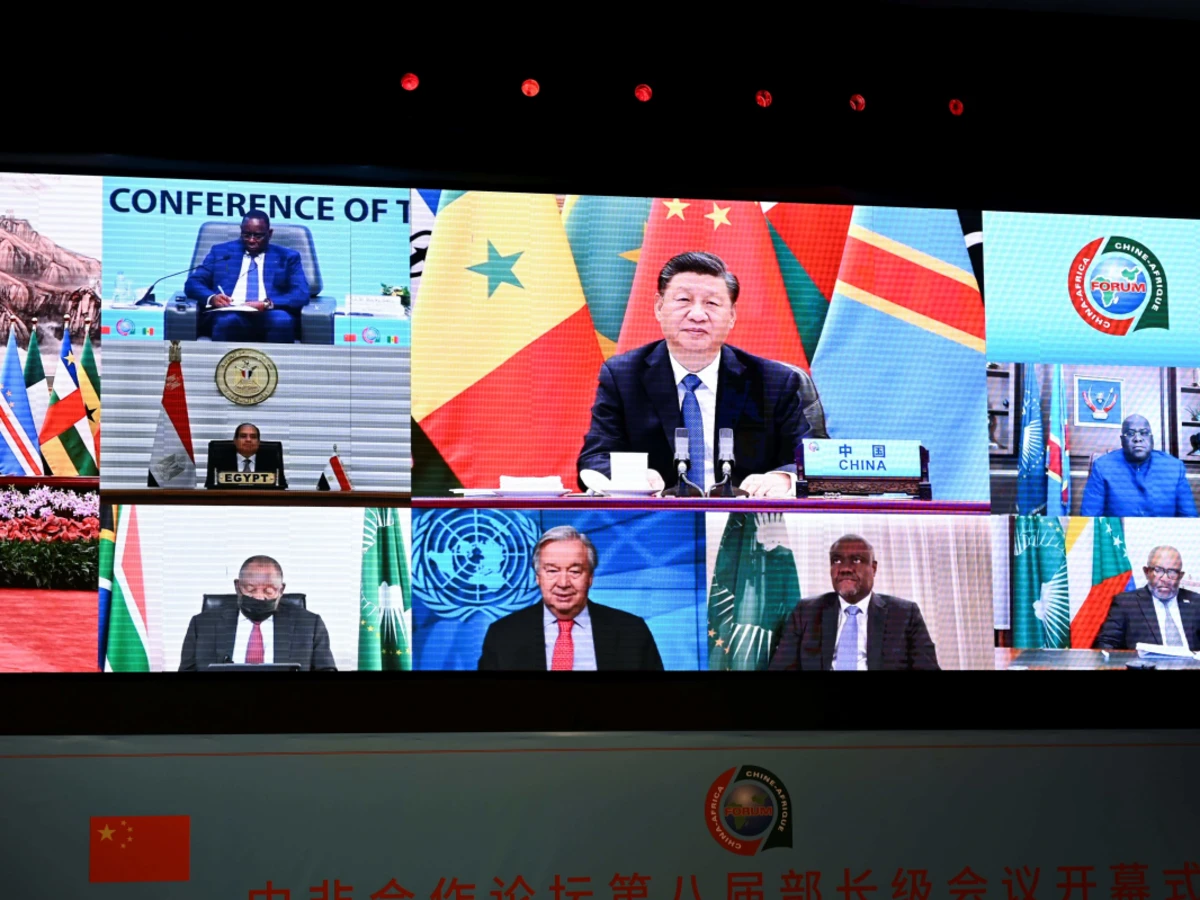
Once a country adopts these systems, it also implicitly adopts the discursive and ideological logic embedded within them. This is the ultimate expression of discourse as technology.
Conclusion
In this lesson, we have moved from the persuasion of naturalization to the institutional power of technologization. You now have a framework for understanding how discourse is not just spoken, but actively engineered and embedded into the systems that structure our world.
Key Takeaways:
- Technologization of discourse is the deliberate, top-down process of embedding a naturalized ideology into institutional practices and technical systems.
- It functions by transforming complex social or ethical ideas into standardized, operational procedures, turning discourse into a technology of governance.
- Crucially for your thesis, Chinese state strategists are explicitly interested in the work of theorists like Fairclough to build their 'discourse power' (huàyǔ quán).
- This process is not just abstract; it is materialized in the infrastructure of the Digital Silk Road, such as smart city platforms, data centers, and communication networks.
In our next lesson, we will bring this concept to ground level. We will analyze the specific mechanisms China uses to export these technologized discursive models to Africa, focusing on technical training programs and infrastructure projects. We will examine how, in practice, these systems transfer not just technology, but also the ideologies embedded within them.