Welcome to the first practical lesson of your journey into Mandarin pronunciation. In the previous module, we established the conceptual framework of the language, understanding how Pinyin, characters, and words fit together. We concluded by dissecting the HSK 1 exam, giving you a clear blueprint of the target you're aiming for.
Today, we begin building the skills needed to hit that target. We move from theory to practice, focusing on the very first learning outcome of Module 2: pronouncing the foundational sounds of Mandarin. We will break down the syllable into its component parts and master the first set of simple finals (the vowels) and basic initials (the consonants). This is akin to learning the values of the most basic variables before you construct a complex function.
From Structure to Sound
In our introductory module, we established that a Mandarin syllable is typically composed of an Initial, a Final, and a Tone.
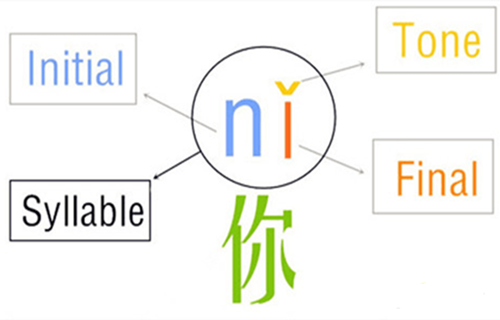
Today, we will ignore the tones for a moment and focus exclusively on mastering the sounds of the most common Initials and Finals. We will learn to produce these sounds accurately in isolation before we begin combining them.
The Six Simple Finals: The Core of the Syllable
The "Final" is the part of the syllable that begins with the main vowel. The simplest finals are just single vowels. There are six of them, and they form the foundation of Mandarin pronunciation.
The resource from the University of Oxford provides excellent, clear audio examples for each one. As you go through this section, your objective is to listen to the audio, read the description of how to form the sound with your mouth, and then repeat until your pronunciation matches the recording. All examples are given in the first tone (high and level), which is a good neutral baseline for practice.
This guide from the University of Oxford's Centre for Teaching Chinese as a Foreign Language provides precise instructions and audio for the six simple finals.
Focus on the section titled "1. Vowels". For each vowel—ā, ō, ē, ī, ū, ǖ—click the audio link, listen carefully, read the description of the mouth and tongue position, and practice repeating the sound. Pay special attention to the vowels that differ most from English: ē: The description "a sound as if you have seen something really disgusting: 'ergh'" is a very effective way to remember this sound. ǖ: This sound, often typed as 'v' or 'ü', has no direct English equivalent. The instruction to "Say 'ee' through tightly pursed lips" is the key. You can also get a feel for this sound by watching this short segment from the video "Chinese Pinyin/ Initials Finals and Tones". The instructor's method of starting with 'e' and gradually pursing the lips is a very useful physical technique.
Take your time with these six sounds. They are the anchor for nearly every syllable in the language. Being able to produce them accurately now will prevent a great deal of difficulty later on. Use the short listening exercises in the Oxford guide to test your ability to distinguish between similar-sounding vowels like ē, ī, ǖ and ō, ū, ǖ.
The Basic Initials: Starting the Syllable
Now that you have the core vowel sounds, let's add the "Initials," the consonants that begin a syllable. We'll start with five of the easiest ones, which sound very similar to their English counterparts.
- m (as in "man")
- f (as in "fan")
- n (as in "no")
- l (as in "low")
- h (as in "have")
In linguistics, consonants are almost never pronounced in isolation; they are pronounced with a vowel. The Oxford guide demonstrates this by pairing these initials with simple finals you've just learned.
This section of the guide introduces the initial sounds by combining them with the finals you just learned.
In the section "2. Consonants", find the rows for m, f, n, l, and h. Notice that they are presented as mo, fo, ne, le, he. Click the audio links for each of these five syllables. Listen and repeat, focusing on the crispness of the initial consonant sound before the final vowel sound begins.
Practice: Assembling the Syllables
You now have two sets of components: five initials and six finals. Let's practice combining them, just as they would be in real words. Try to pronounce the syllables in the table below. For now, pronounce them all with the high, flat first tone (ā) you heard in the audio guides. Not all combinations are common or even possible in Mandarin; this table includes only valid HSK 1 syllables.
| a (ā) | o (ō) | e (ē) | i (ī) | u (ū) | ü (ǖ) | |
|---|---|---|---|---|---|---|
| m- | mā | mō | me | mī | mū | |
| f- | fā | fō | fū | |||
| n- | nā | ne | nī | nū | nǚ | |
| l- | lā | le | lī | lū | lǚ | |
| h- | hā | hē | hū |
Note on typing: The vowel ü is often written as v on standard keyboards (e.g., nv for nǚ, lv for lǚ). You will also see it written without the umlaut after j, q, x, and y, as the 'u' sound is never used in those cases.
Go through the table row by row. For example, for the m- row, say: mā, mō, me, mī, mū. This exercise directly trains the motor patterns for combining initials and finals, which is the fundamental physical skill of speaking Mandarin.
Conclusion
In this lesson, you have transitioned from theoretical knowledge to practical skill acquisition. You have learned to produce the six simple finals, which are the phonetic core of Mandarin syllables, and combined them with five of the most straightforward initials.
Key Takeaways:
- The six simple finals are a, o, e, i, u, ü. Mastering their unique mouth and tongue positions is crucial.
- The vowel ü requires special practice for English speakers; forming an 'ee' sound while rounding your lips is the key technique.
- The initials m, f, n, l, h are pronounced very similarly to their English equivalents.
- Pinyin syllables are built by combining an initial sound with a final sound.
You have now laid the first phonetic bricks. In our next lesson, we will continue to build your pronunciation skills by tackling a new set of initials that introduce a concept not found in English: aspiration. We will learn to distinguish and pronounce the pairs b/p, d/t, and g/k.