Welcome to the first lesson of our new module on the fundamentals of financial accounting. In our previous module, we concluded our exploration of alternative financing by comparing the costs and returns of modern platforms like P2P lending with traditional bank loans. A key theme was how both borrowers and investors use financial information to make critical economic decisions.
Today, we take a step back to answer a more fundamental question: where does this information come from? This lesson marks our entry into the world of accounting, the language of business. Our goal is to explain the purpose of financial statements and identify their main users. Understanding this "why" and "for whom" provides the essential context for everything that follows, from double-entry bookkeeping to complex financial ratio analysis.
1. What Are Financial Statements?
Before we explore their purpose, let's first establish what financial statements are. They are formal reports that provide a structured overview of a company's financial activities and position. Think of them as a company's financial report card, issued periodically to the public. While there are several components, they are built around three core statements:
- The Statement of Financial Position (or Balance Sheet): A snapshot of what a company owns (assets) and what it owes (liabilities and equity) at a single point in time.
- The Statement of Profit or Loss (or Income Statement): A summary of a company's revenues, expenses, and profit over a period of time (e.g., a year or a quarter).
- The Statement of Cash Flows: Tracks the movement of cash from operating, investing, and financing activities over the same period.
To see what these look like in the real world, the following article walks through the financial statements of a well-known company, Amazon.
Financial Statements Examples – Amazon Case Study
This article from the Corporate Finance Institute provides a clear, practical look at the three core financial statements using Amazon's annual report. It's an excellent way to familiarize yourself with the structure and key terms before we dive into the theory.
Read the introduction What are Financial Statements? to get an overview. Then, skim through the explanations for the Cash Flow Statement, Income Statement, and Balance Sheet. Don't worry about understanding every single line item yet. The goal is simply to get a feel for the kind of information each statement presents.
The statements you just reviewed are the final output of the accounting process. Now, let's examine why companies go to the effort of producing them.
2. The Primary Purpose of Financial Reporting
At its core, financial reporting is about communication. Its main objective is to provide financial information that is useful for making economic decisions. But useful to whom?
The conceptual framework that underpins modern accounting standards is very specific about this. It identifies the primary users and their needs. To get a clear and authoritative explanation of this, please watch the following video from Kaplan, a well-respected provider of professional education.
The Conceptual Framework for Financial Reporting
This video explains the Conceptual Framework for Financial Reporting, which sets out the fundamental principles of accounting. The first part of the video directly addresses the purpose of financial statements and for whom they are prepared.
Please watch the section from the purpose of financial reporting. Pay close attention to the definition of the primary users and the two main ways they use financial information: To assess the company's future cash flows. To assess management's stewardship of the company's resources.
As the video explained, the primary purpose of general-purpose financial statements is to provide information to existing and potential investors, lenders, and other creditors to help them make decisions about providing resources to the entity. These decisions involve buying, selling, or holding shares, and providing or settling loans.
The information helps these users assess two critical things:
- Prospects for future net cash inflows: Essentially, "What is the company's earning potential?" From your background in statistics, you can think of this as a forecasting problem. Users analyze historical financial data (the financial statements) to predict future performance and cash generation.
- Management's stewardship: "How well have the directors managed the resources entrusted to them?" This is a retrospective assessment of performance and accountability.
3. The Users of Financial Statements
While investors, lenders, and creditors are the primary audience, they are by no means the only people interested in a company's financial health. We can group the users into two broad categories: internal and external.

Internal Users
These are individuals within the company, primarily the management. They use financial information to make day-to-day and strategic decisions. For example:
- The marketing department might use profitability data to decide which product lines to promote.
- The production department might use cost data to evaluate efficiency.
- Senior leadership uses the statements to set budgets, evaluate performance against targets, and make major investment decisions.
This use of accounting information for internal decision-making is often called management accounting, which is distinct from the financial accounting that produces the external reports we are focusing on.
External Users
This group is much broader and includes the primary users we've already discussed.
- Investors (Shareholders): They want to assess the risk and return of their investment. They are interested in profitability, dividends, and future growth prospects.
- Lenders (e.g., Banks): Their main concern is the company's ability to make interest payments and repay the principal on loans. They focus on liquidity (cash levels) and gearing (debt levels).
- Suppliers and Trade Creditors: They want to know if the company can pay for the goods and services they supply. They are interested in short-term liquidity.
- Customers: Particularly those with long-term contracts or who depend on the company for key supplies, may want to assess its long-term viability.
- Government and Tax Authorities: They need to determine if the company is complying with regulations and paying the correct amount of tax.
- Employees and Trade Unions: They are interested in the company's stability and profitability to assess job security and negotiate pay and conditions.
- The Public: A company affects the public through its employment practices, environmental impact, and local economic contribution.
4. Linking Users to Information: A Practical View
Different users focus on different parts of the financial statements to answer their specific questions. The CB1 exam often tests this by asking you to connect a particular piece of financial data to the user most interested in it.
Let's look at a practical example from a specimen exam paper.
[PDF] Objective Based Assessment - CB1 Specimen Examination
This official specimen paper from the Institute and Faculty of Actuaries gives us insight into how these concepts are tested. The questions provide concrete examples of the link between users and the information they seek.
First, review question Q.38, which you can find by searching for "Match each accounting ratio". This question explicitly links specific calculations from financial statements (ratios) to the user most interested in them. Think about why a lender cares most about the quick asset ratio or why a shareholder focuses on return on capital employed. Next, look at questions Q.42 and Q.44. These questions ask about the usefulness of different financial statements for an analyst. This reinforces how different reports serve different, but complementary, purposes. For example, Q.44 highlights that the cash flow statement is useful because it explains the reasons for changes in cash and indicates how effectively cash has been managed.
The questions you just reviewed demonstrate the practical application of this topic. An investor looking at the Otis cash flow statement from the beginning of our lesson isn't just looking at the final number; they are analyzing the components.
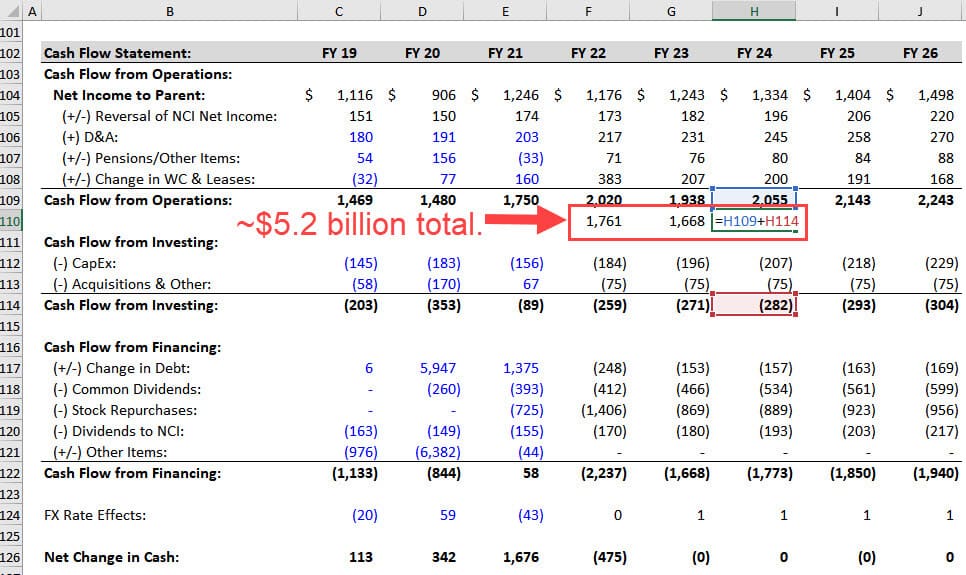
For example, seeing a large cash outflow for "CapEx" (Capital Expenditures) under investing activities tells a user that the company is spending heavily on new property and equipment.
- An investor might see this as a positive sign of investment for future growth.
- A lender might be more concerned about the immediate drain on cash and the company's ability to service its debt in the short term.
This shows how a single piece of data can be interpreted differently depending on the user's perspective and objectives.
Conclusion
In this lesson, we have laid the groundwork for our study of accounting. We've moved from the "what" of financial statements to the more important "why" and "for whom."
Key Takeaways:
- Primary Purpose: The main goal of financial statements is to provide information that is useful to external parties—primarily investors, lenders, and other creditors—for making economic decisions.
- Two Core Assessments: Users analyze this information to evaluate a company's future cash-generating ability and to judge how well management has stewarded the company's assets.
- Internal vs. External Users: Internal users (management) use financial data for planning and control. External users (investors, government, customers, etc.) use it to make decisions relevant to their own interests.
- User-Specific Focus: Different users are interested in different aspects of a company's performance. Lenders focus on liquidity and solvency, while shareholders focus on profitability and growth.
We now have a clear understanding of the purpose of our destination. In the next lesson, we will begin our journey into how these statements are constructed by exploring the fundamental concepts and principles, such as the going concern and accruals concepts, that govern how financial transactions are recorded.