Introduction
In our last two lessons, we explored how to estimate a company's cost of equity using both the Capital Asset Pricing Model (CAPM) and the Dividend Growth Model (DGM). We now turn our attention to the other primary component of a company's long-term financing: debt. Your goal for this lesson is to learn how to calculate the before-tax and after-tax cost of debt.
Unlike dividends, the interest paid on debt is typically a tax-deductible expense. This creates a "tax shield" that reduces the effective cost of debt for a company. Therefore, we must distinguish between the before-tax cost (the actual interest rate or yield) and the more relevant after-tax cost, which reflects the true cost to the company after accounting for tax savings.
We will tackle this by first understanding the tax shield, then calculating the cost for two distinct types of debt: irredeemable debt (which pays interest forever) and redeemable debt (which has a set maturity date).
1. The Tax Shield: Why After-Tax Cost Matters
When a company pays interest on its debt, that interest is treated as an expense, which reduces its taxable profits. A lower taxable profit results in a lower tax bill. This tax saving effectively lowers the cost of borrowing.
Let's illustrate with a simple example. Consider two identical companies, both with Earnings Before Interest and Taxes (EBIT) of £100,000. Company A is funded entirely by equity, while Company B has debt on which it pays £20,000 in annual interest. The corporate tax rate is 25%.
| Company A (No Debt) | Company B (With Debt) | |
|---|---|---|
| EBIT | £100,000 | £100,000 |
| Interest Expense | £0 | (£20,000) |
| Profit Before Tax | £100,000 | £80,000 |
| Tax @ 25% | (£25,000) | (£20,000) |
| Profit After Tax | £75,000 | £60,000 |
Company B paid £20,000 in interest, but its tax bill was £5,000 lower than Company A's (£25,000 - £20,000). This £5,000 tax saving is the tax shield.
The net cost of the interest payment is therefore £20,000 - £5,000 = £15,000.
The relationship is captured by a simple formula, where is the cost of debt and is the corporate tax rate:
- After-tax cost of debt () = Before-tax cost of debt ()
For Company B, if the before-tax cost was, say, 10%, the after-tax cost would be .
2. Cost of Irredeemable Debt
Irredeemable debt, also known as perpetual debt, is debt that has no maturity date. The company makes interest payments indefinitely but never repays the principal. Calculating its cost is straightforward and analogous to valuing a perpetuity, which we covered in the first module.
The before-tax cost of irredeemable debt () is the annual interest payment () divided by the current market price of the debt ().
Here, represents the "net proceeds"—the cash the company receives from issuing the debt after any discounts, premiums, or flotation (issuance) costs. The interest, , is always calculated based on the bond's face value (or par value).
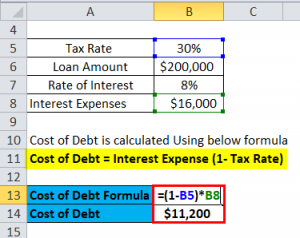
The after-tax cost of irredeemable debt () is then simply:
The following video provides a very clear explanation and detailed worked examples for calculating the cost of irredeemable debt, including scenarios where the debt is issued at par, at a premium, and at a discount.
[1/12] Cost of Capital | FM | Cost of Debt | Irredeemable Debt | Numerical Problem | @kauserwise
This video by Kauser Wise walks you through the formulas and calculations for irredeemable debt.
Please watch the video from the introduction to understand the distinction between irredeemable and redeemable debt. Then, carefully follow the detailed explanation of the formulas and the three worked-out scenarios: Formulas for before-tax and after-tax cost Example: Debt issued at par Example: Debt issued at a premium Example: Debt issued at a discount Pay close attention to how the "net proceeds" change in each case while the interest payment remains constant.
3. Cost of Redeemable Debt
Redeemable debt is more common. It has a finite life and a specified maturity date upon which the principal amount (redemption value) must be repaid. This makes the calculation more complex because we are dealing with a finite series of cash flows: the regular after-tax interest payments and the final redemption payment.
The cost of redeemable debt is its Yield to Maturity (YTM). This is the discount rate that equates the present value of all future cash flows (interest and principal) to the current market price of the debt. In other words, it is the Internal Rate of Return (IRR) of the bond's cash flows from the perspective of the company.
There are two methods to find it: a precise IRR calculation and a simplified approximation formula. For your exam, the IRR method is the most important.
The Accurate Method: Using IRR and Linear Interpolation
To find the cost of redeemable debt, we need to find the rate () that solves this equation:
Where:
- is the current market price (net proceeds)
- is the annual after-tax interest payment
- is the redemption value (the amount paid at maturity)
- is the number of years to maturity
Since we can't solve this formula for directly, we use the trial-and-error process of linear interpolation, just as we would for a project's IRR:
- Choose a discount rate and calculate the Net Present Value (NPV) of the cash flows. The "investment" at time 0 is the current market price .
- If the NPV is positive, the chosen rate is too low; try a higher rate.
- If the NPV is negative, the chosen rate is too high; try a lower rate.
- Once you have one positive and one negative NPV, use the interpolation formula to find the rate where NPV is zero.
The following video from OpenTuition is an excellent guide to this entire process. It's crucial for your exam preparation.
This video provides a comprehensive, exam-focused tutorial on calculating the cost of redeemable debt using the IRR method.
First, watch from the beginning to understand why the IRR method is necessary for redeemable debt. Next, focus on the segment from "six column approach" which explains how to structure the cash flows for the calculation. Note the presenter's important point about reversing the signs of the cash flows to treat it like a standard project appraisal (outflow at T0, inflows thereafter). Finally, work through the detailed numerical example from "Peters and Peters". This is a perfect exam-style question. Follow the steps of setting up the cash flows, calculating two NPVs, and applying the linear interpolation formula.
The Approximation Method
While the IRR method is precise, a shortcut formula can be used to get a quick estimate of the YTM. This formula calculates the average annual cost and divides it by the average value of the debt.
[PDF] Lecture-20 - FACULTY OF COMMERCE AND MANAGEMENT
This document provides the approximation formula and a clear example.
Please read the sections titled "Cost of Redeemable Debt" to see the formula. Then, study Illustration 11, which shows how to apply this formula to calculate both the before-tax and after-tax cost of redeemable debt. Notice the components of the formula: The numerator: I(1-t) + \frac{RV - P_0}{n} represents the average annual after-tax cash cost. The denominator: \frac{RV + P_0}{2} represents the average book value of the debt.
This approximation is useful, but remember that the IRR method is more accurate and generally expected in exams unless stated otherwise.
Conclusion
You have now learned how to calculate the cost of debt, the second key input for determining a company's overall cost of capital. You have seen that debt financing provides a valuable tax shield, making its after-tax cost the relevant figure for financial decisions.
Key Takeaways:
- Interest on debt is tax-deductible, creating a tax shield. The relevant cost is the after-tax cost of debt: .
- For irredeemable debt, the cost is calculated like a perpetuity: .
- For redeemable debt, the cost is its Yield to Maturity (YTM), which is found by calculating the Internal Rate of Return (IRR) of its future cash flows using linear interpolation.
- A simpler approximation formula exists for the cost of redeemable debt, but the IRR method is more accurate.
In our next lesson, we will combine what we've learned about the cost of equity and the cost of debt. You will learn how to calculate the Weighted Average Cost of Capital (WACC), a fundamental concept in corporate finance used for investment appraisal and company valuation.