Introduction
In our last lesson, we examined the trade-off and pecking order theories to understand how firms decide on their mix of debt and equity financing. Now, we turn to a related and equally important question: once a firm generates profits, what should it do with them? Specifically, how does a company decide whether to return cash to its owners and, if so, how much? This is the essence of dividend policy.
This lesson will guide you through the classic debate on this topic. Your learning outcome is to demonstrate dividend irrelevance numerically and analyse factors that influence dividend policy in practice. We will begin by exploring the famous Modigliani-Miller (MM) theory, which, under a set of idealised assumptions, concludes that dividend policy has no effect on a firm's value. This serves as our theoretical baseline. We will then systematically relax these assumptions to understand the real-world factors—such as taxes, information signaling, and investor preferences—that make dividend policy a critical strategic decision for any company.
The Theory of Dividend Irrelevance
The starting point for any modern discussion of dividend policy is the dividend irrelevance theory, proposed by Franco Modigliani and Merton Miller in 1961. They argued that in a perfect capital market, a firm's value is determined solely by its investment decisions and its resulting earning power. The choice of how to distribute those earnings—either by paying dividends or by retaining the cash, which leads to capital gains—is irrelevant to the firm's total value.
The key assumptions underpinning this theory are:
- No Taxes: Investors are not taxed differently on dividends versus capital gains.
- No Transaction Costs: Investors can buy and sell shares without incurring costs.
- No Issuance Costs: Companies can issue new shares to raise capital without any costs.
- Fixed Investment Policy: The firm's investment decisions are independent of its dividend policy. If a firm pays a dividend, it will raise any capital needed for its investments from external sources.
Under these conditions, an investor can create a "homemade dividend" by selling a portion of their shares if the company doesn't pay one. Conversely, if a company pays a dividend the investor doesn't need, they can use it to buy more shares. In either case, the investor's total wealth remains unchanged.

A Numerical Demonstration of Irrelevance
To see this theory in action, we will work through a detailed numerical problem. The following video solves a problem that demonstrates how the total market value of a firm remains constant whether it distributes dividends or not. This is a crucial piece of evidence for the MM proposition and directly addresses the numerical part of our learning outcome.
MM Model | Dividend Policy | Modigliani Miller Hypothesis | Solved Problem | By Kauserwise
The video "MM Model | Dividend Policy" from the Kauser Wise channel provides an excellent step-by-step calculation to prove dividend irrelevance.
Please watch the entire video (from start to finish). As you watch, focus on the three key calculations performed for two scenarios: (1) dividends are paid, and (2) dividends are not paid. Market Price per Share (P1): Notice how the share price is lower when a dividend is paid, as cash has left the firm. Number of New Shares: See how the company needs to issue more new shares to fund its investment when it pays a dividend, as it has less retained earnings available. Total Market Value: This is the critical part. Observe how, despite differences in share price and the number of shares, the total value of the firm ends up being identical in both scenarios.
The video you just watched provides a concrete proof of the MM theory. The total value of the firm, calculated as (Total number of shares × Market price per share), is precisely the same (£14,700,000) regardless of the dividend decision. The lower share price in the dividend-paying scenario is perfectly offset by the dividend payment itself, leaving the shareholder's total wealth unchanged. This confirms that, under the MM assumptions, dividend policy is irrelevant.
Dividend Policy in the Real World: Why It Matters
The MM theory provides a powerful intellectual framework, but its assumptions don't hold in reality. Taxes exist, transaction costs are real, and information is not perfect. These "market imperfections" are the reasons why dividend policy is one of the most debated topics in corporate finance. We can group the arguments into two main schools of thought: one that sees dividends as "bad" for investors and one that sees them as "good."
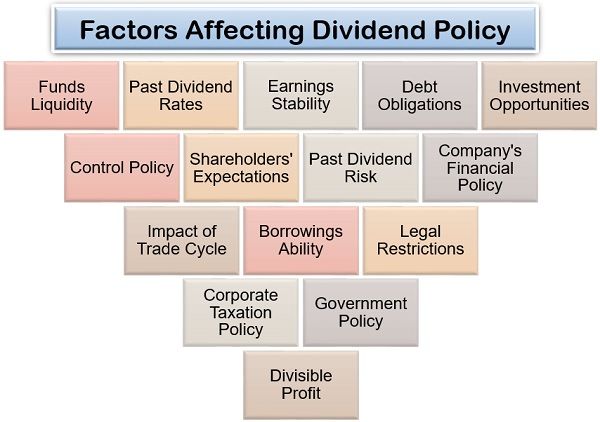
The "Dividends are Bad" School: The Tax Argument
Historically, the most compelling argument against dividends was their tax treatment. In many countries, including the UK and US for many years, dividends were taxed at a higher rate than capital gains.
This creates a clear disadvantage for investors in higher tax brackets. An investor would prefer the company to retain its earnings and reinvest them, leading to a higher share price (and a lower-taxed capital gain when sold), rather than receive a highly-taxed dividend.
The AnalystPrep video below explains this tax argument and other theories of dividend policy.
Analysis of Dividends and Share Repurchases (2025 Level II CFA® Exam –Corporate Issuers–Module 1)
This video, "Analysis of Dividends and Share Repurchases," provides an excellent overview of the different theories of dividend policy.
First, watch the section covering the main theories (dividend theories) to get an overview of the irrelevance argument in contrast to others. Then, focus on the segment explaining the tax argument (tax argument). It clearly explains why shareholders might prefer capital gains over dividends if the tax rates differ.
An interesting way to observe this tax effect in practice is by looking at a stock's price behavior on its ex-dividend date—the first day the stock trades without the right to the upcoming dividend. Theoretically, the stock price should fall. But by how much? The relationship can be modeled to infer the tax preference of the marginal investor:
where:
- is the price just before the ex-dividend time.
- is the price just after the ex-dividend time.
- is the dividend per share.
- is the tax rate on ordinary income (dividends).
- is the tax rate on capital gains.
If the price drops by less than the full dividend amount (), it implies that the marginal investor is taxed more heavily on dividends than on capital gains and thus values a pound of dividends less than a pound of capital gains.
The "Dividends are Good" School: Information and Discipline
Despite the potential tax disadvantages, many investors like dividends, and companies continue to pay them. This suggests there are compelling benefits.
-
Signaling Effect: Dividend announcements convey information to financial markets. Because managers are reluctant to cut dividends, an announcement of a dividend increase is a credible signal of their confidence in the firm's future earnings. Conversely, a dividend cut is a powerful negative signal. Given your background in statistics and interpreting signals from data, you can appreciate how a costly action like a dividend commitment can convey information more powerfully than mere talk.
-
Clientele Effect: Different investors have different preferences. Retirees might prefer a steady stream of dividend income to fund their living expenses. High-net-worth individuals might prefer high-growth, no-dividend stocks to maximize tax-deferred capital gains. Over time, a company's dividend policy attracts a specific type of investor, or "clientele." A sudden change in policy would upset this established investor base.
-
Agency Costs: This links back to our earlier discussions on corporate governance. A commitment to pay dividends reduces the amount of free cash flow available to managers. This imposes discipline, preventing managers from investing in value-destroying pet projects or engaging in excessive spending. The dividend acts as a mechanism to reduce the agency problem between managers and shareholders.
The following video segments explain these important concepts.
Analysis of Dividends and Share Repurchases (2025 Level II CFA® Exam –Corporate Issuers–Module 1)
Continuing with the AnalystPrep video, we'll now explore the reasons why dividends can be seen as beneficial.
Please watch the following sections: Signaling Theory: Explains how dividend changes can be powerful signals to the market. Clientele Effect: Discusses how different investor groups are attracted to different dividend policies. Agency Costs: Explores how dividends can reduce conflicts of interest between managers and shareholders. Other Practical Factors: Briefly covers other considerations like investment opportunities and financial flexibility.
To solidify your understanding of these real-world drivers of dividend policy, the following reading offers a more detailed perspective.
[PDF] CHAPTER 10 DIVIDEND POLICY - NYU Stern
This chapter from a textbook by Prof. Aswath Damodaran provides an in-depth look at the dividend debate.
Please read the sections titled "Dividends Are Good" and the "Conclusion". Focus on how the arguments for dividends (clientele, signaling, agency) provide a strong counterpoint to the tax-based arguments against them. The conclusion succinctly summarises the three main schools of thought.
Conclusion
Today we've journeyed from the sterile, perfect world of Modigliani and Miller to the complex and often contradictory realities of corporate dividend policy. While the MM theory provides a vital null hypothesis—that dividends shouldn't matter—we've seen that once we introduce real-world frictions, they matter a great deal.
Key Takeaways:
- Dividend Irrelevance Theory: In a perfect market with no taxes or transaction costs, a firm's value is independent of its dividend policy. Shareholder wealth is unaffected as changes in share price perfectly offset dividend payments.
- The Tax Argument: When dividends are taxed more heavily than capital gains, a powerful argument emerges for firms to minimize dividends to maximize their investors' after-tax returns.
- Signaling, Clientele, and Agency: Dividends can serve as credible signals of future prospects, cater to the income needs of specific investor clienteles, and impose financial discipline on managers, all of which can be value-enhancing.
- A Practical Trade-off: Ultimately, setting a dividend policy involves a trade-off. Managers must weigh the tax disadvantages against the benefits of signaling, satisfying their investor base, and maintaining managerial discipline.
In our next lesson, we will continue this discussion by examining the primary alternative to paying dividends: share buybacks. We will analyse the financial impact of repurchasing shares on key metrics like earnings per share (EPS) and share price, and compare the strategic implications of buybacks versus dividends.