Introduction
In the previous lessons, we concluded our deep dive into containerization by examining the structure of Kubernetes YAML files, the declarative manifests used to manage applications. As previewed, we are now shifting our focus from the implementation details of containers to the higher-level architectural principles that govern cloud environments.
This lesson addresses the first learning outcome in the "Cloud Architectures and Major Platforms" module. Our goal is to explain the NIST Cloud Computing Reference Architecture. This is a foundational, vendor-neutral model that is crucial for understanding the cloud ecosystem and is a very common topic in university exams. We will define the architecture and describe the roles and responsibilities of its five main actors: the Cloud Consumer, Provider, Broker, Carrier, and Auditor, complete with a diagram to visualize their interactions.
1. Understanding the NIST Cloud Reference Architecture
Before we can discuss specific cloud platforms like AWS or open-source solutions like OpenStack, we need a common language and a standard blueprint. The National Institute of Standards and Technology (NIST) provides exactly this with its Cloud Computing Reference Architecture (published in Special Publication 500-292).
This is not a design for a specific cloud system but a conceptual model or a high-level blueprint. Its primary purpose is to standardize the vocabulary and concepts used to describe cloud computing, ensuring everyone has a common understanding of the system's components and their relationships.
For your exam, it's important to define it as:
NIST Cloud Reference Architecture: A conceptual model that defines the major actors, activities, and functions in cloud computing to facilitate understanding of its requirements, uses, and standards.
The architecture is built around five key actors who participate in cloud transactions. The following diagram illustrates this conceptual model and the relationships between the actors.
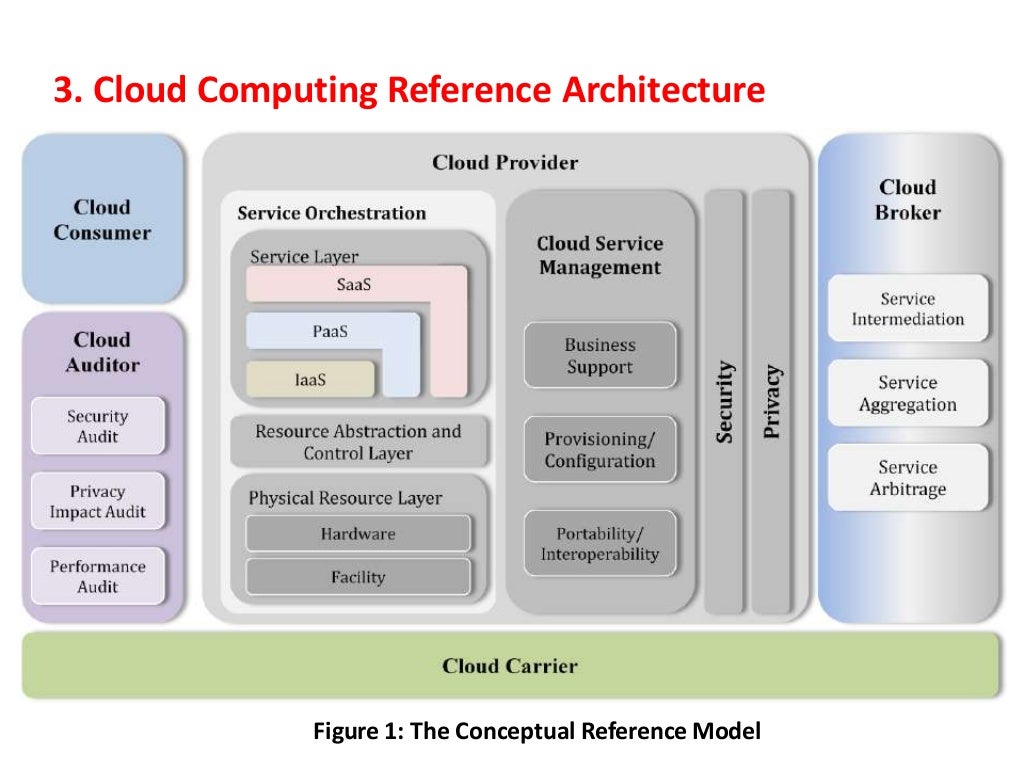
To get a formal introduction, it's best to go directly to the source document.
[PDF] NIST Cloud Computing Reference Architecture
Please read the introduction to the NIST Cloud Computing Reference Architecture. This section will formally introduce the conceptual model and list the five major actors.
Read the section '2. Cloud Computing Reference Architecture: An Overview', starting from the beginning and ending just before Table 1. Focus on understanding the purpose of the architecture and identifying the five actors shown in 'Figure 1: The Conceptual Reference Model'.
2. The Five Major Actors of the Cloud Ecosystem
The NIST model's strength lies in its clear definition of roles. Understanding each actor's function is critical. We'll now examine each of the five actors in detail.
First, let's get the official, concise definitions from the NIST document. This table is perfect for memorization.
[PDF] NIST Cloud Computing Reference Architecture
The following reading contains a table with the official NIST definitions for each of the five actors. These are precise, exam-friendly definitions that you should learn.
Focus exclusively on 'Table 1: Actors in Cloud Computing'. Memorize these one-sentence definitions as they are the basis for explaining each role.
Now, let's expand on these definitions to understand the responsibilities of each actor.
Actor Roles and Responsibilities
| Actor | Core Function | Key Responsibilities & Activities |
|---|---|---|
| Cloud Consumer | Uses cloud services. | Browses service catalogs, requests services, establishes a business relationship and SLA, uses and pays for services. The consumer can be an end-user, developer, or organization. |
| Cloud Provider | Makes services available. | Manages the physical infrastructure (servers, storage), runs the cloud software, and delivers services (IaaS, PaaS, SaaS) to consumers. Responsible for service deployment, management, security, and orchestration. |
| Cloud Carrier | Provides connectivity. | Acts as an intermediary providing the transport of cloud services from providers to consumers. This is typically a telecommunications or network provider ensuring network access. |
| Cloud Broker | Manages and enhances services. | An entity that manages the use, performance, and delivery of cloud services. It negotiates relationships between providers and consumers and can add value through intermediation, aggregation, or arbitrage. |
| Cloud Auditor | Conducts independent assessments. | A third party that evaluates cloud services based on security controls, privacy impact, and performance. Audits verify conformance to standards and SLAs. |
To gain a deeper understanding of each actor's specific duties, let's refer to the NIST document's detailed descriptions and supplement them with a more streamlined article.
[PDF] NIST Cloud Computing Reference Architecture
Now, let's explore the roles of the Consumer, Provider, and Auditor in more detail. This reading from the official NIST publication provides the necessary depth for a comprehensive exam answer.
Read the following sections: '2.2 Cloud Consumer', '2.3 Cloud Provider', and '2.4 Cloud Auditor'. As you read, take notes on the specific tasks each actor performs (e.g., for the consumer, setting up SLAs; for the provider, managing infrastructure across SaaS, PaaS, IaaS; for the auditor, assessing security controls).
The roles of the Broker and Carrier are also distinct and important. The Broker, in particular, has three specific functions that you should be able to name and explain.
[PDF] NIST Cloud Computing Reference Architecture
This final reading from the NIST document covers the Cloud Broker and Cloud Carrier. Pay special attention to the three types of services offered by a Broker.
Read sections '2.5 Cloud Broker' and '2.6 Cloud Carrier'. For the Broker, make sure you can define the three service categories: Service Intermediation, Service Aggregation, and Service Arbitrage. For the Carrier, note its role in establishing dedicated and secure connections.
3. Actor Interactions and Summary
Now that we have defined each actor, it's important to understand how they interact within the ecosystem, as shown in the reference architecture diagram.
- A Cloud Consumer can interact directly with a Cloud Provider to use their services.
- Alternatively, a Consumer can go through a Cloud Broker, which then interacts with one or more Providers on the consumer's behalf.
- The Cloud Carrier is the transport layer that connects the Consumer to the Provider (or Broker). The Provider often has an SLA with the Carrier to ensure a certain level of network quality.
- The Cloud Auditor is an independent party that can interact with both the Provider and the Consumer to assess security, performance, and compliance.
For a final, simplified review of these roles and their interplay, the following resource is very helpful.
Cloud Stakeholders as per NIST - GeeksforGeeks
This article from GeeksforGeeks provides a concise, easy-to-read summary of all five NIST stakeholders (actors). Use this to consolidate your understanding.
Read the entire article. It covers all five actors: Provider, Carrier, Broker, Auditor, and Consumer. Compare these descriptions to the official NIST definitions to solidify your knowledge.
Conclusion
In this lesson, we established a formal, architectural understanding of the cloud computing ecosystem using the NIST Reference Architecture. This model provides the standard terminology and conceptual framework required for any serious discussion of cloud technology and is a vital component of your exam syllabus.
Key Takeaways:
- The NIST Cloud Reference Architecture is a high-level conceptual model, not a specific technical implementation.
- It defines five major actors in the cloud ecosystem:
- Cloud Consumer: The user or organization that consumes cloud services.
- Cloud Provider: The entity that provides and manages the cloud services.
- Cloud Carrier: The intermediary that provides network connectivity between consumers and providers.
- Cloud Broker: An entity that enhances, aggregates, or arbitrates services between consumers and providers.
- Cloud Auditor: An independent third party that assesses and verifies cloud services for security, performance, and compliance.
- Understanding the roles of these actors and their interactions, as depicted in the reference diagram, is essential for a complete understanding of cloud computing.
Preview of the Next Lesson:
Having covered the abstract NIST model, we will now transition to examining specific, concrete implementations of cloud platforms. In the next lesson, we will describe the architectures of two major open-source cloud management platforms: Eucalyptus and OpenStack, exploring their core components and how they implement the principles we've discussed today.