Welcome back to our study of early modern rationalism. In our previous lesson, we traced René Descartes' radical method of doubt to its conclusion: the one indubitable certainty, "I think, therefore I am." This established his existence as a res cogitans, a thinking thing, whose nature is purely mental and known more directly and certainly than any physical body.
This very conclusion, however, creates one of the most famous and persistent puzzles in all of philosophy. By splitting reality into two fundamentally different kinds of things—the mental and the physical—Descartes was immediately faced with the question of how they could possibly relate to one another. This lesson will explain the mind-body problem as it arises directly from his substance dualism. We will explore how a non-physical thought can move a physical limb, and how a physical stimulus can produce a mental sensation, a challenge that has occupied philosophers for centuries. Given your physics background, you'll recognize this as a problem of interaction between two systems with apparently incompatible governing laws.
1. From the Cogito to Substance Dualism
Descartes' discovery in the Second Meditation was that his essence is thought. He is a thing that doubts, understands, wills, and senses—in short, a mind. At that stage, the existence of his body and the entire physical world remained in doubt. This epistemic separation—knowing the mind first and more certainly than the body—forms the basis for a metaphysical separation.
Descartes argues that the mind and body are two distinct substances. In philosophy, a substance is a fundamental, independent kind of thing that can exist on its own. Cartesian dualism, therefore, is the view that there are two and only two kinds of substance in the universe:
- Mind (Res Cogitans): The thinking substance. Its essential attribute is thought. It is non-spatial, unextended, indivisible, and private.
- Body (Res Extensa): The extended substance. Its essential attribute is extension (taking up space). It is spatial, divisible into parts, and publicly observable.
To understand the arguments Descartes uses to establish this "real distinction," let's turn to a brief video overview.
This video from Attic Philosophy provides a clear summary of what substance dualism is and presents one of Descartes' key arguments for it.
Please watch two segments from the video: First, the introduction to substance dualism. This will clarify the terms 'substance' and 'dualism' and lay out the core distinction between the thinking mind and the extended body. Next, watch the argument from simplicity/indivisibility. This is one of Descartes' principal arguments for the mind and body being fundamentally different things.
As the video and Descartes' own reasoning go, the two substances are defined by mutually exclusive properties. A mind cannot have a shape or be divided into smaller minds. A body cannot think or feel. This clean, almost geometric division of reality was appealing to Descartes the mathematician, but it immediately raises a critical question that was put to him by his contemporaries.
2. The Problem of Interaction: Princess Elisabeth's Challenge
If mind and body are two completely separate substances with no properties in common, how do they causally interact? This question seems obvious to us from everyday experience:
- Mind-to-Body Causation: My decision to pick up a book (a mental event) causes my arm to move (a physical event).
- Body-to-Mind Causation: A pinprick on my finger (a physical event) causes a sensation of pain (a mental event).
This apparent two-way interaction is the heart of the mind-body problem. The most incisive early formulation of this challenge came in a series of letters to Descartes from Princess Elisabeth of Bohemia in 1643. She argued that for one thing to cause another to move, it must make contact with it. But contact requires extension and a surface. The mind, being unextended, has no surface and no location in space. How, then, can it "push" on the body to make it move?
The following video walks through Princess Elisabeth's powerful objection.
Princess Elisabeth's attack on Descartes' Dualist Theory of Mind (from 1643)
This video by Jeffrey Kaplan provides an excellent, focused explanation of Princess Elisabeth's argument against Cartesian dualism, which is the canonical formulation of the problem of interaction.
Please watch the first three sections of the video: A recap of Descartes' view, which reinforces the concepts of dualism and interaction. Elisabeth's central question, where she asks how an immaterial soul can move the physical "animal spirits" in the body. Her detailed argument, which breaks down the conditions for movement (contact, extension, shape) and shows that the Cartesian mind meets none of them.
As you've seen, Elisabeth's critique is devastatingly simple: physical effects (like movement) require physical causes. A non-physical cause cannot participate in the chain of physical causation as it was understood. To get a more detailed written account of this problem, let's look at a scholarly article.
René Descartes: The Mind-Body Distinction
This article from the Internet Encyclopedia of Philosophy provides a thorough analysis of Descartes' philosophy. The section on the mind-body problem clearly lays out the challenges posed by his contemporaries.
Please read the section titled "The Mind-Body Problem". Focus on how the complete diversity of mind and body leads to puzzles about both mind-to-body and body-to-mind causation.
Descartes himself was not entirely convincing in his reply. He suggested that the mind was "united" with the body at a specific location, a small gland in the center of the brain called the pineal gland. He believed this was the principal "seat of the soul," where the mind could influence the flow of "animal spirits" (which he imagined as a fine, vaporous fluid) through the nerves to cause muscle movements.
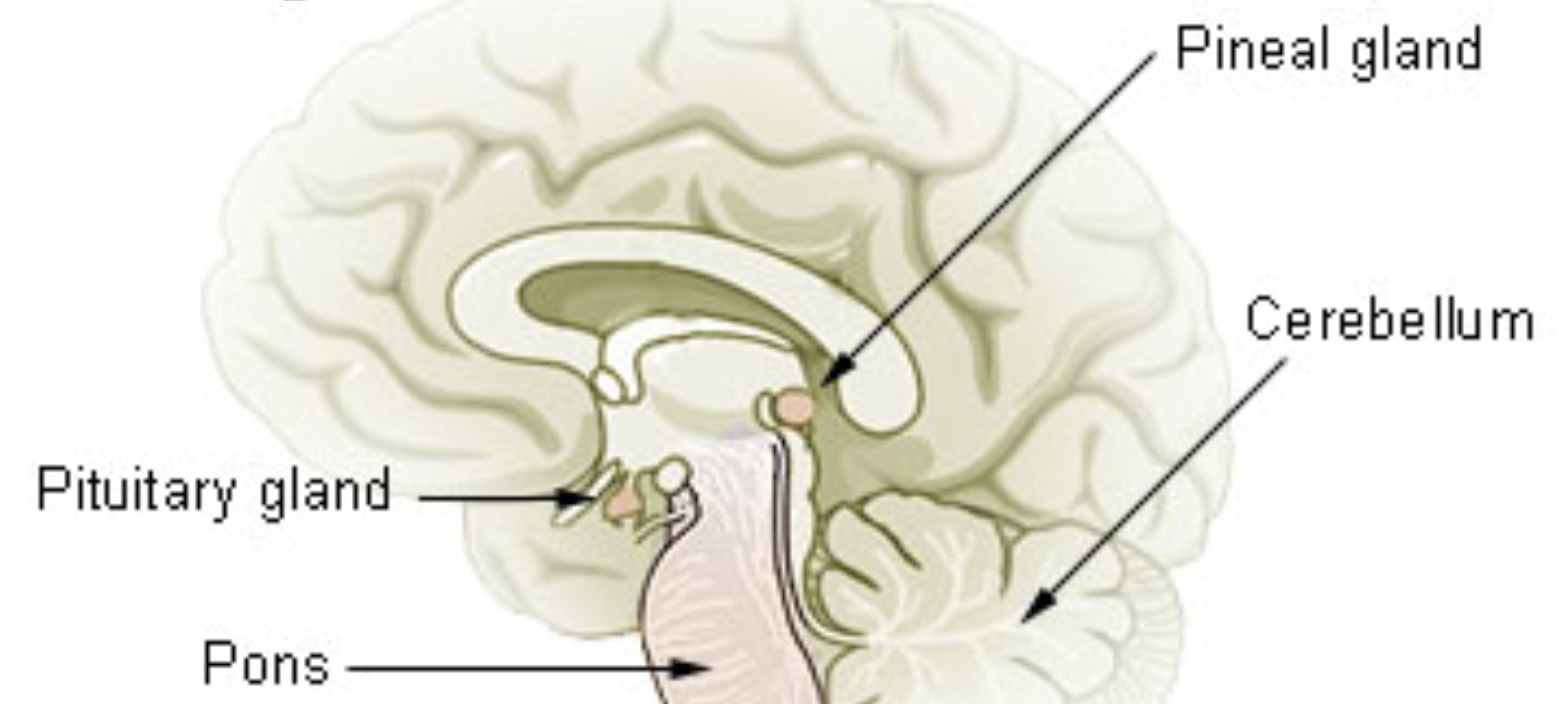
However, this "solution" doesn't solve the problem; it only isolates it. It doesn't explain how the non-physical mind interacts with the physical pineal gland. The fundamental conceptual puzzle remains.
3. A Modern Physics Perspective: The Causal Closure of the Physical
The problem of interaction has not gone away. In fact, for a physicist, the problem is perhaps even more acute today than it was in the 17th century. The classical, mechanistic objection of Princess Elisabeth can be reframed in the language of modern physics, specifically concerning conservation laws. This modern version of the problem rests on two principles:
- The Causal Closure of the Physical (CCP): Every physical event that has a cause has a complete physical cause. This implies that the physical universe is a closed system. One doesn't need to look for non-physical causes to explain physical events.
- The Exclusion Principle: If an event has a complete cause, it cannot have any other independent cause.
If we accept these two principles, then interactionist dualism seems impossible. If my arm moves, CCP states there is a complete chain of physical causes for it (neuron firings, muscle contractions, etc.). The Exclusion Principle then dictates that any supposed non-physical cause (my "will") is excluded—it's either redundant or doesn't exist. To put it another way, if the mind were to cause a neuron to fire, it would have to add energy to the physical system, seemingly from nowhere, thus violating the principle of the conservation of energy.
This powerful modern argument is sometimes called the "culmination POI" (Problem of Interaction).
Cartesian Dualism and the Problem of Interaction
This thesis by Paul Gaschen outlines the history and structure of the problem of interaction. The chapter culminates in the modern, physics-based version of the argument.
Please read the section titled "Culmination POI". This short section formalizes the argument based on the principles of causal closure and causal exclusion.
This argument from causal closure is widely considered the most formidable challenge to any form of interactionist dualism today. However, your own background in quantum mechanics might lead you to question just how "closed" the physical world truly is. Interestingly, some contemporary dualists have done exactly that. They argue that the indeterminism inherent in quantum mechanics—for example, in the decay of a radioactive atom or the position of a particle—might create an opening for the mind to influence physical events without violating conservation laws.
The idea is that the mind could influence which outcome of an indeterminate quantum event occurs, rather than injecting new energy into the system. This is a sophisticated move in a very active contemporary debate. To see how this works, you can explore the subsequent sections of the same paper, which uses Richard Swinburne's arguments to question the principle of causal closure from a quantum perspective.
Cartesian Dualism and the Problem of Interaction
Continuing with Gaschen's thesis, these sections present a philosophical counter-argument to the causal closure principle, one that leverages your domain of expertise: quantum physics.
This is an optional but highly relevant reading. Explore the sections starting from "Rejecting Causal Closure" and continuing through "Quantum Physics and the Brain". This will show you how philosophers engage with contemporary physics to argue that the brain might be a system where small-scale quantum indeterminacies could be harnessed by a non-physical mind to produce large-scale effects.
This foray into quantum mechanics shows that while the mind-body problem originated with Descartes, it is far from a historical relic. It remains a live issue at the intersection of metaphysics, philosophy of mind, and physics.
Conclusion
In establishing the mind as a substance entirely distinct from the body, Descartes bequeathed to philosophy a problem that continues to challenge us. He provided a clear and powerful account of the mind's inner world but struggled to build a bridge back to the physical reality it so clearly interacts with.
Key Takeaways:
- Substance Dualism: Descartes' view that reality consists of two fundamentally different and independent substances: unextended, thinking Mind (res cogitans) and extended, non-thinking Body (res extensa).
- The Problem of Interaction: The central challenge to substance dualism is explaining how these two substances, with their mutually exclusive properties, can causally influence each other.
- Classical Formulation (Elisabeth's Problem): Physical causation requires contact and extension. A non-physical, unextended mind cannot make contact with a body to cause motion.
- Modern Formulation (Causal Closure): Physical events have complete physical causes. If the mind were to influence the body, it would seemingly have to violate fundamental physical laws like the conservation of energy, making it an "energy cheat."
- Descartes' Response: His proposal of the pineal gland as the site of interaction and his appeal to a "substantial union" were seen by many as insufficient, as they merely located the problem without solving the conceptual puzzle.
Preview of the Next Lesson:
Descartes has established his own existence as a mind, but he is trapped in solipsism and confronted with the daunting mind-body problem. To secure knowledge of anything else, including the external world and his own body, he needs a guarantor that his clear and distinct perceptions are not illusions created by an evil genius. His next move is to prove the existence of a perfect, non-deceiving God. In our next lesson, we will analyze Descartes' ontological argument for God's existence and see how it functions as the linchpin for his entire philosophical system.