Hello! Welcome to your next lesson in the module "The Architecture of Global Power."
In our last session, we examined the international system's structure through the lens of polarity, debating whether today's world is unipolar, bipolar, or multipolar. We saw that how power is distributed shapes the "grand chessboard" on which states operate. Today, we'll zoom in on a crucial aspect of this game: how great powers build and protect their domains. We will explore how they project power regionally, creating zones of privilege and security.
This lesson directly addresses the learning outcome: Explain the concept of spheres of influence and buffer states using historical and contemporary examples.
Understanding these concepts is fundamental to answering the questions you're most interested in, such as how great power competition destabilizes regions and how smaller states like Nepal navigate immense external pressures. We will move from abstract definitions to concrete case studies that bring these dynamics to life.
1. Defining Spheres of Influence
The idea that great powers have special interests in their immediate neighborhoods is as old as international politics itself. The modern term for this is a "sphere of influence." Let's establish a precise definition.
Spheres of influence in a multipolar world
To build a solid foundation, please read a section from the 'Spheres of influence in a multipolar world' explainer by Defense Priorities. This will provide a clear, academic definition and outline the key characteristics of these geopolitical spaces.
Please read the section titled 'What are the spheres of influence?' Focus on the technical definition and the different ways spheres can vary.
As the reading highlights, a sphere of influence (SOI) is a region where a dominant external power limits the political independence of weaker states and excludes other external powers. It's a level of control that sits somewhere between a formal alliance and direct colonial rule.
Key characteristics to remember are:
- Degree of Influence: This can range from minimal (simply excluding other great powers) to maximal (shaping the domestic and foreign policies of subordinate states).
- Recognition: SOIs can be formally agreed upon (like colonial-era bargains), informally understood (like the US Monroe Doctrine historically), or unrecognized and contested (like Russia's claims over Ukraine).
- Stability: A stable, less war-prone sphere typically has clear boundaries, is dominated by a power with the actual means to enforce it, and is accepted (willingly or not) by both the states within it and other great powers. Overlapping or unrecognized claims are a recipe for conflict.
Historical Example: The Imperial Model
The 19th and early 20th centuries were the classic era of formalized spheres of influence, used by European empires to manage their rivalries and exert quasi-colonial control.

A Contemporary Debate: Are Spheres of Influence Back?
After the Cold War, during the "unipolar moment," the United States and many Western thinkers argued that spheres of influence were immoral relics of a bygone era. The prevailing liberal view was that all sovereign states should be free to choose their own alliances and political systems. However, with the return of multipolar great power competition, the concept is undeniably back at the forefront of geopolitical debate.
But this return is not without controversy. Should great powers be "allowed" to have them? Let's explore this normative question.
Are Spheres of Influence REALLY Back?
Professor James Ker-Lindsay discusses the contentious issue of whether spheres of influence have a place in the 21st century. He contrasts the historical coercive model with a more modern 'power of attraction' model.
Please watch from the beginning until 08:43. Pay close attention to the distinction he draws between a coercive sphere of influence (like the Monroe Doctrine or Russia's claims) and a voluntary, consensual bloc (like the European Union).
Professor Ker-Lindsay's argument introduces a crucial distinction:
- Coercive Spheres: Based on a great power imposing its will and limiting the sovereignty of its neighbors (e.g., "You cannot join that alliance").
- Consensual Blocs: Based on attraction, where a power or institution offers such an appealing model (economically, politically) that others voluntarily seek to align with it.
This debate is central to many of today's conflicts, most notably the war in Ukraine, where Russia's assertion of a sphere of influence clashed with Ukraine's desire to align with Western institutions.
2. Buffer States: Caught in the Middle
Where competing spheres of influence meet, you often find buffer states. These are typically smaller states geographically sandwiched between two or more larger, rival powers. Their position is both precarious and strategically significant.
To explore this concept, we'll turn to an academic article that argues for a more modern understanding of buffer states.
Re-situating the Buffer State in International Relations: Nepal's ...
This article, 'Re-situating the Buffer State in International Relations' by Bibek Chand, provides a concise overview of the concept. It argues we should see buffer states not just as passive barriers but as active players.
Please read the first three paragraphs, ending just before the discussion of 'critical junctures.' Focus on the shift from the historical, static view of buffer states to the contemporary, dynamic one.
The key takeaway here is the evolution of the concept:
- Traditional View: A buffer state is a passive geographic "cushion" or "early warning system" that physically separates rivals. Its primary value is its location.
- Modern View: A buffer state is a dynamic political space. While its geography is still crucial, the state itself has agency. It can maneuver, play rivals against each other, and actively pursue its own interests within the constraints of its powerful neighbors.
This modern view is essential for understanding the strategic reality of countries like Nepal.
Case Study: Nepal, The Himalayan Buffer
Your home country of Nepal is a quintessential example of a buffer state, positioned between the competing giants of India and China. Its entire foreign policy is a masterclass in navigating the pressures and opportunities this location creates.
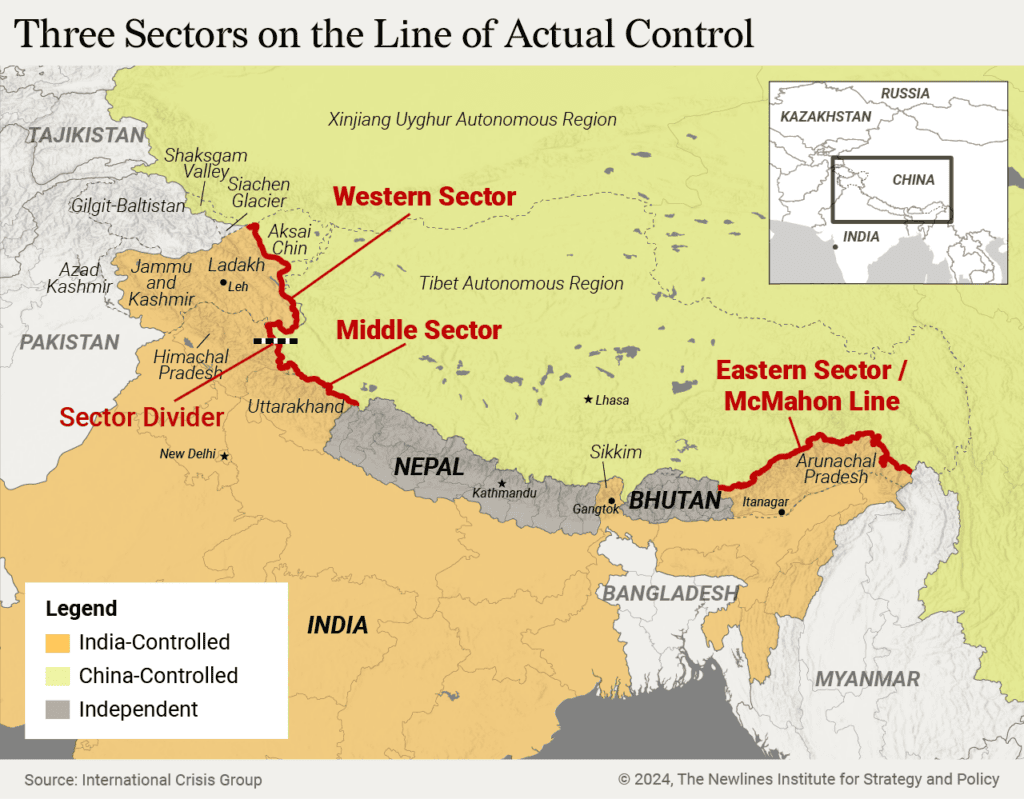
Now, let's dive deep into the specific dynamics of this buffer system. The following video analysis from Study IQ IAS (presented in Hindi, which I hope you'll find engaging) breaks down the complex interplay of history, culture, and geopolitics shaping Nepal's relationships with India and China.
How India Is Losing Nepal? The Great Game Of Himalayas | Buffer State Analysis
This video, 'How India Is Losing Nepal?', provides a detailed analysis of Nepal's role as a buffer state. It uses the ancient Indian strategic concept of the 'Mandala' to frame the discussion, which you may find interesting.
We will watch this in several parts to connect it to our concepts. Introduction (03:36 - 04:37): First, watch this short clip introducing Nepal as a 'Madhyama' (middle power) in Chanakya's Mandala theory. Notice how it immediately frames Nepal as a state that can leverage its position for advantages. Historical Context (11:52 - 15:10): Next, watch this segment on the historical treaties that defined the India-Nepal relationship. This explains the deep-rooted nature of India's traditional sphere of influence. China's Entry (06:41 - 10:22): Now, watch this section detailing China's growing influence through the Belt and Road Initiative (BRI), digital infrastructure, and soft power. This is a classic example of one great power challenging another's sphere of influence within a buffer state. Strategic Stakes (27:07 - 29:18 & 32:00 - 34:32): Finally, watch these two clips explaining why Nepal is strategically vital for both China (regarding Tibet) and India (regarding the security of the Gangetic plains). This highlights the 'strategic utility' of the buffer state for its neighbors, as mentioned in the E-IR article.
This case study demonstrates the concepts in action:
- Competing SOIs: We see India's historical influence being challenged by China's assertive economic and strategic push.
- Buffer State Agency: Nepal is not a passive victim. It actively engages with both powers, seeking infrastructure investment from China while maintaining deep cultural and economic ties with India. This balancing act is a deliberate strategy to maximize its autonomy and national interest.
- Strategic Utility: The video makes it clear that for both New Delhi and Beijing, stability and influence in Nepal are not trivial matters but core national security interests.
Conclusion
Today, we've unpacked two foundational concepts in geopolitical analysis. We've seen how great powers attempt to shape their environment through spheres of influence and how buffer states navigate the perilous space between them.
Key Takeaways:
- Spheres of Influence are zones where a great power exerts significant, exclusive influence, ranging from informal pressure to near-total control over a smaller state's policies. Their re-emergence is a key feature of our multipolar era.
- Buffer States are countries located between rival powers. While historically seen as passive barriers, the modern view emphasizes their agency—their ability to maneuver and play a dynamic role in the regional security complex.
- The case of Nepal perfectly illustrates these dynamics, showcasing how a smaller state can actively navigate the competing interests of giants like India and China to pursue its own path.
In our next lesson, we will examine another critical element of the global power architecture: nuclear deterrence. We'll analyze how the existence of nuclear weapons fundamentally changes the nature of great power competition, constraining direct military conflict and forcing rivalries into other domains—often making the fight for influence in buffer states even more intense.