Hello! Welcome back to our study of geopolitics.
In our last lesson, we analyzed the India-Pakistan rivalry, identifying it as a persistent regional conflict deeply intertwined with great power politics. We introduced the concept of a "strategic chain," where the US-China rivalry amplifies tensions in South Asia, driving India closer to the US and pushing Pakistan into a deeper strategic alignment with China.
Today, we will focus on the most significant project cementing that Sino-Pakistani alignment. Our learning outcome is to: Assess the strategic implications of the China-Pakistan Economic Corridor (CPEC) for regional power dynamics. We will deconstruct what CPEC is, why China and Pakistan are pursuing it, and how it is perceived by India and other powers. This case study is a prime example of how a massive infrastructure project can function as a powerful geopolitical tool, redrawing the strategic map of a region.
1. What is the China-Pakistan Economic Corridor (CPEC)?
CPEC is the flagship project of China's broader Belt and Road Initiative (BRI), an ambitious global infrastructure development strategy. At its core, CPEC is a multi-billion dollar collection of infrastructure projects intended to connect Kashgar in China's western Xinjiang province to the Gwadar Port on Pakistan's coast.
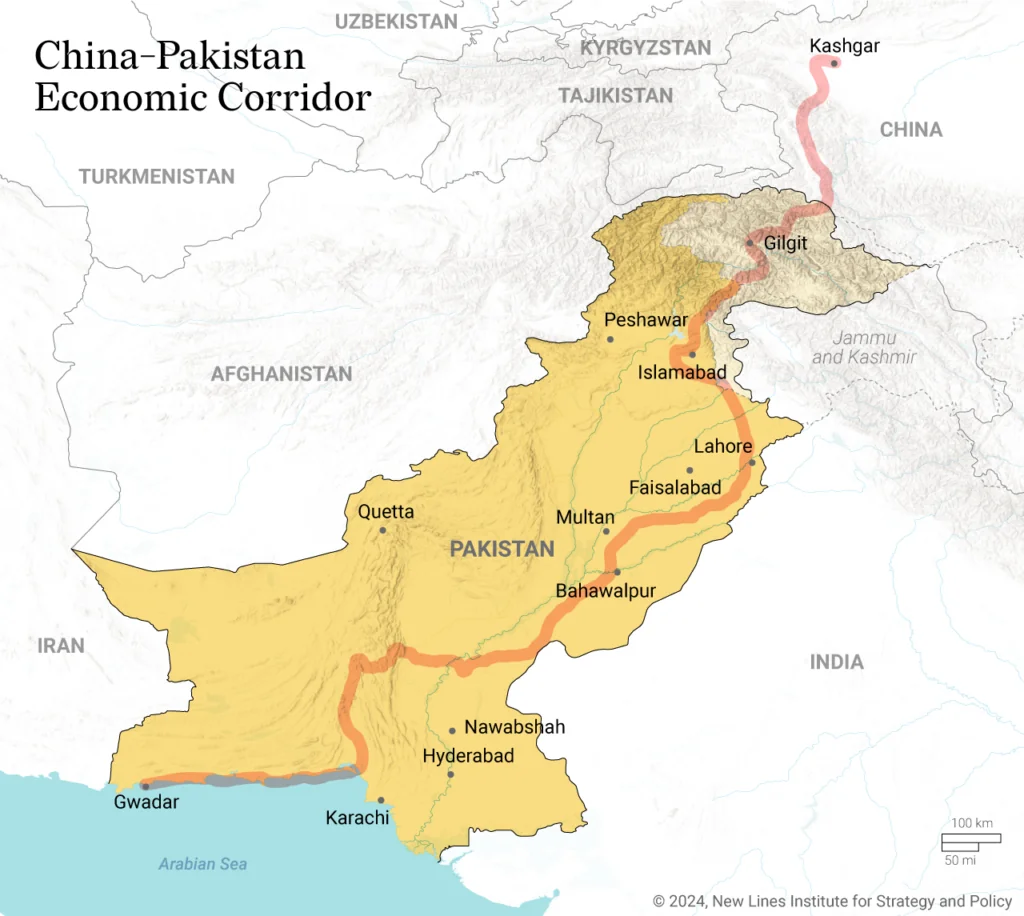
This corridor isn't just a single road; it's a comprehensive network designed to modernize Pakistan's infrastructure, including energy plants, special economic zones (SEZs), and transportation links.
To understand how CPEC fits into China's larger global vision, let's watch a brief overview of the Belt and Road Initiative.
What is China's Belt and Road Initiative? | Start Here
The video 'What is China's Belt and Road Initiative?' from Al Jazeera English provides excellent context. This segment explains the two main components of the BRI and identifies CPEC's role within it.
Please watch from 01:03 to 02:48. Focus on how the video defines the 'Belt' (overland routes) and the 'Road' (maritime routes) and where CPEC fits into this structure.
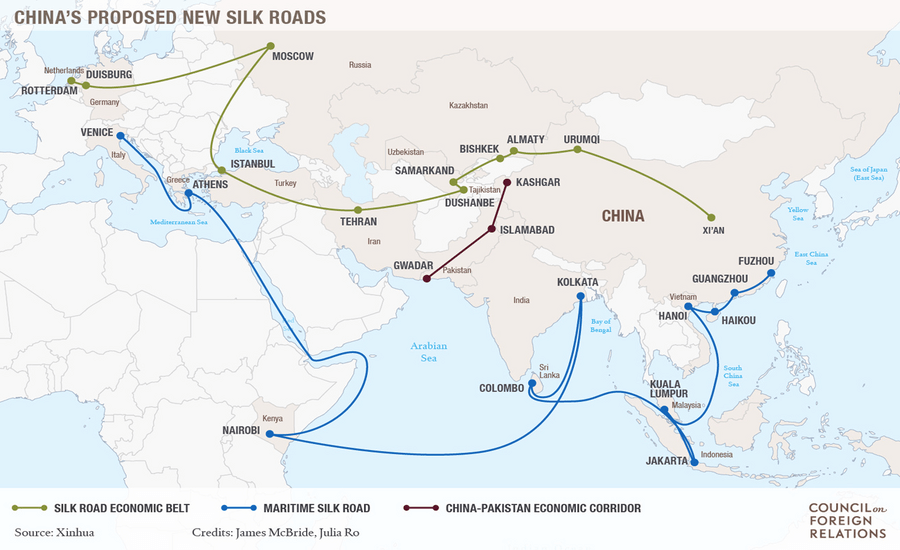
As you can see, CPEC is more than a bilateral project; it is a crucial node in China's plan to reshape global trade routes and enhance its economic and strategic influence across Eurasia and Africa.
2. The Strategic Rationale: A Win-Win for China and Pakistan?
CPEC is often framed as a mutually beneficial project, but the strategic motivations for both China and Pakistan are distinct and profound.
To understand these motivations, let's examine an academic analysis of the project.
The China-Pakistan Economic Corridor: A Flashpoint of Regional Competition
The paper 'The China-Pakistan Economic Corridor: A Flashpoint of Regional Competition' details the economic and strategic goals of the project. This section provides a clear summary of CPEC's scale and its perceived benefits for both nations.
Please read the section titled 'The China-Pakistan Economic Corridor' (starting on page 5). Pay close attention to: The strategic importance of the Gwadar Port for China as an alternative to the Strait of Malacca. The description of CPEC as a multifaceted initiative addressing Pakistan's core socioeconomic issues (energy, infrastructure, employment).
Let's break down the key strategic drivers for each country.
For China:
- The Malacca Dilemma: Approximately 80% of China's oil imports pass through the Strait of Malacca, a narrow chokepoint controlled by the US Navy and its allies. CPEC, terminating at Gwadar Port, offers a shorter, overland alternative route that bypasses this vulnerability. From a network perspective, this adds crucial redundancy to China's energy supply chain.
- Indian Ocean Access: Gwadar provides the Chinese navy (PLAN) a strategic foothold in the Arabian Sea and the wider Indian Ocean, allowing it to project power far from its own shores and monitor key sea lanes.
- Economic Expansion & Stability: The project serves to develop China's landlocked and restive western province of Xinjiang by integrating it into a major economic corridor. It also provides an outlet for China's industrial overcapacity in sectors like steel and cement.
For Pakistan:
- Economic Modernization: The massive influx of Chinese investment promises to overhaul Pakistan's dilapidated infrastructure, resolve chronic energy shortages, and create jobs, potentially transforming its struggling economy.
- Strategic Counterweight to India: CPEC deepens Pakistan's "all-weather" strategic partnership with China, providing a powerful economic and military bulwark against its larger rival, India. It reinforces the "strategic chain" we discussed in the previous lesson.
- Aspiration as a Regional Hub: Pakistan hopes CPEC will turn it into a lucrative transit hub connecting China, Central Asia, and the Middle East.
3. The Indian Counter-Perspective and Regional Fallout
While China and Pakistan herald CPEC as a vehicle for prosperity, it is viewed with deep suspicion and hostility by India, turning the project into a major flashpoint in South Asia.
China-Pakistan Economic Corridor | Geopolitical Impact | Around The World | Drishti IAS English
This video from Drishti IAS English clearly articulates India's objections to CPEC and outlines its strategic response.
Please watch from 02:25 to 04:39. As you watch, identify the two main reasons for India's opposition to CPEC and the major connectivity project India has launched in response.
India's primary objections are:
- Violation of Sovereignty: CPEC's route passes through Gilgit-Baltistan, a part of the disputed region of Kashmir that is administered by Pakistan but claimed by India. New Delhi views the project as a direct challenge to its territorial integrity and an attempt by China to legitimize Pakistan's claim.
- Strategic Encirclement: In India, CPEC is seen as the most significant part of China's "String of Pearls" strategy—a network of ports and military facilities in the Indian Ocean (including in Sri Lanka, Bangladesh, and Myanmar) designed to encircle India and constrain its influence in its own maritime backyard. The development of Gwadar Port is particularly alarming to Indian naval planners.
- Enhanced Two-Front Threat: The corridor's infrastructure can be used for dual civil-military purposes, improving logistics and connectivity between the Chinese and Pakistani militaries. This exacerbates India's long-standing fear of having to fight a coordinated war on two fronts simultaneously.
Broader Regional Implications
CPEC's impact extends beyond the India-Pakistan-China triangle, creating new challenges and realignments across the region.
Debt-Trap Concerns:
CPEC is funded primarily by Chinese loans to Pakistan. This has led to accusations of "debt-trap diplomacy," where a powerful creditor state extends loans to a smaller country for an infrastructure project, only to seize the asset when the borrower inevitably defaults.
Let's revisit the Al Jazeera video for a clear explanation of this concern.
What is China's Belt and Road Initiative? | Start Here
This segment uses the example of Sri Lanka's Hambantota Port to illustrate how BRI projects can lead to debt distress and a loss of sovereignty.
Please watch from 05:50 to 06:55. Note the argument that these projects can compromise a country's sovereignty.
While China denies these accusations, the risk of unsustainable debt and increased economic dependence is a significant concern for Pakistan and other BRI recipient countries.
Regional Realignments:
The project solidifies geopolitical blocs in the region. To get a structured overview of how different actors are responding, please examine the table below from the academic paper Recalibrating Regional Power.
Recalibrating Regional Power: The Geopolitical Implications of CPEC in South Asia
This table neatly summarizes the geopolitical responses of key regional and global actors to CPEC.
Please review 'Table 3: Regional Strategic Influence'. Notice the clear divergence: China and Pakistan view the project positively, while India and the USA adopt negative or cautious stances, leading to countermeasures and new partnerships.
As the table shows, CPEC accelerates regional polarization. It cements the Sino-Pakistani axis, while simultaneously pushing India to strengthen its strategic partnerships with the United States, Japan, and Australia through forums like the Quadrilateral Security Dialogue (Quad).
Conclusion
We have assessed CPEC not merely as an economic corridor but as a transformative geopolitical project with far-reaching strategic consequences.
Key Takeaways:
- CPEC is the flagship project of China's BRI, creating a land-sea corridor from western China to the Arabian Sea through Pakistan.
- For China, CPEC is a solution to the "Malacca Dilemma," providing energy security and a strategic foothold in the Indian Ocean.
- For Pakistan, it is an economic lifeline and a strategic tool to balance against India, but it comes with risks of debt and dependency.
- For India, CPEC is a major threat, violating its sovereignty claims in Kashmir and contributing to its strategic encirclement by China.
- The project intensifies regional power dynamics, solidifying the China-Pakistan bloc, fueling the India-Pakistan rivalry, and driving India closer to the US-led alliance system.
Preview of the Next Lesson:
Our discussion of "debt-trap diplomacy" and competing projects like IMEC highlights that economic tools are central to modern geopolitical competition. This is the theme of our next module, "Economic Statecraft and Geofinance." In the first lesson, we will explore one of the most powerful tools of economic coercion. The learning outcome will be to: Explain the primary mechanisms of economic sanctions and assess their effectiveness using Russia and Iran as case studies.