Hello! Welcome to the final lesson in our module on American Grand Strategy.
In our last lesson, we examined the powerful domestic forces—partisan politics, public opinion, and interest groups—that shape U.S. foreign policy. We saw that America's actions on the world stage are often the result of intense internal debates about its role and priorities.
Today, we will dive into the single most important strategic debate flowing from those domestic divisions. This brings us to our learning outcome: Evaluate the debate between US retrenchment and continued global engagement using recent policy examples.
We will break down the two main strategic postures competing to define America's future:
- Continued Global Engagement: The idea that the U.S. must maintain its global leadership role, its alliance network, and its forward military presence to uphold a stable world order.
- Retrenchment (or Restraint): The argument that the U.S. is overextended and should reduce its foreign commitments to focus on domestic priorities and act more selectively abroad.
This isn't just a theoretical exercise. The choice between these paths has profound consequences for international security, the global economy, and the strategic calculations of every country, from China to your home country of Nepal.
1. A Spectrum of Grand Strategies
To understand this debate, it's helpful to have a framework. The influential political scientist John Mearsheimer outlines four main grand strategies available to the United States. These can be seen as a spectrum from minimal to maximal global involvement.
"FOUR" Grand strategies, John Mearsheimer |Isolationism,Offshore balance,Selective,global domination
Let's begin with a clear overview of these strategic options. In this video, John Mearsheimer, a leading advocate for restraint, explains four distinct grand strategies. Pay close attention to the fundamental differences between 'Offshore Balancing' and 'Global Domination,' as they represent the core of the retrenchment vs. engagement debate.
Please watch the following segments: Isolationism (00:23 - 02:12): Understand its logic, even if it's not considered viable today. Offshore Balancing (02:12 - 04:00): This is a key form of retrenchment. Note the focus on intervening only to stop a regional hegemon. Selective Engagement (04:00 - 05:49): A more engaged strategy, but still limited to key regions. Global Domination (05:49 - 09:17): This is the strategy of maximum engagement, which Mearsheimer argues the U.S. has pursued since the Cold War.
As you saw, the debate isn't just about being "involved" or "not involved." It's about the purpose and scale of that involvement.
- Engagement corresponds to Global Domination, or what is often called Liberal Hegemony: the idea that the U.S. should actively shape the world, promote democracy, and lead a global order.
- Retrenchment corresponds to Offshore Balancing: staying over the horizon and intervening only when a major power threatens to dominate a critical region.
2. The Case for Continued Engagement: "Liberal Hegemony"
Proponents of continued engagement argue that American leadership is essential for global stability and prosperity. Without the U.S. actively upholding the "rules-based international order," they contend, the world would be a more chaotic and dangerous place. The post-WWII era of relative peace and unprecedented economic growth is often cited as evidence of this strategy's success.
Mearsheimer is a critic of this view, but to argue against it, he first has to explain its core logic.
John J. Mearsheimer, “The False Promise of Liberal Hegemony”
In this next clip from a lecture at Yale University, Mearsheimer defines 'Liberal Hegemony' and explains the three core reasons why its supporters believe the U.S. must pursue it. Understanding this rationale is crucial to evaluating the strategy on its own terms.
Please watch the segment from 01:40 to 18:08. Focus on the three justifications for spreading liberal democracy globally: To protect human rights. To cause international peace (Democratic Peace Theory). To protect liberalism at home.
The core idea of liberal hegemony is that by actively shaping the world in its own image—promoting democracy, free markets, and human rights—the U.S. creates an environment that is not only better for the world but also fundamentally safer and more prosperous for itself. The expansion of NATO to include former Soviet bloc countries is a classic policy example of this strategy in action.
3. The Case for Retrenchment: The "False Promise" and Costs of Engagement
Advocates for retrenchment argue that the era of U.S. global dominance is over and that continuing to pursue it is both fiscally unsustainable and strategically counterproductive. They believe that deep engagement has entangled the U.S. in endless wars, drained its resources, and ironically, created more enemies.
The Strategic Argument
Mearsheimer argues that liberal hegemony is doomed to fail for several reasons. He contends that it misunderstands the nature of international politics, particularly the power of nationalism and the persistence of security competition.
John J. Mearsheimer, “The False Promise of Liberal Hegemony”
Now let's examine the core critique of global engagement. Mearsheimer outlines why he believes the project of liberal hegemony consistently fails, leading to disastrous outcomes.
Please watch from 30:38 to 44:50. Listen for his four main reasons why liberal hegemony is 'doomed': The difficulty of social engineering. The power of nationalism. The varying importance of individual rights. The fact that other states will balance against the U.S. (realism). He uses the interventions in the Middle East and the Ukraine crisis as his primary policy examples.
The withdrawal from Afghanistan in 2021 after a 20-year nation-building effort is often held up by restraint advocates as the ultimate example of these failures. They argue it demonstrates the immense cost and ultimate futility of trying to socially engineer another society.
The Technological and Economic Argument
The debate is also being reshaped by technology. This next resource examines the issue through a lens that connects directly to your background in computer engineering, arguing that the strategic logic of the AI era favors restraint.
AI and Grand Strategy: The Case for Restraint
The CSIS report 'AI and Grand Strategy: The Case for Restraint' introduces a fascinating dimension to the debate. It argues that in an age defined by AI, a nation's strength comes more from domestic innovation, economic vitality, and technological leadership than from overseas military deployments.
Please read the 'Introduction,' 'From Liberal Hegemony to Restraint,' and 'Restraint in the AI Age' sections. Focus on how the authors argue that AI shifts the strategic calculus toward prioritizing 'butter over guns'—that is, domestic economic and technological investment over military force.
This perspective suggests that the best way for the U.S. to compete with a rising China is not by trying to contain it militarily everywhere, but by out-innovating it at home. It reframes "retrenchment" not as isolation, but as a strategic reallocation of resources from military power projection to technological and economic power generation.
4. Retrenchment in Practice: Scenarios and Consequences
What would U.S. retrenchment actually look like, and what would be the consequences? The debate is no longer academic, as political dynamics in the U.S. make some form of retrenchment an increasingly plausible scenario.
The following report explores how this might unfold. A sudden crisis in Asia, for example, could force a rapid, unplanned retrenchment from other parts of the world.
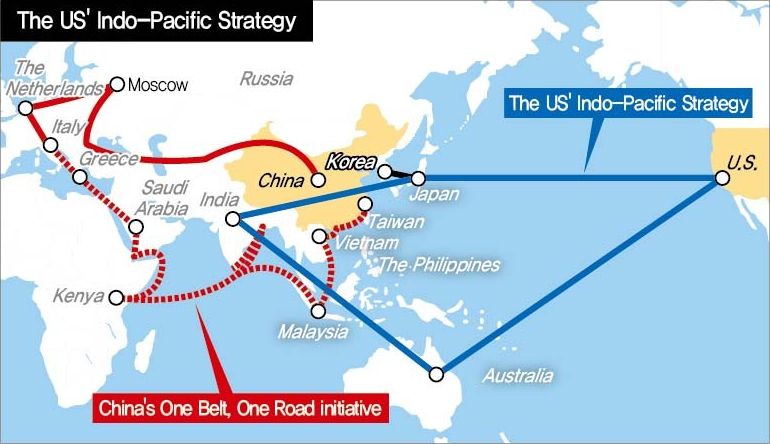
Let's explore a scenario where this competition leads to conflict, forcing a U.S. retrenchment from Europe.
American Roulette: Scenarios for US Retrenchment and the Future of European Defense
The Stimson Center's 'American Roulette' report provides concrete, plausible scenarios for U.S. retrenchment. We'll read the 'Taiwan Contingency' scenario, which illustrates how a crisis in the Indo-Pacific could have immediate, cascading effects on U.S. commitments elsewhere.
Please read the 'Introduction' and 'Scenario One: A Taiwan Contingency'. Note how a conflict with China would force the U.S. to shift high-demand military assets—like fifth-generation aircraft, missile defense systems, and ISR capabilities—from Europe to the Pacific, effectively forcing a retrenchment regardless of political promises.
This scenario highlights a key argument from the retrenchment camp: the U.S. simply may not have the resources to maintain a dominant military presence in both Europe and Asia simultaneously, especially in a conflict with a near-peer competitor like China. It forces a choice, and in this scenario, the choice is to prioritize Asia. This demonstrates how retrenchment might not be a deliberate ideological choice but a practical necessity driven by shifting threats and limited resources.
Conclusion
Today, we've explored the fundamental debate at the heart of American grand strategy. This is not a settled issue; it is a live, evolving conflict of ideas that determines America's posture toward the world.
Key Takeaways:
- Global Engagement (Liberal Hegemony): Argues that U.S. leadership is necessary to maintain a stable, democratic, and open international order, which ultimately serves U.S. interests. Its tools are alliances, democracy promotion, and a forward military presence.
- Retrenchment (Restraint/Offshore Balancing): Argues that global engagement is costly, counterproductive, and leads to endless wars. It advocates for reducing military commitments to focus on domestic strength and intervening only when core interests are threatened by a potential regional hegemon.
- A Debate Shaped by Reality: This debate is driven by the high costs of past interventions (Iraq, Afghanistan), the fiscal constraints on the U.S. government, and the rise of China as a peer competitor.
- Technology's Role: Emerging technologies like AI are reshaping the debate, with some arguing that future power will stem more from domestic innovation than from global military dominance.
The strategic path the U.S. chooses will have massive implications. For a country like Nepal, situated between India and China, a more engaged America might offer a counterbalance to regional giants. A retrenched America, on the other hand, might leave smaller states with less diplomatic room to maneuver, forcing them to align more closely with their powerful neighbors.
This brings us to the end of our module on U.S. Grand Strategy. You now have a solid framework for understanding America's historical trajectory, its tools of power, its domestic political drivers, and the central strategic debate about its future.
Preview of Next Module:
The debate over U.S. engagement and retrenchment is largely a response to a single, massive geopolitical shift: the rise of China. To understand the other side of this great power competition, our next module, "China's Rise and Grand Strategy," will begin by examining the deep historical and geographical factors that shape Beijing's worldview. Our first lesson will be: Explain China's geopolitical position: geographic constraints, historical grievances, and the 'Century of Humiliation' narrative.