Hello! Welcome back to our course.
In the last lesson, we examined the military and diplomatic instruments of American grand strategy: the logic of forward military basing and the structure of its key alliance networks in Europe and Asia. We saw how these tools allow the U.S. to project power and deter adversaries far from its own shores.
Today, we shift our focus from military hardware to financial architecture. We will explore what is arguably the most unique and powerful tool in the U.S. strategic toolkit: the dollar itself. This lesson will address the learning outcome: Explain how the US dollar's reserve currency status provides geopolitical leverage, focusing on the petrodollar system and sanctions enforcement.
By the end of this lesson, you will understand how the global financial system is structured around the U.S. dollar and how this structure grants the United States extraordinary influence over the world economy and international politics.
1. The Dollar's "Exorbitant Privilege"
To begin, we need to understand the dollar's unique position. It is the world's primary reserve currency. This means that central banks around the globe hold a large portion of their foreign exchange reserves in U.S. dollars. It is also the principal currency for invoicing international trade and conducting financial transactions.
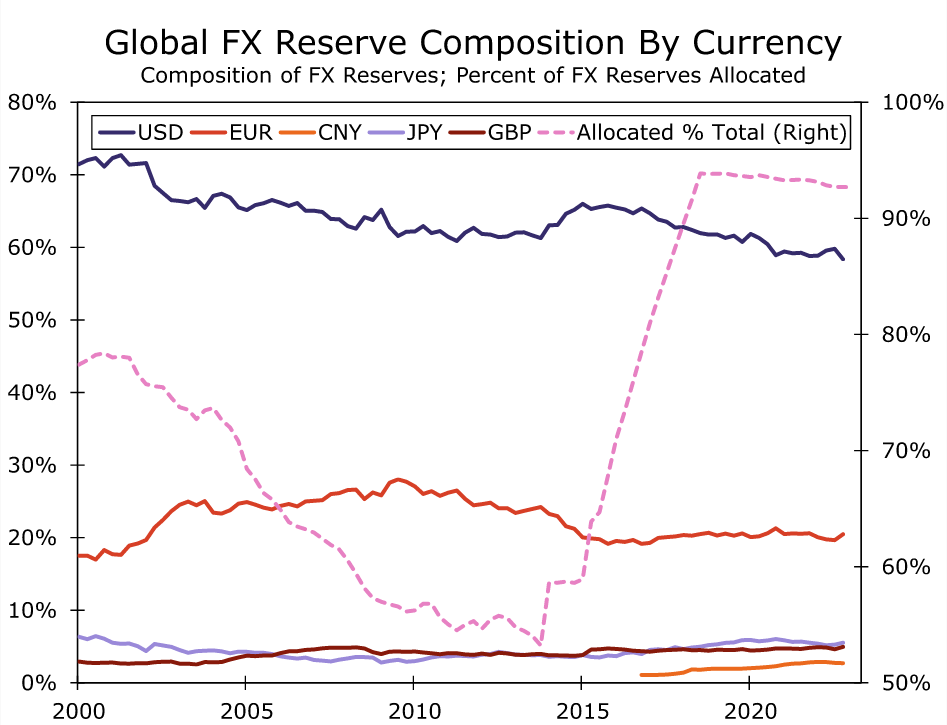
This special status, famously termed the "exorbitant privilege" by a French finance minister in the 1960s, gives the United States significant economic advantages. To understand the origins of this system and the benefits it provides, let's watch the beginning of a video that explains it well.
The Weaponization Of The Dollar
The video 'The Weaponization Of The Dollar' from the channel of financial professional Patrick Boyle provides a clear history of how the dollar achieved its status and what the 'exorbitant privilege' entails.
Please watch the first part of the video, from the beginning to 01:16. This section covers the 1944 Bretton Woods Agreement, which established the dollar as the world's reserve currency, and introduces the concept of 'exorbitant privilege'.
As the video explains, the exorbitant privilege allows the U.S. to:
- Borrow more cheaply: Global demand for dollars and U.S. Treasury bonds (seen as the world's safest financial asset) lowers borrowing costs for the U.S. government.
- Finance deficits: The U.S. can pay for imports and finance its budget deficits by simply printing more of its own currency, which the rest of the world needs and accepts.
- Reduce transaction costs: American companies and consumers face less exchange-rate risk and lower costs in global trade.
However, after the U.S. unilaterally ended the dollar's convertibility to gold in 1971 (the "Nixon Shock"), this system needed a new foundation to ensure the world's continued demand for dollars. That new foundation became oil.
2. The Petrodollar System: Anchoring the Dollar to Oil
In the 1970s, the United States engineered a brilliant strategic arrangement that would secure the dollar's dominance for the next half-century: the petrodollar system.

This system was the result of a landmark, clandestine deal between the United States and Saudi Arabia. The following video tells the story of this deal and explains its profound consequences.
The "Saudi Deal" of 1974: The Secret Agreement That Actually Saved the Dollar
The video 'The "Saudi Deal" of 1974' explains the secret agreement that created the petrodollar system. It masterfully breaks down the geopolitical and economic logic of the deal.
Please watch from the beginning to 05:08. Focus on the three core components of the deal and the concept of 'petrodollar recycling'.
To summarize the video's key points, the petrodollar system created a powerful, self-reinforcing loop:
- Pricing in Dollars: The U.S. provided military security to Saudi Arabia. In exchange, Saudi Arabia agreed to price its oil exclusively in U.S. dollars and to persuade the rest of OPEC to do the same.
- Synthetic Demand: Because every country needs to buy oil, every country was now forced to acquire U.S. dollars to pay for it. This created a massive, constant, artificial global demand for the U.S. currency.
- Petrodollar Recycling: Oil-exporting nations earned vast sums of U.S. dollars ("petrodollars"). They then "recycled" these surplus dollars back into the U.S. economy by purchasing U.S. Treasury bonds.
This recycling mechanism was the system's linchpin. It meant that the money the U.S. spent on foreign oil flowed right back to finance the U.S. government's budget. From a systems perspective, you can see this as a highly efficient, closed-loop financial circuit that tied global energy markets directly to U.S. government financing.
3. Weaponizing the Dollar: Sanctions and Financial Warfare
The true geopolitical leverage of the dollar system comes from the fact that it is not just a medium of exchange, but also a network of control.
Because most international transactions are denominated in dollars, they must eventually be "cleared" through financial institutions that are subject to U.S. law. This gives the U.S. Treasury Department the legal authority—the jurisdiction—to monitor, regulate, and even block transactions that occur far outside U.S. borders.
This control allows the U.S. to "weaponize" the dollar by imposing economic sanctions. Let's return to the Patrick Boyle video, which provides excellent examples of this in practice.
The Weaponization Of The Dollar
This segment of 'The Weaponization Of The Dollar' explains how the U.S. leverages its control over the financial system to enforce sanctions.
Please watch from 01:16 to 05:08. This part discusses the post-9/11 shift to financial warfare, using the Patriot Act, and provides case studies on Iran and Russia to illustrate how sanctions work.
The ability to deny a country or entity access to the U.S. dollar system is a devastating economic weapon. It can cripple a nation's ability to engage in international trade, access foreign capital, and manage its economy.
To consolidate these ideas with a more academic framing, let's read a short selection from a research paper on this topic.
[PDF] Challenges to the US Dollar's Dominance as the Global Reserve ...
The paper 'Challenges to the US Dollar's Dominance' provides a concise summary of how dollar dominance translates directly into geopolitical power.
Please read three very short subsections that explicitly link the dollar to U.S. power: Find the heading '3. Global Implications of the US Dollar's Dominance'. Read subsection '3.3 Geopolitical Influence'. It's a single, clear paragraph. Find the heading 'Geopolitical Risks and Sanctions'. Read the first paragraph under this heading, which describes how the U.S. leverages SWIFT and financial institutions. Finally, find the heading 'The US Dollar as a Tool of Economic Influence and Global Propaganda'. Read subsection '3. Hegemony and Sanction Power'. These three short paragraphs provide a strong, academic summary of the core concept of 'currency power'.
As these resources make clear, the weaponization of the dollar is a primary tool of U.S. statecraft. It allows the U.S. to coerce adversaries without resorting to military force. However, this power is not without consequences.
The frequent and expansive use of sanctions creates a powerful incentive for other countries—both rivals like China and Russia and, increasingly, allies—to develop alternative financial systems that can bypass the U.S. dollar. This has spurred efforts to create new payment systems and even motivated the development of central bank digital currencies. This dynamic can be seen as a systemic feedback loop: the more the U.S. uses the dollar as a weapon, the stronger the incentive for others to build systems that are immune to it, potentially eroding the dollar's dominance over time.
Conclusion
Today, we have explored the economic foundation of American global power. We've moved beyond the tangible assets of military bases and alliances to the more abstract, but equally potent, power of financial architecture.
Key Takeaways:
- Exorbitant Privilege: The U.S. dollar's status as the world's primary reserve currency allows the U.S. to finance its deficits and borrow at a low cost, a unique advantage in the global economy.
- The Petrodollar System: This post-1971 arrangement anchored the dollar to the global oil market, creating massive, sustained demand for the currency and a recycling mechanism that helped fund the U.S. government.
- Weaponization of Finance: The dollar's central role in global transactions gives the U.S. jurisdiction to impose powerful economic sanctions, allowing it to cut off countries and entities from the global financial system.
- Geopolitical Leverage: This "currency power" is a core tool of U.S. statecraft, providing a means of coercion that falls between diplomacy and military action.
In our next and final lesson of this module, we will synthesize what we have learned about the instruments of American power. We will evaluate the ongoing debate within the U.S. about its grand strategy: given the costs and risks of maintaining this global system, should the U.S. retrench and pull back, or must it continue its deep global engagement to secure its interests?