Hello! Welcome back to our course.
In our last lesson, we dove deep into the "chip war," analyzing the US strategy of technology denial against China. We saw how controlling the foundational hardware—advanced semiconductors—has become a primary tool of geopolitical competition.
Today, we shift our focus from the hardware to the software that runs on it. This lesson explores the world-altering impact of Artificial Intelligence. Building on your background in computer engineering and your experience developing an AI chatbot, we'll move beyond the technical aspects to assess the profound geopolitical consequences of the AI revolution.
Our learning outcome is to assess the geopolitical implications of AI development in the military, surveillance, and governance domains. We will examine how the race for AI dominance is not just an economic competition but a struggle that is actively reshaping warfare, state control, and the very nature of global power.
1. The Geopolitical Stakes: An AI "Gold Rush"
Before we break down the specific domains, it's crucial to understand why nations view AI development as a zero-sum competition. AI is the quintessential dual-use technology; breakthroughs in commercial AI have immediate and direct applications in national security. This creates a high-stakes environment where falling behind is seen as an existential risk.
The motivations are both economic and military. The country that leads in AI is expected to dominate the global economy for decades. At the same time, AI offers unprecedented military advantages, leading to what some call a new "arms race."
Security PhD explains the geopolitics of AI
To frame this competition, let's watch this segment from Dr. Waku, a security researcher. He explains the core military and economic drivers behind the national push for AI supremacy and introduces the concept of 'digital sovereignty.'
Please watch the first two parts of the video: Why Countries Care About AI (00:21 - 02:47): Focus on the dual military and economic incentives and the 'winner-take-all' dynamic of AI development. Digital Sovereignty (02:47 - 05:20): Pay attention to why countries are increasingly seeking to develop their own AI models to avoid supply chain vulnerabilities, sanctions, and data bias. This directly connects to our previous lesson on the chip war.
This drive for AI leadership and digital sovereignty is at the heart of the escalating competition between the US and China, an event some have called the AI "Sputnik Moment." The paper below, from the Nepal-based Centre for Social Innovation and Foreign Policy (CESIF), provides a concise overview of this dynamic.
[PDF] Artificial Intelligence and Diplomacy - CESIF Nepal
This report from CESIF, a Nepali think tank, frames the geopolitical competition around AI. It will be a useful reference throughout our lesson.
Please read the section titled 'AI and Geopolitics,' which begins on page 9. It describes the US-China AI race and the significance of the 'Sputnik Moment' event, providing context for the superpower competition.
Now, let's examine the three key domains where these geopolitical implications are most pronounced.
2. Domain 1: AI and the Future of Warfare
The most immediate national security concern is how AI is transforming the character of war. This goes far beyond the popular image of "killer robots." AI is being integrated into every facet of military operations, acting as a "force multiplier."
The core applications include:
- Intelligence, Surveillance, and Reconnaissance (ISR): AI can analyze vast amounts of data from drones, satellites, and sensors to identify targets or patterns far faster than humans can.
- Command and Control (C2): AI can assist commanders by processing battlefield information, predicting enemy movements, and recommending courses of action.
- Autonomous and Semi-Autonomous Systems: This includes everything from drones that can autonomously track targets to AI-powered defensive systems that can intercept incoming missiles.
- Cyber Warfare: AI can be used to develop more sophisticated cyberattacks and to defend networks against them.
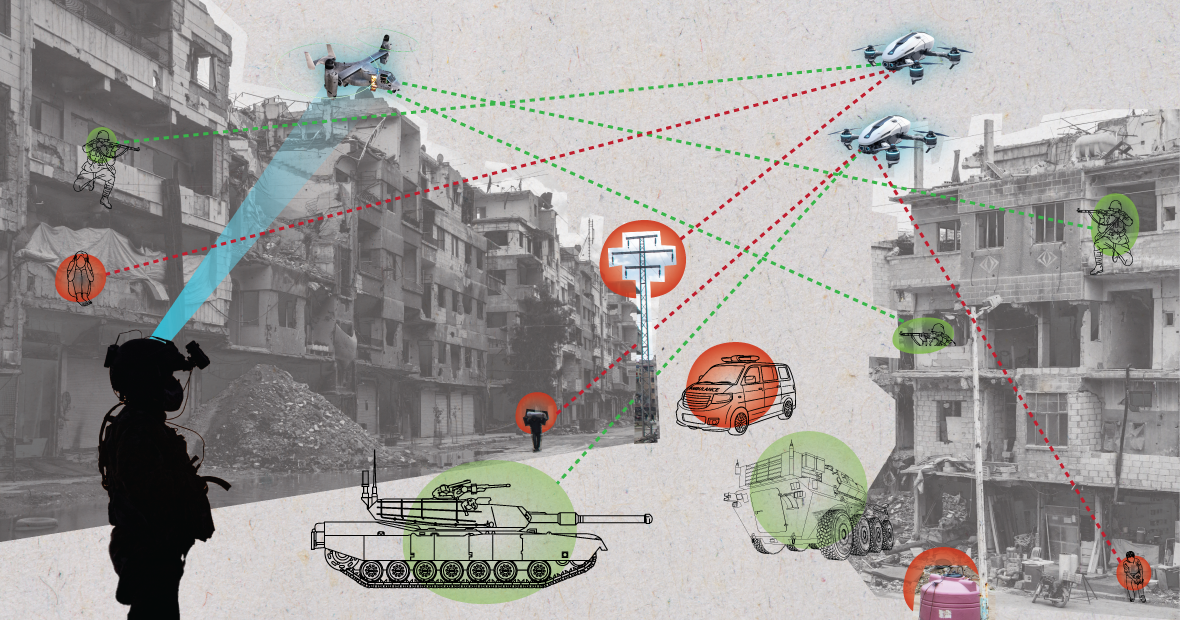
The ongoing wars in Ukraine and Gaza have served as real-world laboratories for military AI, demonstrating its power and raising profound ethical questions.
Governing Military AI Amid a Geopolitical Minefield
This article from the Carnegie Endowment for International Peace provides an excellent overview of military AI. We will focus on the concrete examples it provides.
Please read the following two sections: 'A Military AI Gold Rush': This section details the US-China competition, including China's concept of 'intelligentized warfare' and the limits of applying nuclear-age controls to AI. The unnamed section that follows, which details case studies from Ukraine and Gaza. Focus on how private tech companies like Palantir are involved and how Israel has used AI targeting systems.
The key geopolitical implication here is a classic security dilemma. As one nation develops more advanced military AI, its rivals feel compelled to do the same to avoid falling behind. This accelerates an arms race, increases the risk of miscalculation, and creates new pathways for conflict escalation, all while blurring the lines between state and corporate actors on the battlefield.
3. Domain 2: AI for Surveillance and Social Control
The same AI technologies used for targeting enemies abroad—like facial recognition and pattern analysis—can be turned inward for surveillance and social control. This has profound implications for governance, human rights, and the geopolitical competition between democratic and authoritarian models.
China has pioneered the use of AI to create a sophisticated surveillance state, integrating facial recognition, big data analytics, and social credit systems to monitor and shape citizen behavior. However, it is far from the only country doing so.

The United Arab Emirates (UAE) provides another compelling case study of a nation building what some have called a "perfect surveillance state" and then using sophisticated information campaigns to project an image of openness and modernity.
Gold, AI Surveillance & Gulf Power in the Shadows | Dr. Andreas Krieg UNFILTERED
In this segment, Dr. Andreas Krieg, an expert on the Middle East, explains how the UAE leverages technology for total surveillance and how it uses influencers and PR to manage its global image.
Please watch the clip from 12:59 to 18:38. Focus on how the UAE has built its surveillance apparatus, the contrast between its repressive domestic policies and its international image, and the methods it uses to 'whitewash' its authoritarianism.
The central geopolitical issue is the export of authoritarian governance models. When countries like China or the UAE sell their surveillance technology abroad, they are also exporting a methodology of social control. For developing nations, these tools can be appealing for maintaining stability, but they often come at the cost of civil liberties and can create technological dependencies on the provider nation, strengthening its geopolitical influence. This presents a direct challenge to the liberal democratic model promoted by the US and its allies.
4. Domain 3: AI in Governance and Diplomacy
Beyond direct military use and surveillance, AI is reshaping the broader landscape of governance and international relations. This includes everything from how states conduct diplomacy to how they wage information warfare.
The Weaponization of Narrative
AI-powered tools make it easier and cheaper than ever to create and spread disinformation, deepfakes, and targeted propaganda. This is used to interfere in elections, erode trust in institutions, and polarize societies. Rather than inventing falsehoods from whole cloth, the most effective strategies often involve amplifying existing social grievances to sow division.
Gold, AI Surveillance & Gulf Power in the Shadows | Dr. Andreas Krieg UNFILTERED
Let's return to the discussion with Dr. Andreas Krieg. Here, he explains the concept of 'subversion' or the strategic weaponization of narratives, using the example of Russian interference campaigns.
Please watch the segment from 22:11 to 28:36. Pay close attention to how he defines an information operation's goal: to shift the boundaries of discourse and mobilize or demobilize civil society. The example of the Quran burnings in Sweden is a powerful illustration of how a small, amplified event can have major geopolitical consequences.
AI Diplomacy and the Challenge for Small States
The rise of AI has created a new domain for diplomacy. "AI Diplomacy" involves negotiating norms for responsible use, setting technical standards, and managing the geopolitical competition.
For smaller, developing nations like your home country of Nepal, navigating this landscape is particularly challenging. Caught between giants like China, India, and the US, these nations must benefit from AI advancements without getting caught in digital colonialism or compromising their sovereignty.
[PDF] Artificial Intelligence and Diplomacy - CESIF Nepal
The CESIF Nepal report offers a clear-eyed perspective on the challenges and opportunities for a country like Nepal in the age of AI.
Please read these two sections: 'AI Diplomacy' (page 11): This section defines the concept, breaking it down into AI's impact on geopolitics, AI as a diplomatic topic, and AI as a practical tool. 'Tech Neutrality Amid Digital Colonialism' (page 46): This section is crucial. It discusses the specific challenges for Nepal regarding semiconductor access, quantum computing, and the weaponization of AI, advocating for a policy of 'active neutrality.'
The key takeaway here is that AI is creating new hierarchies of power. States that control the data, the algorithms, and the computing infrastructure gain immense influence. This forces smaller states into a difficult balancing act: they must engage with the major AI powers to access the technology needed for development, while simultaneously trying to preserve their strategic autonomy.
Conclusion
Today we've assessed the profound geopolitical implications of AI across three critical domains. The race for AI supremacy is not merely a technological or economic contest; it is a defining feature of 21st-century great power competition.
Key Takeaways:
- Military Domain: AI is transforming warfare, creating a security dilemma that fuels a new arms race in autonomous systems, AI-assisted command, and cyber capabilities. The battlefield is increasingly becoming a laboratory for corporate and state AI development.
- Surveillance Domain: AI enables powerful systems of social control, which are being pioneered and exported by authoritarian states. This creates a global competition between governance models and threatens to spread "digital authoritarianism."
- Governance Domain: AI is a tool of information warfare, used to polarize societies and undermine democratic institutions. For smaller nations, the rise of AI presents a major diplomatic challenge, forcing them to navigate the pressures of tech giants while trying to harness AI for their own development.
Preview of the Next Lesson:
AI models and digital surveillance systems run on data. In our next lesson, we will examine the physical infrastructure that carries this data around the globe. We will focus on the learning outcome: "Analyze the strategic importance of undersea data cables, focusing on physical chokepoints, vulnerabilities, and ownership." We will see how these vital but vulnerable cables represent another critical arena of geopolitical competition.