Welcome to the final lesson of our first module. In our previous discussion, we explored the different philosophical stances a researcher can take by distinguishing between exploratory, descriptive, and explanatory research. You learned how to select an approach based on your research goals and the maturity of the knowledge in your field. This decision sets the overall direction of your inquiry—whether you are asking "what," "how," or "why."
Today, we will build directly on that foundation. This lesson is about translating your chosen approach and the research gap you've identified into a concrete, actionable plan. We will focus on how to formulate a well-defined research problem with clear objectives and scope. This is arguably one of the most critical steps in the entire research process. A well-formulated problem acts as the blueprint for your Master's thesis, guiding every subsequent decision from your literature search and methodology to your final analysis.
From Broad Interest to a Focused Problem
The journey from a general area of interest, like mechanism design, to a specific research problem is a process of systematic narrowing. You've already practiced the key steps: you started with your interests, conducted literature searches, identified gaps, and considered the fundamental type of question you want to answer.
This process can be visualized as a funnel. You begin at the wide mouth with a broad topic, and through deliberate steps of investigation and refinement, you emerge at the narrow spout with a sharp, focused research question.

The Language of Research: Problem vs. Problem Statement
Before we delve into the "how-to," let's clarify two crucial terms that are often used interchangeably but have distinct meanings: the research problem and the problem statement.
- The research problem is the underlying issue, challenge, or gap in knowledge that your study aims to address. It's the "big picture" justification for your work. It might be a theoretical puzzle, a practical issue in industry, or a lack of data in a specific context.
- The problem statement is the concise, explicit articulation of that research problem. It is typically a single, powerful paragraph that presents the problem, highlights its significance, and outlines how your study will tackle it.
The following video provides an excellent explanation of this distinction and shows how research problems emerge from the research gaps we've discussed previously.
The Research Problem & Problem Statement: Plain-Language Explainer (With Examples) + FREE Templates
This video from Grad Coach, titled "The Research Problem & Problem Statement," clearly explains the core concepts and their relationship.
Please watch the following segments: The first section defines the research problem and distinguishes between theoretical and applied problems. Next, watch the segment from here which clarifies the role of the problem statement. Finally, the segment from this part connects the origin of research problems back to the research gaps you learned to identify in a previous lesson.
The Anatomy of a Powerful Problem Statement
Now that you understand what a problem statement is, how do you write a compelling one? A strong problem statement acts as a miniature proposal, convincing your reader (and your thesis committee) that your research is necessary and well-conceived.
A highly effective way to structure your problem statement is to answer four fundamental questions in sequence. The video below breaks down this four-part structure, providing a clear recipe for you to follow.
💪 How to Write a Problem Statement for Your Research: A Step-by-Step Guide 🎓
In "How to Write a Problem Statement for Your Research," the channel Research with Dr. Saeed presents a practical, step-by-step method.
Pay close attention to the four-part structure explained in these clips: Introduction to the four questions that form the backbone of a problem statement. Part 1: What do we know? Watch from here to understand how to establish the context. Part 2: What don't we know? The segment from this point explains how to articulate the research gap. Part 3: Why do we need to know? From here, learn how to justify the significance of your work. Part 4: How will we find out? This brief clip from here covers the introduction to your methodology. Finally, watch the summary to reinforce the complete structure.
This four-part structure—Context, Gap, Significance, and Approach—provides a logical and persuasive flow that moves the reader from a general understanding of the field to the specific contribution your research will make.
From Problem to Plan: Defining Objectives and Scope
A problem statement sets the direction, but to make your research manageable, you must define clear objectives and a precise scope.
- Objectives are the specific actions you will take to answer your research question. They should be clear, measurable, and realistic.
- Scope defines the boundaries of your study—what it will cover and, just as importantly, what it will not cover.
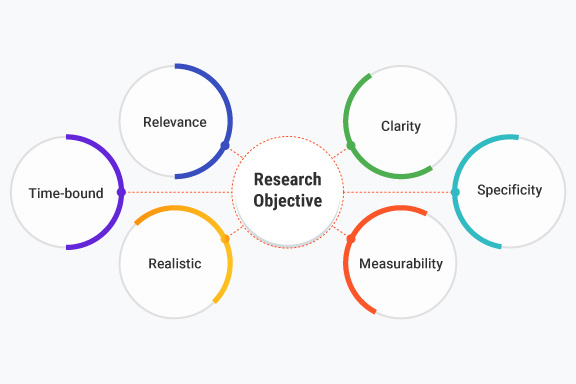
For an engineer, this process is analogous to defining project specifications and system boundaries. You don't design a mechanism without first defining its required performance (e.g., speed, load capacity, range of motion) and its operational environment. The following readings will help you apply this engineering mindset to research formulation.
First, let's consider the high-level purpose and significance from the perspective of a thesis proposal at a top engineering university.
Thesis Proposal : Mechanical Engineering Communication Lab
This guide from the MIT Mechanical Engineering Comm Lab frames the problem statement in the context of a thesis proposal.
Please read the sections titled "Purpose" and "Justify the significance of your work." Notice the emphasis on convincing the committee that your project is important and will concretely move the field forward.
Next, let's look at a structured, technical method for defining the boundaries and performance criteria of your research problem. This approach, which uses the concept of "technical performance requirements," should feel very familiar given your engineering background.
[PDF] Improved Problem Formulation in Engineering Systems Design - DTIC
This research paper details a systematic method for problem formulation in engineering systems design. The approach is highly structured and provides an excellent toolkit for defining objectives and scope.
Please read the section titled 4.1 Method Development (starting on page 41). Focus on two key ideas: The five dimensions (time, dimensions, value, physical matter, people) used to explore the problem space. The four elements of a technical performance requirement: Identification, Conditions, Target Value, and Allowable Variance. Pay close attention to the "Guide to Problem Formulation" in Figure 5.
This method of defining technical performance requirements forces you to move from vague goals ("improve the mechanism") to specific, verifiable objectives ("design a linkage that achieves a target output velocity of 2 m/s ± 0.1 m/s under an external load of 50 N").
A Concrete Example: Synthesizing the Concepts
Let's walk through an example relevant to your interest in mechanism design, applying everything we've learned.
- Broad Topic: Four-bar linkages.
- Identified Gap: Traditional synthesis methods (e.g., Freudenstein's equation) are excellent for kinematic accuracy but ignore the dynamic forces that arise in high-speed operation. This leads to designs that look good on paper but vibrate excessively or experience high stress in reality.
- Research Approach: Explanatory. We want to develop a method that explains and predicts the dynamic performance during the synthesis stage.
With this foundation, we can now construct the Problem Statement using the 4-part structure:
[Context] Analytical and graphical synthesis techniques for planar four-bar linkages are well-established for guiding a point along a prescribed path. These kinematic methods allow for the precise determination of link lengths to achieve a desired motion profile. [Gap] However, these methods typically operate under quasi-static assumptions, neglecting the inertial forces that dominate at high operational speeds. Consequently, there is a lack of a systematic synthesis methodology that integrates dynamic load analysis directly into the initial design phase, rather than treating it as a separate, post-design verification step. [Significance] This disconnect forces a time-consuming, iterative loop between kinematic design and dynamic analysis, often resulting in sub-optimal mechanisms that suffer from high joint forces, shaking forces, and vibrations. An integrated synthesis-and-analysis method would significantly reduce development time and enable the direct creation of dynamically balanced, high-speed mechanisms. [Approach] Therefore, this research aims to develop and validate a computational synthesis algorithm that optimizes link dimensions by incorporating dynamic performance metrics directly within the objective function.
From this statement, we can derive clear Objectives and Scope:
- Objectives:
- To formulate a multi-objective function for a four-bar linkage that includes both kinematic path error and a dynamic metric (e.g., the root-mean-square of the shaking force).
- To implement a numerical optimization algorithm (e.g., a genetic algorithm) to solve for the linkage dimensions that minimize this objective function.
- To validate the proposed method by comparing the dynamic performance (via simulation) of a linkage designed with this method against one designed using a purely kinematic approach.
- Scope:
- Included: Planar four-bar linkages with rigid links and ideal (frictionless, zero-clearance) revolute joints. The analysis will be confined to path generation tasks.
- Excluded: Spatial mechanisms, link flexibility, joint friction/clearance, and more complex tasks like motion or function generation.
This complete structure—from problem statement to objectives and scope—forms the core of a research proposal and provides a robust roadmap for your Master's project.
Conclusion
In this lesson, we have brought together all the foundational elements of planning a research project. You now have a complete toolkit for moving from a broad idea to a precise, defensible, and manageable research plan.
Here are the key takeaways:
- Formulating a research problem is a process of narrowing down from a broad topic to a specific question.
- A research problem is the underlying gap, while the problem statement is the concise paragraph that articulates it.
- A strong problem statement addresses four key questions: What is known? What is unknown? Why is it important to find out? and How will you do it?
- Clear objectives (specific actions) and a well-defined scope (boundaries) are essential for transforming a research problem into an achievable project, especially in an engineering context.
This lesson concludes the first module of our course. You have built a solid foundation in the "soft skills" of research: finding and evaluating literature, identifying gaps, and formulating a research plan.
In the next module, we will pivot to the advanced "hard skills" you'll need to execute such a plan in mechanical engineering. Our first topic will be determining the degrees of freedom of spatial mechanisms using the Kutzbach criterion. This marks our transition from planning research to mastering the technical tools of your chosen field.