Hello! Welcome to the next lesson in our journey to optimize your book.
In the previous lesson, we did the crucial work of analyzing your big list of potential keywords. You learned how to filter them based on relevance, search volume (demand), and competition. This gave you a much shorter, more strategic list of viable keywords.
Today, we're going to dive deeper into the types of keywords on that list. Our goal is to distinguish between broad and long-tail keywords for targeting different customer intents. Understanding this difference isn't just academic; it's the key to understanding your customer's mindset and positioning your book to meet their exact needs.
By the end of this lesson, you'll be able to look at any search term and know what it tells you about the customer, which is the secret to choosing keywords that lead to sales, not just views.
What are Broad and Long-Tail Keywords?
In the last lesson, we briefly touched on this, but let's make the distinction crystal clear.
- Broad Keywords (also called "short-tail" or "head" keywords) are short, general search terms, usually 1-2 words long. Think "coloring book" or "mandala book".
- Long-Tail Keywords are longer, more specific search phrases, usually 3 or more words long. Think "easy floral coloring book for seniors" or "stress relief patterns for anxious adults".
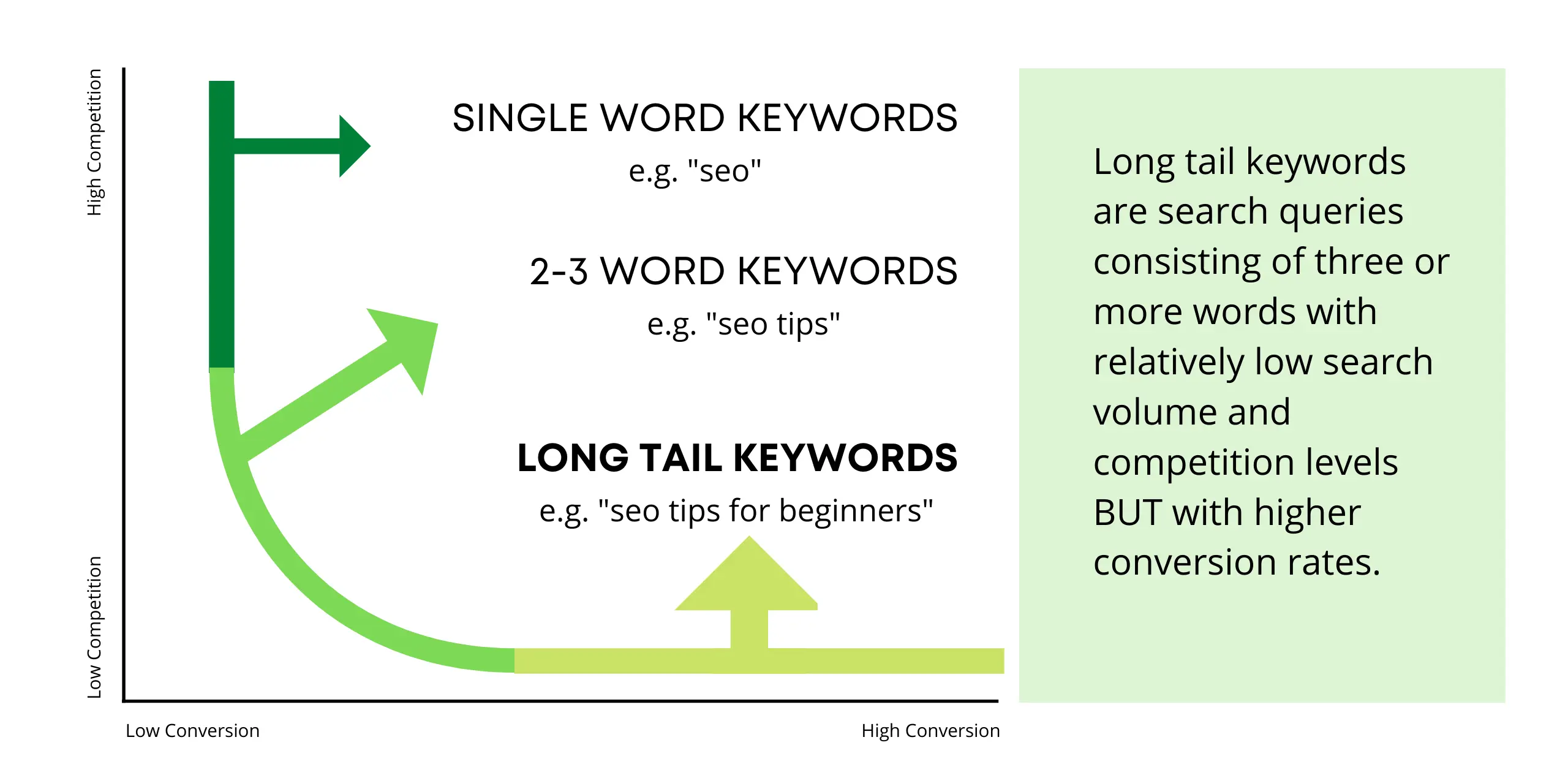
This graph provides a great visual summary of the relationship between keyword length, competition, and how likely a customer is to buy.
To hear this explained, let's watch a short clip.
These 5 Amazon KDP Keyword Mistakes Are Killing Your Book Sales
The YouTuber Rachel Harrison-Sund provides a very clear and concise explanation of why targeting overly broad keywords is a mistake and why you should focus on more specific, long-tail keywords.
Watch the clip from 02:25 to 03:20. Pay attention to the example she gives of a broad keyword versus a more targeted, long-tail keyword.
The Critical Difference: Customer Intent
The most important difference between these keyword types isn't their length; it's what they reveal about the customer's intent.
A person searching for a broad keyword is often just browsing. They haven't decided exactly what they want yet.
- Search: "adult coloring books"
- Intent: "I'm bored, show me some options. I might buy something if it catches my eye."
A person searching for a long-tail keyword has a specific need or problem in mind. They are much further along in the buying process.
- Search: "coloring books for anxiety relief"
- Intent: "I'm feeling stressed and I'm looking for a tool to help me relax right now. I'm ready to buy."
This is why we say long-tail keywords have high purchase intent. Targeting these customers is far more effective for a new book, as you're meeting a clearly defined need.
The article below explains this concept of "thinking like a reader" perfectly.
Mastering Amazon KDP Keywords for More Sales
Let's revisit the 'Mastering Amazon KDP Keywords for More Sales' article from ManuscriptReport. These sections specifically address the power of specific, long-tail keywords and how they connect to reader intent.
First, read the section 'Get Specific to Get Sales' (under the heading 'Why Your Keywords Can Make or Break Your Book'). Then, jump to the section 'Common Questions About KDP Keywords' and read the answer to 'Should I Use Single Words or Longer Phrases?'. Both sections hammer home the importance of specific phrases that match high-intent buyers.
The Strategic Trade-Off: Reach vs. Conversion
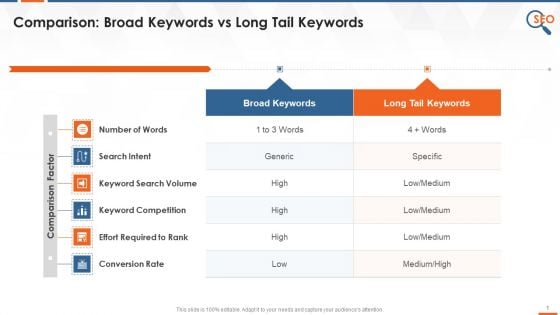
So if long-tail keywords are so great, why would anyone bother with broad keywords? It comes down to a strategic trade-off between Reach (how many people see your book) and Conversion (what percentage of those people buy it).
This table breaks down the key differences:
Let's break this down further with a detailed video explanation.
Amazon KDP Keyword Research For Beginners - Complete Guide 2024
In this segment from the 'Samazonkdp' channel, the presenter provides an excellent, in-depth comparison of long-tail vs. short-tail keywords, including a graph that visualizes the trade-off between ranking difficulty and potential book reach.
Watch from 08:21 to 11:43. Focus on how he explains the balance between reach and ranking. Understand why it's easier to rank for long-tail keywords and why that's a good thing, even if the search volume is lower.
As the video and table show:
- Broad Keywords: Put you in a huge ocean with millions of other fish (books). You have the potential to reach a lot of people, but you're competing with established bestsellers, making it very hard to get seen.
- Long-Tail Keywords: Put you in a small, targeted pond. There are fewer fish (customers), but you're one of only a few options that perfectly matches what they're looking for, making a sale much more likely.
For your first book with zero sales, winning in these small ponds is the only viable strategy to gain traction.
Structuring Your Keyword Strategy
The best approach isn't to use only long-tail keywords, but to build a balanced portfolio. Some authors think of this as a "three-tier system."
Optimize Coloring Books for Amazon KDP
This article from Colorin AI introduces a helpful 'three-tier keyword system'. It's a great way to categorize the keywords you've found and think about their different roles.
Read the section '2.1. Three-tier keyword system'. Note the examples it gives for Main (broad), Niche (medium-tail), and Long-tail keywords, and the search volume it associates with each.
As you gain sales and reviews, your book's ranking improves. This allows you to start competing for more difficult, "Niche" or "Main" keywords over time. But to start, your focus should be almost entirely on Tier 3 (Long-tail).
This final reading gives a practical recipe for how to assemble your final keyword choices, which we will be doing in a future lesson.
Mastering Amazon KDP Keywords for More Sales
To wrap up, let's look at one more section from the ManuscriptReport article. It provides a concrete recommendation for building a balanced 'keyword portfolio' for your 7 backend keyword slots.
Read the section 'Assembling Your Final Keyword Portfolio'. This gives you a clear model: a mix of a few broader (but still achievable) terms and a majority of very specific long-tail keywords.
Conclusion
You now have a robust framework for understanding the most important concept in keyword research. It's not just about finding words; it's about decoding customer psychology.
Key Takeaways:
- Broad keywords (e.g., "coloring book") are short, general, and have high search volume but also massive competition and low purchase intent.
- Long-tail keywords (e.g., "easy mandala coloring book for seniors") are long, specific, and have lower search volume but also low competition and very high purchase intent.
- The choice between them is a strategic trade-off: broad keywords offer reach, while long-tail keywords offer conversion.
- For a new book, focusing on long-tail keywords is the most effective path to your first sales.
Preview of the Next Lesson:
With this deep understanding of keyword types, you are now equipped for a critical task. In the next lesson, we will audit your current book's keywords. You will apply everything you've learned to analyze the choices you originally made for your underperforming coloring book and identify clear opportunities for improvement.