Introduction
In our previous lesson, we analyzed outrage and envy baiting as specific, powerful tactics for hijacking emotions to drive algorithmic engagement. Now, we'll turn our attention to a particular type of online persona that often builds its entire identity around these and other provocative behaviors: the edgelord.
This lesson will define edgelording and, most importantly, help you distinguish between authentic provocative expression and deliberate shock-trolling. This distinction is absolutely critical for you. As a lingerie designer and public figure in alternative lifestyle spaces, your work is inherently provocative. Understanding this line will empower you to navigate criticism, identify bad-faith actors, and ensure your own provocative content serves your message authentically, rather than devolving into trolling for its own sake.
Part 1: Defining the Edgelord Persona
The term "edgelord" is more than just slang; it describes a specific behavioral pattern rooted in a desire to shock and appear "edgy." To build a solid foundation, let's start with a formal definition and analysis from the YouTube channel F.D Signifier, which does an excellent job breaking down the concept.
I Finally Understand Edgelords.
This video, "I Finally Understand Edgelords," provides a concise definition and explores the psychological underpinnings of this online archetype.
Please watch the segment from the dictionary definition to understand the core components of edgelording. Pay close attention to the concepts of deliberately discussing controversial subjects and the defensive claim that it's all "in jest."
As the video explains, an edgelord is someone who deliberately posts offensive, controversial, or nihilistic content with the primary goal of shocking others to appear cool or edgy. Their behavior has three key components:
- Motive: The core driver is not genuine belief or a desire for discussion, but the performance of being "edgy." The shock itself is the goal, as it generates the attention they crave.
- Method: They weaponize taboo subjects—violence, extreme ideologies, nihilism, graphic imagery—and inject them into conversations where they don't belong, purely to get a reaction.
- Defense: When confronted, their signature move is to retreat behind a shield of irony, claiming "it was just a joke," "I'm just playing devil's advocate," or accusing others of being "too sensitive." This strategy, often called "plausible deniability," attempts to absolve them of responsibility for the toxicity they create.
To give this more context, let's consider your work. You post provocative photos to celebrate female confidence and sexuality. An edgelord might comment with something gratuitously violent or sexually degrading. Their comment isn't a critique of your work or a statement on sexuality; it's a performance designed to derail the conversation and center themselves by being as shocking as possible.
The F.D. Signifier video goes on to explore the psychology, linking this behavior to feelings of social inadequacy and the adoption of "Sigma Male" archetypes. You can explore this further if you're interested, but the key takeaway for our purposes is that edgelording is fundamentally a performance rooted in a need for attention, not a coherent ideology.
Part 2: Art vs. Trolling — The Line of Intent
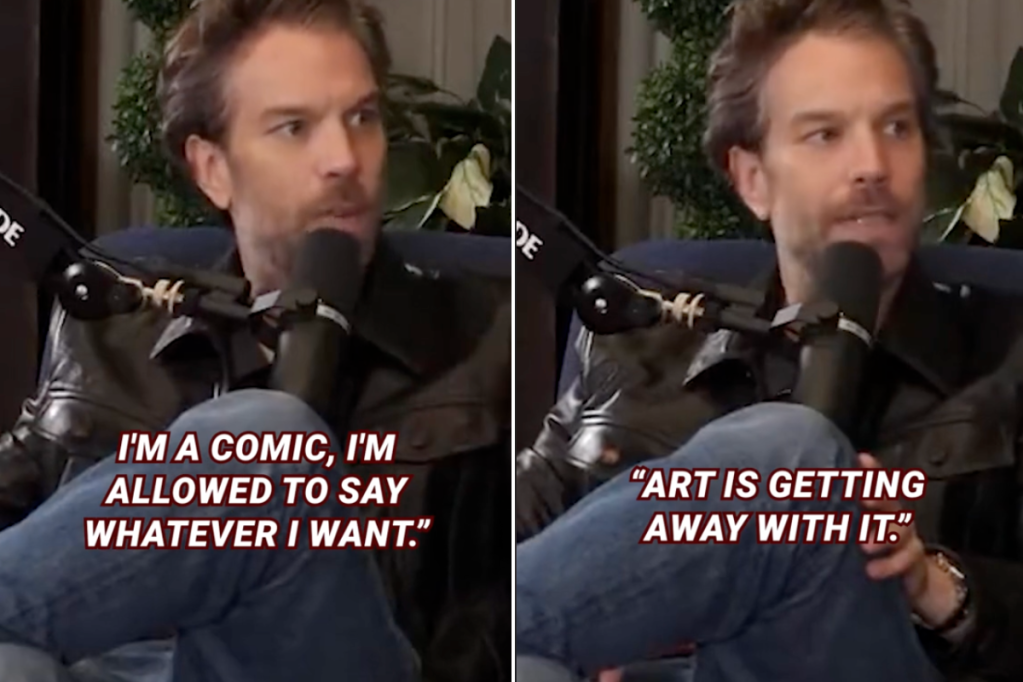
Now we arrive at the most important part of our lesson: distinguishing the edgelord's shock-trolling from authentic provocative expression. A troll's provocation is empty; an artist's or activist's provocation has a purpose. The edgelord's defense often sounds like, "I'm a provocateur, I'm allowed to say whatever I want!" But as we'll see, true provocation is an art form with intent and craft.
To understand this distinction, let's examine two case studies: a controversial artist and a controversial comedian.
Case Study 1: The "Edgelord Artist"
The artist Jordan Wolfson has been called the quintessential "edgelord artist." His work is designed to be unsettling and morally ambiguous, forcing the audience into a state of discomfort.
Jordan Wolfson's Edgelord Art | The New Yorker
This article from The New Yorker explores Wolfson's controversial work and the debate surrounding his intentions. It provides a perfect real-world example of the fine line between provocative art and trolling.
Please read the following sections: Begin with the introduction to understand his work, focusing on the description of "Female Figure" and the question it raises: Was it misogyny, or a critique of it? In the next section, read about how detractors view his work and how he's been linked to "Internet trolling": This discusses his work as a manifestation of online nastiness. Finally, read the section where Wolfson defends his uncensored approach and the critical backlash it generates: Here, he positions himself as an artist who refuses to be censored, but critics question the substance behind the shock.
Wolfson's work lives in the grey area. His defenders see him as holding up a mirror to the "caustic cruelty" of our online age. His detractors see a "noxious expression of privilege" that appropriates pain without purpose. The key phrase from the article is "Wolfson’s medium is plausible deniability."
For an artist like Wolfson, the provocation serves the art. The goal is to make you question what you're seeing. Is it a critique or a celebration of ugliness? The ambiguity is the point. This is fundamentally different from a troll, for whom the provocation is the point. While you may find his work offensive, it's operating in the realm of artistic inquiry. Similarly, your lingerie designs provoke by challenging norms around modesty and the female body, but this provocation serves a clear purpose aligned with your brand's message of empowerment.
Case Study 2: The Comedian's Rule
While art can thrive on ambiguity, comedy offers a clearer metric for success. Comedian Anthony Jeselnik is famous for his dark, offensive jokes, but he draws a sharp line between his craft and simple trolling.
Comedian artfully explains what 'shock comics' get wrong about ...
This article from Upworthy details Anthony Jeselnik's philosophy on edgy comedy and provides a powerful rule for telling the difference between artful provocation and lazy trolling.
Read the first two sections of the article, starting from the beginning and ending just before the mention of Dave Chappelle. Focus on Jeselnik's core argument and the subsequent explanation of what it means to make everyone laugh.
Jeselnik's rule, borrowed from Andy Warhol, is: "Art is getting away with it."
What does this mean? It means that if your provocative statement is successful, it brings the audience together, even when dealing with a taboo subject. A truly brilliant, edgy joke will make even the subject of the joke laugh because they recognize the cleverness and the shared human experience behind it.
If, on the other hand, your "joke" just angers a specific group or punches down on a marginalized community while the rest of the room laughs at them, you haven't gotten away with it. You're not an artist; you're just a troll reinforcing a tribal boundary. The goal of the artist is connection through shock; the goal of the troll is division through shock.
Part 3: Safeguarding and Authentic Expression
With this distinction in mind, how do you handle edgelords in your own community and ensure your own work remains authentic?
Defensive Strategies:
- Identify and Ignore: The primary goal of an edgelord is to get a reaction. Their comments are often nihilistic, nonsensical, or graphically violent in a way that is disconnected from the context of your post. They are not arguing in good faith. Your background in efficiency analysis is useful here: engaging with them has a high emotional cost for zero reward. The most efficient response is no response.
- Moderate Your Space: Use platform tools to block, mute, and delete. Your social media page is your studio. You are under no obligation to display graffiti from every person who walks by. Curating your space is not censorship; it is quality control.
- Distinguish from Legitimate Critics: It's crucial not to lump everyone who disagrees with you into the "troll" category. Someone might say, "I believe your content is objectifying and harmful." This is a belief-based critique you can choose to engage with or ignore. An edgelord, by contrast, would say something like, "I hope [something violent] happens to you." The first is an argument; the second is a pure, contentless provocation.
Maintaining Authentic Provocation:
Your goal is not to stop being provocative, but to be provocative with purpose.
- Anchor to Your 'Why': Your provocation should always be in service of your core message—be it sexual liberation, body confidence, or artistic design. Ask yourself: "Does this provocative post/caption reinforce the values of my brand?"
- Think About Your Audience: Like Jeselnik, consider if your provocation is bringing your ideal followers closer to you and each other. Does it create a feeling of empowerment or shared understanding? Or does it just create chaos for chaos's sake?
- Own Your Message: Unlike an edgelord who hides behind "it's just a joke," stand by your provocation. If you post something challenging, be prepared to explain why it's important to you. This demonstrates that your provocation comes from a place of conviction, not a desire for cheap attention.
Conclusion
Today we've moved from the tactics of outrage baiting to the persona of the edgelord, who often makes provocation their entire identity. We've established a critical distinction between their empty shock-trolling and the meaningful work of an authentic provocateur.
Key Takeaways:
- Edgelording is a Performance: It is the deliberate use of offensive or controversial topics to shock for attention, defended by claims of irony or humor.
- Intent is the Dividing Line: A shock-troll's provocation is the end goal; an artist's or activist's provocation is a tool used to serve a deeper message or create connection.
- Art Gets Away With It: As Jeselnik argues, successful provocation often unites an audience through a shared experience of confronting a taboo, whereas trolling only seeks to divide and anger.
- Defense is Disengagement: The most effective way to deal with edgelords is to deny them the reaction they seek through ignoring, blocking, and deleting.
By understanding this framework, you can more confidently identify and dismiss bad-faith attacks while honing your own unique, provocative voice to build an authentic and engaged community.
In our next lesson, we will get quantitative. We will explore how to interpret the 'ratio' on a post as a numerical indicator of community dissent or controversy, giving you a data-driven tool to complement the qualitative analysis we've done today.