Welcome to the first lesson of our second module, "Digital Identity and Operational Security." In our previous module, we established a foundational understanding of social media dynamics and, most recently, defined the "soft" ethical boundaries for growing your personal brand. You now have a framework for engaging with your communities in a way that is authentic and value-driven.
Today, we shift from social strategy to personal security. We will begin building the "hard" walls necessary to protect yourself in the digital world. Given your visible presence as a lingerie designer and an analyst in alternative lifestyle communities, this topic is not a theoretical exercise; it is a critical component of your personal and professional safety.
Our focus for this lesson is doxing. By the end of our session, you will be able to define doxing, explain the systematic process through which personal information is collected, and understand how that information is weaponized against individuals with a public profile like yours.
What is Doxing and How is it Weaponized?
Let's begin with a clear definition.
What is Doxing? Definition and Explanation - Kaspersky
This article from Kaspersky provides a concise and clear introduction to the concept of doxing.
Please read the first two sections: Start with the definition to understand the term's origin and core meaning. Then, read the section on motivation and escalation. Focus on the intent behind doxing—to punish, intimidate, or humiliate—and how it moves a conflict from the online world into the real world.
As you just read, doxing is the act of researching and broadcasting an individual's private, identifying information without their consent. The key element is malicious intent. The goal is not just to share information, but to use that information as a weapon to inflict real-world harm, fear, or harassment.
A doxing threat can be chillingly direct. Look at the image below, which depicts a real-world example of someone initiating a doxing threat.
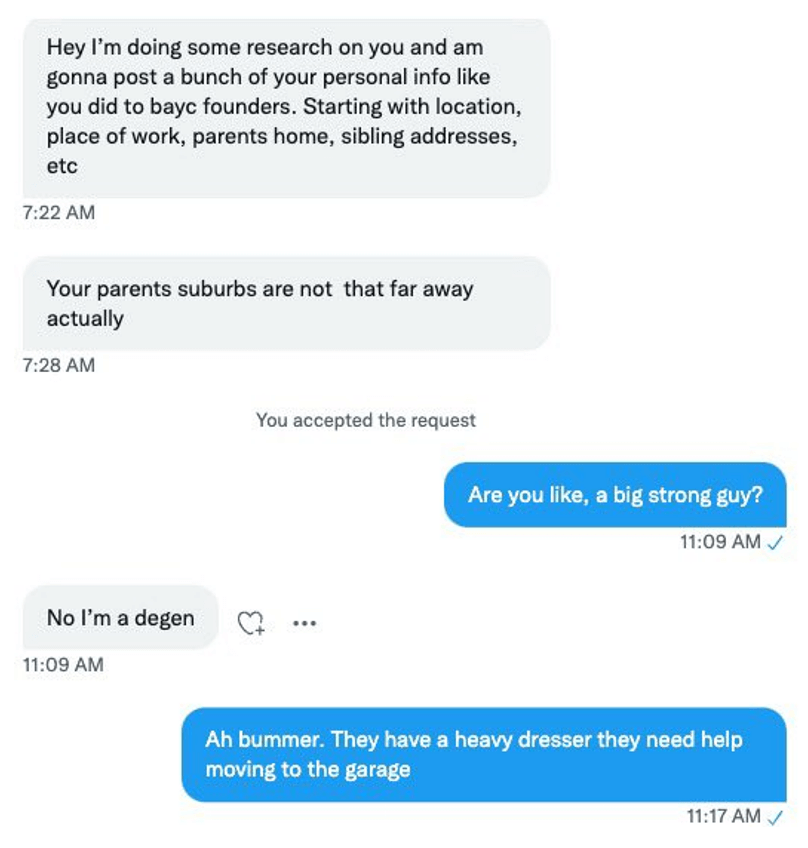
For someone in your position, the motivation for a doxer might stem from moral disagreement with the hotwife lifestyle, offense taken at your "provocative" lingerie photos, or a personal vendetta from within a community. The doxer's goal is to create tangible, negative consequences for your online persona—to cause trouble with your family, your employer, or your local community by exposing an aspect of your life they believe you want to keep separate.
The Anatomy of an Information Hunt
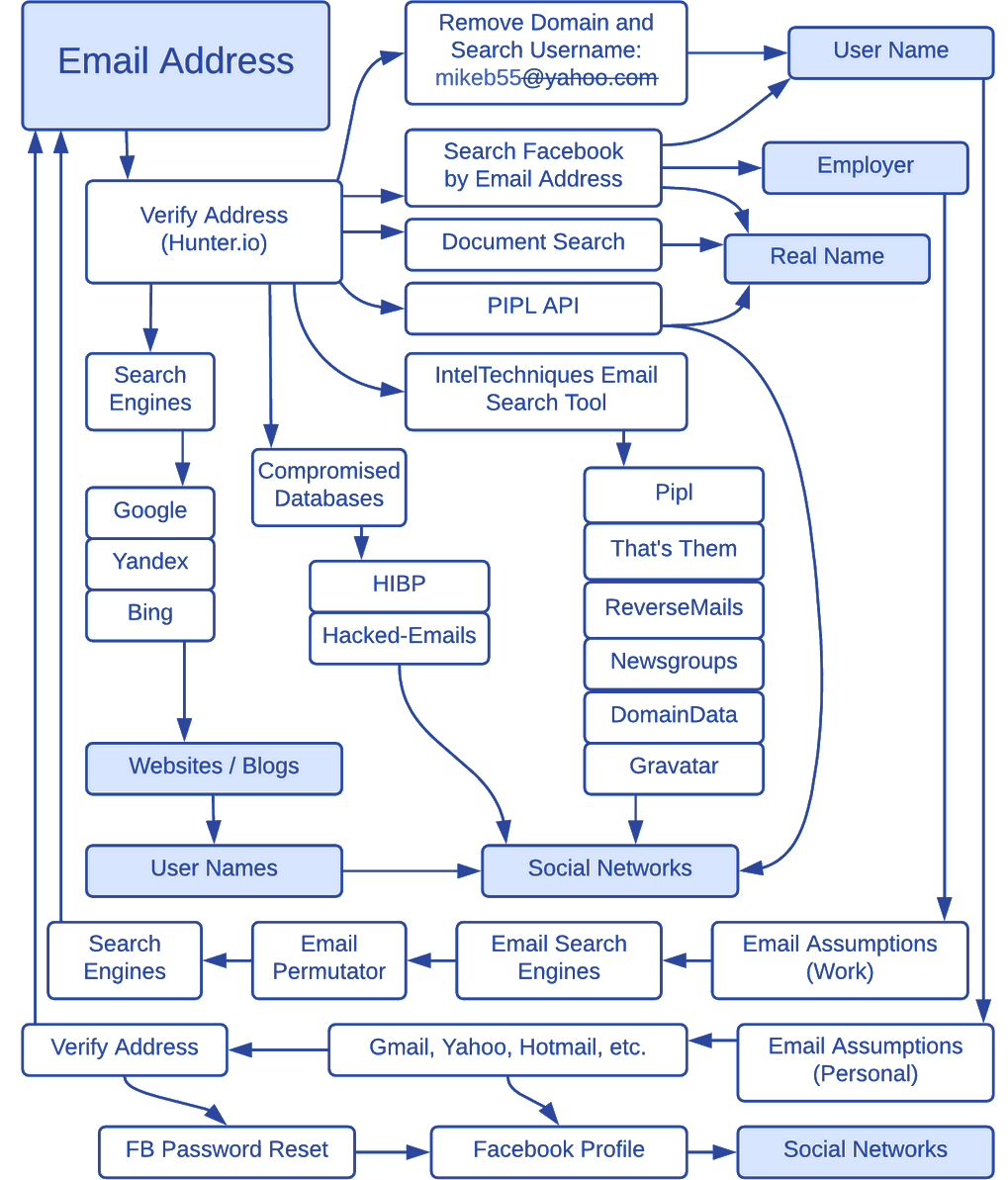
Doxing is rarely a single, lucky discovery. It is a methodical process of what is known as Open-Source Intelligence (OSINT) gathering. A doxer acts like a detective, collecting small, seemingly insignificant "breadcrumbs" of information and piecing them together until a full picture of your identity emerges.
This flowchart illustrates how a single piece of data, like an email address, can serve as a starting point to uncover a vast network of personal information.
To get a quick overview of the most common techniques, let's watch a short video that outlines the primary methods doxers use.
This video from Kaspersky provides a concise overview of the most common ways doxers collect information. It will give you a solid framework for the specific techniques we'll explore next.
Watch the following segments that break down each method: Social Media Stalking Tracking Usernames WHOIS Search on a domain name Sifting Government Records & Tracking IP Using Data Brokers Location from Photos
Now, let's dive deeper into how these techniques apply directly to a platform you use heavily: Instagram. We'll look at this from the perspective of an OSINT analyst to understand exactly how your profile and content can be deconstructed.
Deconstructing an Instagram Profile
An investigator begins with the most visible parts of your profile.
Collecting OSINT on Instagram: a guide - Authentic8
This guide, written for intelligence analysts, shows exactly how a public profile can be deconstructed to find identifying information. We will focus on the sections that detail the analysis of a single Instagram profile.
Please read the following sections to understand the initial steps an investigator would take: Start with How to correlate an Instagram handle across platforms. This demonstrates the risk of using the same username across multiple sites. Next, read How to verify profile photos. This explains how your profile picture can be reverse-searched to find other accounts or information about you. Finally, review How to use account bios and links for OSINT research. Pay close attention to the kinds of information (email, website, other profiles) that are often found in bios.
As you can see, your username, profile picture, and bio are the first "breadcrumbs." A consistent username links your activities across the web, while a bio can provide direct links to other assets you own, such as a personal website for your lingerie designs.
Deconstructing Your Content
For you, as a creator who posts photos of yourself and your designs, the content itself is the most significant source of potential information leakage.
Collecting OSINT on Instagram: a guide - Authentic8
Now let's examine the information contained within your actual posts. This is a critical area of vulnerability for any visual creator.
Read the following subsections under "How to analyze Instagram posts": Focus on Location, Network, and Identifiers. As you read, think about the backgrounds of your photoshoots. What do they reveal? A unique piece of art on the wall? A view out the window? Distinctive tattoos? Then, read the section on Metadata (EXIF) check. This is a crucial technical point: the photo file itself can contain hidden data, including the exact GPS coordinates where it was taken, unless it is deliberately removed.
This is where your operational security becomes paramount. A photo taken for a boudoir shoot might seem anonymous, but if the background contains a distinctive piece of furniture that also appears in a more public photo, a doxer can link the two. A reflection in a mirror, a street sign visible through a window, or GPS data embedded in the image file can all betray your location.
A Practical Scenario: From Instagram Handle to Home Address
Let's synthesize this into a step-by-step narrative to illustrate how quickly an identity can be unmasked.
Imagine a malicious actor, "UserX," who is morally outraged by your content and decides to "expose" you.
- The Starting Point: UserX finds your Instagram profile. They see your username, let's call it
LingerieMaven. They use a tool like WhatsMyName.app and find you use the same handle on Twitter and Pinterest, confirming a pattern. - The Bio: Your Instagram bio links to your professional portfolio website,
LingerieMavenDesigns.com. - The Website: UserX performs a "WHOIS search" on your domain name. If you did not pay for domain privacy, this public record lists the name, address, and phone number you used to register the site. They may now have your home address.
- The Business Registration: Even if you used domain privacy, UserX now has your brand name. They search the public database of their state's Secretary of State for business registrations. If you've registered
LingerieMaven Designs, LLCusing your home address, that information is often publicly accessible. - The Photo Analysis: UserX starts combing through your photos. A post from last year was geotagged at a specific local coffee shop. In another photoshoot photo, the reflection in a window shows the name of a store across the street. A third photo, uploaded directly from your phone, still contains EXIF metadata with the GPS coordinates of a park near your home. UserX is now triangulating your neighborhood.
- The Final Step: With your full name and likely city, UserX pays a few dollars for a report from a data broker site. These sites aggregate public records. The report provides their phone number, current and past addresses, and a list of known relatives.
In less than an hour, using free tools and a small fee, UserX has escalated from knowing only your Instagram handle to possessing your full name, home address, phone number, and a list of your family members. This is the information they can then weaponize.
Conclusion
Understanding doxing is the first step toward building a robust defense. It's not about inducing fear, but about fostering a healthy respect for the value of your personal data and the methods used to exploit it.
Here are the key takeaways from today's lesson:
- Doxing is an act of intimidation, designed to move online conflict into the real world by weaponizing your personal information.
- Information is collected systematically (OSINT) by linking disparate "breadcrumbs" of data from social media, public records, and commercial data brokers.
- Your content is a primary data source. Every photo you post has the potential to leak information about your location, your network, and your identity through visual cues and hidden metadata.
You now have a clear model of the threat. In our next lesson, we will explore a closely related concept: digital stalking. While doxing is often a single act of information release, stalking is a sustained pattern of unwanted monitoring and harassment. We will examine how the information gathered for doxing can fuel a stalking campaign and what the early warning signs are.