Introduction
Welcome back. In our previous lessons, we methodically dismantled the two major "classical prejudices" concerning perception. We saw that both empiricism (which tries to build the world from sensory atoms) and intellectualism (which has the mind impose order on sensory chaos) fail because they share a flawed starting point. Both presuppose an abstract, constructed world as primary and then attempt to explain our lived experience in terms of it, a project Merleau-Ponty argued was fundamentally backwards.
Having cleared the philosophical ground, we can now turn to Merleau-Ponty's own positive account. This lesson addresses a cornerstone of his entire philosophy, a concept that reorients our understanding of knowledge, reality, and our place in the world. Our objective is to explain Merleau-Ponty's 'primacy of perception' thesis.
We will see that for Merleau-Ponty, perception is not just one way of knowing among others. It is the very soil from which all other forms of thought, meaning, and even science, grow.
The Great Reversal: Perception as Foundation
The core of the thesis is a radical reversal of the traditional philosophical picture. Instead of seeing the scientific or objective world as the fundamental reality that explains perception, Merleau-Ponty argues that our lived, perceptual experience is the primary reality upon which all objective knowledge is built.
In a lecture delivered shortly after publishing his masterwork, Phenomenology of Perception, Merleau-Ponty provided a concise and powerful summary of his central argument.
The Primacy of Perception and Its Philosophical Consequences
Let's begin with Merleau-Ponty's own words from his 1946 address, 'The Primacy of Perception and Its Philosophical Consequences'. This is the most direct statement of his thesis.
Please read the short 'Preliminary Summary of the Argument,' focusing on the three numbered points. Pay special attention to the final conclusion in point 3: 'The perceived world is the always presupposed foundation of all rationality, all value and all existence.'
This is a profound claim. It means that before we can formulate a scientific law, make a logical deduction, or even reflect on our own existence, we are already immersed in a world given through perception. This perceived world is not an imperfect representation of a "truer" objective world; it is the inescapable background and condition for any world to appear to us at all.
Let's deepen this understanding by watching a short video that elaborates on this reversal.
Phenomenology of Perception: Maurice Merleau-Ponty
Professor Mark Thorsby explains how this reversal repositions science as a 'second-order expression' of our primary perceptual experience.
Please watch from 11:44 to 13:50 and then from 23:21 to 24:09. The first segment critiques the scientific viewpoint as 'naive and dishonest' for taking perception for granted. The second segment contains this crucial quote from Merleau-Ponty: 'Perception is the background from which all other acts stand out and is presupposed by them.'
As the video explains, science, logic, and philosophy are achievements—abstractions built upon the foundation of our perceptual life. The classical error, which we explored in previous lessons, is to mistake these abstractions for the foundation itself.
The Three Meanings of "Primacy"
The claim that perception is "primary" is not a simple one. Given your background in mathematics, you will appreciate that a rigorous understanding requires us to unpack the distinct logical senses in which this primacy operates. The philosopher Jakub Čapek provides a useful, systematic breakdown of the thesis into three different, though related, meanings.
Summary - Maurice Merleau-Ponty: Thinking According to Perception
This summary from an academic text on Merleau-Ponty will help us structure our understanding of the primacy thesis in a precise way.
Please read the first three paragraphs, starting from 'Merleau-Ponty repeatedly affirms...' and ending with '...analogies with perception in other domains.' The text clearly distinguishes three meanings of the thesis.
Let's formalize Čapek's distinctions:
-
Temporal or Genealogical Primacy: Perception is our first encounter with reality. Before a child learns language or develops abstract reason, they are already navigating a perceived world of faces, objects, and spaces. In this sense, perception is the chronological and developmental origin of our engagement with the world.
-
Foundationalist Primacy: Perception is the basis for more complex activities. Higher-order concepts are derived from and depend upon a bedrock of perceptual experience. For example, our abstract, geometric concept of a uniform, infinite space is founded upon our lived experience of a world structured by 'near' and 'far', 'up' and 'down', relative to our own body. The abstract concept is an idealization of this more fundamental, lived space.
-
Archetypal Primacy: Perception is the model or archetype for understanding other human acts. The essential features of perception—its perspectival nature, its ambiguity, its embodied character, its inherent structure—provide a blueprint for understanding other faculties like emotion, language, and even abstract thought. To "think according to perception," as Čapek puts it, is to recognize that these other domains are not purely disembodied, logical processes, but share the structural features of our primary perceptual contact with the world.
While all three meanings are present in Merleau-Ponty's work, it is the combination of the foundationalist and archetypal senses that carries the most philosophical weight.
Perception as "Nascent Logos"
By establishing this primacy, Merleau-Ponty is not trying to reduce all knowledge to simple sensation, which would be a return to the empiricism he critiqued. Rather, his goal is to "assist at the birth of knowledge"—to catch meaning as it first emerges.
He calls perception a nascent logos. Logos is a rich Greek term meaning 'reason', 'word', or 'structure'. By calling perception "nascent," he means it is the place where reason and meaning are born. The world is not a meaningless chaos upon which we impose structure; the perceived world is already pregnant with a structure and sense that we discover through our engagement with it.
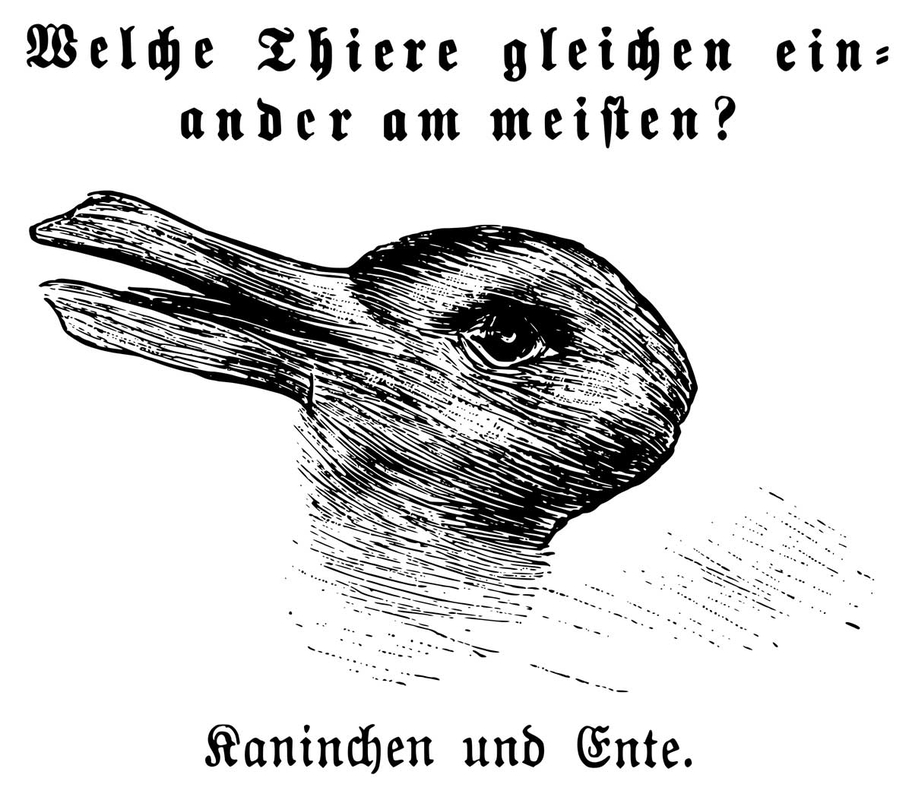
Merleau-Ponty captures this idea beautifully in the following passage.
The Primacy of Perception and Its Philosophical Consequences
Let's return to Merleau-Ponty's text to read his own elegant formulation of this idea.
Please read the paragraph starting with 'In speaking of the primacy of perception...'. Focus on how he defines the project: perception is our 'presence at the moment when things, truths, values are constituted for us' and 'a nascent logos.'
This is the positive alternative to intellectualism. Reason is not a foreign principle that descends upon the world, but something that emerges from within our perceptual dialogue with it.
The Body as the Heart of the World
Finally, it's impossible to grasp the primacy of perception without understanding its connection to the lived body. Our access to this primary, perceived world is not through a disembodied mind or intellect, but through our body. The body is the vehicle of perception, the center from which our world radiates.
We will explore the lived body in detail in the next module, but it's crucial to establish the link now. Merleau-Ponty uses a powerful analogy to describe this relationship.
Phenomenology of Perception: Maurice Merleau-Ponty
In this final clip, Professor Thorsby explains Merleau-Ponty's analogy of the body as the heart of the organism.
Please watch from 43:56 to 45:01. The key line is, 'Our own body is in the world as the heart is in the organism: it keeps the visible spectacle constantly alive, it breathes life into it and sustains it inwardly...'
Just as the heart is not merely one organ among others but the central pump that sustains the entire system, the body is not just one object among others in the world. It is the very center of our perceptual life, the condition for there being a world for us at all. It is through my body's capacity to move, touch, and see that the world unfolds as a field of meaningful presences.
Conclusion
Today we have articulated the core positive thesis of Merleau-Ponty's early philosophy. By reversing the traditional picture and placing perception first, he provides a new foundation for understanding our relationship to the world.
Key Takeaways:
- The primacy of perception thesis states that the perceived world is the presupposed foundation of all rationality, value, and existence.
- Objective knowledge and science are "second-order expressions" built upon this primary, lived experience.
- This "primacy" has at least three meanings: temporal (it comes first), foundational (it is the basis), and archetypal (it is the model).
- Perception is not a passive reception of data but a "nascent logos"—the very birth of meaning and reason from our engagement with the world.
- This entire perceptual life is anchored in the lived body, which acts as the center and sustainer of our world.
Preview of the Next Lesson:
Having established the primacy of the perceived world, our next step is to investigate its structure more closely. If this world is not a chaos, what kind of order does it have? In the next lesson, we will begin to answer this by examining one of the most basic principles of perceptual organization that Merleau-Ponty borrowed from Gestalt psychology: the figure-ground structure of the perceptual field.