Здравствуйте! Welcome to the second module of our course, "First Encounters." In the last module, we built your foundational skills: reading the alphabet, pronouncing sounds correctly, and understanding the crucial role of word stress. You now have all the tools you need to start speaking and being understood.
Today, we take the first and most important step into Russian conversation. Our goal is to distinguish between the formal 'вы' and informal 'ты' in conversation. This isn't just a grammar point; it's a fundamental aspect of Russian culture and social interaction. Getting this right is the key to being polite and making a good first impression.
1. The Two "You"s: A Core Concept
Unlike modern English which uses "you" for everyone, Russian makes a distinction based on formality and number. This might feel new, but many languages have a similar feature.
To get a clear visual overview of this concept, take a look at the following image:

As you can see, the pronoun you choose depends on who you are talking to.
- Ты (ty): The informal, singular "you". Use it when talking to one person you know well or who is a child.
- Вы (vy): This pronoun has two main functions:
- The formal, singular "you". Use it to show respect when talking to one person you don't know, who is older, or is in a position of authority.
- The plural "you". Use it when talking to any group of two or more people, regardless of how well you know them.
To solidify this understanding, let's watch a short video that explains these rules clearly.
Russian - ты vs вы, отчество, Russian patronymic, Russian pronouns
The video 'Russian - ты vs вы' from the channel 'Antonia Romaker - English and Russian online' gives a concise breakdown of the main rules.
Please watch from 00:52 to 02:42. Focus on how the speaker explains the three main situations: Addressing one person informally (ты). Addressing many people (вы). Addressing one person formally (вы).
A quick note on writing: When using Вы as the formal, singular "you" in letters, emails, or official documents, it is often capitalized (Вы, Вас, Вам) to show extra respect. You won't need to worry about this in casual typing or handwriting, but it's good to recognize.
2. Social Context: When to Use Ты and Вы
Now that you know the basic rules, let's explore the social situations that determine your choice. This is where culture comes into play.
Before we dive into a list, test your intuition. Look at the image below. For each of the four scenes, would you use ты or вы?
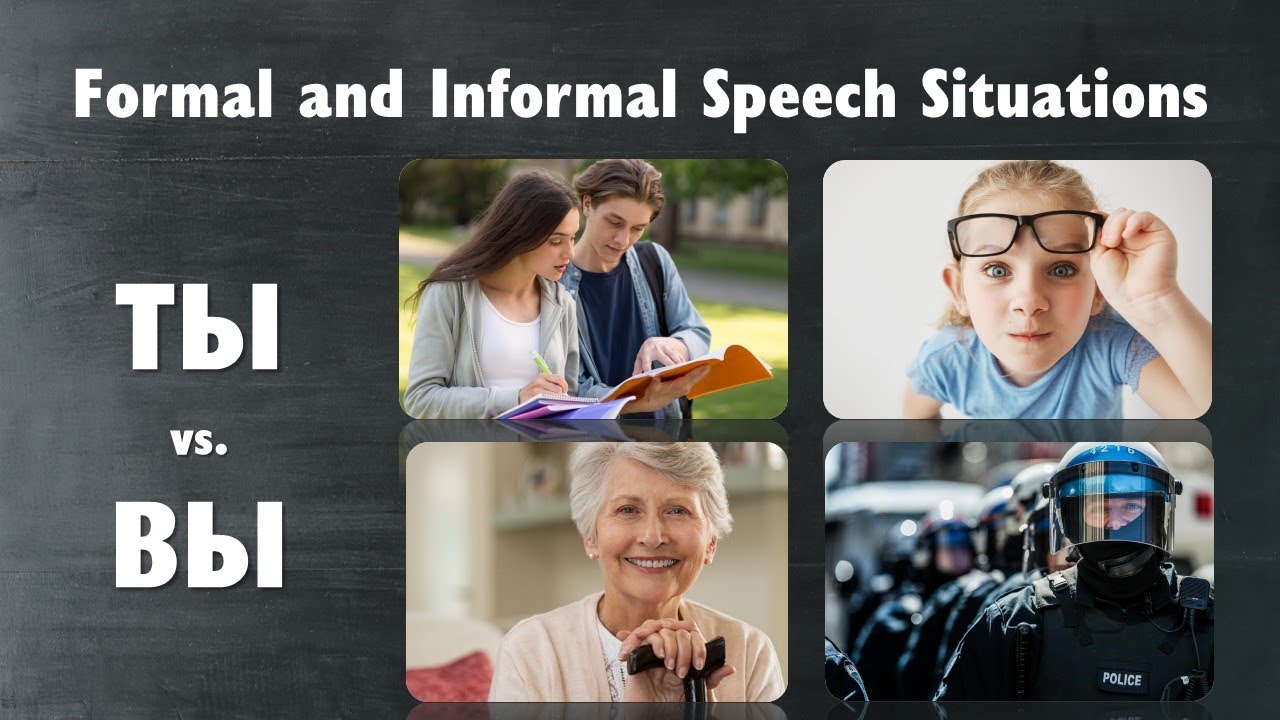
Here’s the breakdown:
- Students studying: Likely ты, as they are peers in an informal setting.
- A child: Definitely ты.
- An elderly woman: Definitely вы, to show respect for her age.
- Police officers: Definitely вы, as they are authority figures in a formal context.
For a more detailed guide on navigating these social dynamics, the following resource provides a clear summary.
When to use ты and вы in Russian
The article 'When to use ты and вы in Russian' from Hack Your Russian gives a great, practical list of who gets a 'ты' and who gets a 'вы'.
Read the sections 'When to use ‘ТЫ’ in Russian' and 'When to use ‘ВЫ’ in Russian'. You can skip the part about the history of 'ВЫ'. Focus on the bulleted lists that specify who to address with each pronoun.
To summarize the key contexts:
| Use Ты (informal) with... | Use Вы (formal/plural) with... |
|---|---|
| Friends & family members | Strangers |
| Children & pets | People older than you |
| Peers you know well (classmates, colleagues) | Authority figures (professors, bosses) |
| Anyone who suggests switching to 'ты' | Service workers (cashiers, waiters) |
| Any group of two or more people |
The Golden Rule for Learners: When in doubt, always use вы. It is always the safe and polite option. No one will be offended if you are too formal, but being overly familiar can be seen as rude.
3. Switching from Вы to Ты
As you get to know someone, you might move from the formal вы to the informal ты. This is a common and natural progression in a relationship. But how does it happen? You don't just decide on your own; it's usually a mutual agreement.
Let's watch a video that explains this process.
ВЫ and ТЫ in Russian: How to switch and where to use
The video 'ВЫ and ТЫ in Russian: How to switch and where to use' from Real Russian Club offers fantastic insight into the social dance of switching forms.
Watch from 00:47 to 03:32. Pay close attention to the specific phrase used to suggest switching to 'ты'. The 'брудершафт' tradition is a fun cultural note you might see in Russian films!
The key phrase to remember is:
Дава́й перейдём на «ты»? (Daváy pereydyóm na "ty"?) — "Let's switch to 'ty'?"
A peer or someone of a similar age might suggest this to you. It's a sign that your relationship is becoming more friendly and less formal.
4. Ты and Вы in Action
Choosing between ты and вы affects other words in your sentences. While we will cover greetings and questions in detail in the next lessons, here is a quick preview of how this choice changes common introductory phrases.
Notice the difference in the bolded words. Don't worry about the grammar behind why they change for now; just focus on recognizing the patterns.
| English | Informal (ты) |
Formal / Plural (вы) |
|---|---|---|
| What's your name? | Как тебя́ зову́т? | Как вас зову́т? |
| Where are you from? | Отку́да ты? | Отку́да вы? |
| And you? | А у тебя́? | А у вас? |
These examples, taken from the "Russian for Free" phrasebook, show that the ты/вы distinction is not just a pronoun choice—it's a setting for the entire conversation.
Conclusion
Excellent work! You've just learned one of the most important concepts for interacting in Russian.
Key Takeaways:
- Ты is the singular, informal "you" used for friends, family, and children.
- Вы is the singular, formal "you" used for strangers and respected individuals, and it is also the plural "you" for any group.
- The choice depends on age, social distance, and context.
- The golden rule: When in doubt, always start with вы.
- You can switch from
выtoтыby asking: Дава́й перейдём на «ты»?
Now that you know how to address people correctly, you're ready to learn what to say to them. In our next lesson, we will cover how to greet people and say goodbye in both formal and informal situations, putting your new knowledge of ты and вы to immediate use.