Здравствуйте!
In our last few lessons, we've carefully assembled the tools for talking about time in Russian. You've mastered the past tense and both future tenses (compound and simple), paying close attention to the crucial concept of verb aspect—the difference between a process and a completed result.
Today, we'll put all those pieces together. Our goal is to narrate a simple sequence of events in the past or future. You'll learn how to connect actions to tell a small story, like describing what you did yesterday or what you plan to do tomorrow. This is a huge step toward using Russian in a more fluid, natural way.
1. The Glue for Your Story: Connector Words
To tell a story, you need more than just verbs; you need words that link your sentences together chronologically. These are often called connector or sequence words. They are the signposts that guide the listener through your narrative.
Here are some of the most essential connector words in Russian.

For today's lesson, let's focus on these four:
- Снача́ла (snachA-la) — First / At first
- Пото́м (pa-tOm) — Then / After that
- Зате́м (za-tYEM) — Then / Next (often interchangeable with пото́м)
- По́сле э́того (pOs-le E-ta-va) — After this
Think of them as the framework for your story. For example:
Снача́ла я встаю́, пото́м я за́втракаю.
(First I get up, then I have breakfast.)
2. Narrating a Past Sequence
When you talk about a series of completed events in the past, you'll typically use a chain of perfective verbs. The connector words link these finished actions together.
For example, to describe your morning yesterday:
Вчера́ снача́ла я просну́лся (perfective), пото́м я поза́втракал (perfective), и по́сле э́того я пошёл (perfective) в университе́т.
(Yesterday, first I woke up, then I had breakfast, and after that I went to the university.)
Now, let's listen to a natural example. In the following video, Max asks Julia what she did last week. Listen to how she lists her activities.
Slow Russian Dialogue For Beginners in Past Tense (with subtitles)
This clip is from the 'Russian With Max' channel. It's a slow dialogue perfect for picking out key verbs in a past-tense narrative.
Watch the clip from 00:27 to 00:44. Listen to Julia's response. Can you identify the four activities she did last week? Notice she uses imperfective verbs here (гуляла, готовила, ходила, работала) because she's describing general, repeated, or ongoing activities during the week, not a single chain of completed events.
Julia described her week in general terms. If she were describing a specific sequence of events on one day, she might have used perfective verbs. For example: "Я погуля́ла (I took a walk), пото́м пригото́вила (I cooked), а пото́м порабо́тала (I did some work)."
3. Narrating a Future Sequence
The same principle applies when you're planning for the future. You use connector words to outline the sequence of your planned actions. Here, you'll use a mix of future tenses:
- Imperfective future (
быть+ infinitive) for processes or actions without a defined end. - Perfective future (simple future) for results or completed actions.
Let's plan a day related to your interests:
За́втра снача́ла я бу́ду рисова́ть (imperfective) не́сколько часо́в. Пото́м я посмотрю́ (perfective) но́вый фильм. Ве́чером я поигра́ю (perfective) в видеоигру́.
(Tomorrow, first I will be drawing for a few hours. Then I will watch a new movie. In the evening, I will play a video game.)
Let's see this in action. In the video below, the speaker is planning her evening.
How to Describe Your Day In Russian | Super Easy Russian 18
In this video from 'Easy Russian', the speaker describes her day. We'll watch the part where she makes plans to meet a friend.
Watch from 05:51 to 06:45. The speaker says she wants to go to a cafe and will call her friend. Listen to the verbs she uses to describe the sequence of future actions: 'позвоню' (I will call), 'договориться и встретиться' (to agree and meet), 'поеду' (I will go by transport).
Her plan is a clear sequence: first, call the friend (позвоню́); then, meet up (встре́тимся); to do that, she will travel by bus (пое́ду на авто́бусе). This is a perfect, real-world example of narrating a future sequence.
4. Practice: Sequencing a Story
Now it's your turn to practice. The image below contains a short story about four characters arriving at a school holiday. Read the text and then determine the correct order of arrival.
The key verbs to look for are пришёл / пришла́ (arrived on foot) and прие́хал (arrived by transport).
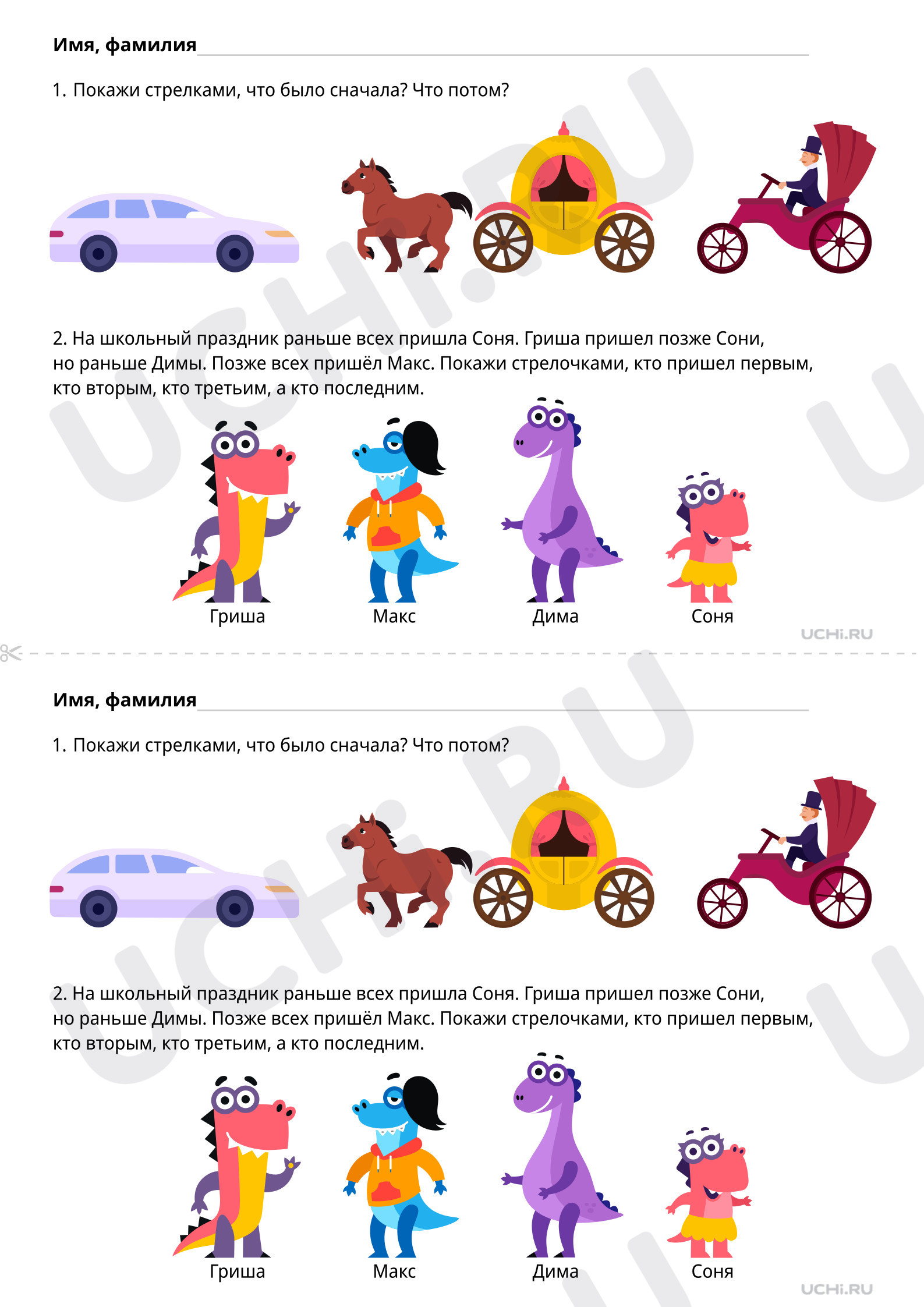
Text from the image:
На школьный праздник дети приходили и приезжали. Первой пришла Соня. Гриша приехал на велосипеде после неё. Дима опоздал и прибежал после Гриши. Последним пришёл Макс.
Vocabulary Help:
- Первой - First (for a female)
- После неё / после Гриши - After her / after Grisha
- Опоздал - Was late
- Последним - Last (for a male)
Click for the solution
Based on the text, the correct order is:
- Соня (Первой пришла Соня - Sonya arrived first)
- Гриша (Гриша приехал... после неё - Grisha arrived... after her)
- Дима (Дима... прибежал после Гриши - Dima... ran up after Grisha)
- Макс (Последним пришёл Макс - Max arrived last)
Conclusion
Excellent work today! You've successfully bridged the gap between knowing individual tenses and actually using them to communicate a series of events.
Key Takeaways:
- Connector words like снача́ла and пото́м are essential for structuring a narrative.
- To describe a sequence of completed past actions, you typically use a chain of perfective verbs.
- To describe future plans, you can combine imperfective future (for processes) and perfective future (for results) to give a more detailed picture.
Preview of the next lesson:
We are now moving into a new module focused on interaction. In our next lesson, you will learn about the instrumental case. This case is fundamental for describing how or with what you do something. For example, you'll learn to say you draw with a pencil (рисова́ть карандашо́м) or have coffee with a friend (ко́фе с дру́гом).