Introduction
In our last lesson, we focused on System 3, the organizational function responsible for managing the "inside and now." We saw how it uses the principles of variety engineering—attenuating information from operations and amplifying its own commands—to maintain control and drive optimization across the various System 1 units. We concluded by highlighting a fundamental cybernetic vulnerability: if System 3's understanding is based on filtered and aggregated information, how can it trust that this information provides a true picture of operational reality? What prevents a System 1 unit from hiding problems or "gaming the numbers" to meet its negotiated targets?
This lesson answers that critical question by introducing System 3* (pronounced "three-star"). You will learn about its unique function as a sporadic, independent audit channel. We will explore why this channel is essential for maintaining the integrity of the entire Viable System Model, acting as a crucial check and balance that ensures the information flowing within the system is grounded in reality. This function completes our picture of the VSM's mechanisms for internal regulation.
The Problem of the Attenuated Channel
As we established, for System 3 to regulate the immense variety of System 1, it must rely on information channels that condense and summarize operational data. This process of variety attenuation is essential for preventing managerial overload. However, it creates an inherent risk—the classic "principal-agent problem" framed in cybernetic terms. The "agent" (System 1 management) controls the detailed information, while the "principal" (System 3 management) only sees the summary. This information asymmetry can lead to several pathologies:
- Goodhart's Law: When a measure becomes a target, it ceases to be a good measure. System 1 units might focus on optimizing the reported metric at the expense of the actual health of their operation.
- Information Hiding: To avoid intervention from System 3, a System 1 manager might choose not to report emerging problems, hoping they can be solved locally before they become visible in the aggregated data.
- Distortion: The data itself could be intentionally or unintentionally skewed as it moves up the hierarchy.
A viable system needs a mechanism to counteract this. It requires a way to get an occasional, unvarnished look at what's truly happening on the ground floor. This is the purpose of System 3*.
Defining System 3*: The Sporadic Audit
Stafford Beer designed System 3* as a specific information channel to solve the problem of attenuated reporting. It is not another layer of management, but a function that provides direct, unfiltered insight into the workings of System 1.
Let's start with a formal definition.
[PDF] Chapter 5: The Viable System Model - ScienceOpen
This excerpt from a chapter on the VSM provides a concise definition of System 3*.
In the section describing the five systems, please locate the paragraph about System 3. Within that paragraph, read the sentence that defines System 3*.
As the text states, System 3* is responsible for providing alternative, sporadic, and complementary information. Let's break that down:
- Alternative: It bypasses the official, aggregated reporting lines that run from System 1 management to System 3.
- Sporadic: It is not a continuous stream of surveillance. Constant monitoring would be a form of micromanagement that undermines the autonomy of System 1 and would overwhelm the metasystem with variety. The audits are occasional and often targeted.
- Complementary: Its purpose is to complete the model that System 3 has of its operations, filling in gaps or verifying information that seems anomalous.
This function is sometimes described as looking for "signs of stress" within the operational units. To better understand this role, let's explore it further.
Preliminary Diagnosis - The Viable Systems Model Guide 3e
This guide offers a practical and accessible explanation of System 3*.
Please read the subsection titled "System 3* Audits and Surveys". Pay close attention to the idea that its job is to "complete the model" and the physiological analogy provided.
The analogy to the vagus nerve is particularly insightful and will likely resonate with your interest in the philosophical and biological underpinnings of cybernetics. The vagus nerve provides the brain with direct feedback on the state of the body's internal organs, independent of other sensory pathways. In the same way, System 3* provides the metasystem with direct, unmediated feedback from the "organs" of the organization—the System 1 operational units.
Visualizing the 3* Channel
The unique path of the System 3* channel is a key feature of the VSM diagram. It visually represents the function's ability to bypass the standard command structure.

This diagram shows that System 3* is not about auditing System 3 itself, but about providing System 3 (and the wider metasystem) with an independent view of System 1.
Another, simpler diagram reinforces this structural point.
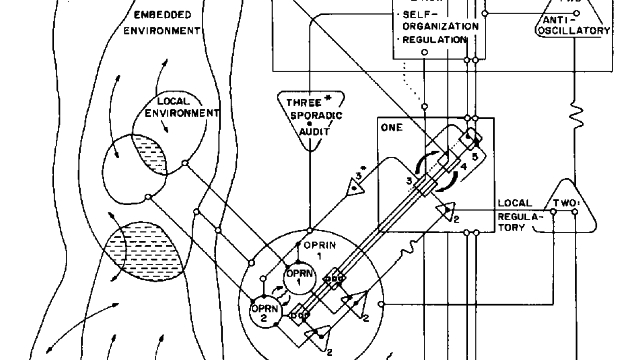
System 3* in Practice
What does a System 3* audit look like in a real organization? It's crucial to understand that System 3* is a function, not necessarily a fixed department called the "Audit Office." It can be embodied in many ways:
- A special project team assembled to investigate a specific issue (e.g., a sudden rise in workplace accidents).
- External auditors or consultants brought in for an independent review.
- Automated probes in a data system that look for unusual patterns that might not be captured by standard reports.
- The practice of "management by walking around," where senior managers visit operational sites to talk directly with frontline staff.
The key is that the information gathered flows directly to the metasystem without being filtered by System 1's own management.
Preliminary Diagnosis - The Viable Systems Model Guide 3e
This section provides concrete examples of the kinds of questions a System 3* audit might investigate.
Under the heading "System Three: Examples," find the case study for "Suma 1991". Focus on the paragraph that begins "Audits are common..." to see examples of real-world 3* inquiries.
As the Suma example shows, these audits are not just about financial compliance. They can be about anything relevant to the organization's health and potential: "How much are we spending on back treatment?" (a sign of physical stress on the system), "What skills do we have that are unused?" (identifying latent potential).
In the context of Project CyberSyn, which sparked your interest, the System 3* function would have been absolutely critical. If the Cyberstride data coming from a factory showed production targets were being met, but worker petitions claimed the machinery was unsafe, a System 3* team could have been dispatched to investigate the reality on the factory floor, bypassing the official factory management reports.
The Cybernetic Balancing Act
System 3* is a powerful tool, but its power lies in its careful, sporadic use. If it were used constantly, it would destroy the very autonomy that makes System 1 effective. The trust required for the "resource bargain" we discussed in the last lesson would evaporate.
The true cybernetic elegance of System 3* is that its mere existence serves as a regulatory function. Knowing that an independent audit is always possible incentivizes honest and accurate reporting through the primary System 3 channels. It acts as a balancing mechanism, ensuring accountability while preserving autonomy. It reinforces the integrity of the entire information architecture, making the whole system more robust and, ultimately, more viable.
Conclusion
In this lesson, we have uncovered the function of System 3*, a subtle but vital component of the Viable System Model. It serves as Beer's cybernetic solution to the inherent problem of information asymmetry in any complex organization.
Here are the key takeaways from our exploration:
- System 3 is an independent audit channel* that provides the metasystem with a direct, unfiltered view of System 1 operations.
- Its primary function is to solve the problem of attenuated information, counteracting the risk of distortion or hiding of information in the main reporting lines.
- It operates sporadically, not continuously, to preserve the essential autonomy of the System 1 units.
- It is best understood as a check-and-balance mechanism whose existence encourages truthful reporting and ensures the metasystem's model of reality remains accurate.
We have now completed our examination of the VSM's systems for managing the "inside and now." However, an organization that only looks inward is doomed to obsolescence. To be truly viable, it must also look outward and forward. In our next lesson, we will turn our attention to System 4, the function responsible for intelligence, strategy, and adapting the organization to the future challenges and opportunities of its external environment.