Hello! Welcome to the first lesson of your personalized course, RHOBH: Interpersonal and Gender Politics. I'm excited to embark on this analytical journey with you.
Introduction
Approximate time to complete: 60 minutes
Today's lesson addresses the first learning outcome of our course: Applying Literary Theory to Reality TV: Deconstructing the 'Real' and the 'Constructed' in RHOBH's Narrative.
Given your background in English Literature and Philosophy, you're perfectly equipped to tackle this. We'll be doing something you're very familiar with: treating a cultural text—in this case, The Real Housewives of Beverly Hills—with the same critical rigor you'd apply to a novel or a philosophical argument. Our goal is to move beyond passive viewing and develop a critical framework for understanding how the show's narrative is built. This foundational lesson will equip you with the initial tools and concepts we'll use throughout the course to analyze the show's complex political and gender dynamics.
We will explore:
- The fundamental tension between "reality" and "construction" in non-fiction media.
- The narrative tools, like tropes and editing, used to shape the story.
- An introduction to the academic theories we can use to deconstruct these narratives.
Let's begin.
1. The "Creative Treatment of Actuality"
Is reality TV "real"? It's a simple question with a complex answer. Let's start our analysis by looking at a piece of the "constructed" narrative itself.
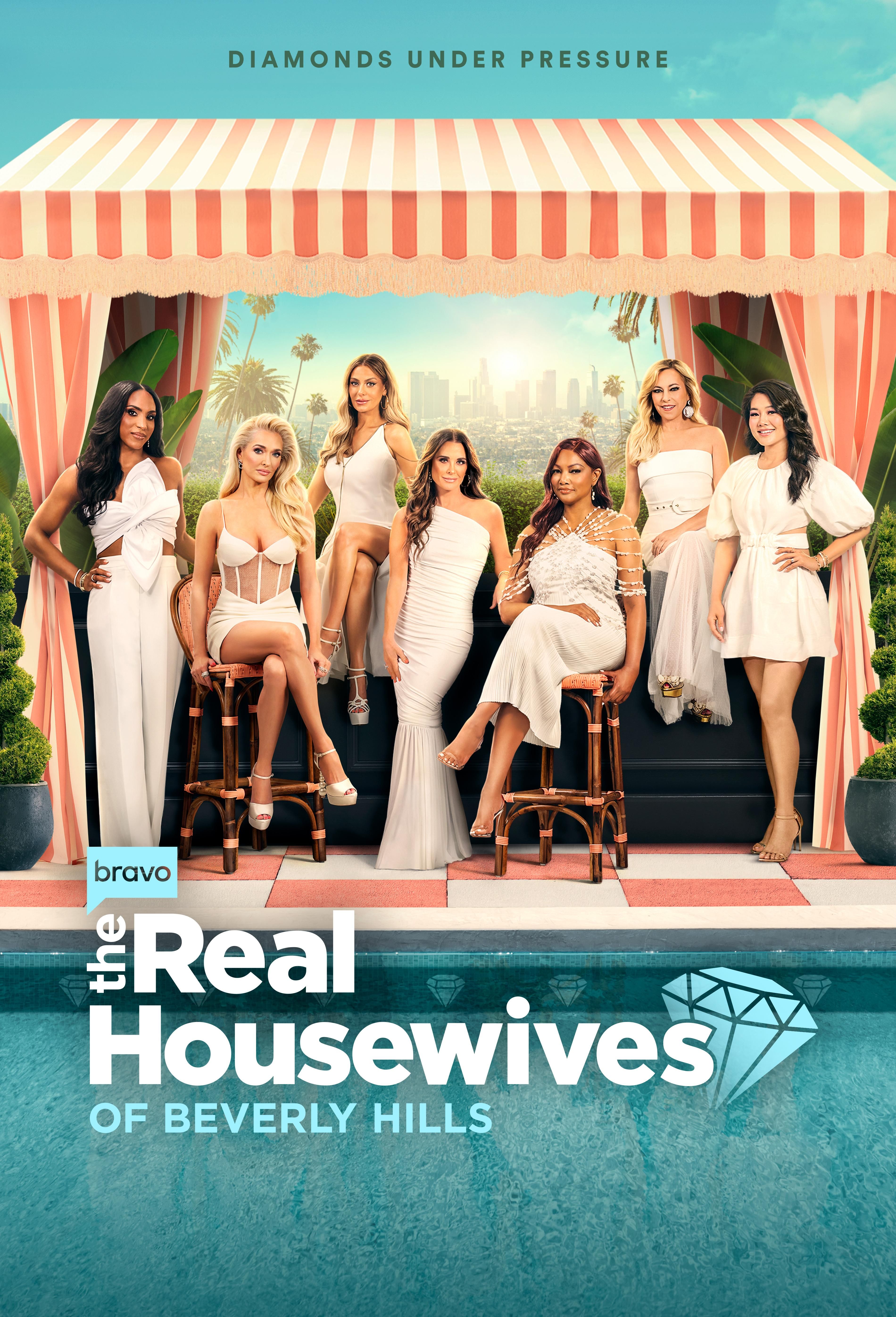 The promotional poster for The Real Housewives of Beverly Hills. Notice the tagline, "DIAMONDS UNDER PRESSURE," which immediately frames the show's narrative around themes of wealth, glamour, and conflict.
This poster isn't a candid snapshot; it's a carefully composed image designed to sell a story. The attire, the setting, the poses, and the tagline all work together to construct a specific idea of what you're about to watch. This is our entry point into the central concept of this lesson.
The filmmaker John Grierson, a pioneer of the documentary form, famously described it as the "creative treatment of actuality." This idea is crucial because it acknowledges that even media intended to capture reality involves creative choices that shape how that reality is presented. Reality TV, a descendant of documentary, takes this "creative treatment" to a whole new level.
To explore this, please watch the following clips from the video essay below. It provides an excellent overview of how non-fiction media shapes truth.

What to watch:
- The Concept of 'Creative Treatment' (2:32 - 3:09): Pay attention to how the very definition of a documentary implies it is not a neutral reflection of reality.
- The Evolution of Reality TV (9:49 - 13:11): This section details the history of reality TV, highlighting how it openly combines "actuality and artifice." Note the discussion of cherry-picking footage (a 22-minute episode from 70 hours of footage), staging scenes, and "manufacturing celebrity."
These clips establish a key principle for our course: The Real Housewives is not a direct window into the lives of these women. It is a product, a narrative constructed from the raw material of their lives through a process of selection, omission, and manipulation.
2. The Narrative Toolbox: Tropes and Editing
Now that we've established that the show is constructed, let's look at how. Like any genre, reality TV has developed its own set of narrative conventions, or tropes, and editing techniques. As someone with a literary background, you can think of these as the genre's equivalent of archetypes, plot devices, and narrative structure.
The following video breaks down some of the most common tools in the reality TV toolbox. Watching these clips will help you start to identify the building blocks of the show's constructed narrative.

What to watch:
- The Villain (1:06 - 4:58): The "villain" is one of the most powerful roles in reality TV. Notice how the video discusses both participants who lean into the role and, crucially, how producers can create a villain through a "misleading edit."
- Big Fights & Apology Rituals (9:21 - 12:52): Conflict is the engine of a show like RHOBH. This segment explains how fights are often staged over trivial matters and escalated for dramatic effect, followed by highly structured "apology rituals" that serve as a narrative arc.
- The Exit Edit (12:32 - 13:31): This is a clear example of post-production manipulation. A character's backstory or "sob story" is suddenly highlighted just before they are eliminated or leave a show to give their departure a sense of a complete, emotionally satisfying arc.
These tropes and techniques are the invisible architecture of the show. Our task, as critical viewers, is to deconstruct this architecture—to take it apart to see how it works. This process of intellectual untangling is what allows us to separate the "real" from the "constructed."
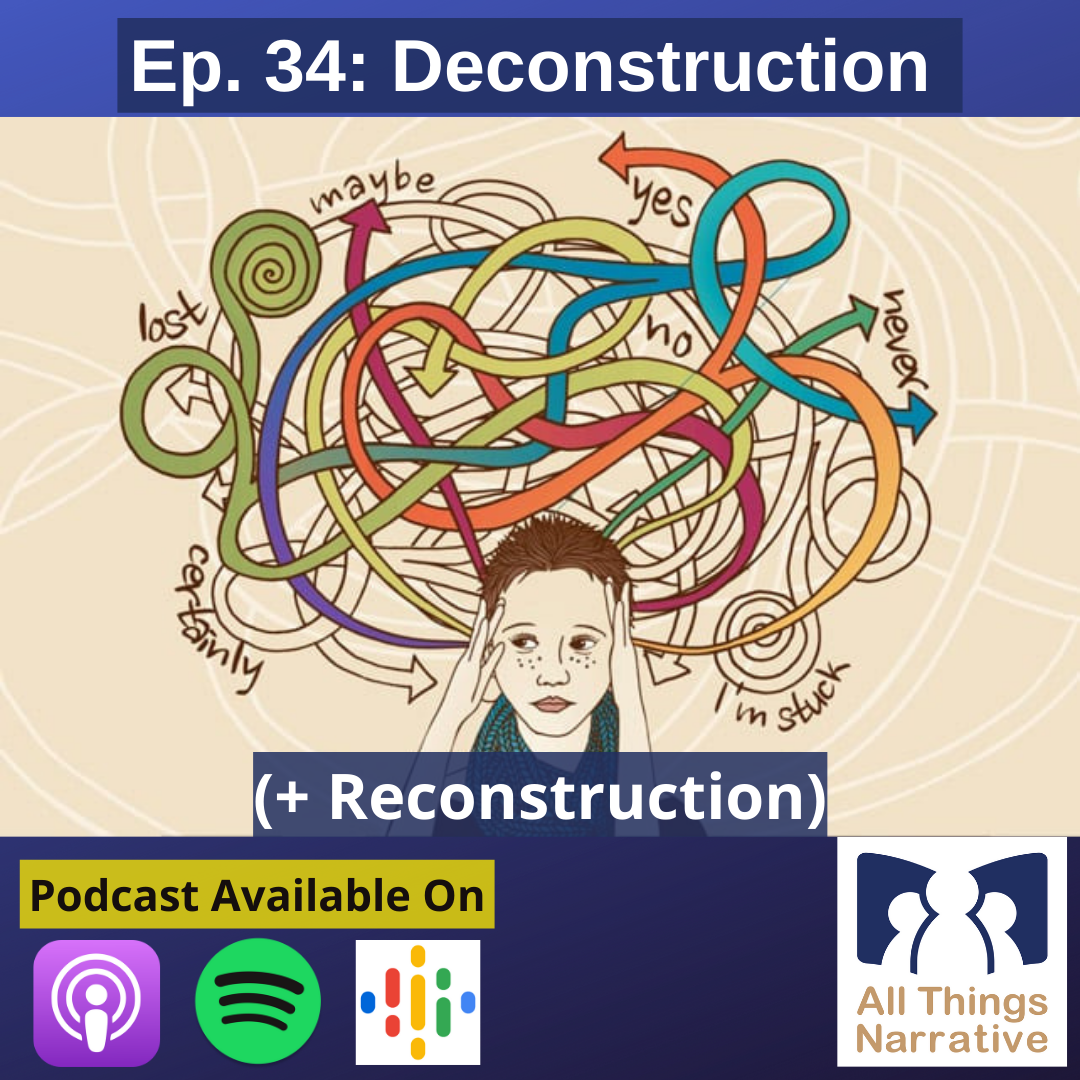 This image is a great visual metaphor for what we're doing. We are looking at the tangled mess of the show's narrative and trying to trace the lines of construction to understand how it's all put together.
3. Applying a Theoretical Lens
The final step in our lesson is to equip ourselves with more formal analytical tools. Your background in philosophy and literature has shown you the power of theory to illuminate a text. We will do the same for RHOBH. Don't worry about mastering these theories today; the goal is simply to see how they can be applied.
I've selected excerpts from two academic papers that use critical theory to analyze The Real Housewives. They provide a model for the kind of analysis we'll be doing in this course.
Resource 1: Postfeminism and False Agency
The first resource is a Master's thesis that examines RHOBH through the lens of postfeminist theory. Please read the introduction to see how the author sets up her analysis.
- Reading (Approx. 5 mins):
In the real housewives of postfeminism: false agency and the by Hannah B. Spector, please read the Introduction (Part 1, pages 1-5 of the document). - Focus on:
- The "paradoxical title": Why are these women called "housewives" when many don't fit the traditional definition?
- How the author positions the show as a cultural text worthy of serious study.
- The questions she poses about the representation of women, marriage, and feminism.
This introduction is a superb example of how to frame an academic inquiry into a popular culture text. The author later uses theorists like Angela McRobbie and Judith Butler (whose work on performativity we will discuss in Module 3) to deconstruct the show's "constructed" ideas about female success and agency.
Resource 2: Stereotypes and Iconography
The second resource uses media theory to analyze how RHOBH constructs female identity through stereotypes. Please read the section on the theoretical framework.
- Reading (Approx. 5 mins):
In Reality (TV) constructing women by Kasper H. Ulmanen & Stella Fogelberg, please read the section on Theoretical framework (Part 2, specifically section 4.1 "Richard Dyer's 'Stereotyping'," pages 15-17). - Focus on:
- The distinction between a "social type" (fitting within society's norms) and a "stereotype" (representing what is outside the norm).
- The concept of "iconography"—the use of visual symbols (like clothing, setting, etc.) to quickly establish a character's identity.
Dyer's framework gives us a precise vocabulary for analyzing the characters on RHOBH. Are they presented as complex individuals, or are they flattened into recognizable "types" or "stereotypes" (e.g., The Villain, The Hot Mess, The Moral Compass) to serve the narrative?
Conclusion
In this lesson, we laid the critical foundation for the rest of the course. You've learned that:
- Reality TV is not a simple recording of events but a "creative treatment of actuality," a narrative that is fundamentally constructed.
- Producers and editors use a toolbox of narrative tropes (like the villain and the big fight) and editing techniques (like the exit edit and cherry-picking footage) to build a compelling story.
- We can apply critical and literary theories—such as postfeminism and theories of stereotyping—to deconstruct these narratives and understand the interplay between the "real" events and their "constructed" presentation.
This ability to deconstruct the narrative is the first and most crucial step in analyzing the show's interpersonal and gender politics.
Preview of the Next Lesson:
In our next lesson, "The Role of the Producer: Analyzing Story Editing and Narrative Manipulation in RHOBH," we will delve deeper into the specific techniques of production. We'll move from the what of construction to the how, examining the producer's hand in shaping storylines, creating conflict, and guiding the audience's perception.