Hello! Welcome back to your course on engineering economics.
In our last lesson, we focused on marginal analysis—the forward-looking technique of evaluating the cost and benefit of the very next step. This helps us optimize decisions by asking, "Is this next action worth it?"
Today, we're going to tackle the opposite challenge: how to properly handle the costs of steps you've already taken. This lesson directly addresses the learning outcome: Identify sunk costs and explain why they should be ignored in forward-looking decisions. Mastering this concept is crucial for any leader, as it helps you avoid one of the most common and costly decision-making traps: throwing good money after bad.
What is a Sunk Cost?
A sunk cost is a cost that has already been incurred and cannot be recovered. It's money, time, or effort that's gone, regardless of what you decide to do next.
The fundamental rule of rational decision-making is: sunk costs are irrelevant to future decisions. The only factors that should influence your choice are the future costs and future benefits of your available options. This is the direct counterpart to the marginal analysis we just studied—both force you to be relentlessly forward-looking.
Let's start with a simple, everyday illustration of this idea, often called the sunk cost fallacy.
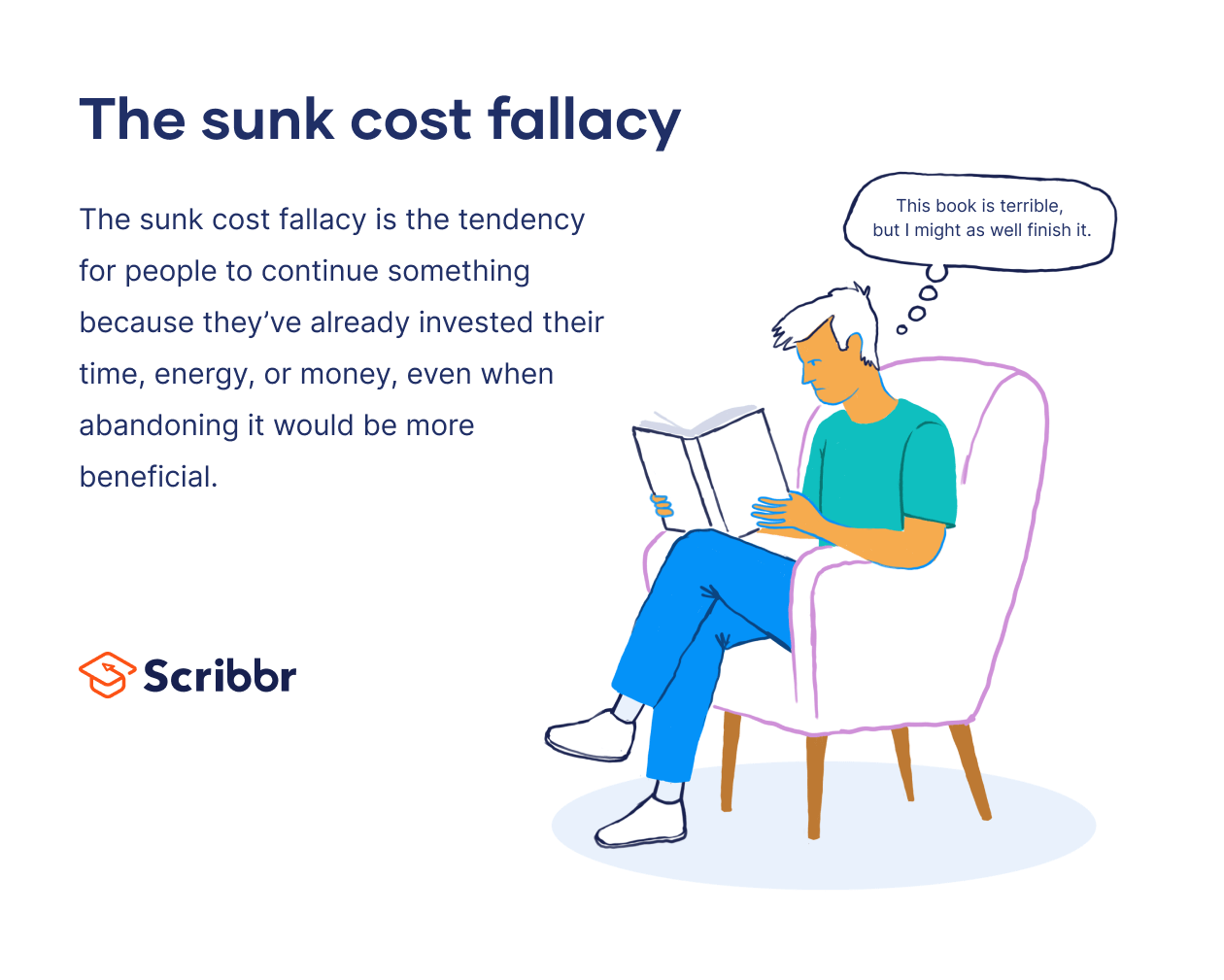
Now, let's ground this intuitive idea in the formal language of engineering economics.
A Refresher on Engineering Economics
The following document, 'A Refresher on Engineering Economics' by Joseph Hamaker, provides the concise, formal definition of sunk costs used in investment analysis.
Please read the short section titled 'Exclusion of Common Cash Flows and Sunk Costs' (on page 12). Focus on the core statement about why sunk costs are of 'no consequence' to an analysis.
As the resource states, the critical question is always: "from the current moment onward, which of the alternatives is most economical?" The money you've already spent on a project doesn't change the future economics of your remaining options.
The Sunk Cost Fallacy in Technology Projects
While the concept seems simple, ignoring sunk costs is notoriously difficult in practice. This difficulty has a name: the sunk cost fallacy, also known as the "Concorde Fallacy." It describes our tendency to continue an endeavor once an investment in money, effort, or time has been made.
Given your experience scaling businesses and leading software development, you've likely seen this play out in high-stakes environments. Projects that are behind schedule and over budget often create immense psychological pressure to "see it through" to justify the resources already burned.
The following reading explores catastrophic real-world examples of this fallacy, with a specific focus on IT and engineering projects.
The article 'The Sunk Cost Fallacy' from LeadershipIQ synthesizes decades of research on this topic. It details how this bias has led to massive project failures in business and government.
Please read two sections from this article: Start with the section 'How Sunk Costs Destroy IT Projects and Megaprojects'. This details failures like the FBI's Virtual Case File project, which is highly relevant to large-scale software development. Then, read 'The Concorde Fallacy and Other Cautionary Tales'. This section covers the classic stories of the Concorde jet, Blockbuster's failure to adapt, and Nokia's decline. As you read, consider how the decision-makers in these scenarios framed their choices.
The stories of Blockbuster ignoring Netflix, Nokia clinging to its old operating system, and the FBI pouring millions into a failing software project are powerful examples. In each case, decision-makers allowed the weight of past investments to cloud their judgment about the future, leading them to reject nimbler, more promising paths.
Test your understanding!
Imagine your team spent six months and $500,000 developing a new software feature. Just before launch, a competitor releases a far superior, free tool that does the same thing. Your project manager argues, "We can't just abandon this project! We've already spent half a million dollars!"
How would you reframe the decision to correctly apply the principle of ignoring sunk costs?
Show answer
The $500,000 and six months of work are sunk costs. They are gone, regardless of what you do next. The correct way to frame the decision is to ignore those past costs and evaluate the future options based on their future costs and benefits.
The decision is now: "Knowing that a superior, free alternative exists in the market, what is the best use of our team's time starting today?"
The options might be:
- Launch our feature anyway: What are the future costs (marketing, maintenance, support) and what is the future (likely very low) benefit?
- Scrap the feature: The cost is zero (beyond the already sunk costs), and the benefit is that you free up your team to work on a new project that can actually generate value.
- Pivot the feature: Can we use the work done to create something different that is competitive? What are the future costs and benefits of this pivot?
By framing it this way, you shift the focus from justifying past expenses to maximizing future returns, which is the core of sound economic decision-making.
Why Is Ignoring Sunk Costs So Hard?
If the logic is so clear, why do smart, experienced leaders fall into this trap? The article you just read alludes to the powerful psychological forces at play. This isn't just a simple error in calculation; it's a deep-seated cognitive bias.
Research by Nobel-laureate Daniel Kahneman and others has identified a few key drivers:
- Loss Aversion: Psychologically, the pain of a loss is about twice as powerful as the pleasure of an equivalent gain. Abandoning a project crystallizes the loss, which is very painful. Continuing the project, even if it's unlikely to succeed, offers a glimmer of hope to avoid that loss.
- Desire Not to Appear Wasteful: From a young age, we're taught to finish our plates and not waste resources. Abandoning a project can feel like an admission of wastefulness, which conflicts with this ingrained norm.
- Personal Responsibility & Self-Justification: This is especially powerful for leaders. When you've publicly championed a project, abandoning it can feel like a personal failure. The desire to prove your initial decision right can lead you to escalate your commitment, doubling down to justify the past choices.
Understanding these psychological underpinnings is important because it shows that simply knowing the rule isn't enough. You have to build systems and mental models to counteract the bias.
Practical Frameworks for Overcoming the Fallacy
So, how can you, as a leader, build a defense against this bias for yourself and your organization? The key is to create processes that force a forward-looking perspective.
Let's return to 'The Sunk Cost Fallacy' article to explore some proven techniques for breaking out of this trap.
Please read the first part of the section 'Practical Frameworks for Escaping Sunk Cost Traps'. Focus on the two techniques described at the beginning: Zero-based thinking and the "new CEO" thought experiment.
These mental models are incredibly effective because they create psychological distance from the past.
-
Zero-Based Thinking: Ask yourself, "Knowing what I know now, would I still start this project today?" If the answer is no, you should seriously consider cutting your losses. This reframes the decision from one of "continuing" to one of "re-investing."
-
The "New CEO" Thought Experiment: This was famously used by Intel's leadership to exit the memory chip business—a decision that saved the company. Ask, "If the board fired me and brought in a new CEO, what would they do with this project?" A new leader has no emotional attachment to past decisions and can evaluate the situation purely on its future merits. Your goal is to adopt that same detached perspective.
Conclusion
Today we've dissected one of the most important concepts for making clear-headed business and engineering decisions. By learning to identify and ignore sunk costs, you can more effectively allocate resources to projects with the highest future potential.
- Key Takeaways:
- A sunk cost is a past, unrecoverable cost that is irrelevant to future decision-making.
- The sunk cost fallacy is the psychological bias that makes us want to continue a failing project to justify past investments.
- This bias is driven by powerful forces like loss aversion and the need for self-justification.
- To make rational, forward-looking decisions, you must only compare the future costs and future benefits of your alternatives.
- Use mental models like zero-based thinking or the "new CEO" thought experiment to break free from the psychological weight of past decisions.
Preview of the Next Lesson
We have now examined several core principles of decision-making within a firm: opportunity cost, marginal analysis, and sunk costs. Next, we will zoom out to understand the market environment your firm operates in. We will explore the foundational laws of supply and demand and see how they determine prices and quantities for technology products.