Hello! Welcome to the final lesson in our module on advanced topics.
Introduction
In our last session, we got practical with real options, learning how to use decision trees and the rollback method to model and calculate the value of projects with embedded flexibility. We saw how to put a number on options like deferring, abandoning, or proceeding with a phased investment.
Today, we take a step back to synthesize these concepts and address the core "why" behind this entire topic. This lesson is designed to fulfill the learning outcome: Explain how real options analysis can capture strategic value missed by traditional NPV. We will connect the dots between the limitations of traditional methods and the power of real options thinking, showing why it's an indispensable tool for evaluating the kinds of innovative, high-uncertainty technology projects you manage.
1. The Blind Spot of Traditional NPV Analysis
The traditional Net Present Value (NPV) or Discounted Cash Flow (DCF) method is the bedrock of project evaluation. It's clear, consistent, and widely understood. However, it operates on a set of assumptions that don't hold up well in the dynamic world of technology development.
Its primary weakness is that it's static. It assumes that you make an "all-or-nothing" investment decision today and then passively follow a single, predetermined path into the future. It struggles to account for the value of active management and strategic pivots.
Real Options Analysis versus Traditional DCF Valuation in Layman’s Terms
To understand these limitations more deeply, let's read an excerpt from the white paper 'Real Options Analysis versus Traditional DCF Valuation in Layman’s Terms' by Dr. Johnathan Mun. This section clearly contrasts the rigid assumptions of DCF with the flexible reality of business decisions.
Please read the section titled 'Practical Issues Using Traditional Valuation Methodologies'. Pay close attention to the table 'Disadvantages of DCF: Assumptions versus Realities', which concisely summarizes the key issues.
As you just read, the core issue is that traditional NPV/DCF assumes away managerial flexibility. It implicitly values the ability to adapt to new information at zero. When you evaluate a software project that might evolve based on user feedback, or a platform that could unlock future product lines, this static view can lead you to reject what might be a highly valuable strategic investment.
2. Defining "Strategic Value": The Value of Flexibility
If NPV misses something, what exactly is it? It's the strategic value that comes from managerial flexibility. This is the value inherent in having the right, but not the obligation, to make different choices in the future as uncertainties become resolved.
The best analogy comes from the world of finance, from which real options theory originates.
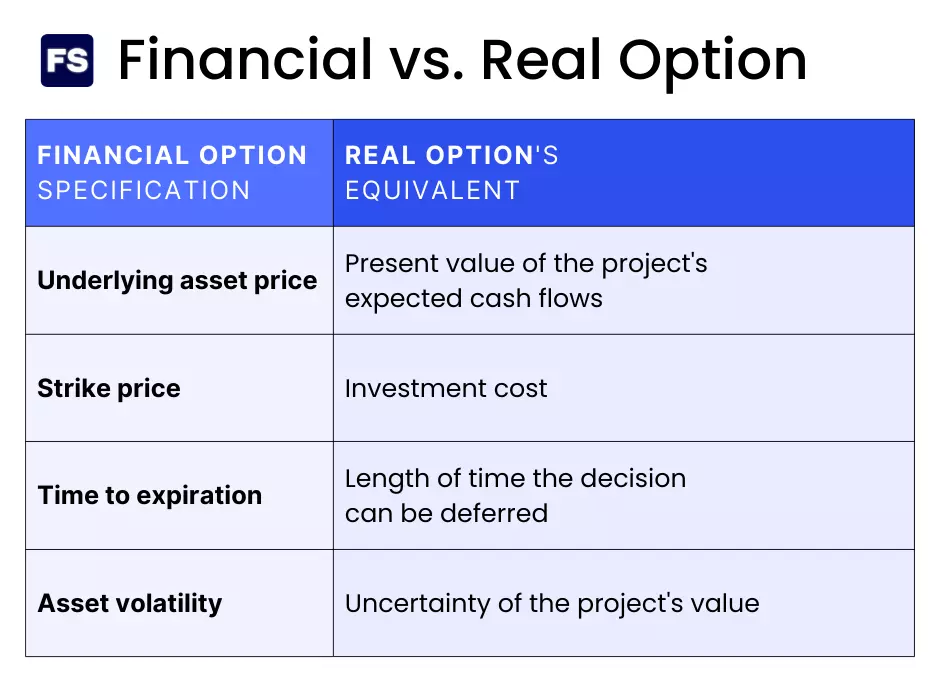
An option to buy a stock has value even if the current stock price is below the purchase price (i.e., it's "out of the money"). Why? Because there's a chance the stock price will rise. The option gives you the ability to capitalize on the upside while your downside is limited to the small price you paid for the option itself.
A technology project is similar. It might have a negative NPV today based on the most likely forecast. But if there's a chance it could lead to a massive success, and you have the flexibility to abandon it if things go poorly, that flexibility has a quantifiable strategic value.
Software Design as an Investment Activity: A Real Options ...
The paper 'Software Design as an Investment Activity' explains this concept in the context of capital budgeting and software development. It directly addresses how NPV overlooks this strategic value.
Read the section 'From Financial Options to Real Options'. Focus on how Myers identified that a firm's value includes 'options to make further investments' and how this insight was developed to address the shortcomings of traditional methods.
This is the "paradigm shift" that real options introduces: viewing projects not as static cash flow streams, but as collections of strategic options that you, the manager, must actively create and exercise.
3. How Real Options Analysis Captures Strategic Value
So, how does Real Options Analysis (ROA) actually capture this elusive value? It does so by fundamentally changing the valuation framework.
A. Modeling Multiple Paths, Not One
Unlike the single straight-line path of NPV, ROA uses the decision trees we studied in the last lesson to map out a "strategic road map" of choices and outcomes. It acknowledges that you will make decisions along the way.
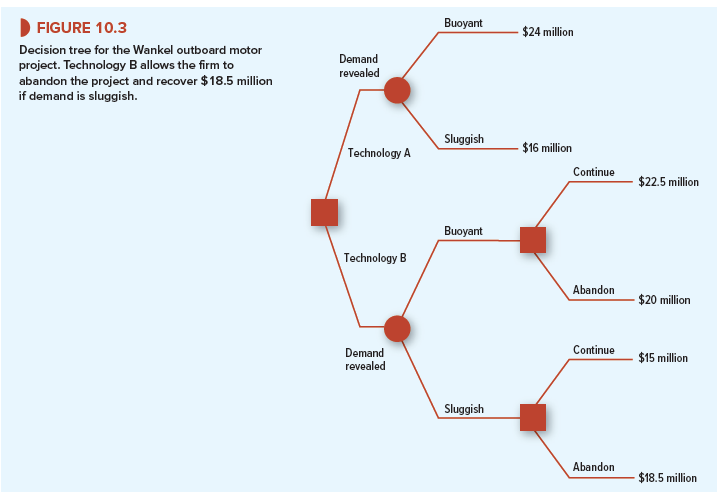
This visual representation forces you to think about and plan for contingencies, turning passive assumptions into active decision points.
B. Asymmetric Payoffs: Capping the Downside, Unlocking the Upside
This is the most critical element. A traditional NPV calculation averages all possible outcomes, good and bad. If a project has a 20% chance of a +$50M outcome and an 80% chance of a -$10M outcome, the expected value gets dragged down by the high probability of a loss.
ROA recognizes that a savvy manager won't passively accept the -$10M loss. Instead, they will exercise an option to abandon the project once it becomes clear it's failing, limiting the loss to the investment already spent. The analysis, therefore, truncates the downside risk while preserving the full upside potential.
Let's see a powerful, extended example of this principle in action.
Real Options Analysis versus Traditional DCF Valuation in Layman’s Terms
Let's return to the white paper by Dr. Mun. It provides an excellent step-by-step example of a project that looks unprofitable under traditional analysis but becomes highly valuable when an option is considered.
Please read section 'A. Discounted Cash Flow' through section 'F. Observations'. You don't need to track every number. Focus on the narrative: the project starts with a negative NPV of -$26.70M. By introducing an 'Option to Wait' (section E), the project's value is recalculated to be nearly +$50M. Understand the logic behind this dramatic shift.
As the example demonstrated, a project that seemed destined for rejection was revealed to be a valuable opportunity. The -$26.70M NPV was an illusion created by a static model. The true value, which includes the flexibility to wait and invest only if conditions are favorable, was nearly +$50M. This difference—over $75M—is the strategic value captured by ROA.
Test your understanding!
Consider a project to build a new software platform. The static NPV is slightly negative (-$50k) because of high initial costs and uncertain market adoption. However, if the platform is successful, it creates the opportunity for several follow-on products that could be extremely profitable.
Why might a traditional NPV analysis lead to a poor strategic decision here, and how does real options thinking correct this?
Show answer
A traditional NPV analysis would likely recommend rejecting the project due to its negative NPV. It fails to account for the strategic value of the follow-on opportunities.
Real options thinking reframes the initial project as the cost of acquiring a growth option—the option to develop those profitable follow-on products. The analysis would value not just the platform itself, but the platform plus the value of this option. Even if the platform's direct NPV is negative, the total value (NPV + Option Value) could be significantly positive, justifying the investment as a strategic move.
C. Valuing Phased Investments
Your experience in software development and management is filled with phased approaches, whether through formal stage-gates or agile sprints. ROA provides a framework to value this approach correctly.
Software Design as an Investment Activity: A Real Options ...
Let's look at one final, highly relevant example from 'Software Design as an Investment Activity'. It explains how a phased project can be viewed as a series of options.
Please read the section 'Phased Projects as Compound Options' and the 'Concrete Example' that follows. Note the striking insight: it can be optimal to invest in the first phase of a project even if the overall project has a negative static NPV.
This concept of a compound option is a perfect economic justification for agile or iterative development. Each phase or sprint is a small investment that buys you an option on the next phase, informed by new knowledge. ROA demonstrates mathematically why it's smart to start a project that might be lucrative, even if its overall success isn't guaranteed from day one.
Conclusion
Today we've reached the summit of our discussion on real options. We've moved beyond the "how" of calculation to the "why" of strategic thinking. By understanding the inherent flaws of static valuation models, you can now appreciate and articulate why a dynamic approach is necessary for the projects you lead.
- Key Takeaways:
- Traditional NPV analysis is static and assumes a passive, single-path investment, which systematically undervalues projects with high uncertainty and managerial flexibility.
- Strategic value is the value created by managerial flexibility—the ability to adapt, defer, expand, or abandon a project as new information becomes available.
- Real Options Analysis (ROA) captures this strategic value by modeling projects as a "strategic road map" of decision points and options, not a one-time decision.
- ROA correctly values the asymmetric nature of options: it models how managers can limit downside risk (e.g., by abandoning a failing project) while retaining full access to the upside potential, leading to a more accurate and often higher project valuation.
Preview of the Next Lesson
This lesson concludes our module on advanced topics. We have now covered the core evaluation techniques used in engineering economics, from the foundational time value of money to the strategic lens of real options.
In our next module, we will begin the Course Capstone and Review. The first lesson will focus on a critical skill: selecting the most appropriate evaluation technique (PW, AW, IRR, B/C, etc.) for a given project scenario. You'll learn to diagnose a problem and choose the right tool from your analytical toolkit, preparing you to conduct comprehensive economic analyses of your own.