Introduction
Welcome back. In our last lesson, we established a critical framework for glute training by identifying exercises that challenge the muscle in its lengthened versus its shortened positions. We saw how combining movements like deep squats (lengthened) and hip thrusts (shortened) is essential for comprehensive development.
Today, we will apply this same precise logic to the hamstrings. As previewed, the goal of this lesson is to differentiate between exercises that target the hamstrings at the hip (e.g., RDLs) versus at the knee (e.g., leg curls).
This distinction is fundamental to hamstring training. Because most of the hamstring muscles are biarticular (crossing two joints), they have two primary jobs. Understanding how to isolate each job is the key to unlocking their full growth potential and moving beyond a simplistic view of hamstring training.
Hamstring Anatomy: The Foundation of Function
To understand the "why" behind exercise selection, we must first revisit the "what." The hamstrings are not a single muscle, but a group of four distinct muscle heads on the posterior thigh.

Their origins and insertions dictate their function:
- Biceps Femoris (Long Head), Semitendinosus, and Semimembranosus: These three muscles originate on the ischial tuberosity (your "sit bone") of the pelvis and insert on the bones of the lower leg (tibia and fibula). Because they cross both the hip and the knee, they are biarticular.
- Biceps Femoris (Short Head): This muscle originates on the femur (thigh bone) itself and inserts on the fibula. Because it only crosses the knee, it is uniarticular.
This anatomical structure gives rise to two primary functions:
- Hip Extension: Straightening the hip joint, or moving the thigh backward. This action is performed by the three biarticular heads.
- Knee Flexion: Bending the knee joint, or pulling the heel toward the glutes. This action is performed by all four heads.
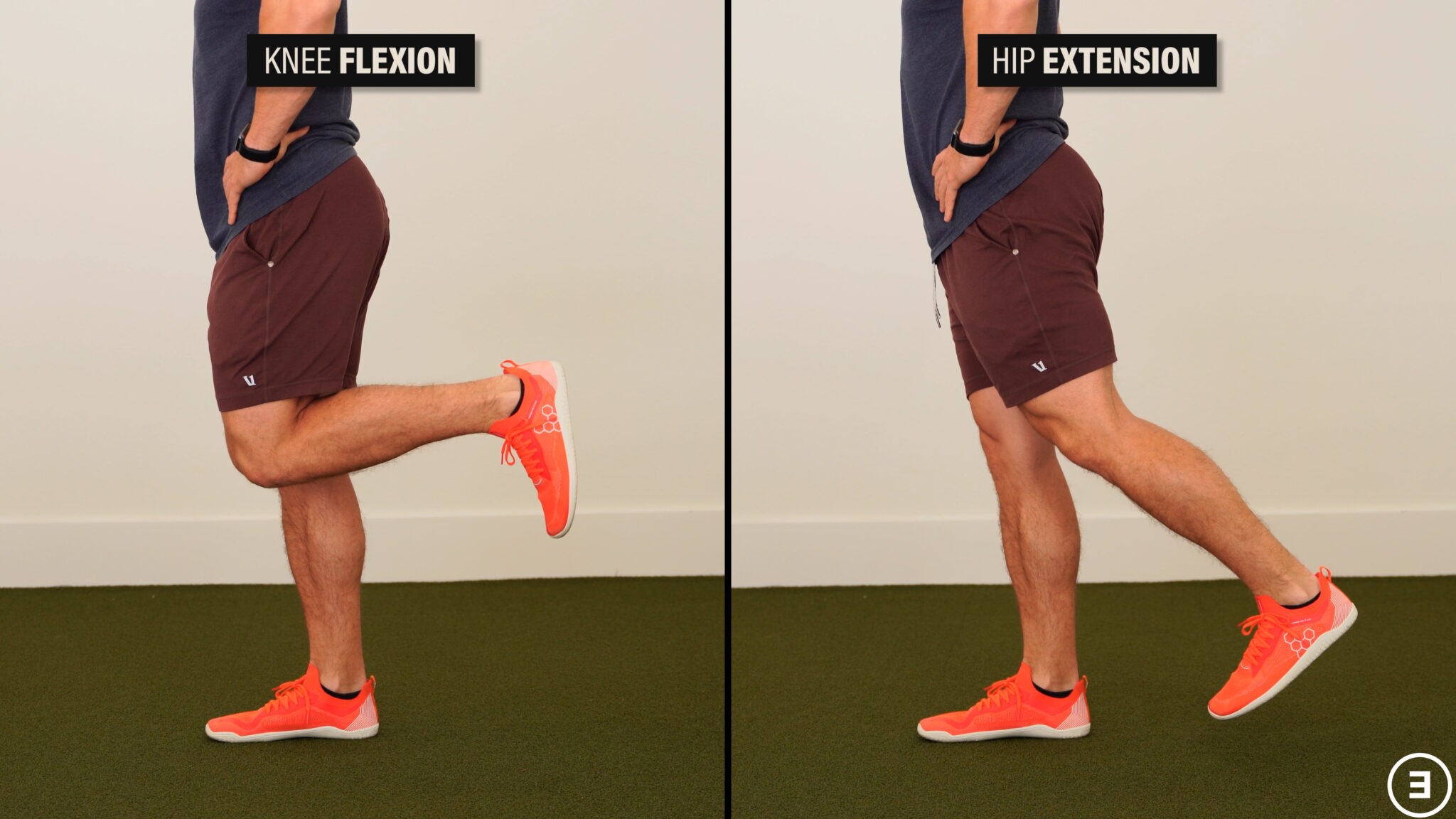
Therefore, for complete hamstring development, our training must include exercises that specifically target both of these movement patterns.
The Two Pillars of Hamstring Training
Based on their dual functions, all effective hamstring exercises fall into one of two categories:
- Hip Hinge Dominant Movements: These exercises train the hip extension function.
- Knee Flexion Dominant Movements: These exercises train the knee flexion function.
Let's explore why each category is unique and indispensable. The following video provides an excellent overview of this concept.
The Most Effective Way to Train HAMSTRINGS | Training Science Explained
In 'The Most Effective Way to Train HAMSTRINGS', Jeff Nippard clearly explains the anatomical basis for using both hip extension and knee flexion exercises. This will serve as a great introduction to our two categories.
Watch from the beginning until 05:49. Pay close attention to: The explanation of the biarticular nature of the hamstrings (00:22 - 01:31). Why squats are poor hamstring builders, but deadlift variations (hip hinges) are effective (01:31 - 03:22). The introduction of knee flexion exercises and the concept of regional activation differences between the two movement types (03:22 - 05:49).
As the video highlighted, relying on just one type of movement is insufficient. Let's break down each category in more detail.
Category 1: Hip Hinge Movements (Training Hip Extension)
These exercises involve keeping the knee angle relatively fixed while flexing and extending at the hip.
- Mechanism: By keeping the knee mostly straight, you anchor the hamstrings in a lengthened position at the knee. As you hinge forward and flex the hip, the biarticular hamstring heads are placed under an immense stretch from the origin point on the pelvis. This makes hinges exceptional for training the hamstrings in their lengthened position.
- Primary Targets: These movements primarily train the three biarticular hamstring heads (semitendinosus, semimembranosus, and biceps femoris long head) and the gluteus maximus. They do not train the biceps femoris short head.
- Examples: Romanian Deadlifts (RDLs), Stiff-Legged Deadlifts, Good Mornings, 45-Degree Hip/Back Extensions.
Category 2: Knee Flexion Movements (Training Knee Curls)
These exercises involve keeping the hip angle fixed while flexing and extending at the knee.
- Mechanism: By pinning the hip and isolating movement to the knee joint, you directly train the primary function of all four hamstring heads. This is the only way to directly train the biceps femoris short head.
- Primary Targets: All four hamstring heads. The specific setup can bias different heads and train them at different lengths.
- Examples: Seated Leg Curls, Lying Leg Curls, Nordic Hamstring Curls.
The distinction between these two categories is not just academic; it has a significant impact on which parts of the muscle actually grow.
Exercise selection for the hamstrings: a guide - Stronger by Science
The article 'Exercise selection for the hamstrings: a guide' from Stronger by Science provides a fantastic, evidence-based summary of how these two movement patterns lead to different hypertrophic outcomes.
Read the introductory section ('First, some quick anatomy...'), the section comparing studies on hip hinges and leg curls ('For instance, a study by Kawama et al...'), and the final summary. Focus on the key takeaway: hinges and curls preferentially grow different parts of the hamstrings.
Synthesis: Why a Complete Program Must Include Both
As the resources make clear, relying solely on RDLs or solely on leg curls will leave significant growth on the table. Here is a summary of the key distinctions:
| Feature | Hip Hinge Movements (e.g., RDL) | Knee Flexion Movements (e.g., Leg Curl) |
|---|---|---|
| Primary Function Trained | Hip Extension | Knee Flexion |
| Hamstring Heads Trained | Biceps Femoris (Long), Semitendinosus, Semimembranosus | All four heads, including Biceps Femoris (Short) |
| Hypertrophy Bias | Preferentially grows proximal (upper) hamstrings, especially the Semimembranosus and Biceps Femoris Long Head. | Preferentially grows distal (lower) hamstrings, especially the Semitendinosus and Biceps Femoris Short Head. |
| Position of Emphasis | Overloads the hamstrings in the lengthened position (at the hip). | Can overload at various lengths. The Seated Leg Curl is superior for lengthened position overload (at the hip). |
| Synergists | Gluteus Maximus, Adductor Magnus, Erector Spinae | Minimal; highly isolating. |
This clear division of labor is why a comprehensive hamstring program isn't a matter of choosing the "best" exercise, but of combining the two categories.
This short article from N1 Training, 'Seated Leg Curl vs RDL', directly compares one exercise from each category, reinforcing the core concepts of this lesson.
Read the first three paragraphs under the main image. Note how clearly it states the RDL trains hip extension while the Seated Leg Curl trains knee flexion. This is the central idea of our lesson.
Coach's Corner: Applying the Principles
Your ability to differentiate these movements translates directly into better coaching and programming.
- Exercise Selection Nuance: Within knee flexion movements, the Seated Leg Curl is generally superior for hypertrophy. Because your hips are flexed at 90 degrees, the biarticular hamstrings are already in a stretched position before you even begin the curl. This allows for a greater stimulus compared to the Lying Leg Curl, where the hips are neutral.
- Programming Logic: A well-rounded leg day or hamstring-focused session should include at least one hip hinge variation and one knee flexion variation. For example:
- Romanian Deadlift (Hinge): 3 sets of 6-10 reps
- Seated Leg Curl (Curl): 3 sets of 8-12 reps
- Common Mistakes & Cues:
- Mistake: Performing RDLs with too much knee bend, turning it into a squat. This unloads the hamstrings.
- Cue: "Imagine your shins are nailed to the wall. Push your hips straight back to touch the wall behind you."
- Mistake: Lifting the hips off the pad during Lying Leg Curls to cheat the weight up. This uses momentum and reduces hamstring tension.
- Cue: "Squeeze your glutes and drive your hips into the pad throughout the entire set."
- Mistake: Performing RDLs with too much knee bend, turning it into a squat. This unloads the hamstrings.
For a deeper dive into the practical application and exercise examples for both categories, the following video is an excellent resource.
The BEST Hamstring Exercises For Strength & Size - Science of Training
The 'BEST Hamstring Exercises For Strength & Size' video from Citizen Athletics provides a library of exercise variations for both knee flexion and hip extension, with a strong emphasis on training at long muscle lengths.
Watch the sections on practical knee flexion options (05:34 - 08:04) and hip extension options (08:04 - 10:03). You don't need to memorize every exercise, but observe how they are all variations of our two primary movement patterns.
Conclusion
In this lesson, we have dissected the dual nature of hamstring function and its direct application to exercise selection. You can now confidently differentiate between exercises that target the hamstrings at the hip versus at the knee.
Key Takeaways:
- The hamstrings perform two main actions: hip extension and knee flexion.
- Hip Hinge movements (like RDLs) train hip extension, primarily target the biarticular heads, and are excellent for overloading the hamstrings in a lengthened position.
- Knee Flexion movements (like leg curls) train knee flexion, are the only way to stimulate the biceps femoris short head, and are crucial for developing the distal portion of the hamstrings.
- A complete program requires both movement patterns to ensure all four heads of the hamstrings are trained across their full length for maximal hypertrophy.
Preview of the Next Lesson
We have now covered the major muscles of the upper and lower body. To round out your foundational knowledge, our next lesson will focus on several important, often-overlooked muscle groups. We will cover Core, Calves, and Forearm Anatomy, explaining their function, their critical role in stability and performance on major lifts, and how to train them effectively for hypertrophy.