Introduction
In our last lesson, we built a detailed anatomical map of the hamstring muscles, identifying their specific origins and insertions. You now know that three of the four hamstring heads—the semimembranosus, semitendinosus, and biceps femoris long head—share a common origin on the ischial tuberosity and cross two joints, while the biceps femoris short head originates on the femur and crosses only one.
This anatomical detail is not just academic trivia; it is the absolute key to unlocking effective hamstring training. Today's lesson focuses on the learning outcome: to explain how the biarticular nature of most hamstrings affects exercise selection for lengthened-position training.
We will explore why this dual-joint action makes some popular exercises like squats ineffective for hamstring growth, and how we can strategically manipulate hip and knee angles to place the hamstrings under a deep, productive stretch—a primary driver of hypertrophy.
The Biarticular Nature of the Hamstrings
A muscle that crosses two joints is called biarticular. As we established, three of the four hamstring heads are biarticular because they cross both the hip joint and the knee joint.
- Semimembranosus: Crosses hip and knee.
- Semitendinosus: Crosses hip and knee.
- Biceps Femoris (Long Head): Crosses hip and knee.
- Biceps Femoris (Short Head): Only crosses the knee (monoarticular).
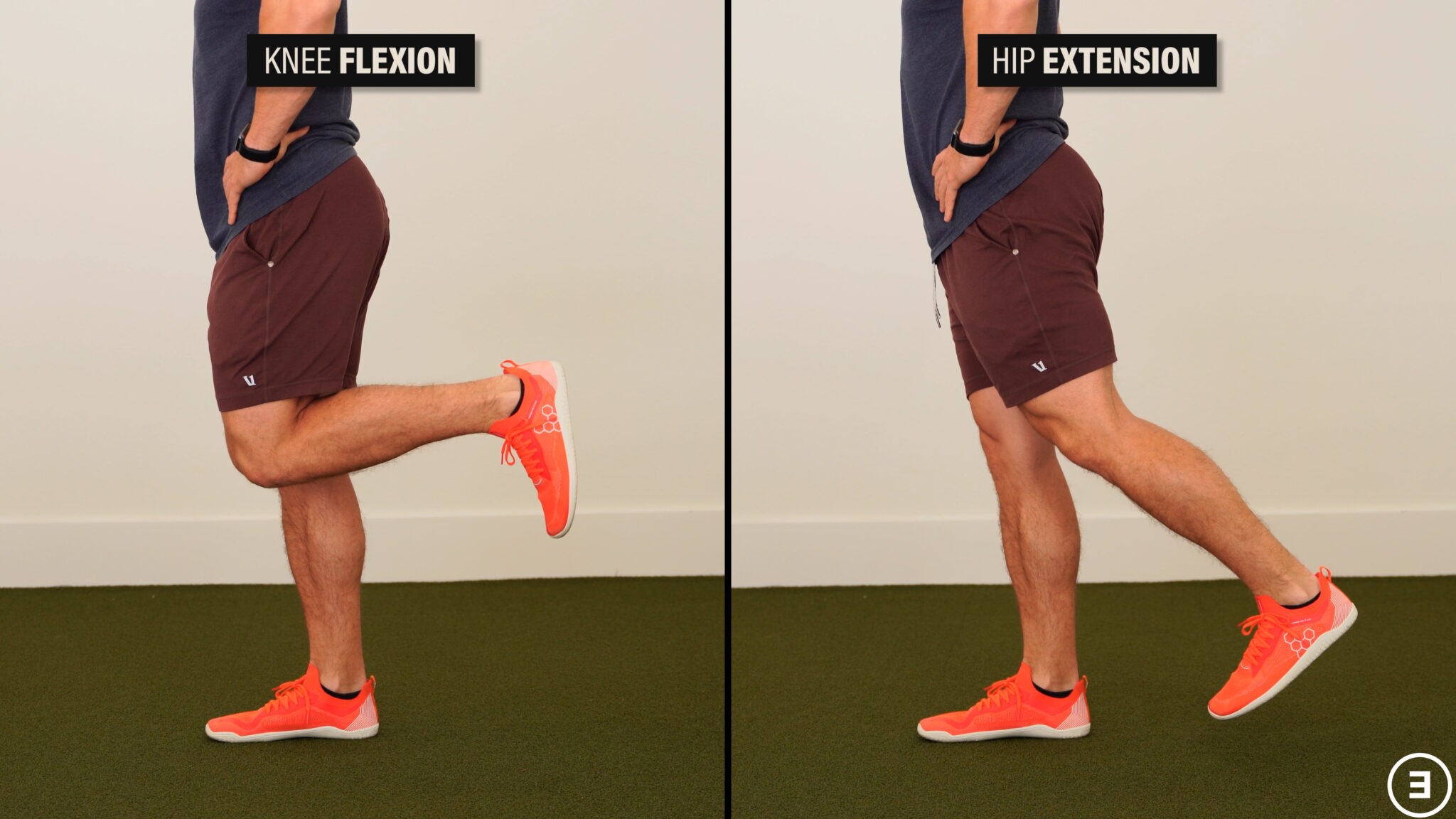
This dual-joint anatomy gives the three biarticular heads two primary functions:
- Hip Extension: Pulling the thigh backward (like in a deadlift).
- Knee Flexion: Bending the knee and pulling the heel toward the glutes (like in a leg curl).
The Biarticular Conundrum: Why Squats Don't Build Hamstrings
Your background in algorithms and complex systems makes you well-suited to appreciate this next point: a system's components can sometimes work against each other. This happens with the hamstrings during movements that involve simultaneous hip and knee extension, like a squat.
- As you descend into a squat, your hips flex (lengthening the hamstrings at the hip) but your knees also flex (shortening the hamstrings at the knee).
- As you ascend, your hips extend (shortening the hamstrings at the hip) while your knees extend (lengthening the hamstrings at the knee).
Because the muscle is being shortened at one end while it's being lengthened at the other, its overall length changes very little. This phenomenon, known as concurrent movement, prevents the hamstrings from generating significant tension or achieving a deep stretch, making squats an inefficient exercise for hamstring hypertrophy.
The following video provides a concise explanation of the hamstring anatomy and this exact issue.
What are the BEST HAMSTRING Exercises? (Science-Based)
The video 'What are the BEST HAMSTRING Exercises? (Science-Based)' from Dr. Milo Wolf starts by explaining the biarticular nature of the hamstrings and why this makes them ineffective during a squat.
Watch from 00:15 to 02:38. Pay close attention to the distinction between the biarticular heads and the short head. The key concept is at the end of this segment, where it explains that if a muscle is lengthened at one joint and shortened at another (like in a squat), it doesn't produce much hypertrophy.
This concept is also reinforced in the text from Stronger by Science.
Exercise selection for the hamstrings: a guide
The article 'Exercise selection for the hamstrings: a guide' from Stronger by Science also addresses why squats are not ideal for hamstring growth from a biomechanical perspective.
Read the first four paragraphs of the article, stopping before the heading about different hypertrophy patterns. This section directly addresses the biarticular nature of the hamstrings and why compound movements requiring simultaneous knee and hip extension are not optimal for their growth.
Leveraging Anatomy for Lengthened-Position Training
If concurrent movement is inefficient, the solution is to isolate the hamstrings' functions. To place a muscle in its most lengthened position, you must move the joints it crosses into the opposite of its primary concentric actions.
Since the biarticular hamstrings perform hip extension and knee flexion, we can achieve a maximal stretch by combining hip flexion and knee extension. This principle gives rise to two primary categories of exercises for training the hamstrings in a lengthened position.
Category 1: Hip Hinges (Lengthened at the Hip)
In this category, we fix the knee in a relatively extended position and focus on flexing at the hip. This directly pulls on the common origin at the ischial tuberosity, creating a deep stretch along the muscle bellies.
- Movement: Hip extension with a mostly straight knee.
- Examples: Romanian Deadlifts (RDLs), Stiff-Legged Deadlifts, Good Mornings.
- Mechanism: These movements put the hamstrings on stretch primarily at the hip joint.
Category 2: Seated Leg Curls (Lengthened at the Knee, Pre-Stretched at the Hip)
In this category, we fix the hip in a flexed position (by sitting down) and then focus on the knee flexion/extension cycle. The seated position pre-stretches the hamstrings at the hip before the movement at the knee even begins.
- Movement: Knee flexion with a flexed hip.
- Example: Seated Leg Curls.
- Mechanism: This movement puts the hamstrings on stretch at the knee joint while they are already in a lengthened state at the hip joint.
The following video explains this logic and the research supporting it.
The BEST Hamstring Exercises For Strength & Size - Science of Training
This video from Citizen Athletics, 'The BEST Hamstring Exercises For Strength & Size', directly connects the biarticular anatomy to the evidence for training at long muscle lengths.
Watch from 03:24 to 06:10. This segment first recaps the squat issue, then introduces the crucial research showing that training hamstrings at a long muscle length is superior for hypertrophy. It then gives practical examples of how to achieve this via knee flexion with a flexed hip (seated leg curls) and hip extension with an extended knee.
Coach's Note: Seated vs. Lying Leg Curls
The superiority of the Seated Leg Curl over the Lying Leg Curl is a perfect practical application of this lesson's concept.
- Seated Leg Curl: Your hips are flexed at approximately 90 degrees. This pre-stretches the three biarticular hamstring heads before you even begin to extend your knee. This leads to a greater overall stretch and has been shown in research to produce more hypertrophy in those three heads.
- Lying Leg Curl: Your hips are in a neutral or slightly extended position. This trains the hamstrings in a shorter position overall. While it's still an effective exercise (and necessary for targeting the monoarticular short head of the biceps femoris), it doesn't provide the same degree of stretch-mediated stimulus to the biarticular heads.
This distinction is clearly explained in the resource from Dr. Milo Wolf.
What are the BEST HAMSTRING Exercises? (Science-Based)
Dr. Milo Wolf returns to specifically highlight why the seated leg curl is an exceptional hamstring builder, directly referencing its ability to lengthen the hamstrings at both joints.
Watch from 11:47 to 12:57. This clip is a powerful summary. It explains how the seated leg curl lengthens the hamstrings at the knee (via extension) and at the hip (via flexion), and references a study showing its superiority to the lying leg curl for hamstring growth.
Why Both Movement Patterns Are Necessary
You might be thinking, "If seated leg curls are so great, why do RDLs?" The answer lies in regional hypertrophy and ensuring all four heads are trained optimally. Research suggests that different exercises preferentially grow different parts of the hamstrings.
- Hip Hinges (e.g., RDLs) appear to be slightly better for growing the hamstrings closer to the hip (proximal region), particularly the semimembranosus and biceps femoris long head.
- Knee Curls (e.g., Seated Leg Curls) are essential for training the biceps femoris short head (which isn't involved in hip extension) and appear to be better for growing the hamstrings closer to the knee (distal region), especially the semitendinosus.
Exercise selection for the hamstrings: a guide
To understand why a complete program needs both RDLs and seated leg curls, we'll turn back to the 'Stronger by Science' article, which summarizes the relevant research.
Read the sections titled 'Hypertrophy patterns may differ between leg curls and hip hinges' and the final 'In summary' paragraph. This will provide the evidence-based rationale for including both movement patterns in your training for complete hamstring development.
Therefore, to develop the hamstrings completely, from origin to insertion and across all four heads, a well-designed program must include both a hip-hinge variation and a leg-curl variation that emphasizes the lengthened position.
Conclusion
In this lesson, we connected the anatomical fact of the hamstrings' biarticular nature directly to practical exercise selection for hypertrophy.
Key Takeaways:
- The three biarticular hamstring heads cross both the hip and knee, allowing for hip extension and knee flexion.
- Movements involving simultaneous hip and knee extension (like squats) are ineffective for hamstring growth due to a lack of significant change in muscle length.
- To train the hamstrings effectively in a lengthened position, we must isolate their functions.
- Hip hinges (e.g., RDLs) train the hip extension function and challenge the hamstrings in a position that is lengthened at the hip.
- Seated leg curls train the knee flexion function and challenge the hamstrings in a position that is pre-lengthened at the hip, making them highly effective for stretch-mediated hypertrophy.
- A complete program requires both movement patterns to ensure all four hamstring heads and all regions of the muscle are developed.
Preview of the Next Lesson
We have established the two fundamental movement patterns for complete hamstring training. In the next lesson, we will delve deeper into the practical application and biomechanics of each, formally differentiating between exercises that target the hamstrings at the hip (e.g., RDLs) versus at the knee (e.g., leg curls). We will analyze specific exercise variations and queuing strategies for each category.