Introduction
Welcome back. In our previous lesson, we mapped the anatomical structure of the three deltoid heads to their specific functions, identifying their roles as prime movers and synergists in various joint actions like flexion, abduction, and extension. You can now analyze a movement like an overhead press and understand how the anterior and lateral deltoids work together to lift the weight.
Today, we take the next critical step. Our goal is to explain the lengthened and shortened positions of each deltoid head by analyzing their anatomy and joint actions. This concept is the bridge between knowing what a muscle does and understanding how to apply tension across its entire contractile range to maximize hypertrophy. By the end of this lesson, you'll be able to visualize how to place each part of the deltoid under a deep stretch or a full contraction simply by moving your arm.
This builds directly on the length-tension relationship we covered in Module 2. Let's briefly revisit that core principle.
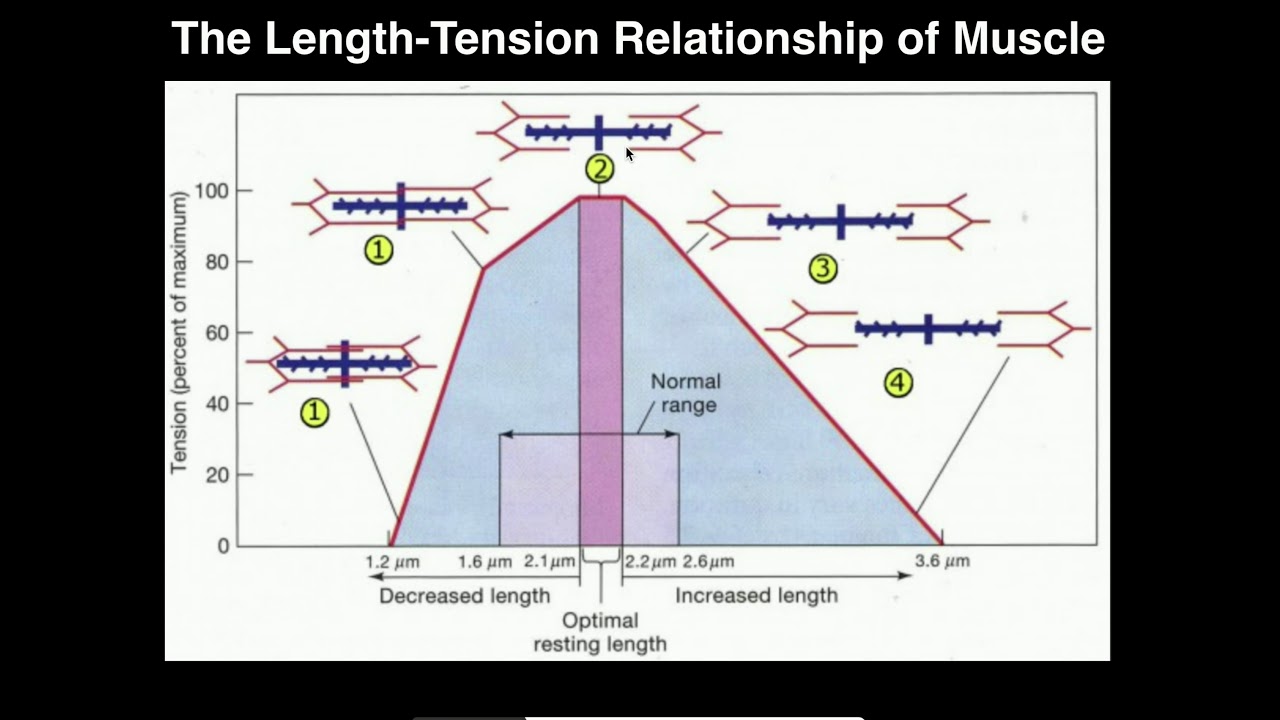
The Principle: Defining Lengthened and Shortened States
The concept is straightforward and can be derived logically from a muscle's anatomy:
- A muscle is in its shortened position when its origin and insertion are brought as close together as possible. This occurs at the peak of a concentric contraction when the muscle is performing its primary joint action.
- A muscle is in its lengthened position when its origin and insertion are moved as far apart as possible. This is achieved by performing the opposite joint actions of the muscle's primary functions.
Essentially, to lengthen a muscle, you must contract its antagonist. As we'll see, the deltoid is unique because its anterior and posterior heads are antagonists to each other.
Lengthened vs. Shortened Positions of the Deltoid Heads
Let's apply this principle to each of the three deltoid heads. We'll use their primary actions, which we covered in the last lesson, as our starting point.
To help you visualize these positions, we will refer to a practical video that demonstrates exercises targeting each head. Pay close attention to the start and end points of each movement.
How to ISOLATE & BUILD ALL 3 DELTOID HEADS! (Part 2 - Everything you NEED to Know About Shoulders)
This video from Dr. Gains, titled 'How to ISOLATE & BUILD ALL 3 DELTOID HEADS!', will serve as our visual guide. While the video discusses exercise selection (which we'll cover in the next lesson), we will use it here to identify the lengthened and shortened positions demonstrated in each movement.
As we discuss each deltoid head below, I will direct you to the relevant clip. For now, just be aware of this resource. Notice how each exercise starts in a position that stretches the target muscle and ends in a position that contracts it.
1. Anterior Deltoid
- Primary Actions: Shoulder flexion, horizontal adduction, and internal rotation.
- Shortened Position: To shorten the anterior deltoid, you perform its actions. Imagine a front raise. At the top of the movement, with your arm straight out in front of you, the anterior deltoid is fully shortened.
- Lengthened Position: To lengthen it, you must do the opposite: shoulder extension (or hyperextension) and horizontal abduction. This means bringing your arm behind your torso.
Let's read a clinical description of how to stretch (lengthen) the anterior deltoid.
The Physiopedia page on the Deltoid provides a clear, clinical procedure for testing the length of the muscle. This perfectly describes the lengthened position.
Read the short paragraph under the sub-heading 'Anterior Deltoid' within the 'Length Tension Testing' section. Note how it specifies taking the shoulder into extension, external rotation, and horizontal abduction to lengthen the muscle.
Now, watch the cable front raise demonstrated in the Dr. Gains video from 03:18 to 04:20.
- Observe the start: The arm is pulled back behind the body. This is the lengthened position.
- Observe the end: The arm is raised forward and slightly out. This is the shortened position.
2. Posterior Deltoid
The posterior deltoid is the direct antagonist of the anterior deltoid. Its positions are, therefore, the mirror image.
- Primary Actions: Shoulder extension/hyperextension, horizontal abduction, and external rotation.
- Shortened Position: To shorten the posterior deltoid, you perform its actions. Imagine a reverse fly. At the peak of the movement, when your arms are spread wide and your shoulder blades are squeezed together, the posterior deltoid is fully shortened.
- Lengthened Position: To lengthen it, you do the opposite: shoulder flexion and horizontal adduction. This means bringing your arm forward and across your chest.
The Physiopedia article also describes this position precisely.
Now, let's look at the description for the posterior deltoid from the same source.
Read the paragraph under 'Posterior Deltoid' within the 'Length Tension Testing' section. Notice it's the exact opposite of the anterior deltoid stretch: flexion, internal rotation, and horizontal adduction.
Now, watch the rear delt exercise in the Dr. Gains video from 11:26 to 12:53.
- Observe the start: The arm is reaching across the body to grab the cable. This is the lengthened position.
- Observe the end: The arm is pulled back and up, behind the torso. This is the shortened position.
Given your interest in the scientific underpinnings, it's worth noting why training this lengthened position is so important.
If you want a bigger back, do this
This article by Menno Henselmans explains why many common back exercises fail to train the rear delts optimally. It directly addresses the importance of training the lengthened position for hypertrophy, which is highly relevant to our discussion.
Read the first three paragraphs. Focus on the explanation of why traditional rows don't load the rear delts in their stretched position, and the evidence suggesting muscles (including the rear delts based on their sarcomere operating lengths) grow more when trained in lengthened positions.
This concept of "stretch-mediated hypertrophy" highlights that the stimulus for growth isn't just about the peak contraction; the tension experienced by the muscle while it is being stretched is a powerful anabolic signal.
3. Lateral Deltoid
- Primary Action: Shoulder abduction.
- Shortened Position: The lateral deltoid is shortest when the arm is abducted out to the side, at approximately 90 degrees (parallel to the floor). This is the top of a lateral raise.
- Lengthened Position: To lengthen the lateral deltoid, you must do the opposite of abduction, which is adduction. This means bringing your arm down and across the front of your body.
Watch the dumbbell lateral raise in the Dr. Gains video from 07:13 to 08:49.
- Observe the start: The arm is at the side of the body. To get a greater stretch, you would bring the dumbbell across the front of your hips. This is the lengthened position.
- Observe the end: The arm is raised to about 90 degrees. This is the shortened position.
Free weights like dumbbells have a limitation here: gravity provides little to no tension at the very bottom of the movement. This is where cables can be superior for loading the lengthened position.
How to Build 3D Shoulders (25 Studies)
This video from House of Hypertrophy digs into the research on shoulder training. This specific clip discusses resistance curves and the benefit of loading the side delts in a stretched position.
Watch the segment from 12:53 to 14:05. Pay attention to the comparison between dumbbell and cable lateral raises and the specific mention of how cables can load the side delts more in the 'stretched position'.
Summary Table
To consolidate this information, here is a quick-reference table. This systematically connects each head's primary action to its shortened and lengthened positions.
| Deltoid Head | Primary Action(s) | Shortened Position (Peak Contraction) | Lengthened Position (Maximal Stretch) |
|---|---|---|---|
| Anterior | Shoulder Flexion, Horizontal Adduction | Arm raised in front of the body | Arm extended behind the torso |
| Lateral | Shoulder Abduction | Arm raised out to the side (~90°) | Arm adducted across the front of the body |
| Posterior | Shoulder Extension, Horizontal Abduction | Arm pulled back behind the body | Arm flexed forward and adducted across the chest |
Conclusion
In this lesson, you've moved beyond simple joint actions to understand the full contractile range of each deltoid head. By analyzing a muscle's primary function, you can now logically determine the joint positions that place it under maximal stretch or at peak contraction.
Key Takeaways:
- A muscle is lengthened by moving the joint in the opposite direction of its primary concentric action, pulling its origin and insertion apart.
- A muscle is shortened by performing its concentric action, bringing the origin and insertion closer.
- Anterior Deltoid is lengthened by shoulder extension (arm behind the body).
- Posterior Deltoid is lengthened by shoulder flexion and horizontal adduction (arm across the chest).
- Lateral Deltoid is lengthened by shoulder adduction (arm across the body).
- Training a muscle in its lengthened position is a potent stimulus for hypertrophy, often referred to as stretch-mediated hypertrophy.
Preview for the Next Lesson
We have now identified the structure of the deltoids, their actions, and their lengthened/shortened positions. The final piece of the puzzle is application. In the next lesson, we will select an optimal exercise for each deltoid head that challenges the muscle through a large range of motion, with a specific emphasis on effectively loading it in the lengthened position. We will connect everything we've learned to make intelligent, evidence-based exercise choices for building three-dimensional shoulders.