Introduction
Welcome back! In our last lesson, we established a powerful, algorithmic framework for managing training volume. You learned how to estimate your Minimum Effective Volume (MEV), auto-regulate weekly set counts based on performance and recovery, and identify when you've hit your Maximum Recoverable Volume (MRV) to trigger a deload. We've solved the problem of how much to train.
Today, we address the next logical question: what exercises should fill that volume? This lesson is designed to meet the learning outcome: Select exercises for a muscle group that collectively challenge its full range of lengthened-to-shortened positions.
Simply picking "the best" exercise for a muscle is a common but flawed approach. A single exercise, no matter how effective, rarely stimulates a muscle optimally across its entire functional range. Instead, we're going to approach this like a systems designer. Our goal is to create a portfolio of exercises for each muscle group. This collection of movements, when combined, will ensure every part of the muscle—from its most stretched state to its most contracted state—receives a potent growth stimulus. This is the key to building well-rounded, fully developed muscles.
The "Why": Resistance Profiles & Stretch-Mediated Hypertrophy
To select exercises intelligently, we first need to understand two core biomechanical and physiological principles: the resistance profile of an exercise and the outsized importance of the stretched position.
An exercise does not challenge your muscles equally throughout the entire range of motion. The point where it feels hardest is where the resistance is greatest. This variation in difficulty across the movement is known as the resistance profile or tension curve.
To understand what creates these curves and why they matter, please watch the first part of the following video.
Tension Curves for Hypertrophy Training | Implications for Exercise Selection
The video 'Tension Curves for Hypertrophy Training' from Flow High Performance clearly defines resistance profiles and the key factors that shape them. It also explains their direct impact on hypertrophy.
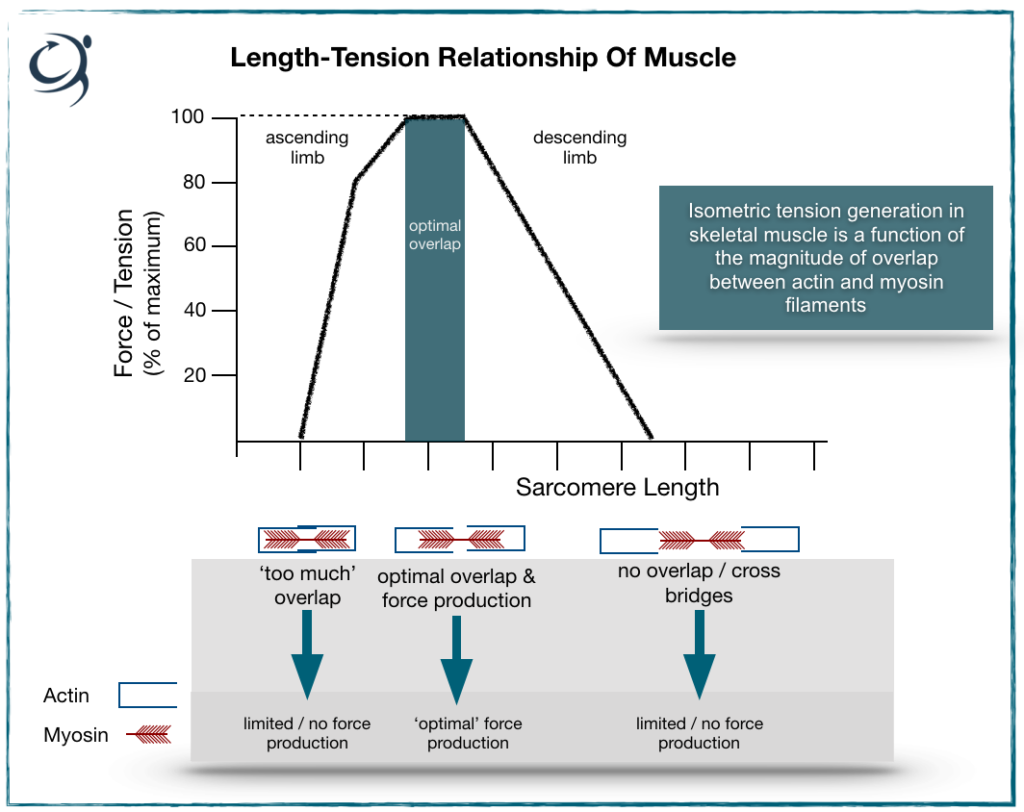
Please watch from the beginning to 02:59, and then from 04:46 to 06:02. Focus on the three factors that influence a tension curve (external moment arm, internal moment arm, length-tension relationship) and the two primary considerations for hypertrophy (tension throughout the range and tension in a stretched position).
As the video highlighted, while maintaining tension throughout the entire range of motion is beneficial, placing high tension on a muscle when it is in a lengthened (stretched) position is particularly powerful for driving hypertrophy. This phenomenon is often called stretch-mediated hypertrophy.
The evidence for this is compelling. Let's explore a resource that quantifies just how significant this effect is.
Min-Maxing Strength Curves for Hypertrophy
The article 'Min-Maxing Strength Curves for Hypertrophy' by Outlift provides an excellent analysis of how different parts of the range of motion contribute to muscle growth.
Please read the section titled 'The Importance of Challenging Our Muscles At Long Muscle Lengths.' Pay close attention to the research cited that compares muscle growth from training in a stretched versus a contracted position.
The key takeaway is striking: training a muscle at long lengths can stimulate significantly more growth than training it at short lengths. This is because when a muscle is stretched under load, it experiences both active tension (from filament contraction) and passive tension (from the elastic properties of muscle tissue). This combination results in a massive overall mechanical tension signal, which is the primary driver of growth.
The "How": A Framework for Exercise Selection
Knowing that different exercises challenge different parts of the range of motion and that the lengthened position is highly stimulative gives us a clear path forward. To ensure complete development, we must select a combination of exercises that collectively targets a muscle across three key positions:
- Lengthened Position: Where the muscle is under maximal stretch.
- Mid-Range Position: Where the muscle can typically produce the most active force.
- Shortened Position: Where the muscle is fully contracted.
This approach helps us avoid what is known as exercise redundancy.
How I Write Programs | Exercise Selection & Order
In this clip from 'How I Write Programs,' Sebastian Oreb (Australian Strength Coach) explains the concept of exercise redundancy and the importance of selecting secondary movements that address what the primary movement missed.
Watch from 05:55 to 06:27. This brief section introduces the critical idea of choosing exercises that target neglected joint angles and ranges of motion.
For example, performing a barbell bench press and then a dumbbell bench press in the same workout is largely redundant. Both exercises have a similar resistance profile, challenging the pecs most in the mid-to-lengthened range. A smarter approach would be to pair the bench press (lengthened/mid-range) with an exercise like a cable fly or pec-deck, which challenges the pecs in the shortened position.
Putting it into Practice: Case Studies
Let's apply this framework to three common muscle groups.
Case Study 1: The Glutes
The gluteus maximus is primarily a hip extensor. Its contractile range runs from deep hip flexion (lengthened) to full hip extension (shortened).
- Lengthened Emphasis: Romanian Deadlifts (RDLs) or Deep Squats. In these movements, the load is heaviest at the bottom, when the hips are flexed and the glutes are stretched.
- Shortened Emphasis: Hip Thrusts or Glute Bridges. Here, the resistance is maximal at the top of the movement, when the hips are fully extended and the glutes are squeezed into their most shortened position.
The Outlift article and the Australian Strength Coach video both provide excellent context for this pairing.
How I Write Programs | Exercise Selection & Order
Watch this clip where Sebastian Oreb explains exactly why pairing a deadlift with a hip thrust is a classic example of non-redundant exercise selection.
Watch from 39:23 to 40:19. He clearly contrasts how deadlifts target the glutes in the lengthened position while hip thrusts target them in the shortened position.
By combining RDLs and hip thrusts in your weekly program, you ensure the glutes are powerfully stimulated across their entire contractile range, leading to more complete development than either exercise could provide alone.
Case Study 2: The Biceps
The biceps brachii flexes the elbow and supinates the forearm. Crucially, the long head also crosses the shoulder joint, meaning its length is affected by shoulder position.
- Lengthened Emphasis: Incline Dumbbell Curls. By lying on an incline bench, your shoulder is in extension, which pre-stretches the long head of the biceps. The bottom of the curl is therefore heavily loaded in this stretched state.
- Mid-Range Emphasis: Standard Barbell or Dumbbell Curls. These have a classic bell-shaped resistance curve, being hardest when your forearm is parallel to the floor—the mid-range of the movement.
- Shortened Emphasis: Preacher Curls or High Cable Curls. In a preacher curl, your upper arm is fixed in front of your body (shoulder flexion), making it difficult to "cheat" and ensuring peak tension occurs high up in the curl, near the fully shortened position.
Case Study 3: The Quadriceps
The quadriceps consist of four muscles. Three of them (the vasti) only cross the knee, so they are lengthened by knee flexion. The fourth, the rectus femoris, is biarticular—it crosses both the hip and the knee. This means to fully stretch it, you must extend the hip and flex the knee simultaneously.
- Lengthened Emphasis (Vasti): Deep Squats or Leg Presses. The bottom of a deep squat places an incredible stretch on the vasti muscles under heavy load.
- Lengthened Emphasis (Rectus Femoris): Sissy Squats or Lying Leg Curls done backwards. These less common movements put you into hip extension while flexing the knee, creating a unique and intense stretch on the rectus femoris that squats cannot replicate.
- Shortened Emphasis (All Quads): Leg Extensions. This isolation movement provides peak tension at the very top, when the knee is fully extended and the quads are maximally contracted.

Coach's Notes: Application and Nuance
When building your program, you don't need to include all three types of exercises for every muscle in every workout. The goal is to ensure they are all present across your weekly training plan.
Here's a simple checklist to audit your program for a given muscle group:
- Do I have an exercise that is challenging when the muscle is stretched? (e.g., Incline Curl for biceps)
- Do I have an exercise that is challenging when the muscle is contracted? (e.g., Leg Extension for quads)
- Do I have a heavy compound lift that challenges the muscle through a large range of motion? (e.g., Squat for quads/glutes)
It's also important to note that this is a model, and biology has complexities. As you discovered in a previous module, the internal architecture of a muscle matters. For example, some research suggests the sarcomeres of the triceps long head don't stretch as much as those in the quads, meaning it may not benefit from extreme stretch-focused movements to the same degree. This is an advanced topic, but it reinforces that our framework is a powerful tool, not an unbreakable law.
Conclusion
You now possess a systematic, evidence-based method for selecting exercises. By moving beyond the idea of a single "best" exercise and instead curating a portfolio of movements, you can ensure comprehensive development and maximize your growth potential.
Key Takeaways:
- Avoid Redundancy: Don't just pick exercises you like; pick exercises that serve different functions.
- Prioritize the Stretch: Ensure every muscle group is trained with an exercise that is difficult in the lengthened position to take advantage of stretch-mediated hypertrophy.
- Cover the Full Range: For complete development, select a combination of exercises that challenge a muscle in its lengthened, mid-range, and shortened positions.
- Audit Your Program: Use the lengthened-to-shortened framework to analyze your current training and identify any gaps in the stimulus you're providing.
Preview of the Next Lesson
We have now determined how much volume to use and how to select a smart portfolio of exercises. But what if a "perfect" exercise on paper feels awkward or even painful for you or a future client? In the next lesson, we will address the learning outcome: Explain how individual anatomical variation (e.g., limb length) should influence exercise selection and modification. We will explore how differences in our skeletal structure affect leverage and movement execution, and how to adapt our training accordingly.