Introduction
Welcome to Module 7. In our previous module, we focused on building external conflict using System Traps. The last lesson, in particular, ignited an 'Escalation' spiral between Henry and Leo, turning their passive competition into an active, unsustainable rivalry for Vera's attention and affection. You wrote a scene where their bids for status left Vera caught in the crossfire.
While that external conflict is crucial for driving the plot, the most resonant stories are built on deep internal conflict. Today, we shift our focus from the external rivalry between the men to the internal dilemma within Vera.
Our goal is to apply the 'Hedgehog's Paradox' to your story. This powerful concept will help us create a specific kind of tension: one where Vera's very attempts at intimacy and connection paradoxically cause more pain. The closer she gets to either partner, the more she hurts them, or herself, with the "quills" of her divided loyalty. This will make her situation feel truly inescapable and raise the personal stakes for her character.
1. Understanding the Hedgehog's Paradox
The paradox, originally a parable by philosopher Arthur Schopenhauer, describes a group of hedgehogs (or porcupines) trying to huddle together for warmth on a cold day. However, as they get closer, they begin to prick each other with their sharp quills. They are forced to move apart to avoid the pain, only to feel the cold again. They oscillate between painful closeness and cold distance, struggling to find a comfortable equilibrium.

To get a richer feel for this idea, please watch this short, evocative video.
i fear you close by. i love you far away
The video 'i fear you close by. i love you far away' from the Sisyphus 55 channel provides a poetic and philosophical introduction to Schopenhauer's porcupine analogy, framing it as a fundamental tension between the need for intimacy and the need for individuality.
Please watch from the beginning until 01:18. Pay attention to how the paradox is described as a 'dance of desire' between entanglement and isolation, and how it relates to boundaries and the contradictory emotions present in love.
In relationships, our "quills" are our fears, insecurities, past wounds, and conflicting needs. When we try to get close to someone, we risk exposing our own vulnerabilities and bumping up against theirs, causing pain.
For a deeper dive into the psychological mechanics of this, please read the following article.
The Hedgehog's Dilemma - Karen Grierson, Registered ...
The article 'The Hedgehog’s Dilemma' by psychotherapist Karen Grierson applies the paradox directly to human relationships, exploring why intimacy can feel threatening.
Please read the section that begins 'There is a vibrant, powerful, push-me-pull-you dynamic...' and ends '...we’re on the warpath, although we’re often punching the shadows that linger from our past.' Focus on the concepts of fearing being 'seen,' losing autonomy, and how our defensive behaviors (our 'prickliness') are activated by intimacy.
As the article highlights, the paradox arises because the very act of lowering our defenses to let someone in can trigger our deepest fears, causing us to instinctively raise our "quills."
2. Applying the Paradox to the Vee Relationship
Your story's 'Vee' structure is a perfect amplifier for the Hedgehog's Paradox. Vera, as the hinge, is trying to find warmth from two separate sources, but every move she makes risks pricking someone.
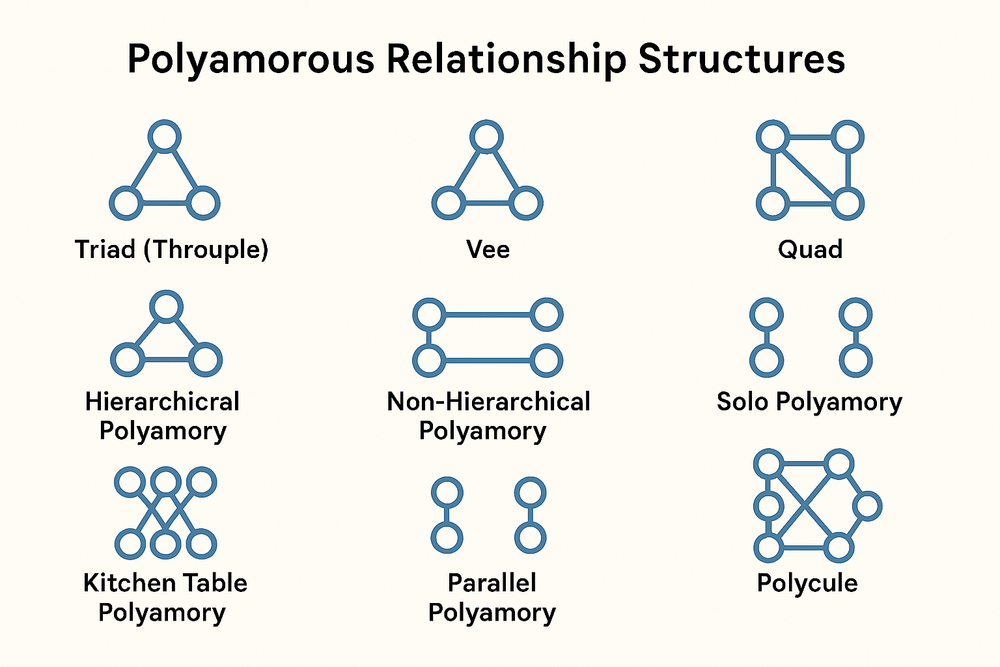
Let's define the "quills" in your story:
- Vera's Dilemma (The Hinge): She is caught between her desire for the stability and deep history with Henry (one kind of warmth) and the passion and novelty with Leo (another kind of warmth).
- Moving closer to Henry: An attempt to reassure him and share marital intimacy inevitably spikes Leo with the reality of his secondary status. It also risks spiking Henry if her actions feel motivated by guilt rather than pure affection, which only highlights his insecurity.
- Moving closer to Leo: An attempt to embrace the new relationship and its joys inevitably spikes Henry with potent feelings of jealousy, replacement, and betrayal. It also risks spiking herself with guilt, making the closeness with Leo a source of pain.
- Staying distant from both: To avoid pricking either man, she might withdraw, creating emotional distance. This is the "cold" option—safe, but leaving her lonely and unfulfilled, failing to achieve the intimacy she desires from either relationship.
This isn't just about Vera causing pain; it's reciprocal. When Henry feels pricked, his reaction—perhaps becoming withdrawn, suspicious, or demanding—causes Vera pain, pushing her away. When Leo feels pricked, his reaction—perhaps demanding reassurance or questioning his place—also causes Vera pain by intensifying her guilt. She is trapped in a web where every move toward connection is fraught with potential hurt.
Given your background as a social researcher, you might find the ideas in the article "Like hedgehogs in a cold, haunted mansion" (LINK) intriguing. It extends the paradox by suggesting that for individuals with relational trauma, the dilemma plays out in a "haunted mansion" where perceived threats are amplified. You could use this as a potent metaphor for Henry's internal state—his past insecurities or fears about the marriage acting as the "ghosts" that make Vera's attempts at closeness feel threatening.
3. Writing Exercise: The Pain of Closeness (30 minutes)
Your task is to write a scene that dramatizes the Hedgehog's Paradox from Vera's perspective. The scene should take place shortly after the 'Escalation' incident from the last lesson, where the rivalry between Henry and Leo became overt.
Scenario:
The competitive tension from the previous scene is still hanging in the air. Vera feels the pressure and the pain her situation is causing. Motivated by a desire to soothe the hurt and find warmth, she decides to act.
Instructions:
Write a scene where Vera makes a deliberate attempt to get closer to either Henry or Leo, but this action backfires, demonstrating the paradox.
- The Motivation: Start with Vera's internal state. Show her feeling the "cold" of the conflict. She is distressed by the tension and wants to connect, to fix things, to feel the warmth of one of her relationships.
- The Action (Attempt at Closeness):
- Option A (Reassuring Henry): Vera approaches Henry when they are alone. She tries to close the distance created by the conflict. This could be through a tender physical gesture, initiating a heartfelt conversation about "them," or recalling a loving memory that is exclusively theirs.
- Option B (Connecting with Leo): Vera reaches out to Leo, perhaps after Henry has gone to bed or through a private message. She tries to find refuge in their connection, seeking the passion and validation that feels uncomplicated. She might express her feelings for him intensely or affirm his importance to her.
- The "Spike" (The Painful Reaction): Show how her attempt at intimacy causes pain.
- If you chose A (Henry): Her attempt at closeness might not be comforting. Instead, it might open the floodgates to his pain. He might respond with, "How can you say that after I saw the way you looked at him?" Her touch, meant to soothe, now feels like a lie. The closeness forces a confrontation with a painful truth that a colder distance allowed them to avoid.
- If you chose B (Leo): Her message seeking comfort might prompt a question she can't handle, like "Does he know you're talking to me right now? I hate feeling like a secret." Or, his loving response might be so pure that it fills her with overwhelming guilt, turning the warmth of his affection into a painful reminder of her divided heart.
- The Realization: End the scene with Vera's internal reaction. She should feel the sting of the paradox—her attempt to get closer has only made things worse. She is trapped. She wanted warmth, but all she found were the quills.
Conclusion
In this lesson, you've moved from crafting external plot mechanics to sculpting your protagonist's internal, emotional reality. By applying the Hedgehog's Paradox, you've placed Vera in a classic tragic dilemma where her fundamental human need for closeness is the very source of her and others' pain.
Key Takeaways:
- The Hedgehog's Paradox is a powerful metaphor for the conflict between the desire for intimacy and the fear of the pain it can cause.
- In the 'Vee' structure, the hinge character (Vera) is uniquely vulnerable to this paradox, as any move toward one partner can be perceived as a "prick" by the other.
- By writing a scene where Vera's attempt at connection backfires, you've established a core internal conflict that makes her situation feel psychologically complex and inescapable.
Preview of the Next Lesson:
Now that Vera is caught in this painful trap, what will she do? Often, when faced with an unsolvable problem, we try to find a clever workaround. The next paradox we'll explore is the 'Inventor's Paradox,' where a character, in trying to solve a specific problem, ends up making it more difficult by tackling a much broader, more general version of it. We'll see how Vera's attempt to find a grand solution to her dilemma might only deepen her predicament.