Hello, welcome back to our course.
In the last lesson, you created a complete tension-friction-resolution framework for your story using the Seven-Point Structure. This gave you a bird's-eye view of the entire narrative arc, ensuring the final scene of consented intimacy will feel earned. The first beat of that structure, the Hook, was designed to establish the story's initial state of secrecy and avoidance—the emotional opposite of your resolution.
Today, we bring that blueprint to life. Your goal for this lesson is to write an opening scene that establishes the vee dynamic and seeds the initial tension between the three characters. We will move from the abstract outline to the concrete craft of prose, focusing on how to create a compelling opening that immediately engages the reader with subtle conflict and unspoken desires.
1. The Engine of an Opening Scene: Secrecy and Imbalance
An effective opening scene needs an engine—a source of energy that creates immediate intrigue. For your story, this engine is the imbalance created by the hinge's new connection and the secrecy she uses to manage it. This isn't about overt conflict yet, but the subtle friction that precedes it.
To see how to craft a scene with this kind of engine, let's start with some foundational principles of scene construction.
Stop Writing Boring Scenes -- Use this Secret 9-Step Formula
The video 'Stop Writing Boring Scenes' by Bookfox offers several key strategies. We'll focus on three that are essential for our opening scene.
Please watch the following segments: Start Late, End Early (00:13 - 01:34): Pay attention to the advice to jump directly into the action and cut the scene at the moment of highest tension. Use an Engine (01:34 - 03:19): Note the examples of scene engines like a hidden identity or a lie. Your scene's engine is the hinge's secret feelings. Prioritize Actions and Dialogue (08:54 - 09:43): Focus on how to use present-moment action and dialogue over backstory to create an engaging scene.
The video emphasizes starting as close to the conflict as possible. Your "Hook" is the perfect place for this. We don't need to see the beginning of the couple's dinner date; we need to drop in at the precise moment the outside world—in the form of the new lover—intrudes.
This intrusion is fueled by what polyamorous communities call New Relationship Energy (NRE).
How would I write a healthy polyamorous relationship?
To understand the emotional force driving your hinge character, let's look at a description of NRE from a Quora discussion on polyamory.
In the linked resource, find the answer by Katie Anne Holton. Read her description of New Relationship Energy (NRE), which she calls that 'exquisite almost painful mania that comes with new love.' Focus on how this 'brain chemistry explosion' can be seen as a potent, temporary force.
NRE is the "engine" of your opening scene. It's the reason the hinge feels a jolt of excitement from a simple text message, and it’s the source of the imbalance that creates tension with her husband, who represents a more stable, less "shiny" connection. Your task is to show this imbalance without explicitly naming it.
2. Character Dynamics: Using Attachment Theory to Create Friction
To make the tension feel psychologically real, we can ground the characters' interactions in a framework you'll recognize from your social research background: attachment theory. Different attachment styles naturally create friction and specific relational patterns.
The Key to Writing Criminally Good Relationships | Video Essay
The video 'The Key to Writing Criminally Good Relationships' explains how attachment theory can be a powerful tool for writers. It also demonstrates how introducing a third person can naturally create conflict.
Please watch these two key sections: Attachment Theory (08:01 - 11:50): Get a quick overview of anxious, avoidant, and secure attachment styles and how they interact. Application (16:34 - 19:18): Pay close attention to how the 'party dude' character is introduced to challenge the existing couple's dynamic. This is a direct parallel to your vee story.
As the video illustrates, pairing different attachment styles is a fantastic way to generate organic conflict. For your writing exercise, let's assign specific styles to create a tense triangle:
- The Husband: Let's define him as having a secure attachment style that is being tested. He is fundamentally confident in the marriage, but the new situation is pushing him toward anxious behaviors—seeking reassurance, questioning, feeling insecure.
- The New Lover: Let's cast him as having an avoidant style. This doesn't mean he is cold, but rather that he presents as self-contained, independent, and less emotionally effusive. This might be part of what the hinge finds attractive—he's a challenge.
- The Hinge: She is caught between the two. Her husband's security provides comfort and stability, while the lover's avoidant mystery triggers the thrill of the chase, amplified by NRE.
In your opening scene, these dynamics will play out in miniature. A simple question like "Who was that?" from the husband can be layered with his budding anxiety. The hinge's evasive answer is her attempt to manage both the NRE hit and her husband's feelings.
3. The Craft of Seeding Tension
Now, let's focus on the specific writing techniques to translate these dynamics onto the page. The goal is to show the tension, not tell the reader it exists. This is achieved through subtext, body language, and point of view.

The article "How to Write Tension in Romance" provides a masterclass in these techniques. We'll focus on just a few key areas for this exercise.
How to Write Tension in Romance
This article is a comprehensive guide. For now, let's concentrate on the techniques most relevant to a subtle opening scene.
Please read the following three sections: Physical Tension: Focus on 'Body Language, Lingering Touches, and Almost-Kisses' to see how to show tension physically. Subtext and What’s Left Unsaid: This will help you craft dialogue where the real meaning is under the surface. Deep POV and Character Reactions: This is the most important section. Focus on how to use Deep Point of View to immerse the reader in the hinge's internal conflict—her physical sensations and contradictory thoughts.
Here's how to synthesize these ideas:
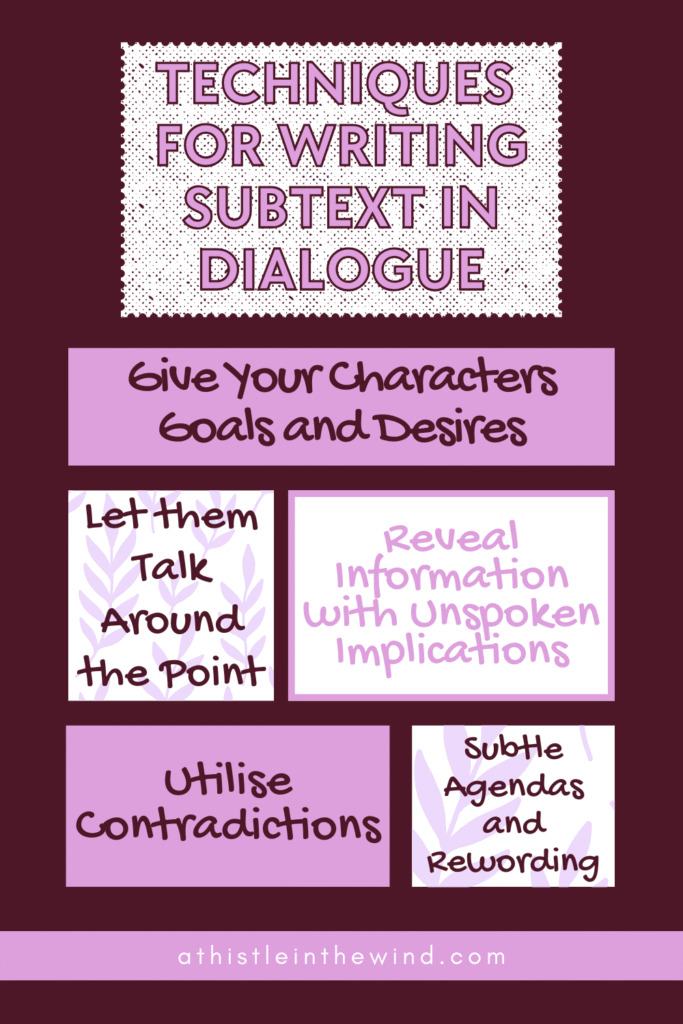
- Dialogue is the tip of the iceberg. The characters might be discussing what to order for dessert, but the subtext is about the phone that just buzzed. Use what's unsaid to create tension.
- The body doesn't lie. A character might say, "It's nothing," but their hand instinctively covers their phone screen, or their partner's posture stiffens.
- Use Deep POV from the hinge's perspective. Let the reader feel her heart jump when the text arrives, the warmth of her husband's hand on her leg, and the guilt that immediately follows. Contrast the sensory details of her present reality (the restaurant, her husband) with the imagined reality the text message represents.
Writing Exercise: The Opening Scene
It's time to write. Your task is to write a 500-700 word opening scene that brings the "Hook" of your story to life.
Scenario: The hinge and her husband are out for a quiet dinner, a moment meant to reinforce their connection. A text message arrives from the new lover.
Instructions:
- Start Late: Begin your scene at the moment the text message arrives, or in the immediate silence after. Do not describe the restaurant or what they ate before.
- Use Deep POV: Write from the hinge's perspective. Immerse the reader in her immediate physical and emotional reaction. What does she feel? What does she think? What does she want to do versus what does she actually do?
- Show, Don't Tell:
- Her Reaction: Don't write "she felt guilty." Instead, show her phone screen angling away from her husband, a flush rising in her cheeks, her sudden inability to meet his eyes.
- His Reaction: Don't write "he was suspicious." Instead, show his fork pausing halfway to his mouth, the way his lighthearted tone from a moment ago vanishes, a new quietness settling over him. His question, "Everything okay?" should be heavy with unspoken meaning.
- Incorporate Attachment Dynamics: Let the husband's dialogue reveal his secure-turning-anxious state (e.g., a simple, direct question that is fishing for reassurance). The hinge's dialogue or actions should show her trying to manage the situation to avoid conflict.
- End Early: Conclude the scene on a moment of unresolved tension. Perhaps he asks a follow-up question she doesn't know how to answer, or she gives a vague reply that leaves an uncomfortable silence hanging in the air. End the scene there. Do not resolve this mini-conflict.
Conclusion
In this lesson, you've moved from architect to builder, translating your plot outline into a living scene. You've learned how to use a specific narrative engine (secrecy fueled by NRE), psychological frameworks (attachment theory), and craft techniques (Deep POV, subtext) to create an opening that is rich with potential conflict.
Key Takeaways:
- A strong opening scene starts in media res, right at a point of tension.
- The psychological dynamics between characters, such as those described by attachment theory, are a powerful source of believable friction.
- Tension is most effectively shown through subtext, body language, and a character's internal sensory experience, rather than through direct exposition.
- Ending a scene on an unresolved note creates a "cliffhanger" effect that compels the reader to continue.
You have now successfully established the initial problem of your story. In our next module, we will begin exploring the SCAMPER framework, a set of creative techniques for escalating conflict. Our first lesson will focus on 'Substitute,' where you'll learn to replace expected relationship dynamics with unexpected ones to heighten the tension you've just seeded.