Hello! Welcome to your third lesson in the "Developing Compelling Characters" module.
In our last lesson, we explored how a character's internal motivation (the "why") translates into a tangible goal (the "what"), which drives the story's plot forward. But what happens to the character during that journey? The pursuit of a goal isn't just a series of external events; it's a process that tests, challenges, and ultimately changes a person.
Today, we'll delve into that internal journey. The learning outcome is to define a character arc and describe its importance for transformation and audience connection. This concept is the heart of compelling storytelling, as it’s the transformation itself that makes a story resonate with us long after it’s over.
1. What is a Character Arc? The Journey Within
A character arc is the internal transformation a character undergoes from the beginning of a story to the end. It’s the evolution of their personality, worldview, or core beliefs. While the plot describes what happens to the character, the arc describes what happens in them.
To get a clear definition, let's start with a short video.
Character Arcs, Flaws, & Lies Don't Need to Be Confusing (Writing Advice)
The video 'Character Arcs, Flaws, & Lies Don't Need to Be Confusing' by writer Brandon McNulty offers a straightforward definition of a character arc as a personal journey of transformation.
Watch from 00:41 to 01:56. Focus on how an arc is identified by comparing the 'before and after snapshots' of a character.
As the video explains, a character arc is a process of meaningful change. To understand how that change happens, writers often use two powerful frameworks: the "Lie vs. Truth" and the "Want vs. Need."
The Lie vs. The Truth
At the start of a story, the character often believes a fundamental Lie about themselves or the world. This Lie is a misbelief that holds them back. The character arc is the journey of them being challenged by the plot until they can finally let go of the Lie and embrace a liberating Truth.
- The Lie: "I'm only worthy of love if I'm perfect."
- The Truth: "My imperfections are part of who I am, and I am worthy of love regardless."
The Want vs. The Need
This framework is closely related. The character has an external Want (the goal we discussed in the last lesson), but what they truly Need is internal growth (the Truth). The arc is the journey of them pursuing their Want, only to discover what they really Need.
Let's watch a video that breaks down this crucial distinction.
Writing Strong Characters - The Important Distinction Between Want and Need
The video 'Writing Strong Characters' from Think Story expertly explains the difference between a character's external 'Want' and their internal 'Need,' using great examples from popular films.
Watch from 00:59 to 03:43. Pay close attention to how the 'Want' drives the plot, while the 'Need' drives the character's internal transformation and the story's theme.
As the video illustrates with characters like Woody from Toy Story:
- Want: To be Andy's favorite toy again (external goal).
- Need: To learn to share and accept that his value doesn't come from being the "favorite" (internal growth).
His entire journey is about chasing the Want, but the satisfying conclusion comes when he fulfills his Need.
2. Why Character Arcs Are Crucial for Audience Connection
So, why is this internal journey so important? Because it’s what creates an emotional connection. We don't just follow a story to see what happens; we invest in it because we relate to the character's internal struggle, their failures, and their ultimate growth. A strong character arc makes a story feel human and meaningful.
Character Arc Definition: Complete Guide with Examples & ...
This article, 'Character Arc Definition,' provides a concise summary of why arcs are so vital for storytelling.
Read the short section '1.3. Why Are Character Arcs Important?'. It effectively summarizes how arcs create emotional investment and reinforce a story's theme.
This principle is directly applicable to your goal of brand storytelling. When you frame your customer's journey as a character arc, you're not just selling a product; you're telling a story of transformation that your audience can see themselves in.
How to Use Story Arcs to Make Your Marketing More ...
Now let's see how this concept translates to marketing. The article 'How to Use Story Arcs to Make Your Marketing More Memorable' explains the benefits of this approach in a business context.
Read the section 'Why It Matters.' Notice how it highlights building emotional connection and turning basic posts into memorable experiences.
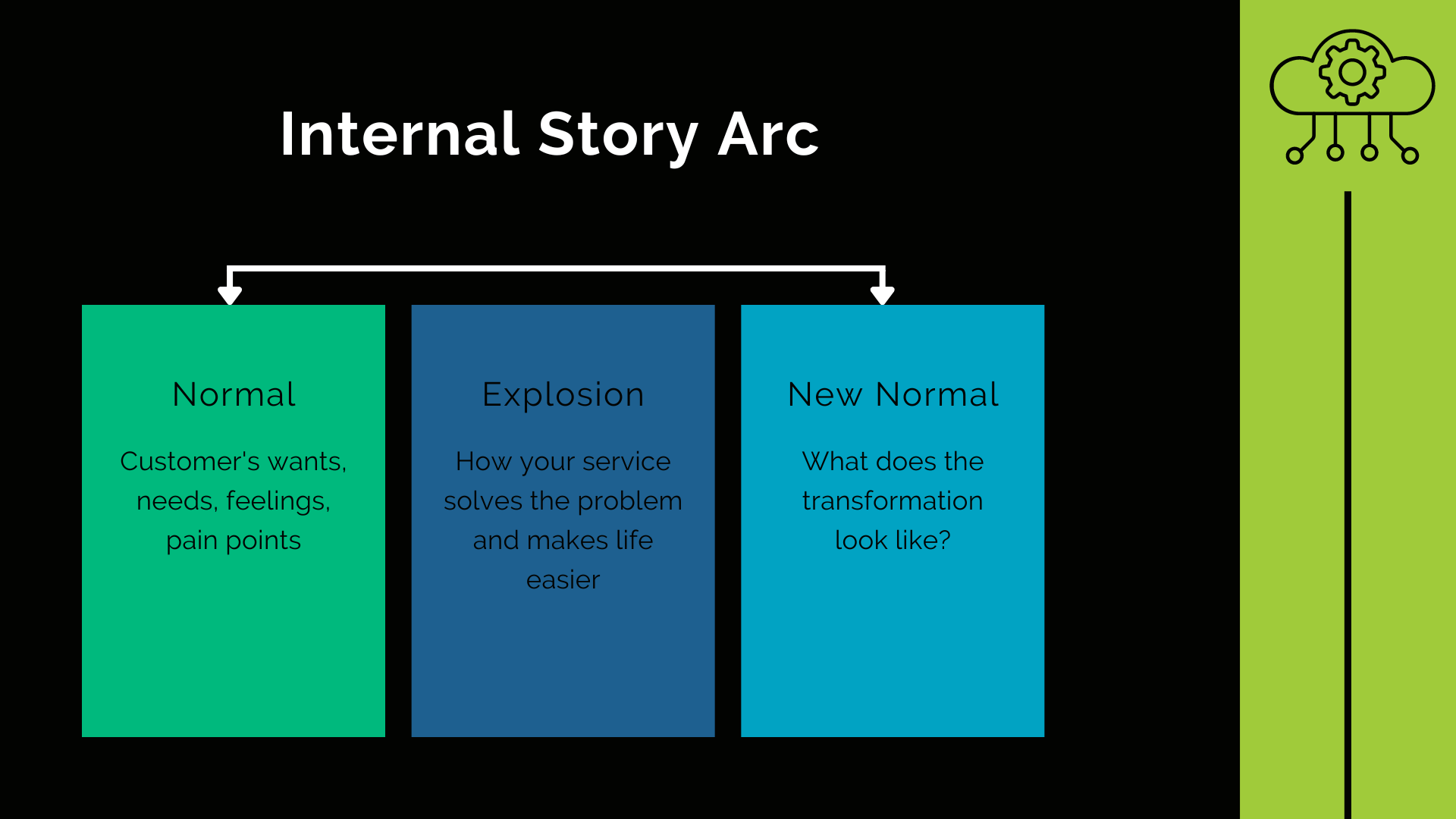
This image provides a perfect visualization of how a character arc works in a branding context, mapping the customer's transformation.
3. The Three Main Types of Character Arcs
While every character's journey is unique, most arcs fall into one of three main categories. Understanding these types will give you a versatile toolkit for crafting different kinds of brand stories.
Let's return to the Brandon McNulty video, which gives an excellent overview of these three types.
Character Arcs, Flaws, & Lies Don't Need to Be Confusing (Writing Advice)
This segment of 'Character Arcs, Flaws, & Lies' breaks down the positive, flat, and negative arcs.
Watch from 04:02 to 06:22. Pay attention to the core dynamic of each arc—whether the character moves toward a Truth, holds onto a Truth, or succumbs to a Lie.
Let's recap and apply these to branding:
-
Positive Change Arc: The character starts believing a Lie and ends by embracing the Truth. They become a better, more complete version of themselves.
- Literary Example: Ebenezer Scrooge in A Christmas Carol.
- Branding Application: This is the most common and powerful arc for customer stories. The customer starts with a problem or a limiting belief ("I'm too disorganized to run my own business"). Your brand provides the tool/solution that helps them overcome this and achieve success ("With this software, I am an efficient and confident entrepreneur").
-
Flat Arc: The character already knows the Truth and does not change. Instead, their journey is about holding onto that Truth in the face of challenges and using it to change the world around them.
- Literary Example: Atticus Finch in To Kill a Mockingbird.
- Branding Application: This is often the arc of the brand itself when it acts as the mentor or guide. The brand has a steadfast set of values (its Truth) and its mission is to help customers see that Truth. For example, a sustainable brand's "Truth" is that environmental responsibility is crucial. Its marketing stories will show how it helps customers live more sustainably, without the brand's core values ever wavering.
-
Negative Change Arc: The character either starts with a Truth and ends by embracing a Lie, or they sink deeper into an existing Lie, ending up worse off than they began.
- Literary Example: Michael Corleone in The Godfather.
- Branding Application: This arc is used more sparingly in marketing, but it can be very effective for "cautionary tales." It's the "failure" side of the StoryBrand framework. A cybersecurity company might tell a story of a business owner who believed the Lie ("A small business like mine is not a target for hackers") and suffered the consequences, thereby highlighting the stakes and the importance of the brand's solution.
Test your understanding!
Let's consider a brand that sells home organization products, like The Container Store. The protagonist is a parent who feels overwhelmed by the chaos of their family's clutter.
- What is a potential Lie this character believes at the start of their story?
- What is the Truth they need to discover?
- What type of character arc would their transformation represent?
- In this story, what kind of arc does the brand (The Container Store) have?
Show answer
- The Lie: A potential Lie could be, "My life is destined to be messy and chaotic, and there's nothing I can do about it," or "Being organized is an innate talent that I just don't have."
- The Truth: The Truth they need to discover is, "With the right systems and tools, I can create an orderly and peaceful environment for my family."
- Arc Type: This is a classic Positive Change Arc. The character moves from a state of helplessness to a state of empowerment and control.
- Brand's Arc: The Container Store has a Flat Arc. Its core "Truth" is that organization improves lives. It doesn't change; it remains the steadfast expert (the guide) that helps the customer on their transformative journey.
Conclusion
Today, we've moved from the external 'plot' to the internal 'arc.' The character arc is the emotional core of a story, tracing a character's journey of transformation as they confront a central Lie and (hopefully) embrace a new Truth. It's this journey, not just the destination, that builds a powerful and lasting connection with an audience.
Key Takeaways:
- A character arc is the internal journey of change a character experiences throughout a story.
- It's often driven by the conflict between what a character Wants (an external goal) and what they Need (internal growth).
- Arcs are vital for creating emotional connection because audiences relate to the struggle and growth of the character.
- The three main types are the Positive Arc (growth), Flat Arc (steadfastness), and Negative Arc (decline), each with a distinct function in storytelling.
By framing your customer's journey as a character arc, you elevate your brand's message from a simple sales pitch to a meaningful story of human transformation.
Preview of the Next Lesson:
We've now covered the key roles, motivations, and the arc of transformation. But to make this truly effective, our hero can't be a generic placeholder. In our next lesson, we will get practical and learn how to create a customer persona that can serve as a relatable protagonist in a brand story. We will build a detailed profile of a target customer, infusing them with the very narrative elements we've been discussing.