Hello! Welcome back to our study of digestive disorders.
In our last lesson, we delved into evidence-based practice by interpreting a clinical trial on an Ayurvedic intervention for Ulcerative Colitis, correlating it with Kshataja Grahani. We saw how modern research methods can be used to validate and understand the efficacy of classical formulations.
Today, we continue our focus on the gut, shifting from inflammatory pathologies to functional disorders, which are often classified under the broader umbrella of Grahani Roga. The learning outcome for this lesson is to compare the rationale and application of Pathya-Apathya for Grahani with modern elimination diets, specifically the low-FODMAP diet. This comparison is central to your goal of integrating classical Ayurvedic wisdom with modern clinical nutrition, particularly for digestive health.
1. The Ayurvedic Foundation: Pathya-Apathya in Grahani
Before we compare, let's solidify our understanding of the Ayurvedic approach. The pathogenesis of Grahani Roga, in most of its forms, originates from Mandagni (impaired digestive fire). Therefore, all treatment, especially dietary management, is aimed at restoring the power of Agni.
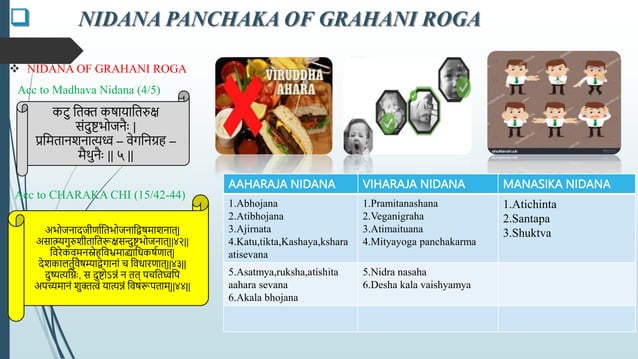
Pathya-Apathya (wholesome and unwholesome regimen) is not merely a list of "good" and "bad" foods; it is a therapeutic strategy designed to correct the underlying pathology.
To understand this strategy, let's examine the core principles.
An Ayurvedic Perspective on Diet and Lifestyle ...
The paper 'An Ayurvedic Perspective on Diet and Lifestyle...' provides an excellent summary of the therapeutic aims of dietary modification in Grahani. This will form the basis of our understanding of the 'why' behind Pathya.
Please read the section 'DIET AND LIFESTYLE MODIFICATION IN GRAHANI (IBS)' and the sub-section 'DIET MODIFICATION IN GRAHANI:'. Focus on the four main aims of the diet and the specific properties (Gunas) that a dravya should possess to be considered Pathya for a Grahani patient.
As you've read, the dietary intervention for Grahani aims to:
- Enhance Agni.
- Reduce Amadosha (metabolic toxins).
- Correct bowel habits.
- Improve overall nutrition.
To achieve this, foods (Ahara Dravyas) should possess specific qualities:
- Deepana: Appetizer, stimulates Agni.
- Pachana: Digestant, helps process Ama.
- Laghu: Light and easy to digest.
- Grahi: Absorbent, helps to bind stool and manage diarrhea.
A classic example of a substance that embodies these qualities is Takra (buttermilk). Charaka Samhita describes it as Grahani Dosha haraanam Sreshtam (the best remedy for Grahani disorders) because it is Laghu, Deepana, and uniquely pacifies all three Doshas despite its Amla (sour) taste.
2. The Modern Approach: The Low-FODMAP Diet
In modern gastroenterology, one of the most prominent dietary interventions for Irritable Bowel Syndrome (IBS)—the condition most commonly correlated with Grahani—is the low-FODMAP diet.
What exactly are FODMAPs, and why do they cause issues? Let's watch a clear explanation.
What is the low-FODMAP diet, and should you try it? | Dr Will Bulsiewicz
The video 'What is the low-FODMAP diet, and should you try it?' from the ZOE channel provides a concise overview. It will help us understand the biochemical basis of this modern approach.
Please watch from 01:31 to 06:52. Focus on: The definition of the FODMAP acronym. The five categories of FODMAPs and food examples. The two main mechanisms by which FODMAPs trigger digestive symptoms.
To summarize the video's key points, FODMAPs are Fermentable Oligosaccharides, Disaccharides, Monosaccharides, and Polyols. These are short-chain carbohydrates that are poorly absorbed in the small intestine. They cause symptoms through two primary mechanisms:
- Osmosis: They draw excess water into the intestine, leading to distension and diarrhea.
- Fermentation: They are rapidly fermented by gut bacteria in the large intestine, producing gas (hydrogen, methane), which leads to bloating, flatulence, and pain.
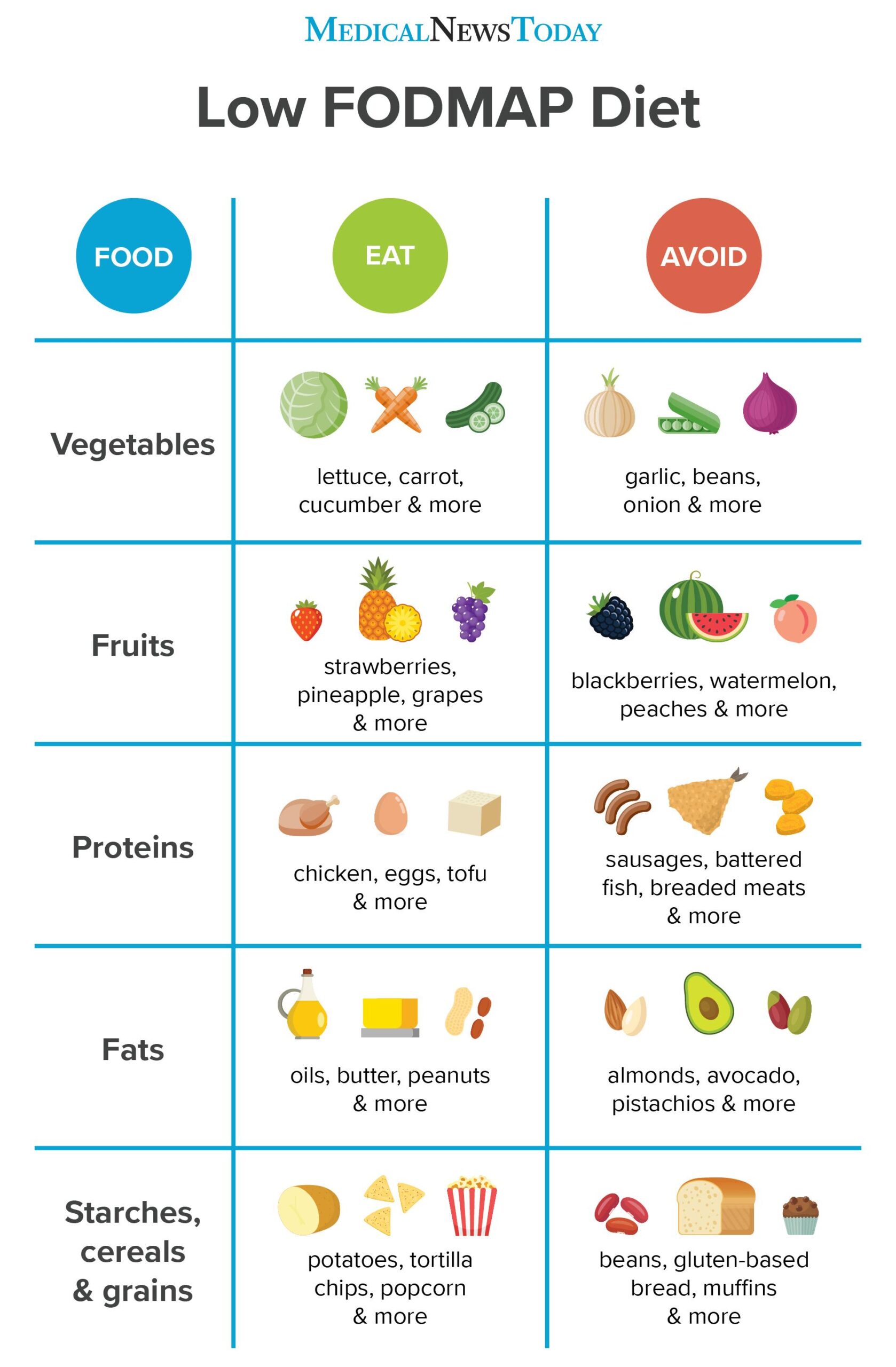
The image below gives a practical overview of which foods to eat and avoid during the initial phase of the diet.
A crucial point highlighted in the video is that the low-FODMAP diet is not a "forever diet." It's a structured, three-phase process designed to identify individual triggers.
3. Comparing the Two Frameworks: Rationale and Application
Now, let's bring the two approaches side-by-side. While both aim to alleviate digestive distress, their underlying rationales and methods of application differ significantly, yet often lead to overlapping advice.
A. Comparing the Rationale
The "why" behind each diet stems from a different understanding of the problem.
| Feature | Pathya-Apathya for Grahani | Low-FODMAP Diet for IBS |
|---|---|---|
| Core Problem | A weak digestive system (Mandagni) that is unable to properly process food, leading to Ama formation and Dosha imbalance. | A sensitive gut that overreacts to the osmotic and fermentative effects of specific, poorly-absorbed carbohydrates. |
| Focus of Intervention | The qualities (Gunas) of food (e.g., Laghu, Guru, Snigdha, Ruksha) and their impact on strengthening the body's digestive capacity (Agni). | The biochemical structure of food (i.e., the presence of specific short-chain carbohydrates like fructose, lactose, etc.). |
| Conceptual Bridge | The Ayurvedic concept of Guru (heavy) foods that are hard to digest often corresponds to foods high in FODMAPs. These substances can overwhelm a weak Agni, leading to incomplete digestion (Ama) and gas formation (Vata aggravation), which mirrors the modern explanation of fermentation causing bloating. |
B. Comparing the Application
The "how" of implementing each diet also reveals key differences. The low-FODMAP diet is a systematic diagnostic tool, while Pathya is a holistic therapeutic lifestyle.
What is the low-FODMAP diet, and should you try it? | Dr Will Bulsiewicz
To understand the application of the low-FODMAP diet, let's return to the ZOE video. It explains the three distinct phases of the diet.
Please watch the segment from 10:29 to 13:50. Pay close attention to the description of the Elimination, Reintroduction, and Personalization phases.
Now, let's contrast this structured process with the application of Pathya.
| Feature | Pathya-Apathya for Grahani | Low-FODMAP Diet for IBS |
|---|---|---|
| Process | A continuous, long-term adjustment of diet and lifestyle. It is not typically phased as an elimination-reintroduction protocol. | A structured 3-phase process: 1. Elimination (2-6 weeks), 2. Reintroduction (systematic testing of FODMAP groups), 3. Personalization (long-term moderation of identified triggers). |
| Personalization | Personalized from the very beginning based on the individual’s Prakriti, the specific Doshic dominance of the Grahani (Vataja, Pittaja, Kaphaja), Agni bala, season, and location. | Personalization is the end goal of the process, achieved after identifying specific triggers during the reintroduction phase. The elimination phase is relatively standardized. |
| Example of Application | A Vataja Grahani patient might be given warm, nourishing soups and ghrita, while a Kaphaja Grahani patient would get more pungent, light, and dry foods like medicated Yusha (soups). This is determined at the initial consultation. | A person eliminates all high-FODMAP foods. They then reintroduce onions (Fructans) for 3 days to test tolerance, then apples (Fructose), then milk (Lactose), etc., to build a personal map of trigger foods. |
Test your understanding!
A patient with IBS-D (diarrhea-predominant) tells you they feel bloated and have loose stools after eating lentils (masoor) and chickpeas (chana). How would you explain this from an Ayurvedic (Pathya) perspective and a modern (FODMAP) perspective?
Show answer
Ayurvedic Perspective: You would explain that while lentils (masoor) are often considered Pathya for Grahani due to being relatively Laghu (light), other legumes like chickpeas can be Guru (heavy) and Ruksha (dry), which can aggravate Vata. In a person with Mandagni, even permissible foods can be difficult to digest, leading to improper processing (Ama) and the formation of gas (Vata Prakopa), causing bloating and altered stools. The recommendation would be to prepare the lentils as a very light, well-spiced soup (yusha) with Deepana-Pachana herbs and to avoid heavier legumes until Agni is stronger.
Modern (FODMAP) Perspective: You would explain that lentils and chickpeas are high in Galacto-oligosaccharides (GOS), which are a type of FODMAP. Since these carbohydrates are poorly absorbed, they travel to the large intestine where they draw in water (contributing to loose stools) and are fermented by gut bacteria, producing gas (causing bloating). A low-FODMAP approach would involve temporarily eliminating these foods and then systematically reintroducing a small amount later to determine the patient's personal tolerance threshold.
C. Finding the Common Ground
Despite their different foundations, both systems often arrive at similar conclusions for what to avoid. A research paper has explored this very comparison.
Comparison of conventional low FODMAP diet therapy and ...
The paper 'Comparison of conventional low FODMAP diet therapy and Pathya ahara...' directly addresses our learning outcome. It highlights the significant overlap in dietary recommendations.
Please read the 'DISCUSSION' and 'CONCLUSION' sections of this paper. Focus on the foods that both dietary approaches recommend avoiding and the shared underlying principle they identify.
As the paper concludes, the perspective in both diets converges on easily digestible food, which is light in property, less complicated carbohydrates and which doesn’t ferment to produce gas and bloating.
Commonly avoided foods in both frameworks include:
- Wheat & Rye: High in Fructans (FODMAP); considered Guru (Ayurveda).
- Onions & Garlic: High in Fructans (FODMAP); considered pungent and potentially aggravating, especially for Pitta (Ayurveda).
- Beans & Lentils (in large amounts): High in GOS (FODMAP); known to be Vatala (gas-forming) and Guru (Ayurveda).
- Cabbage & Cauliflower: High in Fructans (FODMAP); known to be Vatala (Ayurveda).
- Milk & Soft Cheeses: High in Lactose (FODMAP); milk is considered Guru and Abhishyandi (channel-clogging) in cases of Mandagni (Ayurveda).
Conclusion
Today, we have critically compared the classical Ayurvedic dietary strategy of Pathya-Apathya for Grahani with the modern low-FODMAP elimination diet for IBS. This exercise is fundamental to developing an integrative clinical practice.
Key Takeaways:
- Pathya-Apathya is a holistic, quality-based approach focused on strengthening Agni and balancing Doshas. It is personalized from the outset based on the individual's constitution and imbalance.
- The low-FODMAP diet is a biochemical, evidence-based diagnostic tool used to identify specific carbohydrate triggers through a structured process of elimination and reintroduction.
- The Ayurvedic concept of food Gunas (Laghu/Guru) provides a powerful qualitative framework that often aligns with the quantitative biochemical analysis of the FODMAP approach.
- Both systems aim to reduce digestive load and fermentation, leading to significant overlap in their lists of "unwholesome" or "high-trigger" foods.
Preview of the Next Lesson:
This lesson concludes our module on digestive disorders. We will now move to the next module, which focuses on your other key area of interest: metabolic disorders. Our first lesson will be: Analyze Medoroga (obesity) pathogenesis and its correlation with metabolic syndrome. We will deconstruct the Ayurvedic Samprapti of obesity and map it onto the modern pathophysiological understanding of metabolic syndrome.