Hello! Welcome to your final lesson in this module on neurological conditions.
In our last session, we constructed a detailed integrative plan for managing early-stage cognitive decline (MCI). We used a seven-pillar framework, mapping modern functional medicine strategies to core Ayurvedic principles like Ahara, Vihara, and Rasayana.
Today, we take a significant step further. We will address Alzheimer's disease (AD), a more advanced stage of neurodegeneration. While the foundational principles remain the same, managing established AD requires a more intensive and multi-pronged protocol. Your learning outcome for this lesson is to design an integrative treatment protocol for Alzheimer's disease combining Ayurvedic and modern approaches. This will bring together your knowledge of Dravyaguna, pathology, and modern research to create a powerful therapeutic strategy.
1. The Pathological Landscape of Alzheimer's Disease
To design an effective protocol, we must first clearly understand the disease we are treating from both modern and Ayurvedic viewpoints.
Modern Pathophysiology
Alzheimer's disease is characterized by two primary pathological hallmarks in the brain:
- Amyloid-Beta Plaques: These are sticky clumps of protein that accumulate outside neurons, disrupting cell-to-cell communication.
- Neurofibrillary Tangles (Tau Tangles): The Tau protein, which normally stabilizes the internal transport system of a neuron (microtubules), becomes abnormal and forms tangles inside neurons. This causes the transport system to collapse, leading to cell death.
This dual assault results in progressive neuroinflammation, synaptic dysfunction, and widespread brain atrophy, leading to the severe cognitive and functional decline seen in AD.

Ayurvedic Samprapti (Pathogenesis)
In Ayurveda, Alzheimer's disease is not seen as a new entity but can be correlated with conditions described in classical texts, primarily as Jara janya Smrutibhramsha (age-related degenerative memory loss).
To understand its Ayurvedic pathogenesis, let's explore the core concepts from a review article.
''AYURVEDIC INTEGRATED REVIEW OF DEMENTIA AND ...
The paper 'AYURVEDIC INTEGRATED REVIEW OF DEMENTIA AND ITS MANAGEMENT' provides an excellent summary of the Ayurvedic perspective on AD. We'll use it to understand the underlying Samprapti.
Please read the 'INTRODUCTION' and the subsection 'Alzhiemer’s Disease - Ayurveda Perspective', which begins after 'MATERIAL AND METHODS'. Focus on: The primary classification of this disease as a Vataj vyadhi. The key Samprapti Ghatakas (pathological components) involved: the specific sub-doshas of Vata, Pitta, and Kapha; the vitiated Dhatus (Rasa, Rakta, Majja); and the affected Srotas (Rasavaha, Majjavaha, Manovaha).
As you've read, the core issue is a profound aggravation of Vata Dosha, leading to Dhatu Kshaya (tissue depletion), particularly in the Majja Dhatu (nervous tissue). This vitiation of Vata's qualities—dryness, lightness, and erratic movement—disrupts the functions of Manas (mind), specifically Dhee (intellect), Dhriti (retention), and Smriti (memory).
2. The Integrative Therapeutic Strategy: A Multi-Target Approach
Modern medicine has historically focused on single-target drugs. Cholinesterase inhibitors (e.g., Donepezil) and NMDA receptor antagonists (e.g., Memantine) primarily manage symptoms by modulating neurotransmitter levels. More recent monoclonal antibody drugs (e.g., Lecanemab) target the amyloid-beta plaques themselves, but their effectiveness is debated, and they come with significant risks.
The complex, multi-factorial nature of AD, as understood from both modern and Ayurvedic perspectives, calls for a multi-target therapeutic strategy. This is where an integrative approach shines.
The Ayurvedic treatment strategy (Chikitsa Sutra) for such conditions is built on a three-tiered approach, which we will use to structure our protocol:
- Shodhana: Purification therapies to clear deep-seated toxins and obstructions in the channels (Srotoshuddhi).
- Shamana: Palliative therapies, including diet, lifestyle, and herbal medicines to pacify doshas and manage symptoms.
- Rasayana: Rejuvenation therapies to nourish and rebuild the depleted tissues (Dhatu Poshana), especially the Majja Dhatu.
3. Building the Protocol: Component by Component
Let's construct a comprehensive protocol based on this framework, integrating evidence-based modern and Ayurvedic interventions.
Component 1: Shamana (Foundational Support)
This component consists of diet and lifestyle changes that pacify Vata, reduce inflammation, and support brain health. It builds directly on the seven pillars we covered in the last lesson.
- Nutrition (Ahara): A plant-rich, mildly ketogenic diet (like the KetoFlex 12/3) is paramount. It reduces neuroinflammation and provides ketones, an alternative fuel source for a brain that struggles to use glucose. From an Ayurvedic view, this means a diet rich in healthy fats (ghee, olive oil), cooked vegetables, and adequate protein, which is inherently Vata-shamana.
- Lifestyle (Vihara):
- Sleep (Nidra): 7-8 hours of high-quality sleep is non-negotiable for enabling the brain's glymphatic system to clear metabolic waste, including amyloid-beta.
- Exercise (Vyayama): A combination of aerobic exercise (to boost BDNF) and gentle mind-body practices like Yoga and Tai Chi helps improve circulation, reduce stress, and maintain motor function.
- Stress Management (Satvavajaya): Practices like meditation (Dhyana) and simple Pranayama (e.g., Nadi Shodhana) calm the nervous system and counteract the damaging effects of chronic stress.
Component 2: Shodhana (Deep Cleansing & Brain-Targeted Therapy)
For established AD, palliative measures alone are often insufficient. Shodhana therapies are essential for clearing the Margavarodha (channel obstruction) caused by vitiated doshas and Ama, allowing Rasayana therapies to work effectively.
The following Panchakarma procedures are particularly relevant for AD.
''AYURVEDIC INTEGRATED REVIEW OF DEMENTIA AND ...
Let's revisit the paper on the Ayurvedic management of dementia to understand the specific purification therapies recommended.
Please read the sections titled 'Panchkarma in Manas vyadhi (Dementia/ AD)' and 'Bahyopachar'. Focus on the rationale for each of these three types of procedures: Nasyakarma: Why is it considered so effective for brain disorders? Basti karma: What is its primary role in this condition? Murdhni taila (Shirodhara, etc.): What is the purpose of these external oil treatments?
- Nasya Karma (Nasal Administration): As the text highlights, "Nasa hi shiraso dwaram" (the nose is the gateway to the head). Nasya bypasses the blood-brain barrier, delivering medicated oils like Kshirabala Taila or Brahmi Ghrita directly to the nervous system. It's a powerful tool for clearing the channels of the head and nourishing brain tissue.
- Basti Karma (Medicated Enema): Considered the foremost treatment for Vata disorders, Basti is crucial for managing the gut-brain axis. Many neurodegenerative diseases are linked to gut inflammation and dysbiosis. A series of nourishing (Bruhana) or rejuvenating (Yapana) bastis can profoundly pacify systemic Vata.
- Murdhni Taila (Head Treatments): Procedures like Shirodhara (continuous oil stream on the forehead), Shirobasti (retaining oil on the head), and Shiropichu (medicated cotton swab on the crown) are deeply calming to the central nervous system. They reduce stress, improve sleep, and directly nourish the brain via transcutaneous absorption.
Component 3: Rasayana (Neuro-Rejuvenation with Medhya Herbs)
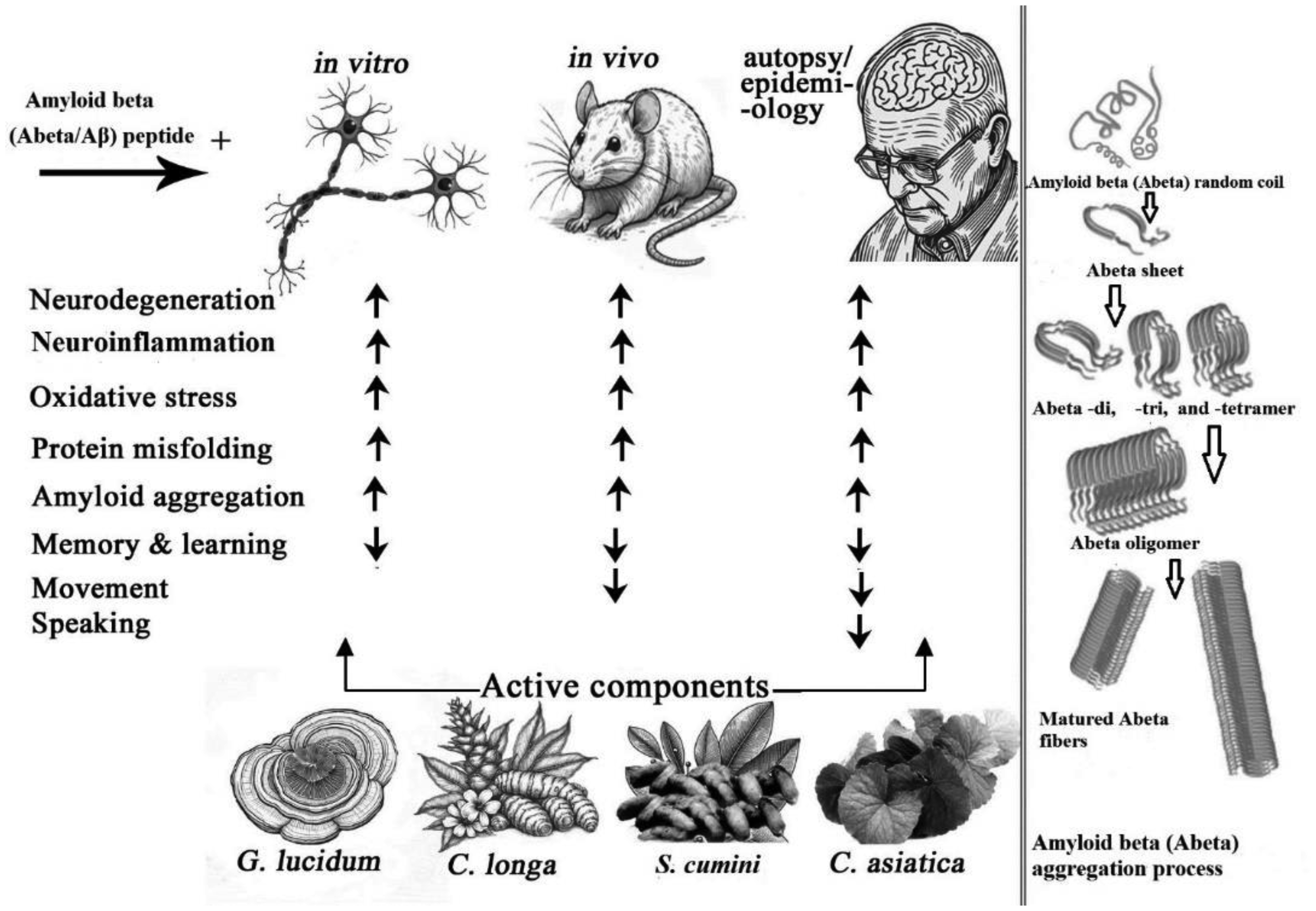
This is the core Dravyaguna component, focusing on herbs that protect and regenerate nervous tissue. Many of these Medhya Rasayanas have been studied for their multi-target effects on AD pathology.
The article "Integrative approaches in Alzheimer's disease" provides an excellent overview of the mechanisms of these herbs.
Integrative approaches in Alzheimer's disease - PubMed Central
Let's explore the scientific evidence for key Ayurvedic herbs. This review from PubMed Central discusses how Traditional, Complementary, and Integrative Medicine (TCIM) interventions target AD pathology.
Please review the following sections: 'Specific botanical drugs' (4.2.2) 'The role of traditional medicine in Alzheimer’s disease' (4.3) Section 5, which begins 'Curcuma longa L. — Family: Zingiberaceae has been explored...' The tables in section 5.1, 'Pharmacological and clinical validation...' As you read, note the mechanisms of action for Ashwagandha, Bacopa (Brahmi), Curcuma (Haridra), and Centella Asiatica (Mandukaparni).
The synergy between the Ayurvedic description and modern pharmacology is striking. Here are some of the most important herbs for an AD protocol:
| Herb | Ayurvedic Action | Modern Pharmacological Mechanism |
|---|---|---|
| Ashwagandha | Vata-Kapha Shamana, Balya, Rasayana (Pacifies Vata/Kapha, Strength-promoting, Rejuvenative) | Reduces stress (cortisol), antioxidant, promotes neurogenesis, may reduce amyloid burden, GABAergic effect. |
| Brahmi | Medhya, Majja Dhatu Rasayana (Cognitive enhancer, Rejuvenative for nervous tissue) | Enhances Brain-Derived Neurotrophic Factor (BDNF), reduces oxidative stress, improves cholinergic function. |
| Haridra | Ama Pachana, Shothahara, Vishahara (Toxin-digesting, Anti-inflammatory, Detoxifying) | Potent anti-inflammatory (inhibits NF-κB), antioxidant, anti-amyloid aggregation properties. |
| Mandukaparni | Medhya, Rasayana (Cognitive enhancer, Rejuvenative) | Protects neurons from amyloid toxicity, reduces oxidative stress, promotes neurite outgrowth. |
| Guduchi | Rasayana, Tridosha Shamaka (Rejuvenative, Pacifies all three doshas) | Immunomodulatory, memory-enhancing, antioxidant properties. |
4. Synthesizing the Integrative Protocol: A Case Example
Let's apply this to a hypothetical patient.
Patient: A 72-year-old male with a diagnosis of moderate Alzheimer's Disease. He is taking Donepezil. He presents with significant memory loss, disorientation, anxiety, and sleep disturbances. His Prakriti is Vata-dominant.
Integrative Treatment Protocol:
Phase 1: Foundational Support & Gentle Rejuvenation (First 3 Months)
- Diet & Lifestyle: Implement the Shamana strategies discussed above (KetoFlex diet, sleep hygiene, gentle walks, breathing exercises).
- Herbal Support (Rasayana):
- Ashwagandha: 500 mg twice daily to manage anxiety and support sleep.
- Brahmi: 500 mg twice daily to support cognitive function.
- Turmeric (with black pepper): 500 mg twice daily for its anti-inflammatory effects.
- Modern Integration: Continue Donepezil as prescribed. Monitor for any increased sedation due to the GABAergic effect of Ashwagandha.
Phase 2: Intensive Cleansing & Nourishment (Shodhana) (e.g., a 21-day program within months 4-6)
- Procedure 1: A course of Shirodhara with Brahmi taila for 7-14 days to calm the nervous system.
- Procedure 2: A course of Nasya with Kshirabala taila (101) for 7 days to directly nourish the brain.
- Procedure 3: A course of 8 Yapana Bastis (rejuvenating enemas) with a decoction including herbs like Ashwagandha and Bala to pacify systemic Vata and support the gut-brain axis.
Phase 3: Long-term Maintenance & Rejuvenation (Ongoing)
- Continue Phase 1 diet, lifestyle, and herbal support.
- The herbal formula can be adjusted based on the patient's response, potentially using a more complex formulation like those mentioned in the classical texts or previous lesson.
- Repeat a course of Shirodhara or Shiropichu seasonally or as needed to manage Vata aggravation.
Test your understanding!
For the 72-year-old Vata-dominant patient in our case study, who suffers from anxiety and sleep disturbance alongside cognitive decline, which Shodhana procedure would you prioritize during Phase 2, and why? Justify your choice based on Ayurvedic principles.
Show answer
While all Shodhana procedures are beneficial, you would prioritize Basti Karma.
Justification: According to Ayurveda, Vata is the primary driver of all degenerative processes (Kshaya) and neurological disorders. The primary site of Vata is the Pakvashaya (colon). For a Vata-dominant individual with systemic signs of Vata aggravation (anxiety, disturbed sleep, degeneration), treating Vata at its root is the most effective strategy. Basti Karma is revered as ardha chikitsa (half of all treatments) precisely because of its profound ability to pacify Vata throughout the entire body. By stabilizing Vata at its source in the colon, you indirectly calm the entire nervous system, improve the gut-brain axis, and create a stable foundation that enhances the effectiveness of all other therapies like Nasya and Shirodhara.
Conclusion
Today, you have learned how to construct a sophisticated, multi-layered integrative protocol for Alzheimer's disease. You have seen how the classical Ayurvedic framework of Shamana, Shodhana, and Rasayana provides a logical and comprehensive structure for combining modern lifestyle medicine, targeted purification therapies, and evidence-based herbal medicine.
Key Takeaways:
- Alzheimer's disease is a multi-factorial condition requiring a multi-target treatment strategy.
- An integrative protocol for AD should be structured around the Ayurvedic principles of Shamana (palliative care like diet/lifestyle), Shodhana (purification like Nasya and Basti), and Rasayana (rejuvenation with Medhya herbs).
- Key Ayurvedic herbs like Ashwagandha, Brahmi, and Turmeric have well-documented pharmacological mechanisms that directly target the pathology of AD (inflammation, amyloid aggregation, oxidative stress).
- Integrating Ayurvedic therapies with conventional medication requires careful consideration of potential herb-drug interactions and layering treatments logically.
Preview of the Next Lesson:
The comprehensive protocol we designed today is a powerful template. However, to achieve the highest level of clinical success, it must be personalized. Our next lesson, "Describe how Deha-Prakriti influences drug pharmacodynamics (Prakriti-based pharmacology)," will equip you with the principles to do just that. You will learn how an individual's unique mind-body constitution (Prakriti) can fundamentally alter their response to the very herbs and drugs we've discussed, taking your ability to design protocols from excellent to exceptional.