Hello! Welcome back to our module on metabolic disorders.
In our previous lesson, we established a strong conceptual bridge between the Ayurvedic Agni-Deepana-Pachana approach and modern metabolic enhancement strategies. We saw how concepts like Jatharagni and Ama correlate with gut health, inflammation, and cellular metabolism.
Today, we will take the next logical step and apply this integrated knowledge to the real world of clinical evidence. Our learning outcome is to interpret clinical studies on anti-obesity and lipid-lowering Ayurvedic interventions. This skill is fundamental to your goal of building an evidence-based practice, allowing you to move beyond classical texts and critically evaluate modern research to inform your clinical decisions.
We will learn how to read a scientific paper, focusing on the most important results, and then apply this skill by analyzing two high-level studies on Ayurvedic treatments for dyslipidemia and obesity.
1. A Practical Guide to Reading Clinical Research
Before we dive into specific papers, let's equip ourselves with a basic toolkit for interpreting them. While your BAMS education provides the clinical foundation, critically appraising research requires a specific set of skills. We'll focus on the essentials you need to extract meaningful information quickly.
A clinical study paper typically follows a standard structure: Abstract, Introduction, Methods, Results, and Discussion/Conclusion. For our purposes, the most crucial sections are the Abstract (for a quick summary), Methods (to understand the study quality), Results (for the data), and Discussion (for the authors' interpretation and context).
Key Study Types and Concepts
- Randomized Controlled Trial (RCT): This is the gold standard. Participants are randomly assigned to an intervention group (receiving the treatment) or a control group (receiving a placebo or standard care). Randomization minimizes bias, making the results more reliable.
- Systematic Review & Meta-Analysis: These are studies of studies. A systematic review gathers all high-quality research on a specific question (e.g., "Does Guggulu lower cholesterol?"). A meta-analysis goes a step further by statistically combining the data from multiple studies to provide a more powerful and precise overall result. These are at the top of the evidence hierarchy.
How to Interpret the Results Section
When you look at the results, especially in a meta-analysis, you'll encounter tables and figures that summarize the findings. Here’s what to look for:
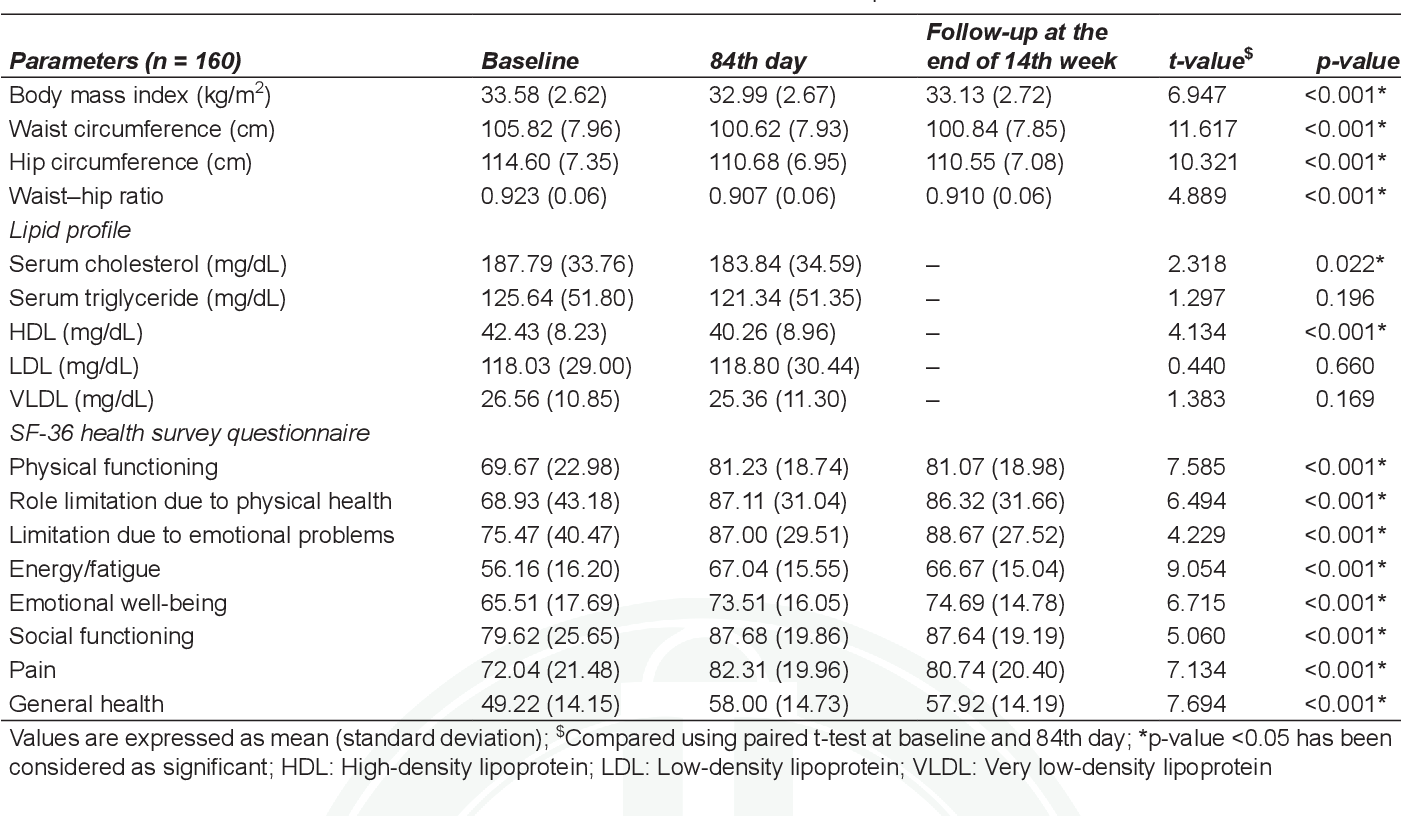
Let's break down the key terms you'll see in tables like this and in the text:
- Mean Difference (MD): The average difference in an outcome between the treatment and control groups. For example, if the Guggulu group's cholesterol dropped by 20 mg/dL and the placebo group's dropped by 2 mg/dL, the mean difference is -18 mg/dL.
- p-value: This tells you the probability that the observed result occurred by chance. A conventional threshold is p < 0.05. If the p-value is less than 0.05, the result is considered statistically significant, meaning it's unlikely to be a random fluke. In the table above, the change in Serum Cholesterol has a p-value < 0.001, indicating a highly significant change.
- Confidence Interval (CI): This gives a range of plausible values for the true effect. A 95% CI means we are 95% confident that the true effect lies within this range. The most important thing to check is whether the CI crosses zero.
- If the 95% CI for a mean difference is [-25, -10], it does not cross zero. This reinforces that the effect is statistically significant.
- If the 95% CI is [-5, 15], it does cross zero. This means the true effect could be negative, positive, or zero, so the result is not statistically significant.
- Heterogeneity (I²): In a meta-analysis, this tells you how much variability there is between the results of the individual studies.
- Low I² (< 50%): The studies are consistent. You can be more confident in the pooled result.
- High I² (> 50%): The studies show widely different results. This is a red flag. You need to be cautious and ask why (e.g., differences in dosage, population, study quality).
With this framework, let's analyze our first paper.
2. Interpreting Evidence on Lipid-Lowering Interventions
Dyslipidemia (Medovriddhi) is a core component of metabolic syndrome. Let's examine the evidence for some classical Ayurvedic remedies. We will focus on a systematic review and meta-analysis that synthesizes the results of many individual studies.
a-systematic-review-and-meta-analysis-of-ayurvedic- ...
This paper, 'A systematic review and meta-analysis of Ayurvedic herbal formulations for hypercholesterolemia', is a high-quality resource that pools data from numerous randomized controlled trials. It will help us understand the strength of evidence for key Medohara Dravyas.
Please read the following sections: Results (Abstract): Get a quick overview of the main findings. Section 1.2. Ayurveda: Note the herbs identified as commonly used for cholesterol. Sections 3.1.1 & 3.1.2: Focus on the tables and text describing the effects on Total Cholesterol (TC) and LDL Cholesterol. Identify the key numbers for Guggulu and Garlic. Sections 4.1 (Commiphora Mukul) & 4.1.1 (Garlic): Read the detailed discussion on these two herbs. Pay attention to the clinical significance, comparison with statins, and nuances like purification and preparation. Section 5. Conclusions: Read the final summary. Don't worry about understanding every single detail. Focus on the main takeaways for each herb.
Analysis of Findings
After reading the specified sections, let's synthesize what we've learned. The study provides "moderate to high level of evidence" for a few key herbs.
1. Guggulu (Commiphora mukul)
- Efficacy:
- Total Cholesterol (TC): Reduced TC by 16.78 mg/dL (p=0.02). Statistically significant.
- LDL-C ("Bad" Cholesterol): Reduced LDL-C by 18.78 mg/dL (p=0.02). Statistically significant.
- HDL-C ("Good" Cholesterol): Increased HDL-C by 2.19 mg/dL (p=0.03). A small but significant improvement.
- Triglycerides (TG): The effect was not statistically significant.
- Interpretation: This study provides strong evidence that Guggulu is effective in lowering TC and LDL-C and slightly increasing HDL-C. Its lack of effect on triglycerides is an important clinical nuance. The paper's discussion (Section 4.1) adds crucial context: the effect may be greater in patients with higher baseline cholesterol, and the purification (
Shodhana) of Guggulu, a critical step in Dravyaguna, may be essential for both efficacy and safety.
2. Garlic (Allium sativum)
- Efficacy:
- TC: Reduced TC by 12.45 mg/dL (p < 0.0001). Highly significant.
- LDL-C: Reduced LDL-C by 10.37 mg/dL (p=0.005). Significant.
- HDL-C & TG: No significant effect.
- Interpretation: Garlic also shows good evidence for lowering TC and LDL-C. The authors note its high tolerability and minimal side effects compared to statins. They also specifically included studies using whole garlic powder, aligning with traditional Ayurvedic practice, rather than isolated extracts like allicin.
Test your understanding!
A 55-year-old patient with hyperlipidemia (elevated LDL and Total Cholesterol, normal Triglycerides) is hesitant to start statins due to fear of side effects. He asks you about using Guggulu. Based on the evidence from this meta-analysis, how would you counsel him?
Show answer
An evidence-informed response would be balanced and transparent. You could say something like:
"Modern research, which has combined the results of several high-quality studies, shows that Guggulu can be moderately effective for managing high cholesterol. The evidence indicates it can significantly lower both Total Cholesterol and LDL, the 'bad' cholesterol, which are your main concerns. It may also provide a small boost to your HDL, the 'good' cholesterol.
It's important to know that the studies suggest it's most effective for LDL and Total Cholesterol, not so much for triglycerides. Since your triglycerides are normal, this aligns well with your lipid profile.
From an Ayurvedic perspective, and supported by a few observations in the research, using a traditionally purified form of Guggulu is likely best for both effectiveness and safety. It is generally well-tolerated with minimal side effects. We can consider it a safe and evidence-supported option to integrate into your management plan, alongside diet and lifestyle changes."
3. Interpreting Evidence on Anti-Obesity Interventions
Now let's shift our focus to obesity (Sthaulya or Medoroga). We will analyze another systematic review and meta-analysis, this time on one of Ayurveda's most famous formulations: Triphala.
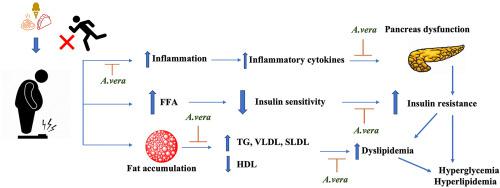
The Anti-Obesity Effects of Triphala and Triphala Guggul
The paper 'The Anti-Obesity Effects of Triphala and Triphala Guggul: A Systematic Review and Meta-Analysis' evaluates the clinical evidence for these popular formulations in weight management.
Please review the following sections: Abstract: Get the main conclusions at a glance. Section 3.2. Study Characteristics: Briefly look at Table 1 to see the different ways Triphala was administered in the studies (e.g., oral vs. topical, dosage, duration). Section 3.5. Meta-Analysis of Subgroups: This is the core results section. Focus on the findings for oral vs. topical interventions on Body Weight and BMI. Section 4.1. Main Findings of the Review: Read this to understand the authors' interpretation of the results, especially the high heterogeneity. Section 4.4. Methodological Limitations...: This is crucial. Read this to understand the weaknesses in the available evidence. Section 5. Conclusions: Read the final summary.
Analysis of Findings
This paper presents a more complex picture, which is common in emerging areas of research.
- Efficacy of Oral Triphala:
- Body Weight: The meta-analysis found a statistically significant decrease in body weight (Mean Difference = -2.4 kg, p=0.01).
- BMI: The effect on BMI was not statistically significant (p=0.09).
- Efficacy of Topical Triphala: Topical application (e.g., massage with powder or udvartana) showed no significant effect on either body weight or BMI. This is a critical clinical finding, suggesting that the benefits are derived from systemic action via oral intake.
- Major Caveats (The "Buts"):
- High Heterogeneity (I² = 91%): This is a very important finding. It means the results of the individual studies were highly inconsistent. This variability likely comes from differences in dosage, formulation, study duration, and participant characteristics. This high I² value warns us that while the average effect is a 2.4 kg loss, the effect in any single patient could be very different.
- Poor Study Quality: The authors are transparent about the methodological limitations of the studies they reviewed (Section 4.4). Many of the trials had a high risk of bias due to poor blinding or randomization. This weakens our confidence in the results.
Interpretation
The evidence suggests that short-term oral use of Triphala can lead to a modest but statistically significant reduction in body weight. However, this conclusion is not definitive due to the inconsistency across studies and the poor methodological quality of much of the primary research. The lack of effect from topical application is also a key takeaway for clinical practice.
This analysis shows that interpreting evidence isn't just about finding a significant p-value. It's about critically assessing the quality and consistency of the entire body of evidence.
Conclusion
Today, you have equipped yourself with the essential skills to be an evidence-based Ayurvedic practitioner. You have moved beyond theory to critically appraise the scientific literature, a crucial step in integrating Ayurveda with modern healthcare.
Key Takeaways:
- Interpreting clinical studies involves understanding key concepts like p-values, confidence intervals, and especially the context provided by study design, quality, and heterogeneity (I²).
- The evidence for lipid-lowering herbs is quite strong. Meta-analyses show that Guggulu and Garlic significantly reduce Total Cholesterol and LDL-C, supporting their classical use in Medoroga.
- The evidence for anti-obesity interventions like oral Triphala is promising but currently inconsistent. It appears to aid in modest weight loss, but high heterogeneity and methodological flaws in existing research mean more high-quality studies are needed.
- An evidence-based approach requires acknowledging both the strengths and the limitations of the current research when making clinical recommendations.
In our next lesson, we will put this knowledge into direct clinical action. We will design an evidence-based treatment protocol for dyslipidemia using Ayurvedic medicines, drawing upon the very studies we have interpreted today to make informed choices about drug selection, dosage, and patient counseling.