Hello and welcome to our lesson.
In our previous session, we explored how Anupana (adjuvants) can be used to intelligently modulate a drug's journey through the body, enhancing its absorption and bioavailability. We compared this classical concept to modern pharmacokinetic principles. This addressed how to optimize a drug's effect after it has been administered.
Today, we take a crucial step back to answer the question: how do we guarantee the quality, authenticity, and potency of the raw drug (Dravya) in the first place? This is fundamental to ensuring safety, efficacy, and reproducibility in both clinical practice and research.
Our learning outcome for this lesson is to interpret pharmacognostic and phytochemical standards for quality assessment of raw drugs. This will equip you to understand and evaluate the scientific basis for quality control in Ayurvedic pharmaceutics, a skill that is indispensable for an evidence-based practitioner.
1. The Need for Standardization
Herbal medicines, by their very nature, are subject to significant variation. The therapeutic properties of a plant can be influenced by its geographical source, harvest time, storage conditions, and post-harvest processing. Furthermore, the risk of adulteration (mixing with inferior substances) or substitution (using the wrong plant entirely) is a persistent challenge.
To address this, a systematic process of standardization is employed. Standardization provides a set of definitive quality parameters to ensure that every batch of a drug is authentic, pure, and possesses a consistent chemical profile.
To understand the scope of this challenge and the methodologies used, let's start with a brief introduction from a research paper focused on standardizing an Ayurvedic formula.
Quality standards for Hutabhugādi cūrṇa (Ayurvedic ...
The paper 'Quality standards for Hutabhugādi cūrṇa' provides an excellent rationale for why standardization is critical for traditional medicines. Please read the introduction to grasp the core problem.
Please read the '1. Introduction' section. Focus on how the authors frame the challenges unique to herbal drugs and the role of standardization in ensuring quality, safety, and reproducibility.
As the reading emphasizes, standardization is the tool that bridges traditional preparations with modern quality assurance. This process relies on two main pillars:
- Pharmacognosy: The science of identifying and evaluating crude drugs by their macroscopic and microscopic characteristics.
- Phytochemistry: The study of the chemicals derived from plants, used here to establish a drug's chemical fingerprint and purity.
Let's watch a short video that introduces these evaluation methods.
Evaluation of crude drug/Quality Control/assessment of crude drug according to WHO guidelines Part-I
This video, 'Evaluation of crude drug...Part-I' by Sufipharm Dr. Sufiyan, offers a clear and concise overview of the different methods used in quality control.
Please watch from the beginning until 02:36. Pay attention to the definition of drug evaluation (identity, purity, quality) and the list of methods presented.
Now, let's explore these two pillars in more detail.
2. Pharmacognostic Evaluation: The Drug's Identity Card
Pharmacognosy establishes the fundamental identity of a raw drug. It's like checking a person's photo ID and fingerprints to confirm who they are. This is done at two levels:
a) Macroscopic and Organoleptic Evaluation
This involves using our senses to examine the physical characteristics of the drug:
- Color, Odor, Taste: Classical Ayurvedic texts often use these as primary identifiers.
- Size, Shape, Texture: The physical form of the root, bark, leaf, or seed.
- Fracture: How the drug breaks (e.g., fibrous, brittle).
b) Microscopic Evaluation
This is the cellular "fingerprint" of the plant. A transverse section of the drug is examined under a microscope to identify unique and diagnostic cellular structures, such as:
- Specific types of tissues (e.g., cork, xylem, phloem).
- Presence of calcium oxalate crystals, starch grains, or oil globules.
- Unique cell types like stone cells or trichomes (plant hairs).
These official characteristics are meticulously documented in pharmacopoeias.
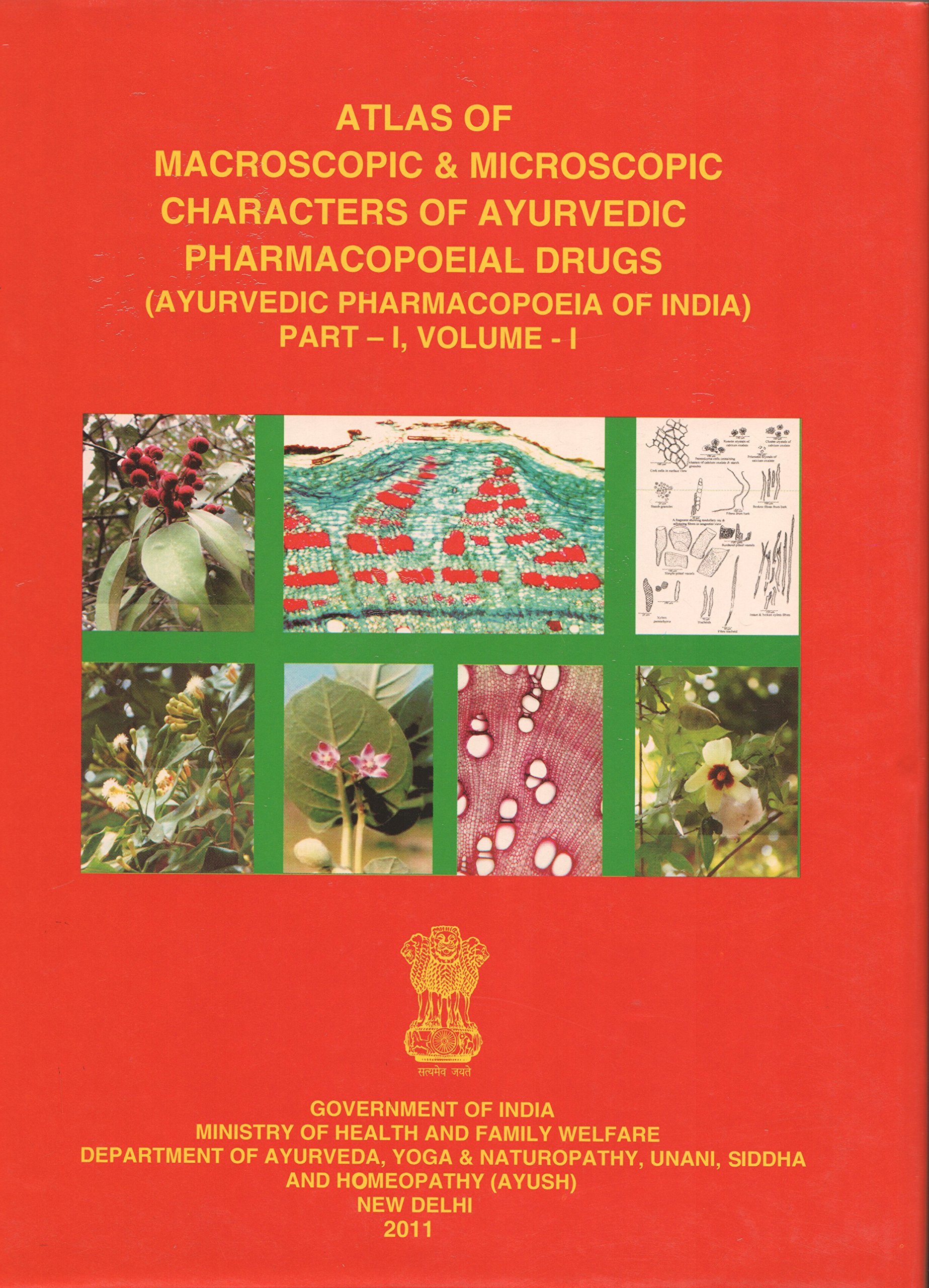
Microscopy is particularly powerful for identifying ingredients in powdered form (Churna), where macroscopic features are lost. It allows an analyst to confirm the presence of all correct ingredients and detect powdered adulterants.
Test your understanding!
Imagine you receive two samples of Ajamoda (Apium leptophyllum). One consists of whole fruits, and the other is a fine powder. You suspect the powder might be adulterated with Yavani (Trachyspermum ammi), a common substitute. Which evaluation method—macroscopic or microscopic—would be more definitive for authenticating the powdered sample, and why?
Show answer
Microscopic evaluation would be more definitive. For the whole fruits, macroscopic examination could likely distinguish between Ajamoda and Yavani based on size, shape, and surface features. However, once powdered, these visual cues are destroyed. The microscopic examination of the powder would reveal the unique cellular structures (diagnostic characteristics) of Ajamoda, such as specific types of trichomes or cell wall patterns, which would be different from those of Yavani. This allows for definitive identification even when the overall form is lost. The paper on Hutabhugādi cūrṇa (Resource LINK) discusses this exact scenario.
3. Phytochemical Evaluation: The Quality & Purity Report
Once a drug's identity is confirmed, phytochemical analysis assesses its quality and purity. This is like a comprehensive lab report, providing quantitative data on the drug's composition. This involves several key tests.
a) Physicochemical Parameters
These are general tests that give an overall measure of quality and purity:
- Loss on Drying (LOD): Measures the moisture content. High moisture can promote microbial growth and degradation of phytochemicals.
- Total Ash: Measures the total amount of inorganic material left after incineration. It represents minerals naturally present in the plant as well as any inorganic adulterants.
- Acid-Insoluble Ash: Measures the part of the total ash that is insoluble in hydrochloric acid. This is a crucial indicator of contamination with sand and soil. A high value suggests poor collection or cleaning practices.
- Water-Soluble and Alcohol-Soluble Extractive Values: Measures the amount of constituents that can be extracted in a given solvent (water or alcohol). This gives a rough estimate of the quantity of active principles, as different classes of compounds have different solubilities. A low value may indicate an exhausted or poor-quality drug.
b) Phytochemical Analysis (Qualitative and Quantitative)
This part of the evaluation looks at the specific chemical constituents.
- Qualitative Screening: Simple chemical tests to confirm the presence of major classes of compounds like alkaloids, glycosides, flavonoids, tannins, and steroids. This helps verify that the plant has the expected chemical profile associated with its therapeutic actions.
- Quantitative Analysis & Chromatographic Fingerprinting: This is the most advanced step. Techniques like High-Performance Thin-Layer Chromatography (HPTLC) are used to:
- Create a unique chemical fingerprint for the drug. This is a visual pattern of bands, where each band represents a different chemical compound. It serves as a highly specific identity test.
- Quantify the concentration of one or more specific marker compounds. These markers can be known active principles (e.g., tinosporaside in Guduchi) or just unique, stable chemicals that serve as a proxy for quality.
By ensuring the marker compound is within a specified range, manufacturers can guarantee batch-to-batch consistency and, by extension, a more predictable therapeutic effect.
4. Case Study: Standardization of Guduchi (Tinospora cordifolia)
Let's put all this together by examining a research paper that performs a complete standardization of Guduchi stem, a vital Rasayana and anti-diabetic herb.
Phyto-chemical profiling and pharmacognostical ...
The paper 'Phyto-chemical profiling and pharmacognostical evaluation of guduchi...' is a perfect case study. It integrates all the methods we've discussed to create a comprehensive quality standard.
Please read the following sections from the paper: Start with 'Materials and Methods'. Pay attention to the different types of evaluation performed: Pharmacognostical, Physicochemical, and Phyto-chemical (including HPTLC). Next, move to the 'Results' section. Don't worry about memorizing every number. Instead, focus on interpreting the tables: Table 1: Look at the physicochemical parameters. Notice how small the variation is between the 5 different batches (B1-B5). Table 2: See how qualitative screening confirms the presence of expected chemical classes. Table 3 & 4: This is the core of HPTLC analysis. Look at the high R² values (indicating good linearity) and the measured amounts of key markers like tinosporaside and berberine across the batches. Finally, read the first two paragraphs of the 'Discussion' to see how the authors interpret these findings.
Let's break down the key findings from that paper:
- Consistency: The very low variation in ash and extractive values (Table 1) across five different batches shows that standardized collection and processing can produce a highly consistent raw material.
- Identity Confirmation: The qualitative tests (Table 2) confirmed the presence of alkaloids and glycosides, which are known to be responsible for Guduchi's bitter taste and therapeutic effects.
- Potency Measurement: The HPTLC analysis (Table 4) provided a precise measurement of key marker compounds. For instance, it established a target range for tinosporaside (around 0.60-0.65% w/w). A manufacturer can now use this range as a quality specification. If a batch of raw Guduchi tests at 0.2%, it is of inferior quality and should be rejected, as it likely won't have the expected therapeutic efficacy.
- Reproducibility: The entire process provides a reproducible framework that can be used by any pharmaceutical company to ensure their Guduchi-based products are consistent and effective.
Conclusion
Today we have seen how the quality of Ayurvedic medicines is assured through a multi-layered scientific process. This isn't just an academic exercise; it is the bedrock of safe and effective Ayurvedic practice in the modern world.
Key Takeaways:
- Standardization is essential to overcome the inherent variability of herbal drugs and protect against adulteration, ensuring consistent quality, safety, and efficacy.
- Pharmacognostic evaluation (macroscopic and microscopic) serves as the drug's "identity card," confirming its authenticity, especially through its unique cellular fingerprint.
- Physicochemical tests (ash values, extractive values) act as a general "purity report," detecting inorganic contaminants and giving a broad measure of chemical content.
- Phytochemical analysis, particularly HPTLC fingerprinting and quantification, provides the most specific "certificate of analysis," confirming the drug's chemical profile and potency by measuring key marker compounds.
Understanding these standards empowers you to look beyond the classical descriptions and critically assess the quality of the very medicines you prescribe.
Preview of the Next Lesson:
Now that we have established how to assess the quality of the intervention (the drug), we are prepared to evaluate the quality of the evidence about that intervention. In our next lesson, we will begin our journey into research methodology by learning how to construct evidence hierarchies combining classical references and modern research.