Introduction
In our last lesson, we completed a thorough survey of the evidential landscape for Event 2, identifying the competition records, participant accounts, and artifacts that could hold clues to the contestant's victory. This gave us a map of where to look for evidence. Now, we must transition from being cartographers to being critics. Not all evidence is created equal; some sources are more reliable than others, and nearly all are susceptible to bias.
This lesson directly addresses the crucial task of assessing the reliability and potential biases of our sources for Event 2. For an analyst, this is comparable to scrutinizing a dataset for measurement errors, sampling bias, and confounding variables before running any models. A causal conclusion is only as strong as the evidence that supports it. Our goal is to systematically identify the psychological and cognitive biases that could distort our evidence, from the judges' evaluations to the contestant's own recollections. Understanding these risks is fundamental to designing a robust investigation and ultimately arriving at a trustworthy causal explanation.
The Problem of Bias in Qualitative Evidence
Before we dissect specific biases, it's essential to understand what we mean by "validity" or "trustworthiness" in a qualitative context. Unlike statistical measures, qualitative validity centers on ensuring that our findings accurately reflect the phenomena being studied, rather than the researcher's preconceptions or other distorting influences.
Validity in Qualitative research explained in under 8 minutes
This short video from Dr. Kriukow provides an excellent overview of validity in qualitative research, framing it as a quest for "trustworthiness" and a process of actively reducing bias.
Please watch the video from the beginning until the end. Pay close attention to the core idea that validity is about reducing different forms of bias and note the six strategies Robson suggests for achieving this. We will be implicitly using some of these strategies as we analyze the risks in our sources.
As the video explains, our primary task is to anticipate and mitigate bias. Let's begin by examining the biases most likely to affect the perceptions of the judges and audience.
Cognitive Biases in Evaluation: The Halo and Contrast Effects
Our hypotheses for Event 2 rely heavily on the idea that the judges' and audience's perceptions were swayed by specific factors. Two powerful cognitive biases are directly relevant here: the Halo Effect and the Contrast Effect.
The Halo Effect
The Halo Effect occurs when a single positive attribute of a person (like physical attractiveness) creates a positive "halo" that leads us to perceive their other, unrelated attributes more positively.
Social perception - The Halo Effect | Individuals and Society | MCAT | Khan Academy
This Khan Academy video offers a clear, visual explanation of the Halo Effect and its opposite, the Devil Effect.
Watch from the beginning to this point. The graphical representation effectively illustrates how an overall positive impression can "boost" the ratings of specific, independent skills. Notice the specific mention of attractiveness as a common trigger for this effect.
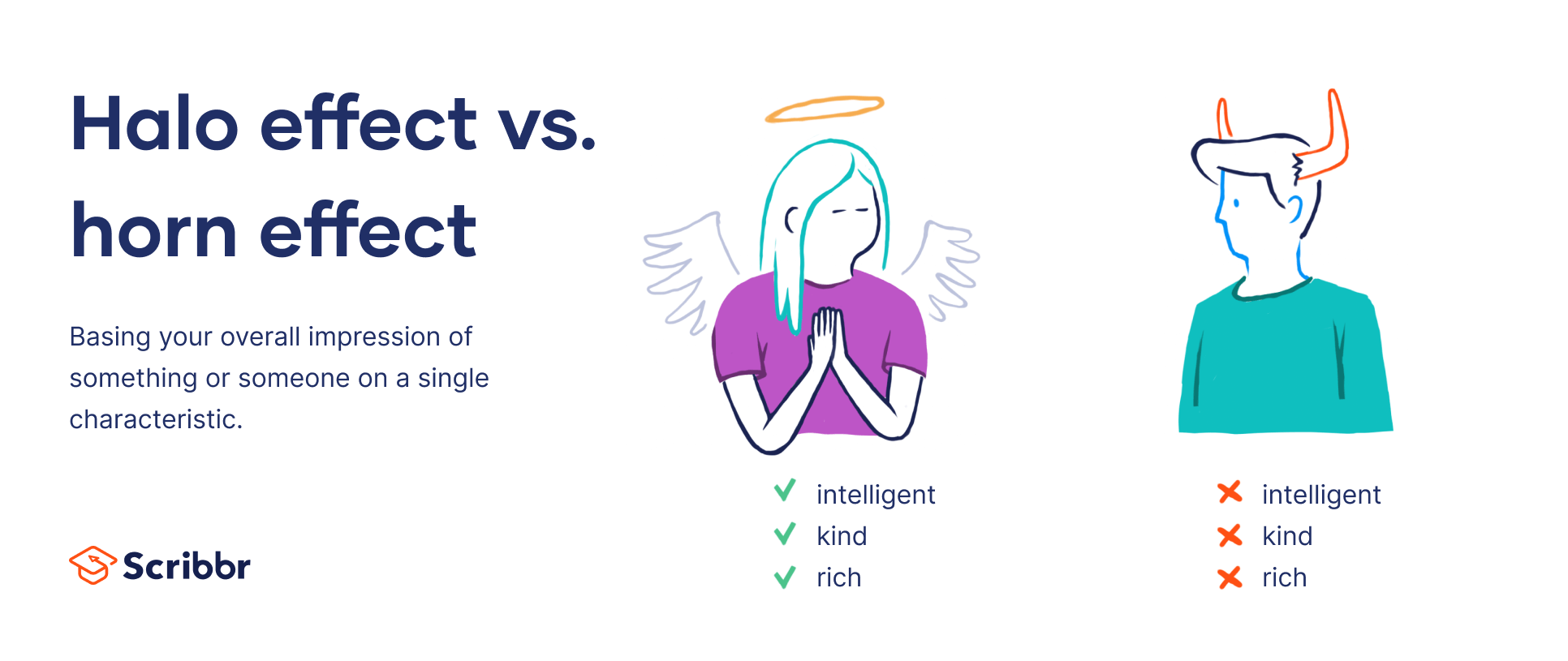
In the context of Event 2, the Halo Effect is a primary risk to the validity of judge evaluations. Hypothesis 1 (Body Type Advantage) posits that the contestant's physique was a key cause of her win. The Halo Effect describes the mechanism through which this might work: her distinct physique could have created a positive impression so strong that judges rated her more highly on other criteria like "confidence" or "posing skill," regardless of her actual performance on those metrics.
For a deeper, more technical understanding of this bias, it's worth examining the academic research.
What is beautiful is still good: the attractiveness halo effect in the era ...
This research paper provides a robust, quantitative analysis of the attractiveness halo effect, using a methodology that will be familiar given your background in statistical analysis. It explores how attractiveness impacts perceptions of intelligence, trustworthiness, and other traits.
Start by reading the Introduction section to get a formal definition of the attractiveness halo effect and its documented impact. Next, jump to subsection 2.3.2, "Impact of rater’s gender." Read this subsection carefully, especially the paragraph beginning "Even though images of females" and the paragraph that follows it, starting "Concerning opposite-gender effects". These sections reveal a fascinating and concerning gender interaction: beautified female stimuli were perceived as less intelligent by male raters. This is a critical potential bias to consider if the judging panel for Event 2 included men. Finally, read the first four paragraphs of the Discussion section. This part synthesizes the key findings and provides a robust confirmation of the halo effect.
The key takeaway is that the judges' scores cannot be taken at face value. They are not pure measures of performance but are likely influenced by the Halo Effect stemming from the contestant's physical appearance. When we design our investigation, we will need to find ways to disentangle these factors.
The Contrast Effect
Hypothesis 2 (Attire/Persona Contrast) relies on a different psychological principle: the Contrast Effect. This bias describes how our perception of something is influenced by other things we have recently observed or have in context.

This illusion is a perfect analogy for Hypothesis 2. The contestant's provocative lingerie and bold performance (the central dot) are made to seem even more impactful because they are contrasted against the backdrop of her known "shy and modest" background (the surrounding small dots). Had she been known for a bold persona all along, the same performance might have been less remarkable.
Therefore, when evaluating evidence from judges or audience members, we must be alert to language that indicates surprise or a violation of expectations. A comment like, "I couldn't believe it was her," is not just a statement of fact; it's a potential fingerprint of the contrast effect at work, amplifying the perceived impact of her performance.
Attribution Biases in Self-Reporting
Next, we must consider the accounts of the participants themselves, particularly the winner. While her testimony is vital for understanding her intentions, it is also highly susceptible to attributional biases, which are systematic errors we make when trying to explain our own behavior or the behavior of others.
5.3 Biases in Attribution – Principles of Social Psychology
This chapter from a social psychology textbook provides a clear and structured overview of the most common attributional biases.
First, read the brief introduction, Are Our Attributions Accurate?, to set the stage. Then, focus on these three key sections: The Fundamental Attribution Error: Read the entire section from the beginning up to the discussion of culture. This explains our tendency to over-credit personal traits for others' behavior. Judges might commit this error by attributing the win entirely to the contestant's innate "star quality" while ignoring situational factors. The Actor-Observer Bias: Read from the beginning of this section, "The fundamental attribution error..." This explains why we see our own behavior as situationally driven but others' as trait-driven. The contestant might attribute her win to specific choices she made in response to the competition's context, while observers see it simply as a reflection of "who she is." Self-Serving Biases: Read the first two paragraphs of this section, "You may recall..." This is the most critical bias for our purposes. It describes our tendency to attribute successes to our own internal qualities and failures to external factors.
The self-serving bias is paramount when assessing the winner's account. It is psychologically natural for her to attribute her victory to her own efforts, choices, and talents (e.g., "I worked hard," "I made a bold choice," "My posing was superior"). She is less likely to spontaneously attribute her win to factors like the Halo Effect or the specific composition of the judging panel. Conversely, defeated competitors may exhibit the same bias in reverse, attributing their loss to external factors ("The judging was biased," "She just got lucky").
Therefore, interviews with the winner and competitors must be designed to probe beyond these initial, self-serving explanations. We must ask questions that encourage reflection on situational and external factors to get a more balanced picture.
Reliability of Physical and Digital Artifacts
Finally, let's assess the artifacts: the lingerie itself and the contestant's social media presence.
- The Lingerie: The garment is a highly reliable piece of evidence—it is a physical fact. Its properties (cut, fabric, construction) can be objectively described. Here, your expertise in lingerie design is an invaluable asset, allowing for an expert assessment that is less prone to the Halo Effect than a layperson's. You can distinguish between genuine design innovation and a standard design that simply looks good on a particular body type. The risk here is not in the evidence itself, but in the interpretation of its role.
- Pre-Competition Social Media: This is a crucial source for establishing the "shy persona" baseline for Hypothesis 2. Its reliability depends on its authenticity. We must consider the possibility that the persona was curated. However, a consistent, long-term pattern of modest posts provides a reasonably reliable baseline of her public-facing identity, which is what matters for the contrast effect to work on the audience and judges.
Summary of Risks and Mitigation Strategies
Let's consolidate our assessment into a working table. This structure helps translate our understanding of biases into a practical plan for the investigation.
| Evidence Source | Primary Purpose | Key Bias Risks | Mitigation Strategies |
|---|---|---|---|
| Judge Scorecards/Interviews | To understand the formal and informal reasoning for the win. | Halo Effect: High attractiveness inflates scores on unrelated criteria. Contrast Effect: Surprise amplifies the impact of the performance. |
Triangulation: Compare scores/comments across judges. Look for inconsistencies. Specific Probing: In interviews, ask judges to break down their scores and provide concrete behavioral examples for each criterion, rather than just general impressions. |
| Winner's Interview | To understand her intentions, choices, and perspective. | Self-Serving Bias: Attributes success entirely to internal factors (skill, effort). Hindsight Bias: May reconstruct her decision-making process to seem more strategic than it was. |
Focus on Process: Ask about the process of her decisions ("What were the other options you considered for your attire?") not just the justification for the final choice. Corroboration: Compare her account with other evidence (e.g., preparation materials). |
| Competitor Interviews | To gain a comparative perspective on the winner. | Self-Serving Bias: Attributes their loss and her win to external factors (luck, biased judging). Jealousy/Rivalry: May unfairly denigrate the winner's performance or attributes. |
Focus on Specifics: Ask for specific, comparative observations ("What did you notice about her posing compared to others?") rather than general opinions ("Do you think she deserved to win?"). Look for Consensus: Give more weight to observations shared by multiple competitors. |
| Official Photos/Videos | To objectively assess physical attributes and performance. | Framing/Editing: The way photos/videos are shot and edited can emphasize certain contestants or qualities over others. | Comprehensive Review: Analyze all available footage, not just highlight reels. Compare the winner's screen time and shot composition to that of other top competitors. Expert Analysis: Use your own design expertise to assess the lingerie objectively. |
Conclusion
We have moved from merely identifying sources to critically evaluating their potential weaknesses. This is the hallmark of a rigorous causal investigation. By anticipating how cognitive and attributional biases can shape evidence, we prepare ourselves to collect and interpret it with the necessary skepticism and analytical precision.
Key takeaways from this lesson include:
- All evidence, especially from human accounts, is subject to bias. Our job is not to find "pure" evidence, but to understand and account for its impurities.
- The Halo Effect poses a significant risk to judge evaluations, where attractiveness may have inflated scores for other skills.
- The Contrast Effect provides a psychological mechanism for why the contestant's bold performance, set against a shy persona, was so impactful.
- The Self-Serving Bias will almost certainly shape how the winner and her competitors explain the outcome, requiring us to probe beyond initial narratives.
In our next lesson, we will put this risk assessment into practice. We will design a structured data collection template for Event 2, creating specific interview questions and observation checklists tailored to navigate the biases we have just identified and to systematically hunt for the evidence we need to test our hypotheses.