Hello! Welcome to your first lesson in the CFA Level 1 Economics course.
Given your academic background, you'll likely find that many economic concepts are built on logical frameworks, much like mathematics or coding. We'll start from the ground up as you requested, ensuring a solid foundation, but we'll move at a pace that respects your ability to quickly grasp new analytical concepts.
Today's lesson is the starting point for all of microeconomics. We will focus on the fundamental building blocks of any market: demand and supply. By the end of this 60-minute lesson, you will be able to define demand and supply and state the law of demand and the law of supply. This is the first step towards understanding how prices and output are determined in an economy.
1. The Concept of Demand
In economics, "demand" isn't just about wanting something. It's more specific: it refers to the quantities of a good or service that consumers are both willing and able to buy at various prices over a specific period, holding all other factors constant.
The relationship between the price of a good and the quantity consumers are willing to buy is governed by a fundamental principle: the Law of Demand.
The Law of Demand states that, all else being equal (ceteris paribus), as the price of a good increases, the quantity demanded for that good decreases. Conversely, as the price of a good decreases, the quantity demanded increases. There is an inverse relationship between price and quantity demanded.
To get a clear, intuitive introduction to these ideas, let's watch a short video.
This video from the 'Professor Dave Explains' channel provides a straightforward explanation of demand. Pay close attention to how it distinguishes between simply wanting something and having economic 'demand' for it.
Please watch the segment from 00:41 to 01:57. Focus on the two necessary components of demand (desire and ability to pay) and the inverse relationship between price and the quantity people are willing to buy.
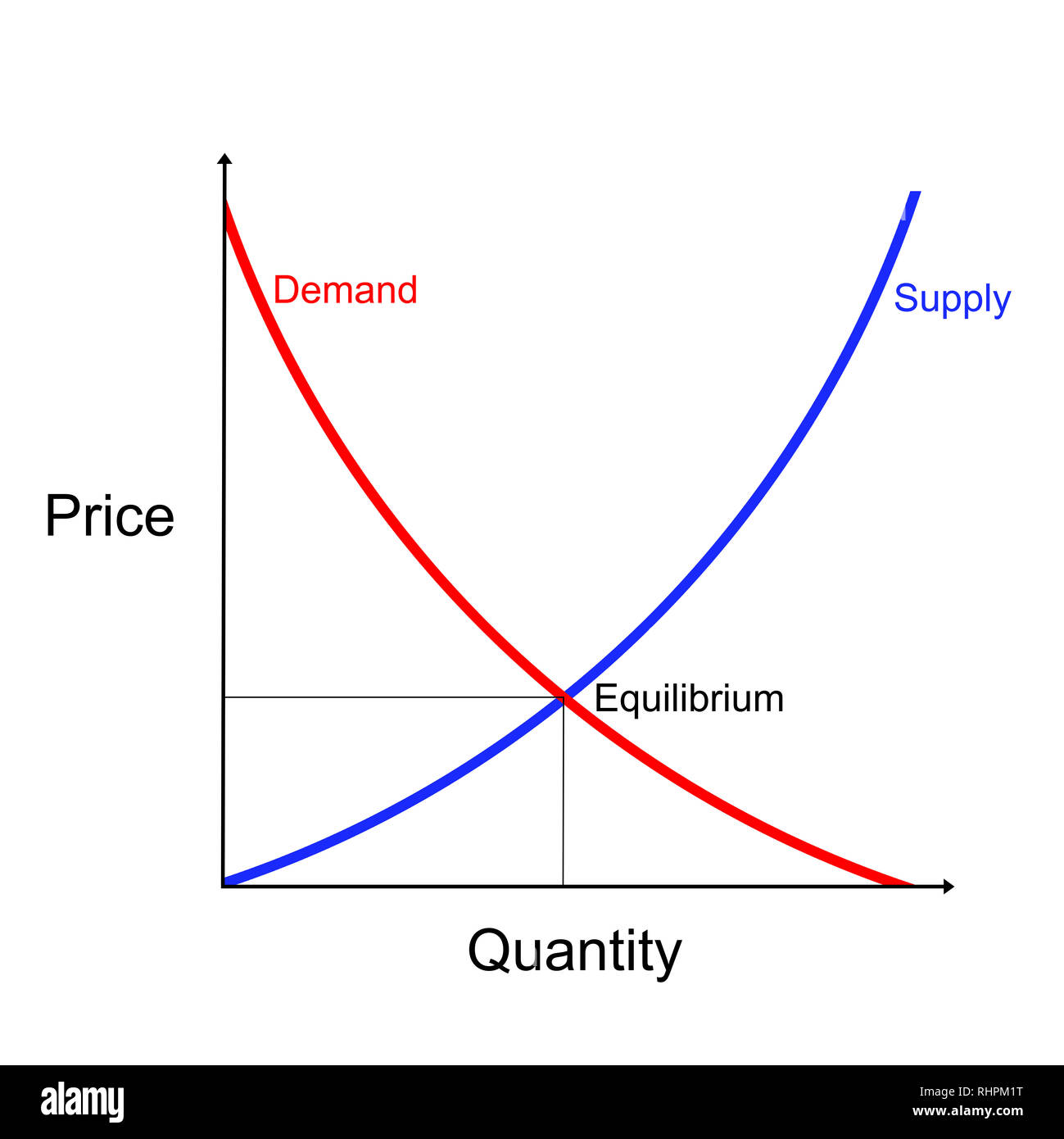
This inverse relationship is what gives the demand curve its characteristic downward slope. By convention, economists place Price on the vertical (y) axis and Quantity on the horizontal (x) axis.
The Demand Function
For the CFA exam, you'll need to be comfortable with a more formal, mathematical representation of demand. The relationship between quantity demanded and its various determinants is expressed through a demand function.
While many factors influence demand (like income, tastes, and prices of other goods), the Law of Demand focuses on the effect of the good's own price. To do this, we hold the other factors constant.
The following video explains how a general demand function is used to derive a specific demand curve. It also introduces the concept of the inverse demand function, which is what we actually plot on the graph (with Price as a function of Quantity).
Level 1 CFA Economics: Topics in Demand and Supply Analysis-Lecture 1
Now, let's look at how economists represent demand more formally. This video from IFT, a well-known CFA prep provider, walks through the demand function and how to derive the demand curve that you'll see in your studies.
Watch from 01:36 to 06:36. Focus on how a general demand function (which depends on multiple variables) is simplified to a demand curve by holding other factors constant. Also, note the distinction between the demand function (e.g., Q = 100 - 2P) and the inverse demand function (e.g., P = 50 - 0.5Q) used for graphing.
2. The Concept of Supply
Now let's turn to the other side of the market: the sellers.
Supply refers to the quantities of a good or service that producers are both willing and able to offer for sale at various prices over a period, holding other factors constant.
Just as with demand, there is a fundamental law governing this relationship: the Law of Supply.
The Law of Supply states that, all else being equal (ceteris paribus), as the price of a good increases, the quantity supplied of that good also increases. Conversely, as the price decreases, the quantity supplied decreases. There is a direct relationship between price and quantity supplied.
The underlying "why" for this law is the profit motive. Higher prices, assuming costs remain the same, mean higher potential profits, which creates an incentive for producers to supply more.
Let's return to the video from Professor Dave for a simple explanation of supply.
The logic for supply mirrors that of demand but from the producer's perspective. This section of the video explains the law of supply using the same pizza shop example.
Watch from 03:55 to 05:02. The key takeaway here is the profit motive: why are producers willing to sell more when the price is higher?
This direct relationship gives the supply curve its upward slope, as seen in the blue line in the graph we looked at earlier. A higher price corresponds to a higher quantity supplied.
Similar to demand, supply can be represented by a supply function. For example, a simple supply function might be , where is quantity supplied and is price. The positive coefficient on price (2) reflects the direct relationship of the Law of Supply.
To reinforce the formal definitions used in CFA materials, take a moment to read these precise statements of both laws.
[PDF] Demand and Supply Analysis: Introduction - Kaplan
This excerpt from a Kaplan Schweser study guide provides the concise, formal definitions of the law of demand and the law of supply that you should know.
Please locate and read the single sentence that defines the 'law of demand' (on page 2, in the paragraph just above the 'The Supply Function' subheading) and the single sentence that defines the 'law of supply' (on page 3, in the paragraph just above the 'Shifts and Movements...' subheading).
3. Application and Practice
Your preference for combining theory with practice is key to mastering economics. Let's apply what we've just learned by tackling some CFA-style questions. This will help solidify your understanding and highlight the level of precision required for the exam.
Subject 2. Basic Principles and Concepts - AnalystNotes
To ensure you've grasped these concepts, let's work through some practice questions from AnalystNotes. Try to answer each one yourself before looking at the correct answer and its explanation.
Please navigate to the 'Practice Question' section and attempt questions 1, 2, 6, 7, 11, and 12. These questions specifically test the definitions of the laws of demand and supply.
How did you find those questions? Notice the precision in the wording. For example, question 11 emphasizes the "inverse relation between price and the quantity demanded," not between price and "demand." This is a critical distinction that we will explore fully in our next lesson. A change in a good's own price causes a change in quantity demanded (a movement along the curve), while a change in another factor causes a change in demand itself (a shift of the entire curve).
Conclusion
In this introductory lesson, we have laid the essential groundwork for market analysis. You should now be comfortable with the core definitions and laws that govern the behavior of buyers and sellers.
Key Takeaways:
- Demand: The relationship between the price of a good and the quantity consumers are willing and able to purchase.
- Law of Demand: A fundamental principle stating that price and quantity demanded are inversely related, leading to a downward-sloping demand curve.
- Supply: The relationship between the price of a good and the quantity producers are willing and able to sell.
- Law of Supply: A fundamental principle stating that price and quantity supplied are directly related, leading to an upward-sloping supply curve.
- The phrase ceteris paribus (all else being equal) is a crucial assumption for both laws, as it isolates the effect of a good's own price.
Preview of the Next Lesson:
We've established the basic laws by assuming "all else is equal." In our next session, we will relax this assumption. We'll explore the factors other than price that influence buying and selling decisions and learn to distinguish between a movement along a demand or supply curve and a shift of the entire curve. This distinction is fundamental to analyzing how markets respond to changing economic conditions.