Hello! Welcome back to our journey through world history.
In our last lesson, we explored the remarkably stable and successful world of our Paleolithic ancestors. We saw how for over 90% of human history, people lived in small, nomadic, and egalitarian hunter-gatherer bands, using increasingly sophisticated toolkits to adapt and thrive across the globe.
Today, we arrive at one of the most significant turning points in the entire human story. Around 12,000 years ago, this ancient way of life began to give way to something radically new. This lesson will focus on a fundamental transformation that set the stage for everything we call "civilization." We will analyze the causes and consequences of the Neolithic Revolution, including the shift to agriculture.
We'll investigate why people would abandon a lifestyle that had worked for millennia and explore the profound, and often double-edged, consequences of this choice.
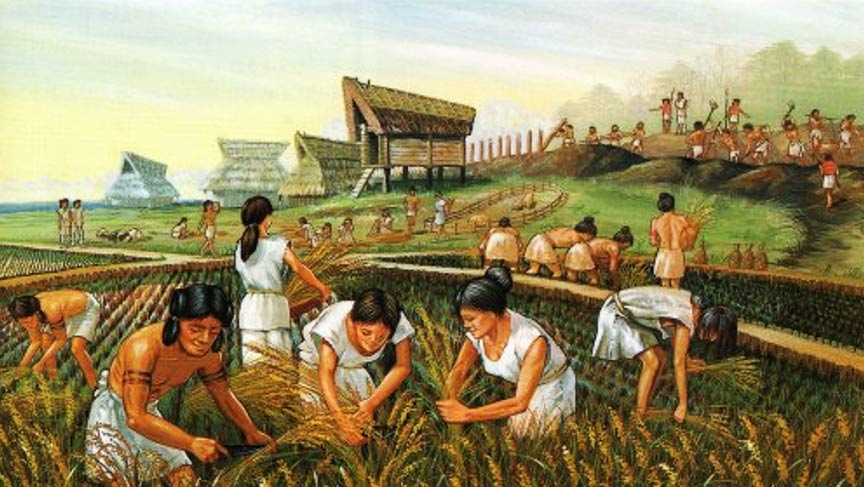
1. A New Way of Life: The Agricultural Trade-Off
Before we dig into the complex causes, let's get a clear picture of what this "revolution" really meant. What were the fundamental trade-offs involved in swapping a spear for a hoe? The following video provides an excellent, high-energy overview of the key differences between the foraging and farming lifestyles.
The Agricultural Revolution: Crash Course World History #1
The video 'The Agricultural Revolution' from Crash Course offers a fast-paced look at the pros and cons of agriculture, framing it as a pivotal, and not entirely positive, development in human history.
Please watch from 02:14 to 05:34. As you watch, pay close attention to the host's comparison of the hunter-gatherer lifestyle (health, work hours) with the advantages and disadvantages of agriculture (food supply, surplus, labor, inequality).
As the video highlights, the shift to agriculture was a monumental trade-off. On one hand, it offered a controllable food supply and the potential for a surplus. This surplus was the key that unlocked population growth and allowed for the specialization of labor—not everyone had to be a full-time food producer anymore.
On the other hand, it came at a steep price:
- Farming was incredibly hard work, demanding more labor than foraging.
- It led to less varied and often less nutritious diets.
- It tethered people to the land, making them vulnerable to localized disasters like droughts and floods.
- Most profoundly, it created the conditions for social inequality and hierarchy to emerge for the first time.
This begs the question: If the trade-offs were so stark, why did it happen at all?
2. Why Farm? Unpacking the Causes
Historians and archaeologists don't have a single, definitive answer, but they have several compelling theories. It's likely that a combination of factors, playing out differently in various parts of the world, pushed people toward cultivation.
Theory 1: The "Trap of Sedentism"
The most widely accepted model links the origins of agriculture to major environmental and demographic shifts at the end of the last Ice Age. A warmer, wetter climate created regions of natural abundance, which led to a chain reaction of events. The following video provides a more academic and detailed explanation of this process.
The Big History of Civilizations | Origins of Agriculture | Wondrium
In this video, 'The Big History of Civilizations' by Wondrium, the lecturer presents a clear, step-by-step model explaining how climate change and population pressure may have led to the adoption of farming.
Please watch from 14:14 to 26:18. The lecturer outlines a multi-step process. Focus on understanding: The preconditions (human knowledge, suitable species). The move to sedentism (settling down) in areas of natural abundance. How sedentism led to population growth. Why this created the 'trap of sedentism,' where returning to a nomadic life was no longer possible, making farming the only viable option to feed a larger, settled population.
To summarize this powerful model:
- Climate Change: The end of the Ice Age made certain regions, like the Fertile Crescent in the Middle East, incredibly lush and productive.
- Affluent Foragers: People in these areas could settle down (sedentism) because food was so plentiful they no longer needed to be constantly nomadic. The Natufian culture in the Levant is a prime example of this.
- Population Growth: Nomadic life naturally limits population growth (it's hard to travel with many small children). Once people settled down, these constraints vanished, and populations grew.
- The Trap: Eventually, the population outgrew what the local environment could naturally provide. At the same time, a sudden cold snap (the Younger Dryas) reduced resources. Returning to a nomadic life was no longer an option—there were too many people, and the skills for constant wandering may have been lost. They were "trapped" in their settlements.
- Intensification: The only solution was to get more food out of the same amount of land. This forced people to actively cultivate plants—weeding, planting, and harvesting—kicking off the process of domestication and agriculture.
Theory 2: A Revolution of Symbols
For decades, the "climate and population" model was the standard explanation. But a stunning archaeological discovery in modern-day Turkey has suggested another powerful driver: religion and social gathering.
This reading introduces that evidence and the alternative theory it suggests.
The article 'Neolithic Revolution' explains the discovery of Göbekli Tepe, a massive temple complex built by hunter-gatherers, and what it might mean for the origins of agriculture.
Please read the sections titled 'Natufians' and 'New Evidence.' The 'Natufians' section gives context on sedentary foragers. The 'New Evidence' section introduces Göbekli Tepe and the radical idea that the need to feed people at large-scale religious gatherings, not environmental pressure alone, spurred the intensive cultivation of crops.
The existence of Göbekli Tepe suggests that perhaps, in some places, the causal arrow was reversed. Instead of Farming -> Settlement -> Complex Society/Religion, the order might have been Complex Society/Religion -> Settlement -> Farming. The immense social project of building a temple and holding rituals for large crowds may have created the demand for food that only organized farming could supply.
Ultimately, there is no one-size-fits-all answer. The Neolithic Revolution was not a single event but a process that occurred independently in at least seven different parts of the world, from Mesopotamia to China to Mesoamerica. It was likely a mix of environmental pressures, population dynamics, and uniquely human social and cultural impulses that nudged our ancestors down the path to agriculture.
3. The Point of No Return: The Consequences of Agriculture
Regardless of the causes, the consequences of adopting agriculture were massive and irreversible. This new way of life fundamentally reshaped every aspect of human society.
The following reading from the OpenStax textbook provides a comprehensive analysis of these societal transformations.
2.3 The Neolithic Revolution - World History Volume 1, to ...
This section from a world history textbook details the cascade of changes that agriculture brought to the human experience, from social structure to daily life.
Please read the section titled 'How Farming Changed the Human Experience.' Focus on identifying the key societal changes that stemmed directly from the adoption of agriculture.
Let's synthesize those consequences. The agricultural package deal included:
- Demographic Change: A food surplus enabled massive population growth, leading to the first villages, then towns, and eventually cities.
- Social Stratification: For the first time, individuals could accumulate wealth (land, livestock, stored grain). This led to the end of Paleolithic egalitarianism and the emergence of social hierarchies, with elites, commoners, and often slaves.
- Labor Specialization: A food surplus freed some people from farming. This gave rise to new roles: artisans, priests, soldiers, traders, and political leaders.
- New Gender Dynamics: While roles varied, a common pattern emerged where men took on field labor with plows and animals, while women's work became more centered on the domestic sphere—processing grain, weaving textiles, and raising more children. This often led to a decrease in women's public status compared to their roles in hunter-gatherer societies.
- Health and Disease: Larger, denser populations living with waste and domesticated animals created ideal conditions for epidemic diseases. Diets became less diverse, leading to nutritional deficiencies.
- Environmental Impact: Humans began to actively and radically reshape the landscape by clearing forests, diverting rivers for irrigation, and selectively breeding plants and animals.
- A New Worldview: Religious beliefs shifted from the animism common to foragers towards deities focused on fertility, the seasons, and the cycle of life, death, and rebirth—concepts central to an agricultural calendar.
This infographic provides a great visual summary of these interconnected changes.

Test your understanding!
A political leader from an early farming village wants to build a large defensive wall around the settlement. Using your understanding of the consequences of the Neolithic Revolution, what two new societal resources does this leader have that a Paleolithic hunter-gatherer leader would not?
Show answer
- A Labor Surplus: Because of the food surplus from agriculture, the leader can command a workforce of non-farmers (or take farmers away from their fields during the off-season) to work on a large-scale construction project. A hunter-gatherer band needed everyone's effort for the daily task of finding food.
- Social Hierarchy and Authority: The leader has a level of authority that didn't exist in egalitarian hunter-gatherer societies. This authority, likely derived from control over surplus food, land, or religious ceremony, allows them to compel or organize the community to undertake such a massive, coordinated effort.
Conclusion: Lessons from the Revolution
The Neolithic Revolution was arguably the most important single transformation in the human story. It was a slow, uneven process, not a sudden event, but its effects were definitive and laid the groundwork for the modern world.
Key Takeaways:
- The Neolithic Revolution was the shift from a nomadic hunter-gatherer lifestyle to a settled, agricultural one, a trade-off that offered food security in exchange for harder labor and greater social inequality.
- The causes are complex and debated, but likely involve a combination of climate change, population pressure (the "trap of sedentism"), and social drivers like the need to feed large gatherings.
- The consequences were profound and interconnected, leading to population booms, social hierarchies, labor specialization, new health challenges, and a fundamental reshaping of the environment.
A Lesson from History:
One of the most powerful lessons from the Neolithic Revolution is about the nature of transformative change. It was a choice that, once made, could not easily be unmade. The very success of agriculture—the population growth it enabled—made returning to a foraging lifestyle impossible for most. It reminds us that major societal and technological shifts create their own momentum, locking us into new paths with unforeseen consequences, both good and bad. The world we live in today—of cities, states, and immense social complexity—is a direct descendant of the choices made in a few small pockets of the globe over 10,000 years ago.
Preview of the Next Lesson:
We've now seen the "before" (the Paleolithic hunter-gatherer) and the "after" (the Neolithic farmer). In our next lesson, we will do a direct comparison of these two worlds, focusing specifically on our next learning outcome: Compare the social structures of hunter-gatherer bands with early agricultural communities. We will formalize our understanding of how this revolution fundamentally altered the way human societies were organized.