Hello! Welcome to the final lesson of our first module, "Business and Equity Fundamentals."
In our last lesson, we discussed the critical trade-off between a stable, guaranteed salary and a compensation package that includes equity. We established that your salary is for living, while equity is a high-risk, high-potential investment in the company's future. You saw inspiring stories of wealth creation but also learned to treat ESOPs as a potential bonus, not a replacement for a livable wage.
Today, we'll connect all the dots from this module. We've talked about what shares are, how a company's value grows, and the "smaller slice of a bigger pizza" concept of dilution. Now, we'll see it all come together. Our goal is to analyze a simple example of how early employees at a successful company created wealth through equity. We'll walk through a step-by-step journey, from receiving an option grant to cashing it in, turning that "paper" promise into real, life-changing money.
The Journey of an Early Employee: A Step-by-Step Example
Let's imagine you are joining a promising startup. How do stock options actually work to create wealth? The following article provides a fantastic, clear, and simple walkthrough.
A Simple Guide: Stock Options for First Time Startup Employees
This article by Ryan Gayman on Medium breaks down the lifecycle of stock options for a first-time employee. We will focus on the step-by-step example which is the core of our lesson today.
Please read the section titled 'Can you give a step-by-step example of how options might work for me?'. Pay close attention to the numbers: the number of options, the initial price ($1), and the final price ($25).
Let's summarize the key steps from that example to make sure the process is crystal clear:
- The Grant: You join "Venture Startup Inc." and are granted options to buy 10,000 shares. The price to buy them is locked in at $1 per share. This is your strike price. At this moment, you don't own any shares yet, just the right to buy them later.
- Vesting: You can't buy all 10,000 shares on day one. You have to earn them over time by staying with the company. In this example, you earn the right to buy 2,500 shares after one year (the "cliff"), and the rest vest monthly for the next three years.
- Company Growth: While you are working and your options are vesting, "Venture Startup Inc." becomes very successful. Its value skyrockets.
- The Exit (Liquidity Event): The company either gets acquired or has an IPO. The share price is now $25 per share.
- The Payoff: Now you use your right to buy the shares.
- You Exercise: You buy your 10,000 vested shares at your locked-in strike price of $1. Cost to you: 10,000 shares * $1/share = $10,000.
- You Sell: You immediately sell those 10,000 shares at the new market price of $25. Money you receive: 10,000 shares * $25/share = $250,000.
- Your Profit: You made a profit of $250,000 - $10,000 = $240,000. (Note: This is before taxes, which we'll cover in detail in a future module).
This difference between the low price you paid (strike price) and the high price you sold at (market price) is the entire basis of wealth creation through stock options.
Test your understanding!
Imagine you were granted options for 5,000 shares at a strike price of ₹20 per share. The company does very well and gets acquired a few years later, with the final share price being ₹1,500. What is your total pre-tax profit?
Show answer
- Cost to Exercise (buy the shares): 5,000 shares * ₹20/share = ₹1,00,000
- Value at Sale: 5,000 shares * ₹1,500/share = ₹75,00,000
- Total Profit: ₹75,00,000 - ₹1,00,000 = ₹74,00,000
Visualizing Wealth Creation at Scale
The example above is simple, but this same mechanic applies to real-world giants. Let's see how this could have played out for an early employee at a company like Facebook.
How Startup Equity REALLY Works
In this video from The Startup Club, the host explains how stock options work using the example of an early, imaginary Facebook employee. This will help reinforce the calculation we just did.
Watch from 05:31 to 07:00. Notice how the host calculates the potential net gain for the employee when Facebook went public.
As the video showed, an early employee could have turned their options, granted when the company was small and shares were cheap, into over a million dollars when the company went public. This is the power of joining a company early and being rewarded for the risk you took and the value you helped create.
Real-World Success Stories in India
These examples aren't just hypotheticals or stories from Silicon Valley. This happens right here in India, and it can change lives for employees at all levels.
How Stock Options Can Change Lives
This article from EquityList compiles several inspiring stories of Indian employees who created significant wealth from their ESOPs.
Read the stories of Ashok Kumar at SlideShare and Shyam Kumar Singh at CitrusPay. These are powerful examples of how ESOPs can benefit not just senior executives, but all employees who contribute to a company's growth.
The stories of Ashok Kumar, who started as an office boy at SlideShare and used his ESOP money to buy a home, and Shyam Kumar Singh at CitrusPay, who made ₹50 lakhs, are perfect illustrations of the core idea of ESOPs: to share the success of the company with the people who helped build it.
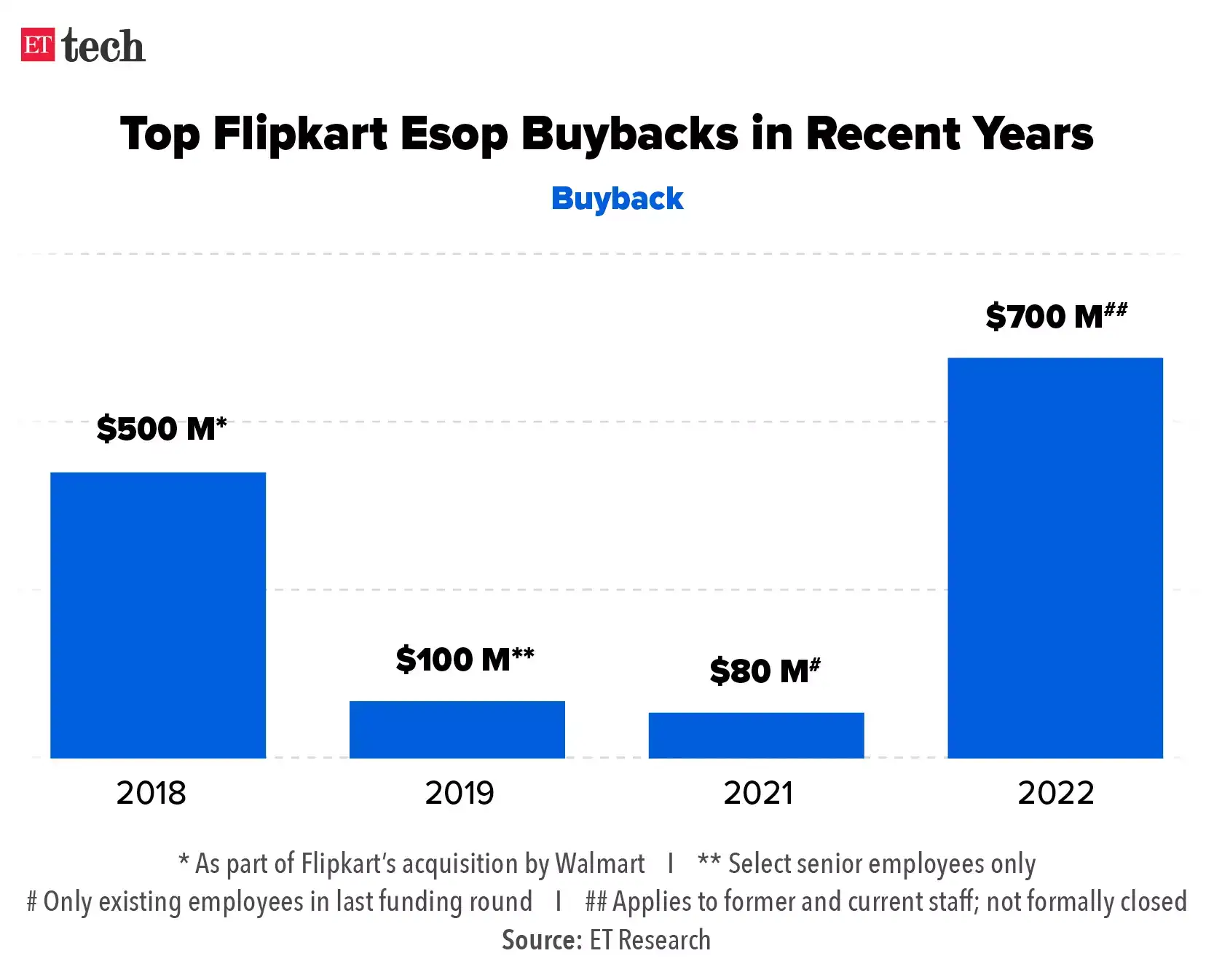
These aren't isolated incidents. Major Indian startups have consistently created wealth for their employees through these programs.
A Final Reminder: The Lottery Ticket Analogy
The stories we've looked at today are inspiring, and they show the incredible "reward" side of the risk-reward equation. However, it's vital to remember the "risk" side.
A Simple Guide: Stock Options for First Time Startup Employees
Let's revisit the first article one last time for a crucial piece of advice on maintaining a healthy perspective about stock options.
Read point number 4 under the heading 'Is there anything else I should keep in mind about Stock Options?' This reinforces the idea we discussed in our last lesson.
As the article states, "Stock options are lottery tickets, not something to rely on." For every success story, there are many startups that don't make it, and their options become worthless. That is why we spent the previous lesson emphasizing that your salary must be your financial foundation.
Conclusion
This lesson concludes our foundational module on business and equity. We've gone from understanding what a 'share' is to seeing how those shares can create life-changing wealth.
Key Takeaways:
- Wealth from ESOPs is created from the difference between your low, locked-in strike price and the high market price when the company has a successful exit.
- The formula is simple: Profit = (Sale Price - Strike Price) x Number of Shares.
- Joining a company early often means you get a lower strike price and potentially more options, increasing your potential upside.
- Real employees at all levels, including in major Indian startups like Flipkart, SlideShare, and PayTM, have created significant wealth through their ESOPs.
- Despite the huge potential, ESOPs remain a high-risk gamble; they are a "lottery ticket" that might pay off spectacularly, but you cannot rely on it.
Preview of the Next Module:
We've now built a solid conceptual understanding of ownership and wealth creation. In the next module, "Introduction to Employee Stock Options," we will start getting more formal. Our very next lesson will focus on defining exactly what an Employee Stock Option Plan (ESOP) is and comparing it to other forms of equity compensation you might encounter. See you there