Hello! Welcome to your first lesson.
This course is designed to give you a full understanding of Employee Stock Option Plans (ESOPs), from the basic concepts to the practical details of negotiation, taxation, and making informed decisions.
In this first lesson, we'll start with the most fundamental building block: ownership. Before we can dive into what an ESOP is, we need to be crystal clear on what it means to "own" a piece of a company. We'll explore this idea using simple, everyday analogies to build a strong foundation for everything that follows.
The Core Idea of Ownership
At its heart, ownership is about rights and control. Let's start with an analogy you're familiar with.
Imagine you have a bicycle.
- If you own the bicycle, you can ride it whenever you want, sell it to someone else, paint it a different color, or even decide to take it apart. If a collector suddenly decides your model is rare and its value doubles, that financial gain is yours.
- If you rent a bicycle, your rights are limited. You can use it for a specific period, but you can't sell it or make permanent changes. You have to return it, and you don't benefit if its market value increases.
Owning a house versus renting one is another powerful example of this difference.
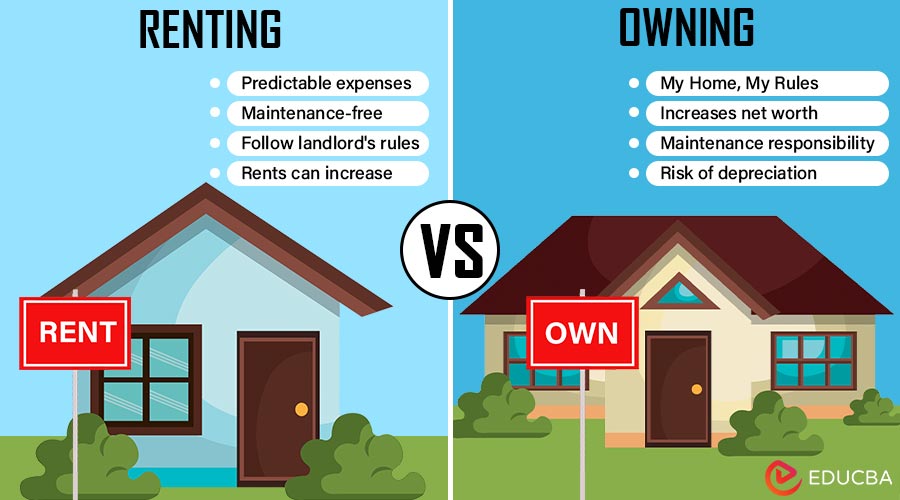
The key takeaway is that ownership gives you a claim on the value of an asset and certain rights over it. Renting or borrowing only gives you the right to use it temporarily.
In finance, the value you truly own in an asset is often called equity. To understand this better, let's look at the home-ownership example in a short video.
The following clip from The Finance Storyteller explains the concept of 'equity' in the simple context of owning a house. This is a core financial term, and understanding it in this simple way will be very helpful later.
Please watch from the timestamp 1:31 to 2:55. Focus on how equity is calculated as what the house is worth minus what you owe the bank.
As the video explained, your equity is the portion you truly own. If your house is worth ₹1 crore and you have a ₹70 lakh loan, your equity is ₹30 lakh.
From Owning a House to Owning a Company
Now, how does this apply to a company?
A company is much bigger and more complex than a single house. It's usually impossible for one person to own a large company entirely, just like it's hard for one person to fund a massive real estate project alone.
So, companies divide their ownership into many tiny pieces. These pieces are called shares.
Imagine a company is a giant pizza.
Basic investing concepts explained – With pizza analogies!
This article from Money King NZ explains this concept perfectly. Please read the first part to see how a pizza can represent a company's ownership.
Read the section titled '1. Shares', focusing on the subsection 'What are shares?'. It's very short and gets right to the point.
Just as described, if a company is a pizza, a share is one slice. If you own a slice (a share), you are a part-owner of the pizza (the company). A person who owns shares is called a shareholder.
Why do companies do this? Let's watch a video that illustrates this with a simple story about a pizzeria.
What are Stocks? And How do They Work?
This animated video from Explains 101 tells the story of 'Sarah's Pizzeria'. It's a fantastic, simple example of why a business sells shares and what it means for the investors who buy them.
Watch the video from the beginning until 2:33. Pay close attention to why Sarah needs money, how she divides her company into shares, and what rights Alex gets when he buys a share.
The story of Sarah's Pizzeria brings all our concepts together:
- The Need: Sarah needed money to start her restaurant—more than she had.
- The Solution: She divided the ownership of her company into 10 shares and sold 5 of them to investors.
- The Result: Alex bought one share. He didn't own the whole restaurant, but he became a 10% owner. As a shareholder, he now has a claim to 10% of the company's profits and value.
This is the essence of owning a piece of a business. When a company offers you ESOPs, they are offering you a path to becoming a part-owner, just like Alex became a part-owner of the pizzeria.
Test your understanding!
Imagine a friend is starting a new tech company called "Appify." The total value of the new company is decided to be ₹10,00,000. To raise money, the founder divides the company into 1,000 total shares.
- What is the value of a single share of Appify?
- You decide to invest and buy 50 shares. What percentage of the company do you now own?
- If, after two years, Appify becomes very successful and is now valued at ₹50,00,000, what is the new value of your 50 shares?
Show answer
- Value of a single share: ₹10,00,000 (total value) / 1,000 (total shares) = ₹1,000 per share.
- Your ownership percentage: (50 shares you own / 1,000 total shares) * 100 = 5% of the company.
- New value of your shares: The total company value increased 5 times (from ₹10 lakh to ₹50 lakh). Therefore, the value of your shares also increases 5 times. Your initial investment of (50 shares * ₹1,000) = ₹50,000 is now worth ₹2,50,000.
Conclusion
In this lesson, we started from scratch to build the fundamental concept of ownership.
Key Takeaways:
- Ownership vs. Renting: Owning an asset gives you a claim on its value and control over it, unlike renting or borrowing.
- Shares: A company's ownership is divided into small, equal units called shares.
- Shareholders: When you own one or more shares, you become a part-owner of the company, also known as a shareholder.
- Claim on Value: As a shareholder, your portion of ownership entitles you to a corresponding portion of the company's value and future profits.
You now have the basic vocabulary and mental model to understand what you are being offered in a compensation package that includes equity.
Preview of the Next Lesson:
In the pizzeria example, Alex's investment grew because the restaurant became more successful. But how does that happen? In our next lesson, we will explore how the value of an asset changes over time. We'll look at the forces of demand and future potential that can make your "slice of the pizza" much more valuable.