Hello! Welcome to the first lesson of our module on the mechanics of ESOPs.
In our last module, we established why companies offer ESOPs. We saw they are a strategic tool to attract talented people, create a culture of ownership, and conserve cash. A key part of that strategy was retaining employees for the long term.
But how does a company ensure you don't just take the offer and leave a month later? The answer is vesting. This lesson will explain the fundamental concept of vesting and why it is a non-negotiable part of almost every ESOP plan. Understanding this concept is the first step to figuring out what your options are really worth and when they become truly yours.
What is Vesting? Earning Your Ownership
When a company gives you an ESOP grant, say for 1,000 options, it’s important to know that you don't own all 1,000 options on your first day. Instead, you've been given a promise of ownership that you will earn over a specific period of employment.
Vesting is the process of earning the right to your stock options over time. Think of it like a loyalty program for your job. The longer you stay with the company and contribute to its growth, the more of your granted options "vest," meaning they become eligible for you to exercise (buy).
To get a formal definition, let's start with a short reading.
The ESOP Vesting Period: A Complete Guide to How It Works
The article 'The ESOP Vesting Period' from Vested Finance provides a very clear and simple definition of vesting. It will help solidify this core idea.
Please read the introduction and the first section titled 'What is Vesting in an ESOP?'. This will explain why, even if you are granted thousands of options today, you don't technically own any of them yet.
So, the key takeaway is this: the grant date is when the company promises you the options, but the vesting dates are when you actually earn them, piece by piece.
Why Do Companies Implement Vesting Schedules?
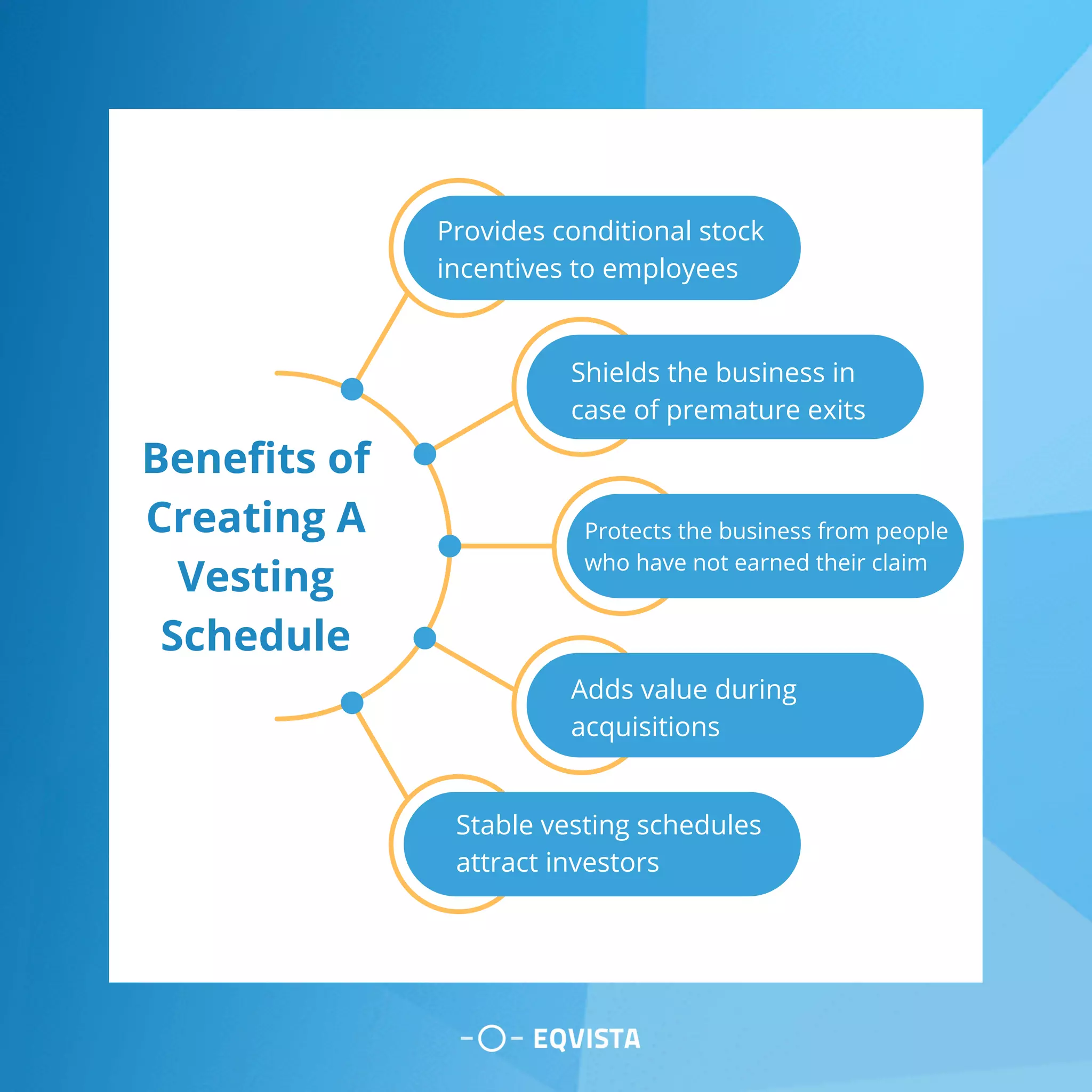
If ESOPs are meant to make employees feel like owners, why delay that ownership? Why not give the shares immediately? The reasons are critical for both the company and for you as a long-term employee. Vesting serves four main purposes.
1. To Encourage Commitment and Retain Talent
This is the single biggest reason. Imagine a startup hires a key developer and gives them 1% of the company in stock options, fully owned on day one. What's stopping that developer from leaving the next week to join another company, while still holding a valuable piece of the first one?
Vesting solves this. By making employees earn their equity over several years, the company incentivizes them to stay, contribute, and help make that equity valuable. It aligns your long-term presence with the company's long-term goals. These are sometimes called "golden handcuffs" because they are a powerful incentive to stay.
2. To Reward Long-Term Contribution
Building a successful company takes years. Vesting ensures that the employees who see the company through its difficult early stages are the ones who benefit most from its success.
This video gives a great explanation for why this is fair.
Employee Stock Options Explained
In this clip from 'Employee Stock Options Explained' by Axosoft, the speaker explains the logic of vesting by comparing an employee who has been with the company for years to one who joined just weeks before a major success.
Watch from 06:52 to 08:11. Pay attention to how the speaker frames vesting as a way to ensure fairness among employees based on their tenure.
3. To Motivate an "Owner" Mindset
While immediate ownership sounds nice, a vesting schedule keeps the "prize" in view. It constantly reminds employees that their continued hard work directly contributes to the future value of the shares they are still in the process of earning. This promotes the ownership mentality we discussed in the last module over a sustained period, not just on day one.
4. To Protect the Company from Early Departures
Vesting acts as a safety measure. If an employee leaves before their options have vested, those unvested options are returned to the company's ESOP pool. They can then be used to hire a replacement or reward other loyal employees. Without vesting, the company's equity would be quickly distributed to people who are no longer contributing to its success.
This article summarizes these points well.
The ESOP Vesting Period: A Complete Guide to How It Works
The article 'The ESOP Vesting Period' provides a section dedicated to explaining these motivations. It's a useful summary of what we've just discussed.
Find and read the section titled 'Why Vesting Periods Exist'. This neatly lists the core reasons and reinforces the idea of 'Golden Handcuffs'.
Test your understanding!
A startup founder is creating their ESOP policy. A friend tells them, "Vesting just frustrates employees. You should give them their shares immediately to build trust."
Based on what you've just learned, what are the two strongest arguments the founder could make against this advice?
Show answer
- Retention: The founder could argue that without vesting, there is no incentive for new hires to stay for the long term. An employee could accept the job, receive valuable shares, and leave shortly after, which defeats the purpose of using ESOPs to build a committed team.
- Fairness and Protection: The founder could also explain that vesting protects the company and its long-term employees. If someone leaves after a few months, their unvested shares return to the pool. This ensures that only those who contribute to the company's long-term growth ultimately share in its ownership. It prevents the company's equity from being held by people who are no longer part of the journey.
Visualizing Vesting: The Pizza Analogy
To make this concept even simpler, let's go back to the pizza analogy. Imagine your total ESOP grant is one large slice of pizza. Vesting means you don't get the whole slice at once. Instead, you get it bite by bite over time.
This video provides a perfect visual demonstration.
Everything you need to know about ESOPs
The 'Everything you need to know about ESOPs' video from Zerodha has an excellent, simple analogy using a pizza slice to explain vesting. This is a great way to visualize the concept of earning your shares over time.
Watch the segment from 10:32 to 11:32. Notice how the employee can't take the pizza slice at first (the 'cliff' period, which we'll discuss next lesson) and then earns it in pieces over several years.
This simple idea—earning your shares gradually by staying with the company—is the heart of vesting. The specific timeline you earn them on is called the vesting schedule.
Conclusion
Today, we've unpacked the crucial concept of vesting. It's the bridge between a company promising you ownership and you actually earning it.
Key Takeaways:
- Vesting is the process of earning your stock options over time. You don't own them all on day one.
- Companies use vesting primarily to retain talent and ensure employees are committed to the company's long-term success.
- Vesting also ensures fairness, by rewarding employees who stay longer more than those who leave early.
- Unvested options are forfeited if you leave the company, protecting the company's equity for those who remain.
Preview of the Next Lesson:
Now that you understand what vesting is and why it exists, the next logical question is: "How does it actually work in practice?" In our next lesson, we will dive into the most common vesting schedule used by startups: the 4-year vesting schedule with a 1-year cliff. We'll use a timeline to show exactly how your options become yours, year by year.