Introduction
Welcome to the final lesson of our course on the basics of game theory. Over the past eleven modules, we have journeyed from the fundamental building blocks of games—players, strategies, and payoffs—to complex models involving sequential moves, incomplete information, and even paradoxes of rationality like Braess's Paradox, which we explored in our last session.
Your goal for this course was to learn game theory as a framework for "meaningful planning in a chaotic world." This lesson is the capstone of that journey. Our objective is not to learn a new model, but to synthesize everything we've covered into a practical, systematic approach. By the end of this lesson, you will be able to select and justify an appropriate game-theoretic model to analyze a given complex scenario. We will build a framework that allows you to deconstruct a real-world situation and map it onto the powerful analytical toolbox you've developed.
The Art and Science of Modeling
Think of game theory not as a single, monolithic theory, but as a "toolbox" for building models of strategic interaction. A model is a simplification of reality designed to illuminate specific features of a problem. The success of any game-theoretic analysis hinges on choosing the right tools for the job.
The process of modeling can be broken down into three core steps:
- Deconstruction: Break down the real-world scenario into its essential strategic components.
- Selection: Choose the game-theoretic representation and solution concept that best fit those components.
- Justification: Articulate the reasons for your choices, acknowledging the assumptions and simplifications you've made.
The following reading from the Internet Encyclopedia of Philosophy provides an excellent high-level perspective on this process. It discusses the "architecture" of game theory, highlighting the crucial role that a "model narrative"—the story of the real-world situation—plays in both constructing the game and choosing how to solve it.
Game Theory | Internet Encyclopedia of Philosophy
Please read the section titled 'The Architecture of Game Theory' from the article on Game Theory in the Internet Encyclopedia of Philosophy. This will frame our discussion by explaining how abstract game forms are connected to real-world phenomena.
Read the subsection 'c. The Architecture of Game Theory'. Focus on how a 'model narrative' helps interpret a situation, construct a game form, and even support the choice of a solution concept. The diagram in Figure 16 provides a great summary of this architecture.
A Framework for Analysis
With the insights from the reading in mind, let's build a structured framework for analyzing any strategic scenario.
Step 1: Deconstruct the Scenario
The first step is to ask a series of foundational questions to identify the core components of the interaction.
- Who are the players? Identify the key decision-makers. Are there two, or many?
- What are their actions/strategies? What choices can each player make? A strategy is a complete plan of action.
- What are their payoffs? What does each player value? Payoffs aren't always monetary; they represent a player's preferences over outcomes, which can include reputation, fairness, or other non-selfish concerns. This is often the most challenging part of modeling.
- What is the timing? Do players act simultaneously, or is there a sequence of moves?
- What is the information structure? What do players know when they make their decisions? Do they know each other's payoffs? Do they observe past actions?
- Is the interaction repeated? Is this a one-shot game, or will players interact again in the future? If so, is the horizon finite or indefinite?
Step 2: Select the Appropriate Model
Your answers to the deconstruction questions will guide you through a "decision tree" to select the right model. This is where we connect the real-world narrative to the formal theory.

The flowchart above provides a very basic guide for static games. Our framework will be more comprehensive. The two most critical branching questions are Timing and Information.
To refresh our memory on the crucial distinctions in information structures, let's revisit a key video from our module on incomplete information.
Game Theory 101 (#63): Incomplete Information
This clip clearly distinguishes between perfect, imperfect, and incomplete information, and then presents a 2x2 matrix that maps these concepts, along with timing, to the appropriate equilibrium concepts we've learned.
Please watch from the beginning to 03:50 to review the definitions of different information types, and then from 05:41 to 06:43 to see the summary table of game types and solution concepts. This table is the core of our model selection process.
Based on that review, we can build our main decision path:
-
Is the game static or dynamic?
- Static (Simultaneous moves): Represent with a Normal-Form (Payoff Matrix).
- Dynamic (Sequential moves): Represent with an Extensive-Form (Game Tree).
-
Is information complete or incomplete?
-
Complete Information (Payoffs are common knowledge):
- If static Solution concept: Nash Equilibrium (NE), pure or mixed. You might refine this by using Iterated Elimination of Dominated Strategies first.
- If dynamic with perfect info Solution concept: Subgame Perfect Nash Equilibrium (SPNE), found via Backward Induction.
- If dynamic with imperfect info Solution concept: SPNE. Requires solving for Nash Equilibria within subgames.
-
Incomplete Information (Players have private information about their "type," e.g., their payoffs):
- If static Model: Bayesian Game. Solution concept: Bayesian Nash Equilibrium (BNE).
- If dynamic Model: Signaling Game. Solution concept: Perfect Bayesian Equilibrium (PBE).
-
This decision tree covers the "classical" game theory models we've studied.
A Note on Bounded Rationality
But what if players don't behave with perfect, calculating rationality? Experimental evidence often shows systematic deviations from these classical predictions. Your justification should consider whether a behavioral or evolutionary model might be more appropriate.
- Bounded Rationality: If players have limited cognitive ability or you suspect they aren't performing complex calculations, a Level-k thinking model might be more predictive, as we saw in the "Beauty Contest" game (Lesson M11L3).
- Evolutionary Dynamics: If you are modeling a large population where strategies evolve through trial-and-error or replication over time, an Evolutionarily Stable Strategy (ESS) approach from evolutionary game theory might be the best fit (Lesson M10).
Step 3: Justify Your Model
Justification is about defending your choices from Steps 1 and 2. It means stating your assumptions clearly.
- "I am modeling this as a two-player game because..."
- "I am assuming payoffs are driven by market share because..."
- "A dynamic game is appropriate because the incumbent firm observes entry before setting its price..."
- "I chose a model of incomplete information because the entrant does not know the incumbent's true production costs. This uncertainty is a key strategic factor."
There is rarely one "perfect" model. Good analysis comes from choosing a reasonable model and being explicit about its limitations.
Case Study: A Tech Startup vs. an Incumbent Giant
Let's apply our framework to a complex, modern scenario.
Scenario: A well-funded startup is planning to launch a new social media app that directly competes with an established platform, let's call it "Behemoth." Behemoth is known for its aggressive tactics. How should we analyze the strategic situation?
Step 1: Deconstruction
- Players: The primary players are the Startup and Behemoth. We can treat Users and Advertisers as part of the environment that determines payoffs, rather than as strategic players, to keep the model manageable.
- Actions:
- Startup:
LaunchorStay Out. If they launch, they can choose a strategy:Niche Market(focus on a specific feature) orBroad Market(compete head-on). - Behemoth: If Startup launches, Behemoth can
Accommodate(do nothing),Replicate Features, orAcquirethe startup.
- Startup:
- Timing: Clearly sequential. The Startup moves first by choosing whether and how to launch. Behemoth then observes this move and responds.
- Information: This is the crucial part. It's a game of incomplete information.
- Behemoth doesn't know the Startup's true "type." Is it a
High-Qualityinnovator with strong funding and a loyal team, or aLow-Qualityimitator that will fold under pressure? - The Startup doesn't know Behemoth's "type." Is Behemoth a
Benigngiant focused on other threats, or anAggressivepredator determined to crush any competitor? Behemoth's true cost of replicating features or its internal valuation for an acquisition is private information.
- Behemoth doesn't know the Startup's true "type." Is it a
- Repetition: This could be modeled as a one-shot "entry game," or as a long-term repeated game of competition if entry is successful. For analyzing the initial launch decision, a dynamic one-shot model is a good starting point.
Step 2 & 3: Selection and Justification
-
Model Representation: The sequential timing points directly to an Extensive-Form (Game Tree) representation.
-
Information & Solution Concept: The presence of asymmetric information (unknown "types") makes this a quintessential game of incomplete information.
-
Justification: A simple model of complete information (like the entry-deterrence game from M4L5) would miss the core of the problem: uncertainty. The Startup's launch strategy might be a signal of its quality. For example, a massive initial marketing blitz might signal a
High-Quality, well-funded type, which might make Behemoth more likely toAcquirethan toReplicate Features. -
Selected Model: Therefore, the most appropriate model is a Signaling Game. The Startup is the "Sender," and its launch strategy is the "signal." Behemoth is the "Receiver," who updates its beliefs about the Startup's type based on the signal and then chooses an action.
-
Solution Concept: The corresponding solution concept is Perfect Bayesian Equilibrium (PBE), which we studied in Module 8. A PBE would specify:
- The Startup's optimal signaling strategy (e.g., a
High-Qualitytype choosesBroad Market, aLow-Qualitytype choosesNiche Market). - Behemoth's optimal action based on its beliefs.
- A belief-updating rule (using Bayes' rule) that is consistent with the strategies.
- The Startup's optimal signaling strategy (e.g., a
-
This kind of modeling is common in analyses of platform competition.
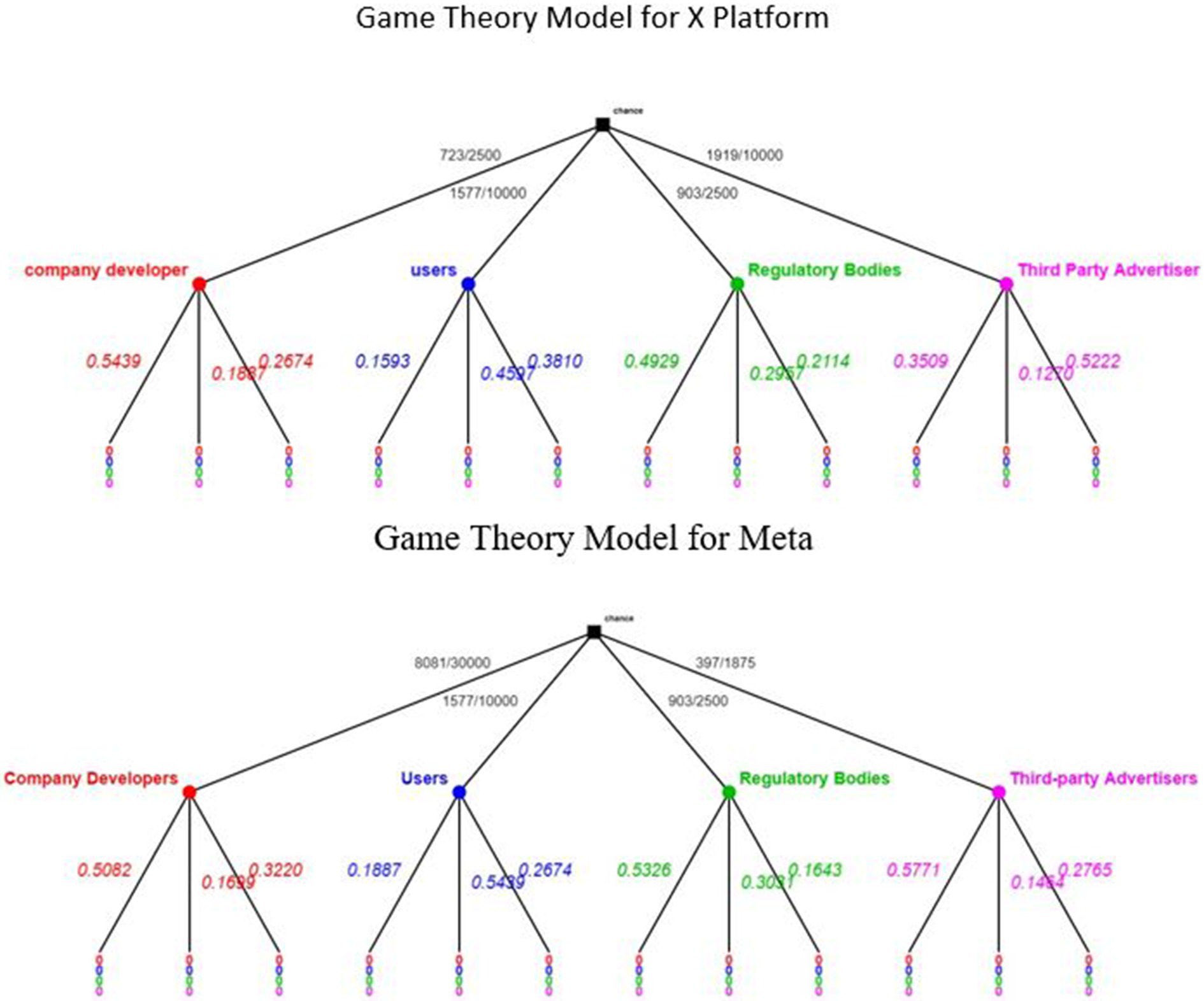
This case study shows how our framework guides us from a messy real-world problem to a specific, justifiable game-theoretic model. The true analytical work would begin now, assigning probabilities and payoffs to solve for the PBE, but selecting the right framework is the critical first step.
Conclusion
This lesson, and this course, has been about learning to see the world through a strategic lens. We've built a powerful toolbox, and today we created a manual for how to use it.
Our key takeaways from this final lesson are:
- Game theory is a modeler's toolbox, not a single universal theory.
- Analyzing a real-world scenario involves a three-step process: Deconstruct, Select, and Justify.
- The most critical factors for model selection are the timing of moves (static vs. dynamic) and the information structure (complete vs. incomplete).
- Your choice of model must be justified by making your assumptions about players, payoffs, and information explicit, drawing from the "model narrative."
- The assumptions of perfect rationality are not always warranted, and sometimes behavioral or evolutionary models provide better insight.
You began this course with a desire to use game theory for "meaningful planning." The framework we've developed is precisely for that purpose. By systematically deconstructing complex problems, you can identify the core strategic tensions, anticipate the behavior of others, and make more informed decisions.
This marks the end of our introduction to the basics. You've built a solid foundation. The fields of Cooperative Game Theory, Mechanism Design, and Behavioral Game Theory offer exciting paths for further study, exploring coalitions, designing rules for better outcomes, and digging deeper into the psychology of strategic choice. I hope this course has sparked a lasting interest in this fascinating field.