Welcome to the start of your first project! We're embarking on building a full-fledged task management application, treating it just as a real company would—from initial idea to a deployed product. This first lesson kicks off the "Product Definition & Scoping" phase. Before writing a single line of code, successful teams invest time in establishing a clear direction.
Today, we will lay that critical foundation. Our goal is to answer two fundamental questions: "Who are we building this for?" and "Why are we building it?" By the end of this lesson, you will have defined the target users for our application and crafted a compelling product vision statement to guide our efforts throughout the project. This initial step is paramount, as it informs every subsequent decision in design, architecture, and development.
The Starting Point: Problem and People
The market for task management tools is crowded, so a generic "to-do list app" is unlikely to succeed. The key is to solve a specific problem for a specific group of people. This initial phase of product development is often called "Discovery and Validation." It's about ensuring you're building the right thing before you focus on building the thing right.
A great way to structure this thinking is to start with a clear problem definition and a precise understanding of your target audience.
MVP Roadmap Guide 2026 | Build Your Minimum Viable Product
This guide provides a professional framework for launching a new product. It emphasizes starting with validation rather than jumping straight into development, which aligns perfectly with our project methodology.
Please read the section titled Phase 1: Discovery and Validation. Focus on the two main subsections: Problem Definition and Market Research and Target Audience Definition. Pay close attention to how the guide moves from a vague idea to a specific problem statement and a detailed user persona.
The guide you just read gives you the theory. Now, let's look at a practical case study to see how this is applied. A UX researcher documented his process for designing a task management app, which closely mirrors our current objective.
Design of a Daily Task Management App: A UX Research Case Study | by Isaac Popoola | Medium
This case study by Isaac Popoola demonstrates how user research leads to a clear definition of the target audience.
Read through the article, focusing on the Define stage. Observe how the author uses a survey to gather data and then synthesizes that data into an Affinity Map. Finally, study the three Personas he creates. These represent the specific user groups he aims to serve.
Your Turn: Define the Target Users
Based on the principles from the MVP Roadmap Guide and the example from the case study, it's time to define the primary users for our application. For this project, let's focus on a niche you're familiar with: software developers and tech students. This focus will help us make more informed decisions later on.
Consider their unique challenges with task management:
- Juggling tickets from a project management tool (like Jira or Trello).
- Managing personal learning goals (e.g., "learn about Kubernetes").
- Tracking bugs and feature ideas for side projects.
- Context-switching between different projects and clients.
Activity (Part 1): Create one detailed user persona that represents our primary target user. Use the following template and fill it out in your own notes.
- Name: (e.g., "Alex, the Backend Developer")
- Demographics: (Role, years of experience, work environment - e.g., remote, hybrid, freelance)
- Goals: (What are they trying to achieve professionally and personally? e.g., "Ship features efficiently," "Stay on top of multiple project deadlines," "Continuously improve my skills.")
- Frustrations/Pain Points: (What problems do they face with current tools or workflows? e.g., "Too many tools to check," "Personal to-dos get lost among work tasks," "Hard to prioritize learning goals against urgent project work.")
Crafting the Product Vision
With a clear picture of who we are building for, we can now define why. A product vision is a concise, aspirational statement that serves as the "North Star" for the entire project. It's not about features; it's about the ultimate purpose and the positive change the product should create.
A fantastic tool for this is the Product Vision Board, developed by product management expert Roman Pichler.
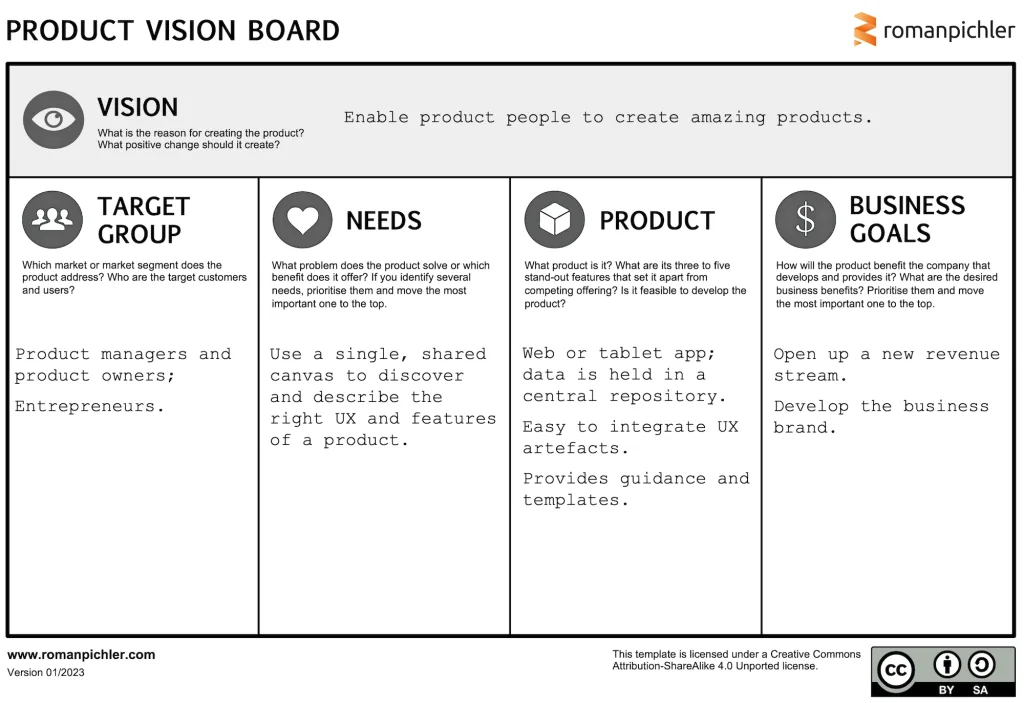
Product Vision Board Introduction
Roman Pichler, the creator of the board, provides a clear and concise introduction to its purpose and structure.
Watch the beginning of the video to understand the overall concept. Pay close attention to the explanation of the Vision section, where he discusses the six qualities of an effective vision. Then, watch the segment on the Target Group, which will reinforce the persona work you just did.
To make the vision statement concrete and actionable, you can use a simple but effective formula.
MVP Roadmap Guide 2026 | Build Your Minimum Viable Product
Let's revisit the MVP guide for a practical template.
In Phase 2, find the subsection The Core Value Proposition. Note the template: “We help [target audience] achieve [specific outcome] by [unique approach]”.
This template forces you to connect your user, their desired outcome, and your unique solution into a single, powerful sentence.
Your Turn: Write the Product Vision
Now, combine these ideas to craft the vision for our task management app. Think big and be aspirational. What is the ultimate impact you want this product to have on the lives of developers and tech students?
Activity (Part 2): Write a product vision statement for our application.
- Use the template: "We help [your defined target audience] achieve [a specific, valuable outcome] by [your unique approach or core idea]."
- Review your statement against Pichler's criteria: Is it inspiring, concise, ambitious, and ethical?
For example: "We help software developers reclaim their focus and accelerate their growth by providing a unified space to manage professional projects, personal tasks, and learning goals."
Bringing It All Together: The Product Requirements Document (PRD)
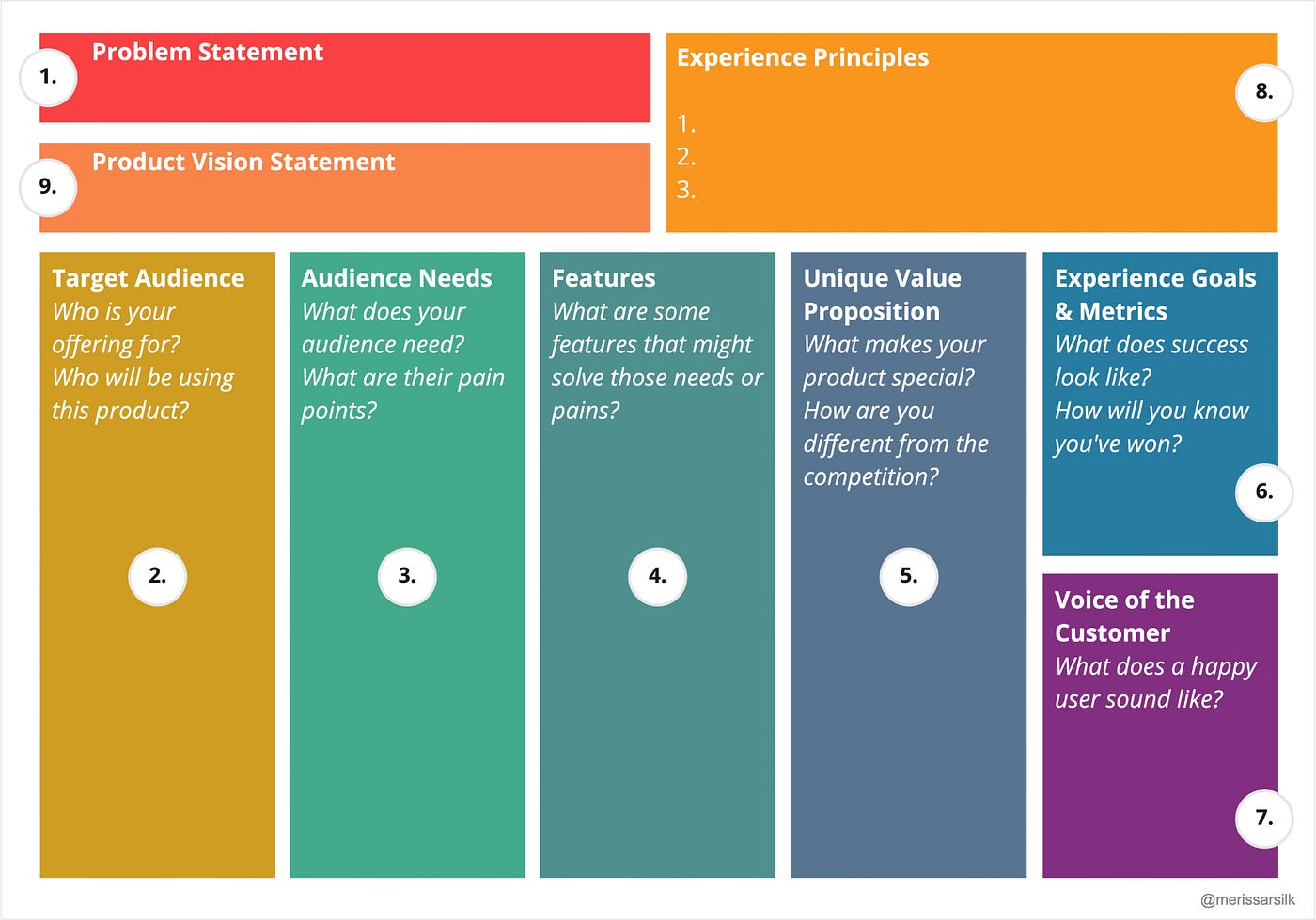
The work you've done today—defining the target user and the product vision—forms the first part of a crucial document in software development: the Product Requirements Document (PRD). A PRD is the single source of truth that aligns everyone—engineers, designers, and stakeholders—on what is being built and why.
Product Requirements Document | How To Build A Web App ep2
The YouTube channel WisePup offers a great, developer-focused overview of what a PRD is and why it's so important.
Please watch the introduction to understand the role of a PRD from what a PRD is. Then, review the segment that outlines the common sections of a PRD. Notice that "Introduction," "Purpose," "Objectives," and "Target Audience" are right at the top.
Your persona and vision statement are the heart of the PRD's introduction. As we move through this course, we will progressively build out the other sections of this document.
Conclusion
In this lesson, we established the strategic foundation for our task management application. You've moved from a generic idea to a focused concept by defining a specific target user and crafting an ambitious product vision. These artifacts aren't just academic exercises; they are the guiding lights that will prevent scope creep and ensure we build a product that delivers real value.
Key Takeaways:
- Successful products start with a deep understanding of a specific user's problems.
- A user persona is a tool to create empathy and focus on a target audience's needs, goals, and frustrations.
- A product vision is a concise, aspirational statement that defines the product's long-term purpose and acts as a North Star for the team.
- The target user definition and vision statement are the first critical components of a Product Requirements Document (PRD).
In our next lesson, we will translate this high-level vision into actionable development tasks. We'll explore how to write user stories with clear acceptance criteria for the core features of our Minimum Viable Product (MVP), taking the next step from "why" to "what."