Hello! Welcome to our next lesson on alkene addition reactions.
In our previous lessons, we've built a powerful toolkit for understanding how molecules add across a C=C double bond. We started with electrophilic addition, where the regiochemistry is governed by Markovnikov's rule and the formation of the most stable carbocation intermediate. Then, we explored catalytic hydrogenation, a surface-mediated reaction with a distinct syn-addition stereochemistry.
Today, we add a third, mechanistically unique pathway to our repertoire: radical addition. This reaction proceeds through an entirely different type of reactive intermediate—a radical—and as a result, follows its own set of rules.
Your learning outcome for this lesson is to explain the mechanism of radical addition to alkenes (e.g., HBr with peroxides) and predict the anti-Markovnikov product. By the end of this session, you will understand the fundamental principles of radical chain reactions and why the presence of a simple peroxide completely reverses the regiochemical outcome for HBr addition.
A Tale of Two Mechanisms: Radicals vs. Cations
In the absence of peroxides, HBr adds to an alkene via an electrophilic mechanism. The proton (H⁺) acts as the electrophile, adding to the less substituted carbon to form the most stable carbocation. The bromide ion (Br⁻) then attacks the carbocation, leading to the Markovnikov product.
What happens if we add a small amount of peroxide (ROOR) to the mixture? The outcome flips. The bromine adds to the least substituted carbon, and the hydrogen adds to the most substituted carbon. This is called anti-Markovnikov addition.
This dramatic change signals a complete shift in the reaction mechanism. We are no longer dealing with charged intermediates like carbocations. Instead, we have entered the realm of free radicals.
Radicals and the Singly Occupied Molecular Orbital (SOMO)
A free radical is a neutral chemical species that contains an unpaired electron. This single electron resides in what is known as a Singly Occupied Molecular Orbital (SOMO).
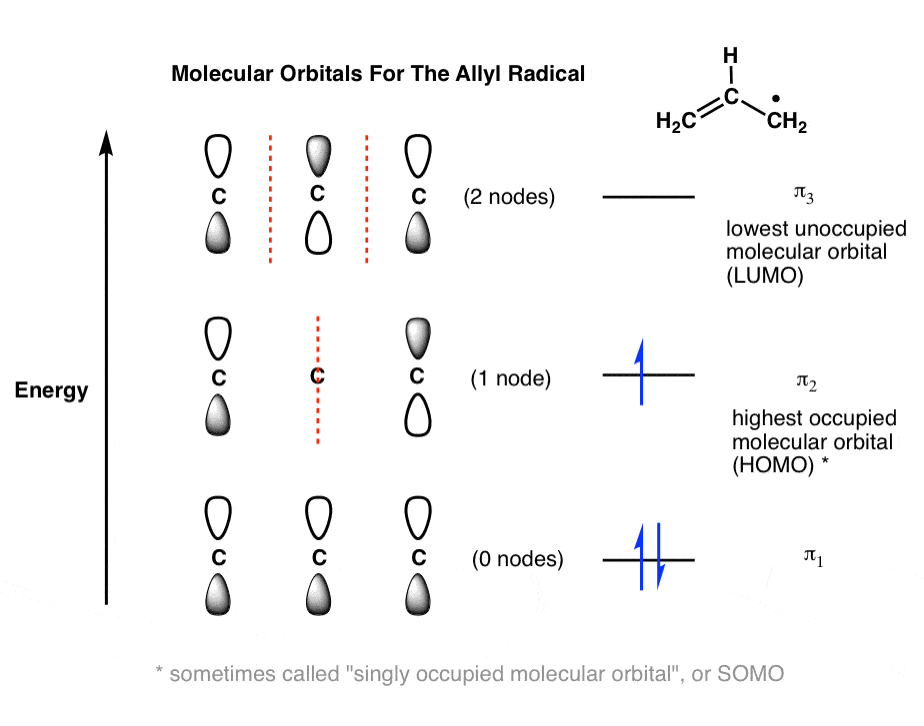
Species with a SOMO are highly reactive because there is a strong driving force to pair up that lone electron and form a stable bond. This reactivity is harnessed in radical chain reactions.
Advanced Organic Chemistry: Introduction to Radicals
To begin, let's watch a brief introduction to radicals from the 'Synthesis Workshop' channel. This will set the stage by explaining what radicals are and their importance in modern chemistry.
Please watch from the beginning to 02:12. This will provide a general overview of radical chemistry and its relevance.
The Radical Chain Mechanism
Radical addition of HBr is a classic example of a chain reaction. This type of mechanism consists of three distinct phases: initiation, propagation, and termination.
Let's dissect this process using the excellent step-by-step explanation from the jOeCHEM channel.
Anti-Markovnikov Addition of HBr to a Double Bond
The video 'Anti-Markovnikov Addition of HBr to a Double Bond' provides a very clear, visual breakdown of the entire chain mechanism.
Watch from 02:09 to 06:47. As you watch, focus on identifying the three key phases and the role each species plays: Initiation (02:09 - 04:09): How is the bromine radical (Br•) generated from the peroxide and HBr? Propagation, Step 1 (04:09 - 05:21): How does the Br• add to the alkene, and why does it form the more stable radical intermediate? Propagation, Step 2 (05:21 - 06:47): How is the final product formed, and how is the Br• regenerated to continue the chain?
Let's consolidate what you just watched with a more detailed breakdown.
1. Initiation: Creating the First Radical
The chain reaction needs a spark to get started. This is the role of the peroxide initiator.
- Homolysis of Peroxide: The O–O bond in a peroxide is weak and readily breaks when heated or exposed to UV light. This cleavage is homolytic, meaning each oxygen atom takes one electron from the bond, forming two alkoxy radicals (RO•). We use a single-barbed or "fishhook" arrow to denote the movement of a single electron.
- Hydrogen Abstraction: The highly reactive alkoxy radical abstracts a hydrogen atom from HBr. This is not an acid-base reaction but a transfer of a hydrogen atom (a proton and an electron). This generates the crucial bromine radical (Br•).
2. Propagation: The Product-Forming Cycle
The propagation phase consists of a cycle of two steps that repeat many times, generating the product and regenerating the radical needed to continue the cycle.
-
Addition of Br• to the Alkene: The bromine radical adds to the π bond of the alkene. Here lies the key to the regiochemistry. The Br• can add to either carbon of the double bond. The addition occurs in a way that generates the most stable possible carbon radical.
- Recall that radical stability follows the same trend as carbocation stability: 3° > 2° > 1° > methyl.
- Therefore, the Br• will add to the less substituted carbon, placing the unpaired electron on the more substituted carbon. This is the regiochemistry-determining step.
-
H-atom Abstraction by the Carbon Radical: The newly formed alkyl radical abstracts a hydrogen atom from another molecule of HBr.
- This forms the final C-H bond of the anti-Markovnikov product.
- Crucially, this step also regenerates a bromine radical (Br•), which can now go back and react with another alkene molecule in step 1 of the propagation cycle.
3. Termination: Ending the Chain
The chain reaction doesn't continue forever. Occasionally, two radical species will collide and combine, terminating the chain. These are non-productive events that consume radicals.
Examples:
The entire mechanism is summarized beautifully in the image below.

Test your understanding!
Predict the major organic product of the reaction between 1-methylcyclopentene and HBr in the presence of di-tert-butyl peroxide and heat. Explain your reasoning by identifying the key radical intermediate.
Show answer
- Reaction Type: HBr with peroxide indicates a radical addition mechanism leading to an anti-Markovnikov product.
- Initiation: The peroxide will generate bromine radicals (Br•).
- Propagation (Step 1): The Br• will add to the double bond of 1-methylcyclopentene. It can add to C1 or C2.
- Path A: Addition to C1 (the methyl-substituted carbon) would place the radical on C2, forming a secondary (2°) radical.
- Path B: Addition to C2 would place the radical on C1, forming a tertiary (3°) radical.
- Stability: The tertiary radical is more stable than the secondary radical. Therefore, the reaction will proceed via Path B.
- Propagation (Step 2): The tertiary radical will abstract a hydrogen atom from HBr to form the final product.
- Product: The bromine will be on C2 and the new hydrogen will be on C1. The product is 1-bromo-1-methylcyclopentane.
The "Goldilocks" Principle: Why Only HBr?
You may be wondering why this anti-Markovnikov radical addition is specific to HBr. Why doesn't it work for HF, HCl, or HI? The answer lies in the thermodynamics of the two propagation steps, a perfect example of the deep chemical "why" you're looking for.
Why H-I, H-Cl, and H-F Additions are Electrophilic
The textbook chapter 'Free Radical Substitution and Addition Reactions' provides an excellent, rigorous explanation based on bond dissociation energies (BDEs).
Please read the section titled 'H-I, H-Cl, and H-F Additions are Electrophilic' (you'll find it after the discussion of stereochemistry). Focus on the thermodynamic arguments for each of the other hydrogen halides.
Let's summarize the key thermodynamic arguments from your reading. For a successful chain reaction, both propagation steps must be exothermic or only slightly endothermic.
X• + R₂C=CR₂ → R₂CX-CR₂•(Radical addition to alkene)R₂CX-CR₂• + H-X → R₂CH-CR₂X + X•(H-atom abstraction)
- HF & HCl: The H-F (BDE ≈ 570 kJ/mol) and H-Cl (BDE ≈ 432 kJ/mol) bonds are very strong. Step 2, the abstraction of a hydrogen atom by the carbon radical, becomes highly endothermic. The energy cost is too high for the chain to propagate effectively.
- HI: The H-I bond is weak (BDE ≈ 298 kJ/mol), so step 2 is favorable. However, the C-I bond formed in step 1 is also quite weak. This makes step 1 reversible. The iodine radical (I•) adds to the alkene, but it often "falls off" again before step 2 can occur.
- HBr: HBr is in the "Goldilocks" zone. The H-Br bond (BDE ≈ 366 kJ/mol) is weak enough for step 2 to be exothermic. The C-Br bond is strong enough to make step 1 effectively irreversible. Both propagation steps are thermodynamically favorable, allowing the chain reaction to proceed rapidly.
Conclusion
Today, we've unveiled the mechanism of radical addition, a powerful tool that complements the electrophilic and catalytic pathways we've already mastered. By simply adding a peroxide initiator, we can completely reverse the regioselectivity of HBr addition, providing access to anti-Markovnikov products.
Key Takeaways:
- The addition of HBr to an alkene in the presence of peroxides proceeds via a radical chain mechanism.
- The mechanism involves three phases: initiation (formation of Br•), propagation (a two-step cycle forming the product), and termination.
- The regiochemistry is anti-Markovnikov because the first propagation step involves the addition of a bromine radical to form the most stable carbon radical intermediate.
- This mechanism is unique to HBr due to the specific thermodynamics of its propagation steps; HCl and HF have H-X bonds that are too strong, while the C-I bond formed with HI is too weak.
Preview of the Next Lesson:
We now have methods for both Markovnikov (electrophilic addition) and anti-Markovnikov (radical addition) placement of a halogen. In our next lesson, we will turn our attention back to hydration. We'll explore oxymercuration-demercuration, a sophisticated two-step method for achieving Markovnikov hydration of an alkene that cleverly avoids the potential for carbocation rearrangements that can complicate simple acid-catalyzed hydration.