Welcome to the first lesson of our second module, where we shift our focus from the overarching strategy of rebuttal to the tactical dismantling of specific logical fallacies. In the previous module, you cultivated the "Wise Mind"—the crucial ability to separate an argument's emotional charge from its logical structure. Now, we will begin applying that discipline to a family of fallacies built on flawed premises and faulty definitions, starting with one of the most fundamental: Begging the Question.
This lesson will equip you to deconstruct and counter arguments that don't even try to prove their point, but instead, simply assume it from the outset. You'll learn to spot when a conclusion has been smuggled into the premises, particularly in conversations about a woman's fashion or relationship choices, and how to expose this circular logic with precision.
Deconstructing Petitio Principii
The fallacy of Begging the Question, known in Latin as petitio principii ("requesting the starting point"), occurs when an argument's premises assume the truth of the conclusion, instead of providing independent evidence for it. It creates the illusion of a valid argument—it has premises and a conclusion—but it's merely a disguised assertion. The argument effectively says, "This is true because it is true."
The basic structure is:
- Claim X is true.
- The premise for Claim X is a restatement of Claim X in different words.
Consider a classic example: "Paranormal activity is real because I have experienced what can only be described as paranormal activity." The premise ("I have experienced paranormal activity") assumes the very thing it is trying to prove ("Paranormal activity is real"). No external evidence is offered.
As a social researcher, you understand the critical importance of ensuring your research question does not presuppose your conclusion. Begging the Question is the rhetorical equivalent of this error—it is an argument designed to be unfalsifiable because its conclusion is its own starting block.
The Social Function of Begging the Question
This fallacy is rarely as obvious as the example above. It is most often used to enforce social norms by presenting them as self-evident, logical necessities. A critic assumes their own culturally-bound definitions of terms like "decency," "commitment," or "respectability" are universal truths, and then uses those definitions to "prove" that any deviation is wrong.
Feminist philosophers have highlighted how this move can be used to dismiss entire lines of critical inquiry.
Feminist Perspectives on Argumentation
The Stanford Encyclopedia of Philosophy entry on this topic provides a sophisticated analysis of how fallacy claims are used in philosophical debate. It contains a brilliant example of how critics of feminist theory commit the fallacy of Begging the Question themselves.
Please read the fifth paragraph in the section titled "The Fallacies Approach to Argument Evaluation". Focus on how the authors explain that accusing feminist arguments of a "genetic fallacy" itself begs the question by assuming that a belief's origins are irrelevant to its justification—the very point being challenged.
As the reading shows, by assuming a premise (that origins are irrelevant), critics create a circular argument that allows them to dismiss a feminist critique without ever engaging its substance. This is the exact tactic used in more personal, everyday arguments. The person you are debating assumes their worldview is the only valid "starting point" for the discussion. Your task is to refuse this starting point and expose its circularity.
The arguments you've asked to dissect—about a woman's clothing or relationship structure—are potent examples. They often hinge on unstated, question-begging premises about what a woman's body or a committed relationship is for.
[PDF] Institutionalizing Consent Myths in Grade School
This law review article powerfully deconstructs the logic behind school dress codes and its connection to rape myths. It provides an excellent foundation for understanding the unstated assumptions that fuel fallacious arguments about women's attire.
Read the introduction to understand the core thesis. Then, read the section <span data-type="resource_reading_textrange" data-resource-subitem-id="0d70f5cd" data-range-start="Modesty -based dress codes" data-range-end="unwanted attention and that those wearing">"Stated and Implicit Purposes of Sex-Obsessed Dress Codes", paying close attention to the "lack of distraction" rationale. Finally, read the sections "Institutions, Messaging, and Consent" and "Implied General Consent to Sexual Contact." These sections directly attack the premise that clothing communicates consent.
The article reveals the hidden premise in many arguments about clothing: that a woman's body is an inherent "distraction" or a public object whose meaning is determined by the observer. An argument like, "That outfit is inappropriate because it's distracting to men," begs the question. It assumes that male distraction is the woman's responsibility and that the outfit's primary quality is its effect on others. It never proves why this should be the case; it asserts it as the starting point.
Application: Crafting Your Rebuttals
Your goal is to reject the premise and expose the circle. You are not obligated to accept your interlocutor's loaded definitions.
Scenario 1: A woman wearing a low-cut outfit.
As someone who has designed lingerie and tops, you have a unique appreciation for the intersection of form, function, and personal aesthetic. The argument you face ignores this entirely, imposing a single, external meaning.
- Fallacious Argument: "A woman who respects herself wouldn't wear something so provocative. It's simply not appropriate."
- Deconstruction: The argument is circular. Why is it not appropriate? Because "respectable" women don't wear it. And who is a "respectable" woman? Someone who doesn't wear "inappropriate" clothing. The argument uses the labels "respectable" and "provocative" to presuppose the very conclusion it wants to reach, without offering any independent criterion for what makes an article of clothing "inappropriate."
- Witty, Sharp Rebuttal: "Your argument is a perfect circle. You're saying the outfit is inappropriate because women you've pre-judged as 'inappropriate' wear it. You haven't given me a reason, just a label. Can you try to justify your position without using your conclusion as your premise?"
Scenario 2: A wife in a consensual "open vee" relationship.
Your research experience in personal relationships makes you well aware that "commitment" and "fidelity" are complex terms with varied applications. This fallacy attempts to flatten that complexity into a single, narrow rule.
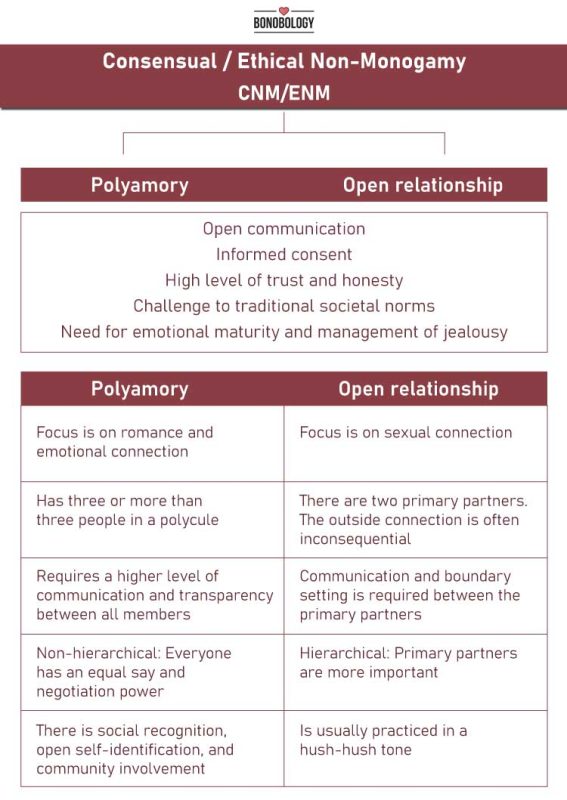
- Fallacious Argument: "You can't call that a real, committed marriage. A true commitment is about being faithful, and that means sexual exclusivity."
- Deconstruction: This argument begs the question by embedding its conclusion within its central premise. It presents a highly specific and contestable definition of "commitment" and "faithfulness" (i.e., sexual exclusivity) as if it were the only possible one. It then "concludes" that a relationship not fitting this narrow definition is invalid. The argument doesn't prove why sexual exclusivity is the sole metric of commitment; it merely asserts it.
- Witty, Sharp Rebuttal: "You're defining 'commitment' in a way that can only lead to your desired conclusion. It's a textbook circular argument. My marriage is built on a commitment to honesty, communication, and emotional fidelity. Are you arguing those are irrelevant to 'true commitment,' or is your definition simply too narrow to account for them?"
Conclusion
You have now analyzed the first fallacy of flawed premises. Begging the Question is a powerful tool for enforcing conformity because it presents subjective norms as objective logic.
Your key takeaways are:
- Identify the Circle: Begging the Question occurs when an argument's premise is a restatement of its conclusion.
- Challenge the Premise: The core of the fallacy is an unproven assumption. Do not accept loaded definitions of terms like "respectability," "decency," or "commitment."
- Expose the Logic: Your rebuttal should not get sidetracked by the emotional content but should surgically expose the circular structure. Force your interlocutor to provide an external, non-circular reason for their claim.
In our next lesson, we will examine a close relative of this fallacy: Circular Reasoning. While often used interchangeably, there are subtle differences. Understanding them will further refine your ability to pinpoint the exact logical failure in an argument and dismantle it with even greater precision.