Welcome to the next lesson in our module on diversionary tactics. In our last discussion, we dissected the Red Herring, a broad strategy for derailing a conversation by introducing an irrelevant topic. Today, we focus on a specific, potent, and incredibly common variant of the red herring: Whataboutism.
Whataboutism is the rhetorical equivalent of pointing a finger at someone else to distract from the one being pointed at you. It's a tactic designed not to win an argument on its merits, but to shut it down entirely by creating a vortex of accusation and counter-accusation. Your goal in this lesson is to learn to deconstruct and counter this deflection, allowing you to hold the line and refuse to have your valid points dismissed through manipulative comparisons.
Deconstructing Whataboutism
Whataboutism, also known as whataboutery, is a logical fallacy that attempts to discredit an opponent's position by charging them with hypocrisy or by raising a different issue, without directly refuting or disproving the argument itself. The classic formulation is to respond to a criticism with, "What about...?" followed by a reference to a perceived fault of the accuser or a different, often unrelated, problem.
This tactic is a specific form of the tu quoque ("you also") fallacy, but it often expands beyond simple hypocrisy to encompass any convenient distraction.
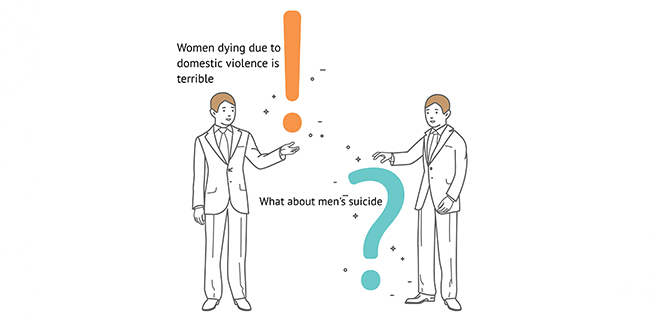
The power of Whataboutism lies in its ability to reframe the conversation. It creates a false moral equivalence, implying that because other problems or wrongdoings exist, the original point is either invalid, unimportant, or hypocritical to raise. It puts the original speaker on the defensive, forcing them to justify why they are talking about issue A when issue B also exists.
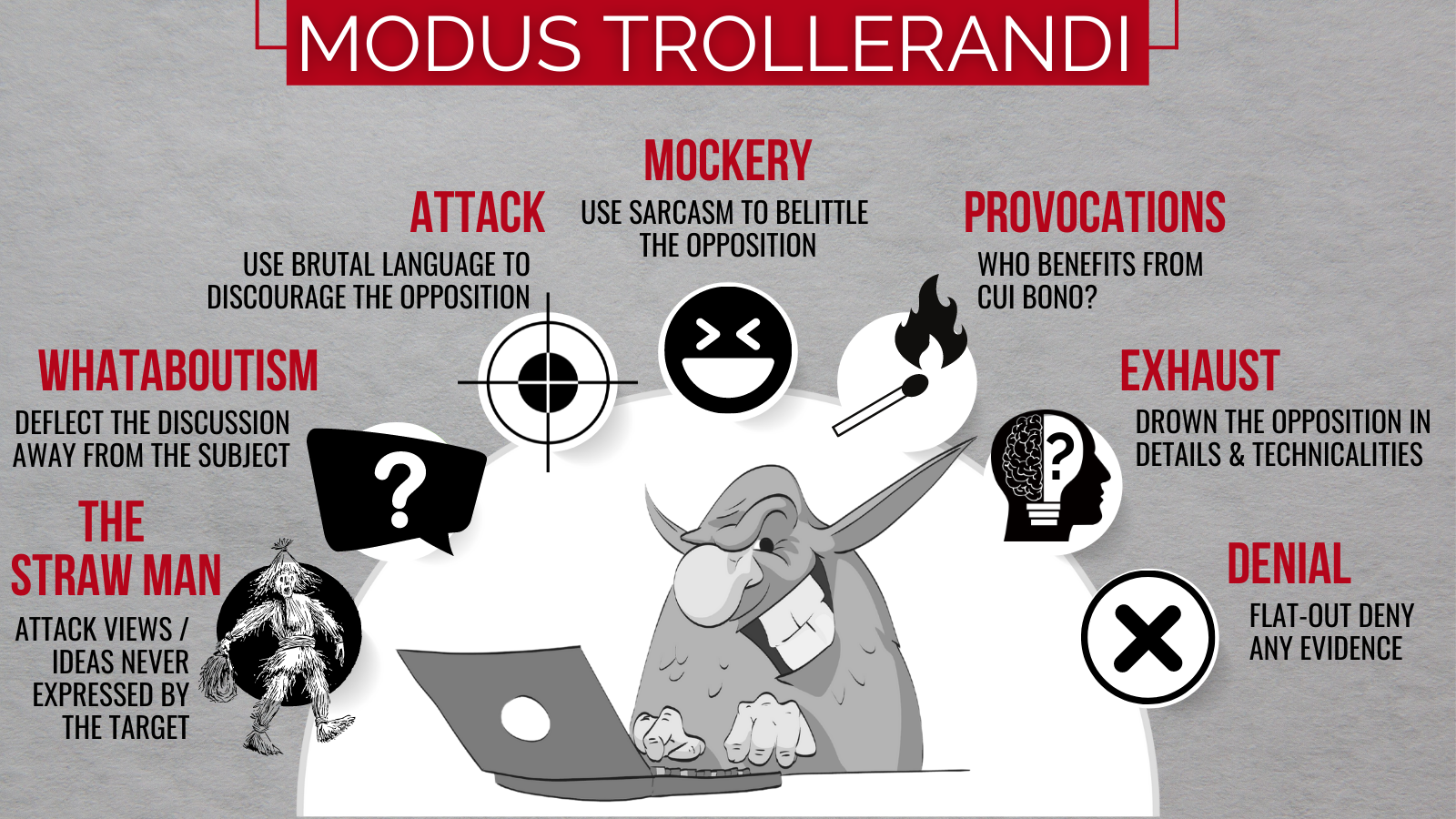
Your primary strategy for countering Whataboutism is to refuse the deflection. You must recognize that the two issues presented are not mutually exclusive and that the introduction of the second issue is a deliberate attempt to derail the conversation about the first.
Application 1: Style and Double Standards
Judgments about a woman's clothing are often defended with deflections that attempt to paint the woman's concerns as trivial or hypocritical compared to other societal problems.
Scenario: You are at a social gathering, and a person makes a comment that your low-cut top is "just asking for attention." You calmly respond that you're wearing it because you like the design and feel confident, not for external validation.
- Fallacious Argument: "You're complaining about being judged for a shirt? What about men who are expected to be the breadwinners and are judged entirely on their financial success? That's real pressure."
- Deconstruction: The original discussion was about the specific act of judging a woman's character or intentions based on her clothing. The critic has deflected by introducing a completely different social issue: the pressure on men to be providers. This is a classic Whataboutism. The existence of societal pressure on men has no logical bearing on the validity of your point about being judged for your attire. The two issues can coexist. The arguer's intent is to minimize your experience by comparing it to a different problem, thereby shutting down your complaint without ever having to address its substance.
- Witty, Sharp Rebuttal: "That's a valid concern, but it's a different conversation. Forcing me to choose between discussing my experience or yours is a false choice. We can certainly talk about societal pressures on men later, but right now, we're talking about my blouse. Are you saying my point is invalid, or are you just trying to change the subject?"
- Why it works: This rebuttal achieves several things. It validates the other person's topic just enough to avoid appearing dismissive ("That's a valid concern"). It then immediately identifies the fallacy ("it's a different conversation," "forcing me to choose... is a false choice"). Finally, it decisively re-centers the debate and puts the onus back on the arguer to defend their diversionary tactic. The final question forces them to either engage honestly or admit they were deflecting.
Application 2: Relationships and Moral high ground
When faced with a relationship structure they don't understand, people often resort to Whataboutism to claim a moral high ground by pointing out flaws in other, unrelated systems.
Scenario: You are explaining to a friend that your open "vee" relationship functions successfully because it is built on a foundation of explicit consent, trust, and continuous communication among all involved parties.
- Fallacious Argument: "You can talk about 'consent' all you want. What about the epidemic of cheating? Millions of people in so-called 'normal' relationships are lying and betraying their partners every day. That seems like a much bigger problem."
- Deconstruction: Your argument was about the ethical framework and functionality of your specific, consensually non-monogamous relationship. The critic has deflected to the general problem of infidelity within monogamous relationships. This serves two purposes for the arguer: first, it avoids having to engage with the complex and possibly challenging details of your relationship structure. Second, it attempts to create a moral fog, implying that because a major problem (cheating) exists in the dominant relationship model, all other models are suspect or, at the very least, not worth discussing. The prevalence of lying in monogamy is logically irrelevant to the prevalence of honesty in your relationship.
- Witty, Sharp Rebuttal: "I agree, infidelity is a huge problem rooted in deception. My partners and I chose this structure specifically to prevent that by prioritizing honesty from the start. So, bringing up a problem my relationship is designed to solve doesn't invalidate it—it actually highlights its purpose. Now, did you have any questions about how we actually handle that honesty in practice?"
- Why it works: This is an advanced technique. Instead of just dismissing the deflection as irrelevant, you absorb it and use its own energy against it. You reframe their "whatabout" point as a justification for your own choice. You turn their "problem" into your "solution." This not only neutralizes the deflection but strengthens your original position. The final question firmly returns the conversation to productive ground.
Key Takeaways
Whataboutism is a powerful tool for derailing arguments because it preys on our desire to seem fair and comprehensive. Resisting it requires focus and discipline.
- Recognize the Deflection: The moment you hear "What about...?" your fallacy detector should activate. The goal is to shift focus and imply hypocrisy.
- Avoid the Trap: Do not get bogged down defending why you are talking about A and not B. Do not try to solve problem B. That is the trap.
- Expose the Irrelevance: Explicitly state that the new topic is separate and that its existence does not invalidate the original point.
- Re-center the Conversation: Firmly and confidently pivot back to the original topic. The most effective rebuttals often frame the deflection as an attempt to avoid the actual subject.
In our next lesson, we will explore a fallacy that is often used in conjunction with Whataboutism: Two Wrongs Make a Right. While Whataboutism deflects by pointing to a different issue, this next fallacy attempts to justify a wrongful act by pointing to another, separate wrongful act.