In our last lesson, we established the crucial difference between passive and active learning, concluding that true learning happens when the mind is actively engaged in constructing its own knowledge. Today, we will explore the formal learning theory that underpins this idea: constructivism.
This lesson will unpack the core principle of constructivism—that learners build knowledge from experience. We'll see how this pedagogical theory has a direct and powerful parallel in the world of product design through the concept of mental models. For your goal of building an effective career guidance app, understanding constructivism is not just academic; it's a foundational principle for designing experiences that genuinely teach and empower your users, rather than just presenting them with information.
The Architect, Not the Vessel
The central idea of constructivism is a radical shift away from viewing the learner as an empty vessel waiting to be filled with information. Instead, it sees the learner as an active architect, continuously building and renovating their own structure of knowledge based on their unique experiences.
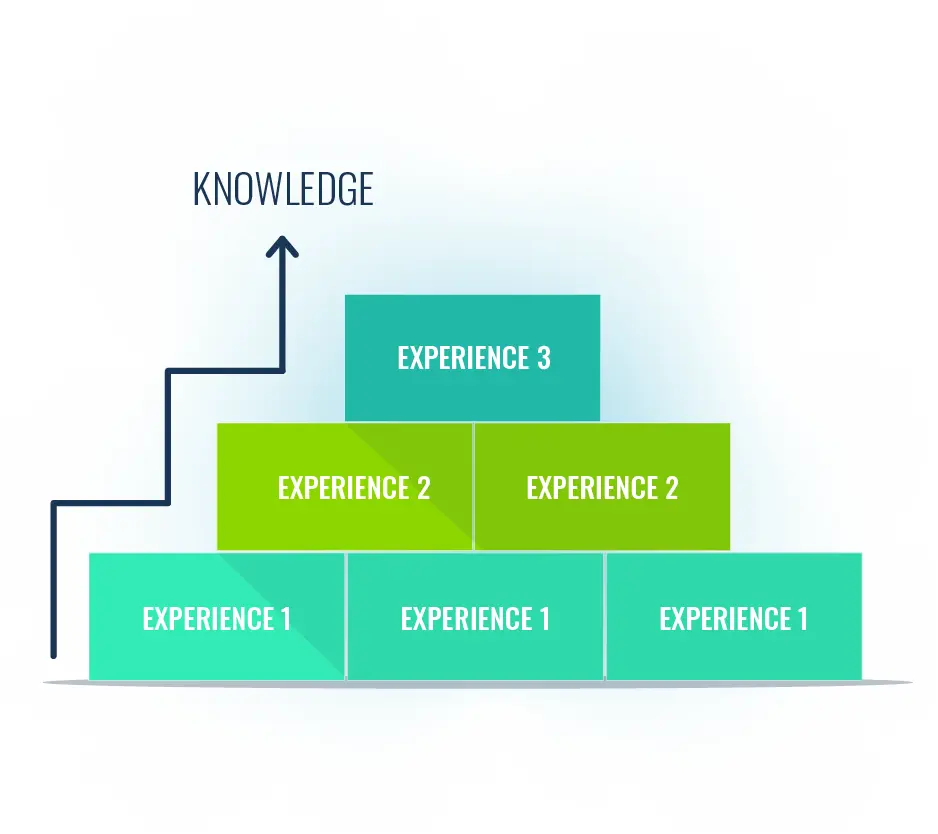
Rather than passively absorbing facts, a learner actively interprets new information through the lens of what they already know, creating meaning by connecting the new to the old.
To get a formal definition of this theory, let's turn to a concise overview.
Constructivism as a Theory for Teaching and Learning
This article from Simply Psychology provides a clear and direct introduction to constructivism and its key features.
First, read the introduction and Key Features. Then, scroll down to the section "Constructivism Philosophy" and read the first two principles: "Prior knowledge forms the foundation for learning" and "Learning is an active process."
As you can see, the theory rests on the idea that knowledge isn't transmitted; it is personally constructed. This is a direct echo of the "minds-on" engagement we discussed in the context of active learning.
A Bridge from Pedagogy to Design: Mental Models
This idea of building on prior knowledge might sound familiar. In your work as a product designer, you constantly deal with a parallel concept: mental models. A user’s mental model is their belief system about how a product works, a belief system they've constructed from all their prior experiences with other digital products.
This video from UX designer Nick Babich explains the concept from a design perspective. As you watch, notice how his description of a user's expectations is a perfect real-world example of constructivism in action.
How to use mental models in UX design
This video provides a great overview of mental models in UX design, which we can use as a practical analogy for constructivism.
Watch the first three minutes, which cover: What a mental model is and how it's based on past experiences. Jakob's Law, which states that users expect your site to work like others they've used. Interface metaphors, a technique that leverages users' existing knowledge.
The connection is direct:
- Constructivism says: Learners interpret new information based on prior knowledge.
- UX Design says: Users interact with a new product based on their mental model, which is built from prior experiences with other products.
When a design "mismatches" a user's mental model, it causes confusion ("user error"). In learning, when new information has no connection to prior knowledge, it leads to non-comprehension or quick forgetting. Your job as a designer of a learning product is to bridge this gap.
The Mechanics of Construction: Assimilation and Accommodation
So how does this construction of knowledge actually happen? The Swiss psychologist Jean Piaget, a key figure in constructivism, identified two fundamental processes: assimilation and accommodation.
This next resource, focused on applying constructivist theories to technology design, explains these concepts clearly.
[PDF] Bridging Constructivist Theories and Design Practice for Children to ...
This paper connects Piaget's theories directly to technology design. It provides a clear explanation of how learners construct knowledge.
Please read the section "3.1.1. Jean Piaget". You can start from the paragraph beginning "Piaget saw children...". Focus on the definitions of constructivism, assimilation, and accommodation.
Let’s break this down with a simple example:
- Existing Knowledge: A teenager's mental model of a "career" is based on their parents' jobs (e.g., doctor, teacher), which they see as stable, lifelong paths.
- Assimilation: Your app introduces them to the career of a "Software Engineer." They might assimilate this by fitting it into their existing model: "Okay, a software engineer is like a teacher, but for computers. You learn how to do it, and you do it for a long time." They are fitting the new information into their existing structure.
- Accommodation: Your app then shows them the career of a "YouTuber" or "Gig-economy Data Analyst." This new information doesn't fit their model of a stable, traditional job. To understand it, they must accommodate it by changing their mental model. Their definition of "career" has to expand to include freelance work, project-based employment, and personal branding.
The app didn't just tell them what a career is. It presented experiences that forced them to actively reconstruct and expand their own understanding. This process of assimilation and accommodation is the cognitive work that makes learning stick.
For another clear explanation of this process, the following video is very helpful.
Constructivism Learning Theory Explained!
This video from Dr. Lindsay O'Neill offers a friendly walkthrough of constructivist theory, with a great summary of assimilation and accommodation.
Watch the section explaining cognitive constructivism from Piaget's theory. Then, you can watch the short recap at the end to solidify the key points.
Cognitive, Social, and Constructionist Flavors
It's important to know that constructivism isn't one single, monolithic theory. It has different "flavors," primarily distinguished by the emphasis they place on individual cognition versus social interaction.
- Cognitive Constructivism (Piaget): Focuses on the individual's mental processes. Knowledge is built inside the learner's head as they interact with the world. This is the assimilation/accommodation process we just discussed.
- Social Constructivism (Vygotsky): Argues that knowledge is first co-constructed between people through social interaction and language, and only then internalized by the individual. Think of learning through discussion, mentorship, or collaboration.
- Constructionism (Papert): An offshoot of constructivism particularly relevant to you. Seymour Papert, who worked with Piaget, argued that one of the best ways to construct knowledge is by making things. By building a tangible artifact (like a robot, a piece of code, or a design mockup), the learner externalizes their thinking and can refine it.
Constructivism as a Theory for Teaching and Learning
Let's return to the Simply Psychology article to see a direct comparison of these types.
Read the section titled "Types of Constructivism", paying close attention to the table comparing Social, Cognitive, and Radical constructivism.
For your career guidance app, you can draw on all of these:
- Cognitive: Design interactive tools where a user explores career data and builds their own mental map of the job market.
- Social: Include features that allow users to discuss career paths with peers or mentors.
- Constructionist: Challenge users to "build" a potential career path for themselves by selecting skills to learn, projects to undertake, and connecting with people in the field.

Conclusion
In this lesson, we have moved from the practical idea of active learning to its theoretical foundation, constructivism. We've established that learning is a process of actively building knowledge, not passively receiving it.
Here are the key takeaways for you as a designer:
- Constructivism's Core Idea: Learners build knowledge on the foundation of their prior experiences.
- The Design Parallel: This is directly analogous to the UX concept of "mental models," where a user's past experiences shape their expectations of a new product.
- Key Mechanisms: Knowledge is built through assimilation (fitting new information into existing models) and accommodation (changing models to fit new information).
- Design for Construction, Not Transmission: Your goal is not to "transmit" career information to the user, but to design experiences that guide them to construct their own understanding of the professional world and their place in it.
This principle—that all new learning is shaped by what the learner already knows—is so fundamental that we will dedicate our entire next lesson to it. We will explore in greater detail how a learner's prior knowledge and experience shape what they can learn next, and what that means for personalizing the journey in your app.