Hello! Welcome to the fifth and final lesson of our first module, "The Psychology of Impactful Storytelling."
Over the last four lessons, we've built a strong theoretical foundation. We started by identifying the key emotional pathways to action, explored the neuroscience of how stories change brain chemistry, learned how to choose between rational and emotional appeals, and, most recently, recognized the psychological barriers like psychic numbing that can stop an audience from engaging.
Now, it's time to bring it all together. This lesson is where theory meets practice. Our learning outcome is to analyze a successful non-profit video to deconstruct its use of psychological triggers and emotional arcs. We will take a powerful, real-world example and reverse-engineer its impact, using the psychological and neuroscientific principles we've covered. As a filmmaker, you are an expert in the "how" of creating emotion; today, we'll focus on the "why," connecting your craft to the science of influence.
1. The Blueprint for Impact: Arc, Attention, and Empathy
Before we dive into our case study, let's assemble our analytical toolkit. A story that moves people to act isn't a random collection of emotional moments; it's a carefully engineered experience.
The Dramatic Arc: The Story's Emotional Skeleton
You're intimately familiar with narrative structure, but let's connect it explicitly to our psychological goal. The classic "dramatic arc" isn't just a convention; it's a technology for managing an audience's emotional and cognitive state.
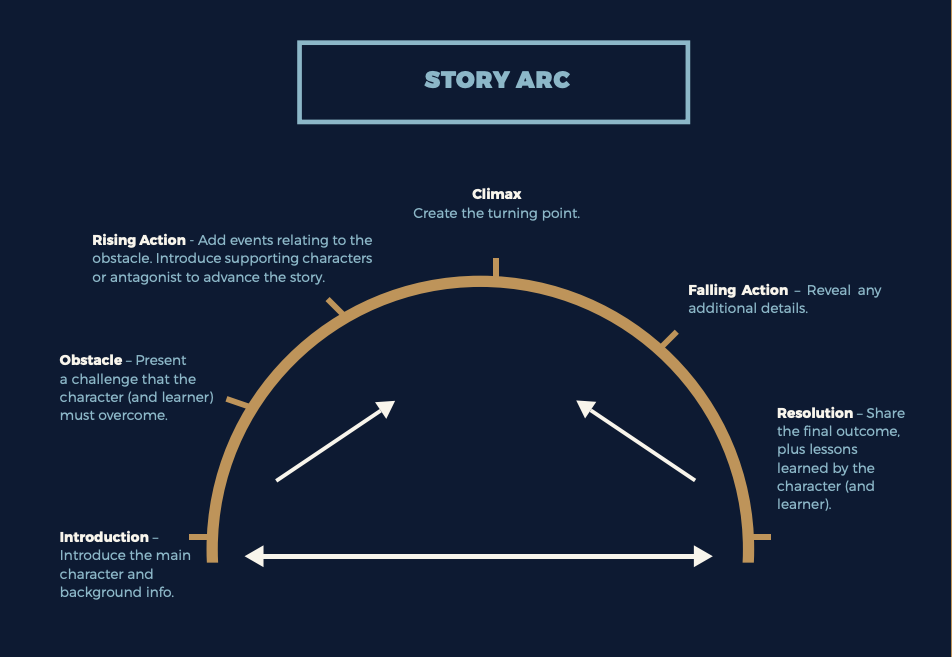
In the context of non-profit storytelling, this arc guides the audience from awareness to emotional investment and, finally, to a desire for resolution—which you can frame as the call-to-action.
The Neurochemical Goal: Distress and Empathy
In a previous lesson, we touched on the work of neuroeconomist Paul Zak. His research provides the crucial link between the dramatic arc and a measurable change in audience behavior. He found that a specific neurochemical cocktail is the key to motivating action.
To refresh your memory on this vital point, let's revisit his experiment.
In this clip from his talk 'Neuroeconomics,' Paul Zak explains the two key chemicals released by a powerful story and how they directly predict generosity.
Please watch from the beginning to 02:40. As you watch, focus on the two chemicals released by the story of Ben and his father: Cortisol: Associated with distress and attention. This is what makes the audience pay attention to the problem. Oxytocin: Associated with empathy and connection. This is what makes the audience care about the characters involved.
Zak's work demonstrates that the most effective stories for driving action are those that first create tension and focus (distress via cortisol) and then create a powerful sense of connection and caring (empathy via oxytocin). The dramatic arc is the narrative structure that allows you to sequence these triggers effectively.
The Filmmaker's Toolkit
So, how do we, as filmmakers, intentionally generate cortisol and oxytocin? We do it through craft. Every choice—in writing, cinematography, and editing—is a tool for emotional engineering.
The following video provides an excellent breakdown of these tools. While it analyzes a fictional film, the principles are universal.
How to Make Your Audience Feel — Emotion Theory in Movies
The video 'How to Make Your Audience Feel' from StudioBinder breaks down the practical techniques filmmakers use to elicit specific emotions.
Please watch from 03:51 to 13:53. This segment covers writing, cinematography, and post-production techniques. Pay attention to how concepts like recontextualized repetition, shot choice, lighting, color, and editing pace are used to build and shape the audience's emotional experience.
Now, with this three-part framework—Dramatic Arc, Neurochemical Goal, and Filmmaking Toolkit—we are ready to deconstruct a masterclass in non-profit storytelling.
2. Case Study: Save the Children's "Most Shocking Second a Day"
The campaign we will analyze is Save the Children's "Most Shocking Second a Day." It was created to raise awareness and funds for the Syrian refugee crisis at a time when global attention was waning.
The central creative choice was radical: to tell the story of the Syrian war, they featured a British girl in London. Why? To directly combat the psychological barriers we discussed in our last lesson.
First, let's get the background on their strategy and its reception.
Are You More Sympathetic Because She's British, And Not ...
This NPR article, 'Are You More Sympathetic Because She's British, And Not Syrian?', discusses the strategic thinking behind the Save the Children campaign and the debate it sparked.
Please read the full article. Focus on the charity's justification for using a British child to make the issue 'more relatable' and how this was a direct attempt to bridge the psychological distance that leads to apathy and psychic numbing.

Analysis and Deconstruction
Now, watch the 90-second film at the heart of the campaign. You can find it linked in the NPR article you just read, or search for "Most Shocking Second a Day." As you watch, have our analytical framework in mind.
Let's deconstruct it together:
1. Psychological Strategy:
- Overcoming Psychic Numbing & Distance: The video's core strategy is to make the abstract familiar. By placing the crisis in London, it forces a Western audience to confront the reality of war not as something that happens "over there" to "other people," but as something that could happen to "us." The final title card—"Just because it isn't happening here, doesn't mean it isn't happening"—makes this explicit. It bypasses psychic numbing by focusing on the experience of one identifiable child.
2. Emotional Arc & Neurochemical Triggers:
- Introduction (Exposition): The video starts with a happy birthday party. We see a normal, relatable child. This establishes a baseline and forges an initial oxytocin connection. We like this girl.
- Rising Action: The "second-a-day" format shows the rapid, jarring descent into chaos. News reports of conflict, sirens, power cuts, and lack of food create a growing sense of unease and distress, triggering cortisol and grabbing our attention.
- Climax: The bombing of the home and the subsequent escape is the peak of the action and distress. The handheld camera, the confusion, and the separation from family are intensely cortisol-inducing.
- Falling Action: We see the girl in a bleak, makeshift medical facility. The hope for a return to normalcy is gone. This is a moment of profound empathy for her suffering, a powerful oxytocin trigger built on the foundation of the preceding distress.
- Resolution (The "Ask"): The video ends not with a solution, but with a stark portrait of a victim. The "resolution" is implicitly left to the audience. The emotional arc has primed them to want a resolution, which the charity provides through its call to donate.
3. Filmmaking Techniques:
- Writing: The "second-a-day" concept is a brilliant narrative device. The use of recontextualized repetition is powerful: the birthday candle at the beginning is a symbol of joy, while the single candle or lighter used for warmth later is a symbol of desperation.
- Cinematography: The film starts with warm, stable, well-lit shots. As the conflict escalates, the lighting becomes dark and cold, the camera becomes shaky and handheld, and the framing becomes tight and claustrophobic. The constant focus on the close-up of the girl's face acts as the primary vehicle for empathy.
- Editing and Sound: The fast-paced cuts of the "second-a-day" gimmick create a feeling of relentless, dizzying decline. The sound design shifts from happy party sounds to news reports, sirens, explosions, and finally, to a somber, melancholic musical score that carries the emotional weight of the final scenes.
This deconstruction shows how a successful non-profit film is a convergence of psychological strategy and masterful filmmaking craft.
Test your understanding!
Another highly successful non-profit film is charity: water's 360° film "The Source," which tells the story of a 13-year-old Ethiopian girl, Selam, and her village's struggle for clean water. Based on the case study descriptions in the provided resources, how does this film likely use the principle of a single, identifiable individual and an emotional arc from hardship to hope to drive donations?
Show answer
The case study of "The Source" shows it follows a similar, yet distinct, psychological blueprint.
-
Single, Identifiable Individual: It focuses entirely on Selam's story, allowing the audience to connect with her personally. We see her home, her school, and learn about her responsibilities. This personal focus overcomes psychic numbing around the global water crisis.
-
Emotional Arc: The story arc moves from hardship to hope. It first builds empathy and distress by showing Selam's daily struggle to collect water, forcing her to choose between chores and education. This generates the cortisol (attention) and oxytocin (empathy) needed for investment. The climax is not one of tragedy, but of joy: the installation of a well. The final emotion is one of shared triumph and hope, which is an incredibly powerful motivator for action. The audience is invited to fund more of these hopeful outcomes.
Conclusion
Today we moved from knowing the psychological theories to seeing them deployed in the field. By analyzing a film like "Most Shocking Second a Day," we can see how every creative decision can be mapped back to a specific psychological goal.
Key Takeaways:
- Impactful stories are engineered: They are not accidents. They are built on a framework that combines psychological insight with filmmaking craft.
- The Analytical Framework: To deconstruct a film's impact, analyze its (1) Psychological Strategy (how it addresses barriers like psychic numbing), its (2) Emotional Arc (how it manages attention and empathy via cortisol and oxytocin triggers), and its (3) Filmmaking Techniques (the specific writing, camera, and editing choices used to execute the strategy).
- Your craft has a scientific basis: Your intuitive choices as a filmmaker—a close-up to show pain, a shift in music to signal hope—have a direct and predictable effect on the brain chemistry of your audience. Understanding this empowers you to be even more intentional and effective in your work.
Preview of the Next Module:
This lesson concludes our first module on the psychology of storytelling. We've built the "why." Now, we'll spend the rest of the course focused on the "how."
In our next lesson, we will begin Module 2: "Narrative Structures for Connection and Action." Our first topic will be to design character-driven narratives that foster empathy through psychological identification and perspective-taking. We'll move from analyzing characters to building them from the ground up, ensuring they are crafted to create the deepest possible connection with your audience.