Welcome to your first lesson! This course is designed to equip you with insights from psychology and neuroscience to elevate the impact of your non-profit filmmaking. Given your extensive experience in documentary production and your goal to create films that forge deeper emotional connections, we'll begin by exploring the very foundation of how stories motivate action.
Today's lesson focuses on a key learning outcome: identifying the emotional pathways that drive audiences to act in non-profit contexts. We'll move beyond intuition to understand the science of what makes people care and, more importantly, what compels them to contribute. We will investigate the roles of empathy, compassion, and hope, and uncover a wider spectrum of human values you can tap into through your narratives.
This foundational understanding will be the bedrock for the rest of the course, where we'll build upon these psychological principles to design specific narrative structures and ethical frameworks for maximum impact.
1. The Neurochemical Power of Story
You know from your work that a good story is captivating. But what's happening inside the viewer's brain? Effective stories aren't just processed as information; they trigger a cascade of neurochemicals that can literally change how a person feels and thinks. This is the "deeper impact" you're looking to create.
A great introduction to this is David JP Phillips's TEDx talk, "The magical science of storytelling." He breaks down how specific hormones, which he calls "the angels' cocktail," are released in response to narrative techniques.
The magical science of storytelling | David JP Phillips | TEDxStockholm
Please watch these three segments from the TEDx talk "The magical science of storytelling." The speaker, David JP Phillips, explains how storytelling can induce the release of specific neurochemicals. Pay close attention to how he links narrative elements to their biological effects.
Watch the segments on Dopamine (5:20 - 9:10), Oxytocin (9:10 - 11:45), and Endorphins (11:45 - 13:31). Note the three effects he attributes to each hormone and the storytelling technique he uses to trigger them.
As you saw, a filmmaker has the power to act as a kind of neurochemist. Specifically for non-profit work, two of these are paramount:
- Oxytocin: Often called the "bonding hormone," it fosters feelings of generosity, trust, and connection. Phillips demonstrates that creating empathy for a character is a direct way to trigger its release. This is the biological basis for the connection you want to build.
- Dopamine: This neurotransmitter is linked to focus, motivation, and memory. It's released in anticipation of a reward. By building suspense—making the audience wonder "what happens next?"—you keep them engaged and emotionally invested, priming them for a resolution, which can be your call-to-action.
This is the science behind the common filmmaking wisdom that it's better to tell the story of one person than to show statistics about millions. A single, compelling character arc allows for the release of oxytocin and dopamine in a way that abstract data simply cannot.
2. The Pathway from Empathy to Action
Oxytocin gives us the "feeling" of connection, but the psychological journey is more nuanced. The most critical pathway for non-profits is empathy. However, not all empathy is created equal.
Let's first distinguish it from a related emotion: sympathy.
- Sympathy is feeling for someone. It's an emotion of care and concern, but it maintains a distance. You might feel pity for a character, but you remain an observer.
- Empathy is feeling with someone. You project yourself into their situation and share their emotional state. Their fear becomes your fear; their hope becomes your hope.
For a non-profit film, sympathy might make an audience sad, but empathy makes the issue personal and creates a powerful motivation to act. To achieve this, we need to aim for a specific type of empathy.
This infographic provides a clear model.
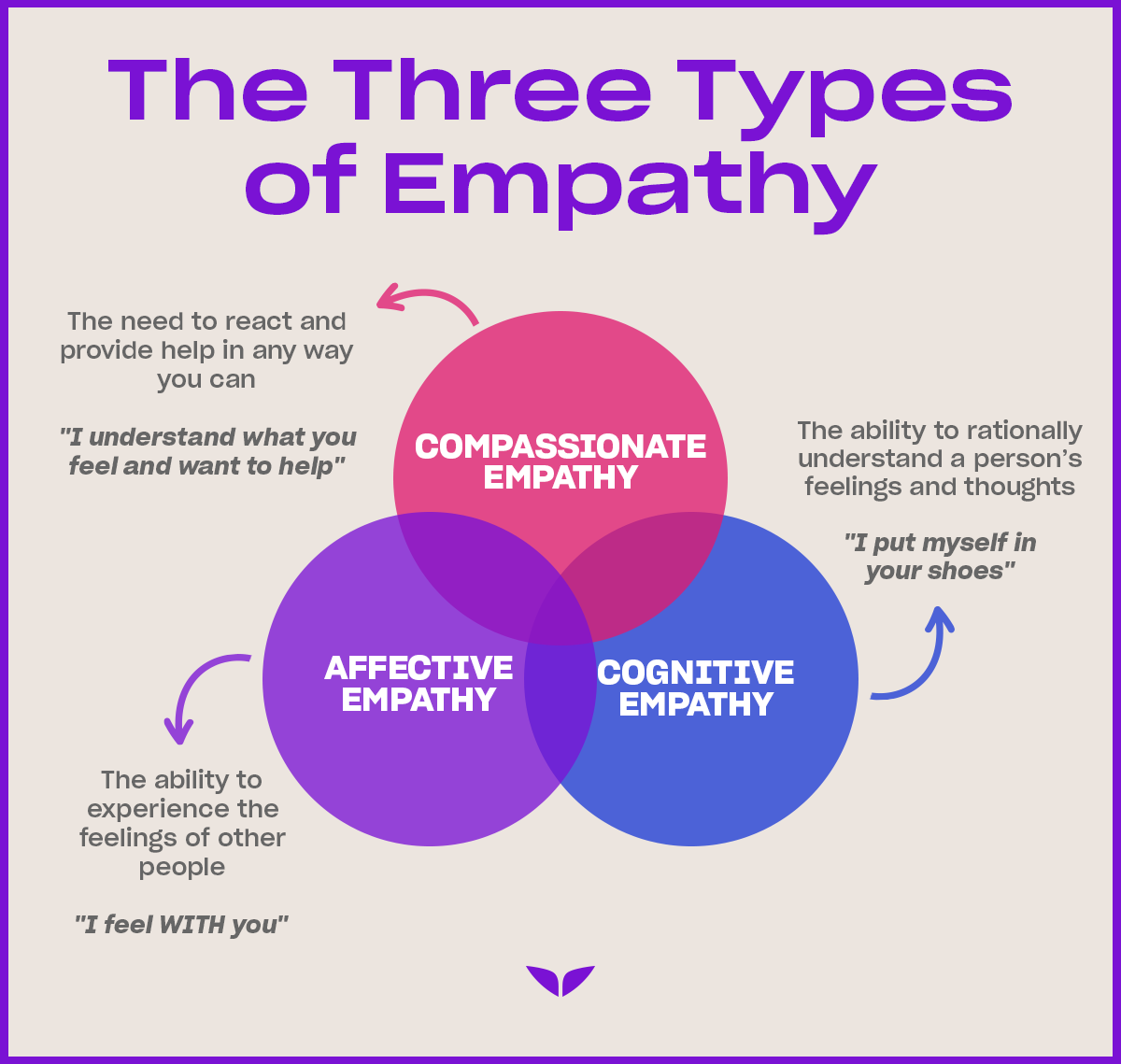
As you can see, the destination is Compassionate Empathy. This is where the viewer not only understands and feels the subject's plight but is actively moved to help. It's the synthesis of:
- Cognitive Empathy: "I understand your perspective."
- Affective Empathy: "I feel your emotions."
When these two combine, they create the impulse for action. This progression is also captured in the model below.

To truly grasp how to leverage this pathway, it's helpful to explore the research behind it. The following reading delves into the science of empathy and how it drives what social scientists call "prosocial behavior"—the technical term for the actions you want to inspire.
Let's read a section from the report "Altruism, Empathy & Efficacy" from Georgetown University's Center for Social Impact Communication. It provides an excellent, research-backed explanation of empathy's role in motivating action.
Please read Chapter 3, "EMPATHY: GETTING PEOPLE TO FEEL IS AS IMPORTANT AS GETTING THEM TO THINK." Start from the beginning of the chapter and read up to (but not including) the section titled "How Do We Trigger Empathy?". Focus on the distinction between empathy and sympathy, the biological drivers (mirror neurons, oxytocin), and the examples of how empathy drives prosocial behavior.
Test your understanding!
Think back to one of the non-profit films you've produced.
- Did the film primarily evoke sympathy or empathy in the audience?
- What specific choices (in character, cinematography, or editing) led to that effect?
- How might you have altered your approach to shift the emotional response more definitively toward compassionate empathy?
Show answer
There is no single correct answer here, as it depends on your specific film. However, here's a sample reflection:
A film about a food bank might feature wide shots of long lines and interviews where people express their gratitude. This can evoke sympathy—the audience feels sorry for those in need and happy that the food bank exists.
To shift this towards compassionate empathy, you could:
- Focus on a single character (Cognitive Empathy): Follow one parent through their day. Show the difficult choices they face—not just getting food, but the stress of a job search, helping a child with homework, and maintaining their dignity. This allows the audience to understand their perspective.
- Use immersive camerawork (Affective Empathy): Employ close-ups that capture the flicker of worry in their eyes, use natural sound to place the viewer in their small apartment, and craft an edit that reflects their internal emotional state (e.g., faster cuts during a moment of panic, slower pace during a moment of quiet resilience).
- Integrate the 'Ask' with the emotion: The call to action wouldn't just be "support the food bank." It would be narratively tied to helping this specific character achieve a goal, like having the stability to find a new job. This bridges the emotional connection to a tangible, hopeful outcome, activating compassionate empathy.
3. A Wider Palette of Motivations
While empathy is a primary driver, human motivation is complex. Relying solely on pure, selfless altruism can limit your reach. People act for many reasons, and your stories can appeal to a broader set of "basic human values."
The same report from Georgetown University outlines ten of these values. Understanding them gives you a more versatile toolkit for framing your stories.
Now, let's read another short section from the same report, "Altruism, Empathy & Efficacy." This part, from Chapter 2, introduces Shalom Schwartz's theory of ten basic human values that motivate behavior.
In Chapter 2, find the subsection titled "Basic Human Values." Read from there until the start of the next subsection, "Why Does Universalism Dominate Social Impact Communications?". As you read, think about how a non-profit story could be framed to appeal to values other than pure selflessness (universalism).
Here's a quick summary of how you might apply these values in a film:
- Universalism: The default for many non-profits. A story about helping strangers or saving nature because it's the right thing to do.
- Benevolence & Security: A film about an after-school program could be framed not just as helping "at-risk youth" (universalism), but as making the entire community safer and more stable for your family (benevolence and security).
- Conformity & Tradition: A story could highlight a community's long-standing tradition of supporting a local institution or showcase how "everyone in the neighborhood" is chipping in.
- Achievement & Power: Some stories can subtly appeal to a donor's desire for status or recognition, for example by featuring the impact made by a "leadership circle" of donors.
4. The Role of Hope
There's one final emotional ingredient that is essential for motivating action: hope.
Triggering empathy for a problem creates emotional tension. The audience feels the subject's distress. However, if that's all you provide, the result can be paralysis or tune-out—what we'll later call "compassion fatigue." Viewers feel overwhelmed and powerless.
Hope is the release valve. It's the belief that a positive outcome is possible and that the viewer can contribute to it.
Research published in Does Use of Emotion Increase Donations and Volunteers for... (a resource we'll revisit) shows that the most effective fundraising appeals often combine negative and positive emotions. They:
- Define a social problem and show its harm (triggering empathy, concern, anger).
- Present a clear path to a solution and show that change is possible (triggering hope).
- Position the viewer as a key agent in that solution (creating a sense of efficacy).
As a filmmaker, your narrative arc can mirror this. You immerse the audience in the reality of the problem through an empathetic character, but you must also guide them toward a hopeful resolution where their action matters.
Conclusion
In this lesson, we've begun our exploration into the psychology of impactful storytelling by identifying the key emotional pathways that motivate action.
Key Takeaways:
- Stories are Neurochemical Events: You can strategically use narrative techniques like empathy-building and suspense to release oxytocin and dopamine, making your audience more connected, trusting, and motivated.
- Compassionate Empathy is the Goal: Moving an audience from feeling for someone (sympathy) to feeling with them and wanting to help (compassionate empathy) is crucial for driving action.
- Motivation is a Spectrum: Beyond pure altruism, you can craft stories that appeal to a wider range of human values, such as the desire for community security, tradition, or belonging.
- Hope is Essential: An effective emotional journey creates tension through empathy for a problem and then resolves it with a hopeful solution, empowering the viewer to act.
Preview of the Next Lesson:
Now that we've identified what these emotional pathways are, our next lesson will focus on how stories use them to be so persuasive. We will explore the neuroscience of how narrative can bypass rational resistance and influence decision-making, setting the stage for building powerful story structures.