In our last lesson, we focused on Allama Iqbal's 1930 Allahabad Address, identifying it as the crucial moment when the idea of a separate Muslim nation was given a tangible geographical and political form. While that speech outlined where a Muslim state might be, it only hinted at what such a state would be like. This lesson moves from the political to the philosophical, addressing a frequent and complex CSS exam question: what was Allama Iqbal's conceptual understanding of an Islamic state?
To answer this, we must look beyond a single speech and immerse ourselves in the broader ocean of his philosophical prose and poetry. We will discover that Iqbal's vision was not for a medieval theocracy, but for a dynamic, modern, and ethical polity built upon the spiritual self-realization of the individual. Our goal is to construct a clear framework of this vision, connecting his core philosophical concepts to the principles of law, governance, and social justice that he believed should define a modern Muslim state.
The Foundation: Khudi (The Self)
Before we can understand Iqbal's state, we must first understand his concept of the individual. For Iqbal, the building block of any society, and indeed the entire universe, is Khudi—the Self. This is the central theme of his philosophy. Khudi is not to be confused with selfishness or egoism. Rather, it is the process of self-realization, self-knowledge, and the strengthening of one's personality to actualize the divine spark within.
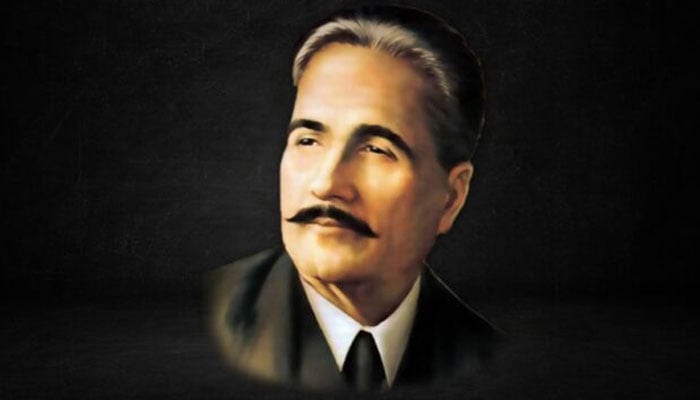
A nation, in Iqbal's view, can only be strong if it is composed of individuals with a strong and developed Khudi. The following article from The News International provides an excellent introduction to this foundational concept.
This article, written by a former Federal Minister for Planning and Development, connects Iqbal's philosophy directly to the modern challenges of Pakistan, making it highly relevant.
Read the first four paragraphs of the article. Focus on how the author defines Khudi as a "disciplined, responsible, and creative selfhood" and distinguishes it from mere egoism. Note the connection drawn between a nation's decline and its loss of "capacity for inquiry and... belief in their own creative mission."
To delve deeper into the philosophical and spiritual roots of Khudi, the following video discussion is immensely helpful. It explains that Khudi is the very essence of a human being, a reality that goes beyond the physical body.
The Modern Muslim Mind & Allama Iqbal's Philosophy Of Khudi | LIVE + Q&A
This discussion from "Imran Hussein Epistemix" breaks down the complex philosophy of Khudi into understandable components, rooting it in the Quranic tradition.
First, watch the segment that defines Khudi, where the speakers explain it as the Self or Nafs, distinct from both the body and the spirit (Ruh), and ground this in the Quranic verse about those who "forgot Allah, so He made them forget themselves." Watch from the introduction. Next, watch the segment that explains how Khudi is developed. The speaker explains Iqbal's two-stage process: strengthening the self first through knowledge (ilm) and intellect, and then elevating it further through intense love (ishq). This distinction is vital for a nuanced understanding. Watch from the path of love.
The Ideal Citizen: Mard-e-Momin and the Shaheen
If the development of Khudi is the process, what is the final product? In Iqbal's work, the ideal individual—the citizen of his ideal state—is the Mard-e-Momin (the Perfect Believer). This is a person who has fully actualized their Khudi, combining immense personal power with profound spiritual insight and a deep love for the Divine.
This concept is often compared to Nietzsche's "Superman," an idea Iqbal engaged with during his time in Europe. However, there is a fundamental difference: Nietzsche's Superman is godless and creates his own morality, while Iqbal's Mard-e-Momin is the ultimate servant of God, whose power and will are submitted to the Divine will. His freedom is not a rebellion against God, but a reflection of his status as God's vicegerent (khalifa) on Earth.
In his poetry, Iqbal uses the powerful symbol of the Shaheen (falcon) to represent this ideal. The Shaheen embodies the qualities of the Mard-e-Momin:
- High-flying and far-sighted: It soars above others and has a broader vision.
- Independent and self-reliant: It does not build a nest and does not feed on leftovers; it hunts for itself.
- Dynamic and action-oriented: It is a creature of action and constant struggle.
- Prefers solitude: It is not a creature of the flock, representing spiritual and intellectual independence.
The article "Reclaiming Iqbal’s vision" explains this symbolism beautifully.
Let's return to the same article to understand this key poetic symbol.
Read the section beginning with "Iqbal’s symbol of the Shaheen." Pay attention to how the Shaheen is described as an "educational ideal" and a "model for national character," embodying qualities like independence, strength, and a "passion for discovery."
The Nature of the State: An Ethical Polity, Not a Theocracy
Now we arrive at the state itself. What kind of state is built by these self-realized, falcon-like individuals? A common misconception is that Iqbal advocated for a theocracy—a state ruled by a priestly class enforcing a rigid interpretation of religious law. His writings clearly refute this.
Iqbal envisioned a modern ethical polity. In this model, the state is not an end in itself but a vehicle for implementing the ethical and social principles of Islam: justice, equality, and human solidarity. It is a spiritual democracy where the law is applied with compassion and reason.
He explicitly distinguished this from a theocracy. In his Reconstruction of Religious Thought in Islam, he states that a theocracy "headed by a representative of God on earth who can always screen his despotic will behind his supposed infallibility" is a concept alien to Islam.
The following article from Dawn, a source you prefer, provides strong evidence for Iqbal's progressive and anti-theocratic stance.
Special report: The enduring vision of Iqbal 1877-1938
This special report gathers scholarly opinion and historical evidence on Iqbal's modernism.
Read the section titled "The name, not the philosophy, lives on". Note the powerful evidence presented: his son's testimony that Iqbal opposed the literalist application of Hudood punishments, and his argument in Reconstruction that certain rules were specific to a particular people and time. This is a critical point for a high-level CSS answer. Then, read the paragraph under the subheading "PIONEER OF SEPARATION" that contains this quote: "nor should the Hindus fear...". This shows Iqbal assuring non-Muslims that the proposed state would not be a coercive "religious rule."
Crucially, in 2026, the current Planning Minister Ahsan Iqbal echoed this very sentiment in The News International, affirming that "Iqbal envisioned a moral state grounded in justice and compassion, not a theocracy, but an ethical polity." This contemporary reference shows the enduring relevance of this interpretation.
The Mechanism of Governance: Ijtihad and Social Democracy
If the state is not a rigid theocracy, how does its legal and social system function in the modern world? Iqbal's answer lies in the dynamic principle of Ijtihad—the intellectual effort to interpret and apply Islamic principles to contemporary problems. For Iqbal, the "gates of Ijtihad," which many traditionalists considered closed, had to be reopened. He believed the Muslim community needed to collectively reinterpret Islamic law (Shari'ah) to meet the challenges of the time, rather than being bound by interpretations from centuries past.
His vision was for the legislative assembly of a modern state to become the vehicle for Ijtihad, allowing elected representatives, in consultation with scholars, to frame laws in accordance with the spirit of Islam.
This dynamism was aimed at a clear socio-economic goal: what Iqbal termed a form of "social democracy." He believed that a state founded on Islamic principles would inherently solve the economic exploitation and poverty plaguing the Muslims of India. For him, a truly Islamic system secured the "right to subsistence for everybody." The creation of a separate state was the necessary political condition for implementing this just economic order.
A personal letter from Iqbal to Jinnah in 1937 provides the most direct evidence for this link between statehood, Shari'ah, and economic justice.
Special report: The enduring vision of Iqbal 1877-1938
We will now read a pivotal excerpt from the Iqbal-Jinnah correspondence, featured in the same Dawn article. This is a primary source of immense value.
Find the section with the heading "Convergence and divergence of views". Read the letter from Iqbal to Jinnah quoted in full, starting with "After a long and careful study of Islamic Law...". This passage is arguably the single most important text for understanding Iqbal's practical vision. He explicitly links the "enforcement and development of the Shariat of Islam" to solving the "problem of bread for Muslims" and achieving "social democracy."
Conclusion
Allama Iqbal’s vision of an Islamic state is far more complex and forward-looking than often assumed. It is not a blueprint for a state frozen in time but a framework for a dynamic, progressive, and spiritually-grounded society.
Key Takeaways:
- Foundation in Khudi: The state is built upon strong, self-realized individuals (Mard-e-Momin), symbolized by the Shaheen, who have actualized their potential.
- An Ethical Polity, Not a Theocracy: The state's purpose is to implement the ethical principles of Islam (justice, solidarity, compassion) through democratic institutions, not to enforce the rule of a clerical class.
- Dynamic through Ijtihad: The legal and social framework of the state must be adaptable to modern realities through the continuous exercise of independent reasoning and reinterpretation.
- Goal of Social Democracy: The ultimate aim of this state is to create a just socio-economic order that eliminates poverty and ensures the well-being of all its citizens, which Iqbal saw as the "original purity of Islam."
In our next lesson, we will move from Iqbal's vision to the political evolution of the man who would translate that vision into reality: Quaid-e-Azam Muhammad Ali Jinnah. We will trace his journey from an "ambassador of Hindu-Muslim unity" to the chief proponent of a separate Muslim state.